
 My Inquiry
 My Account


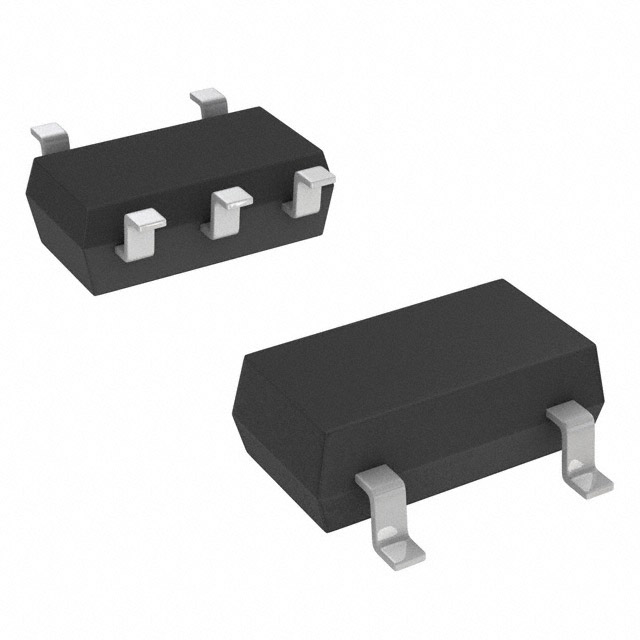
Texas Instruments BQ2026DBZR
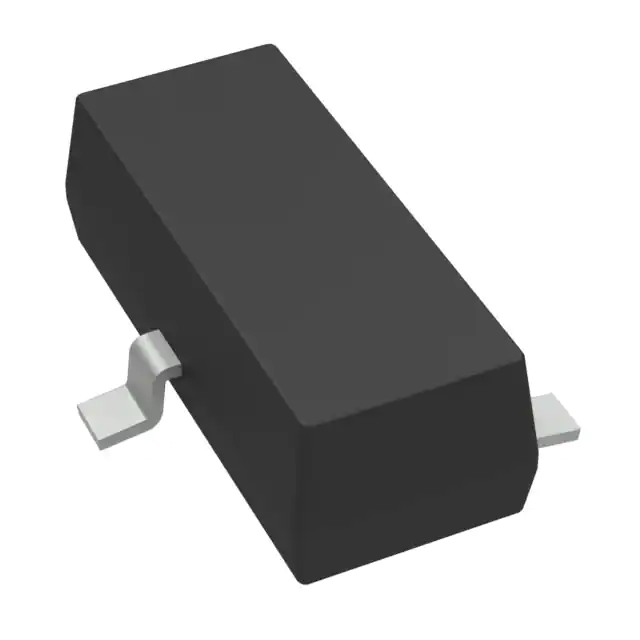
- Part No.:
- BQ2026DBZR
- Manufacturer:
- Texas Instruments
- Category:
- Memory
- Package:
- TO-236-3, SC-59, SOT-23-3
- Datasheet:
-
 BQ2026DBZR.pdf
- Description:
- IC EPROM 1.5KBIT SGL WIRE SOT23
- Quantity:
- Payment:

- Shipping:

Inventory:3,036
Please send an inquiry. Send us your inquiry, and we will respond immediately.
Product details
Overview
BQ2026DBZR from Texas Instruments is a 1.5-kbit one-time programmable (OTP) serial EPROM with SDQ™ single-wire interface, factory-programmed 64-bit ID ROM (including 48-bit unique serial number and 8-bit family code), 1536-bit user-programmable EPROM memory, and 64-bit EPROM status register - used for battery-pack identification, security encoding, and product-revision tracking in portable power systems.
For engineers reviewing the BQ2026DBZR datasheet, BQ2026DBZR pinout, BQ2026DBZR application, or BQ2026DBZR equivalent, key selection considerations include its 3-pin SOT-23 (DBZ) package, 6 kV IEC 61000-4-2 ESD-rated SDQ pin, no-standby-power operation, synchronous SDQ communication protocol, and OTP memory architecture requiring VPP = 11.5–12 V for programming.
Technical Context
The BQ2026DBZR implements a single-wire SDQ interface with open-drain N-channel MOSFET output, requiring an external 5-kΩ pullup to VPU (2.65–5.5 V). Power is harvested parasitically from the SDQ line via internal capacitor storage during high states, enabling operation without dedicated VDD.
It supports hierarchical command execution: ROM-level commands (Read/Match/Skip ROM) must precede memory/status operations. All data transfers use LSB-first bit ordering, CRC-protected framing (8-bit ROM CRC, 16-bit command/address/data CRC), and strict timing windows (e.g., tRST ≥ 480 μs, tc = 60–120 μs).
Key Specifications
| Parameter | Value and Actual Design Meaning |
|---|---|
| Memory Type | One-time programmable (OTP) EPROM - irreversible write-once memory for secure configuration storage. |
| Total Memory Capacity | 1536 bits EPROM + 64-bit ID ROM + 64-bit status register - enables device identity, user data, and runtime state flags in single chip. |
| Interface | Single-wire SDQ™ - reduces PCB routing to one signal + ground, eliminating clock/data skew and simplifying host GPIO usage. |
| ESD Rating | 6 kV IEC 61000-4-2 on SDQ pin - ensures robustness in handheld and battery-pack environments with frequent handling. |
| Supply Method | Parasitic power from SDQ line - eliminates need for separate VDD rail, enabling ultra-low-component-count designs. |
| Operating Temperature | –20°C to +70°C - qualified for consumer and industrial portable equipment operating conditions. |
| Programming Voltage | VPP = 11.5–12 V applied to SDQ - enables reliable OTP programming while maintaining compatibility with standard 5-V host logic levels. |
Pinout & Package
Package: SOT-23-3 (DBZ), 4.30 mm × 4.30 mm body size, surface-mount, lead-free.
| Pin/Terminal | Circuit Role | Design Meaning |
|---|---|---|
| 1 (SDQ) | Bi-directional data & power | Single-wire SDQ interface: carries all commands, data, and CRC; also supplies parasitic power to device during high states. |
| 2 (VSS) | Ground reference | Primary ground connection for internal circuitry and SDQ return path; required for proper parasitic power harvesting and signal integrity. |
| 3 (VSS) | Ground or NC | Second ground terminal in DBZ package - may be connected to ground for improved thermal/electrical performance or left unconnected per layout constraints. |
Key Features
| Feature | Design Value |
|---|---|
| Factory-programmed 64-bit ID ROM | Provides immutable device identity (48-bit serial + 8-bit family code + 8-bit CRC) for anti-counterfeiting and secure authentication. |
| Synchronous SDQ protocol | Eliminates host interrupt overhead by using precise timing-based bit framing instead of asynchronous edge detection. |
| Two-tiered CRC protection | 8-bit ROM CRC validates device identity; 16-bit command/data CRC ensures error-free programming and read transfers. |
| User-programmable EPROM status bytes | Seven general-purpose OTP status bytes (100h–107h) enable field-updatable flags for revision control, calibration lock, or usage counters. |
| No standby power consumption | Zero quiescent current (ISDQ = 20 μA max during operation) - extends battery life in always-connected monitoring applications. |
Applications
| Battery-Pack Identification | Security Encoding |
|---|---|
Use Scenario: Embedded in lithium-ion battery packs to store manufacturer ID, cell chemistry, capacity, and safety thresholds. IC Role / Device Role / Timing Role: Non-volatile identity and configuration storage element interfacing directly with host fuel-gauge or protection IC via SDQ. Use Value: Enables pack authentication and prevents unauthorized replacement; eliminates need for external EEPROM or microcontroller. |
Use Scenario: Storing access codes, encryption keys, or firmware version locks in portable medical or industrial devices. IC Role / Device Role / Timing Role: Secure OTP memory node providing tamper-resistant storage for critical system parameters. Use Value: Prevents cloning or firmware downgrade via irreversible write-once architecture and factory-sealed ID ROM. |
| Product-Revision Maintenance | Inventory Tracking |
Use Scenario: Recording hardware revision, calibration date, and test pass/fail status during final assembly of consumer electronics. IC Role / Device Role / Timing Role: Field-programmable status register (100h–107h) updated post-manufacture to reflect production lineage. Use Value: Supports traceability without modifying main EPROM contents; allows dynamic flag updates across product lifecycle. |
Use Scenario: Tagging rechargeable tools, power banks, or IoT sensors with unique identifiers for warehouse and field asset management. IC Role / Device Role / Timing Role: Compact, low-cost serialization node delivering globally unique 48-bit IDs with CRC validation. Use Value: Reduces BOM cost vs. RFID tags; enables automated scanning via simple microcontroller GPIO without additional transceivers. |
Equivalent & Alternatives
The following parts are listed as comparable options for similar serial OTP memory applications.
| Alternative Part | Technical Difference | Application Difference | Selection Advice |
|---|---|---|---|
| DS2401 | 1-Wire interface (not SDQ); 64-bit ROM only, no user-programmable memory; requires external pullup and 5-V supply. | Limited to identification-only use; lacks EPROM storage for configuration or status data. | Select DS2401 only when only device ID is needed and 1-Wire ecosystem is already deployed. |
| BQ2027DBZR | Same SDQ interface and pinout; adds 256-bit extended status register and enhanced CRC algorithm per TI SLUS938B. | Supports more complex status tracking and higher data integrity in demanding industrial deployments. | Choose BQ2027DBZR if future-proofing for expanded status fields or tighter CRC requirements is required. |
Compared with DS2401 and BQ2027DBZR, the BQ2026DBZR offers optimal balance of compact OTP memory (1536 bits), integrated ID ROM, and SDQ simplicity - making it ideal for cost-sensitive, space-constrained battery and accessory identification where moderate programmability suffices.
Availability
BQ2026DBZR is available at Aetrix Electronics and suitable for battery-pack identification, security encoding, product-revision maintenance, and inventory tracking requiring stable component supply and long-term obsolescence support.
Supply support for BQ2026DBZR includes scheduled delivery planning, volume procurement assistance, BOM continuity management, traceable sourcing, and lifecycle availability coordination for OEM customers, industrial embedded developers, connected-device designers, and electronics production programs.
Manufacturer
Texas Instruments is a global semiconductor company specializing in analog, embedded processing, and power management technologies, with leadership in battery management and interface solutions.
The BQ2026DBZR belongs to TI's SDQ™ serial memory product line, designed specifically for ultra-compact, low-power, single-wire identification and configuration storage in portable and battery-powered systems.
FAQ
What is the primary function of the BQ2026DBZR?
The BQ2026DBZR is a 1.5-kbit one-time programmable EPROM with integrated 64-bit ID ROM and SDQ™ single-wire interface. Its primary function is to provide secure, compact, and low-power non-volatile storage for device identification, configuration parameters, and status flags - especially in battery packs and portable accessories. The BQ2026DBZR operates without a dedicated power supply, drawing energy parasitically from the SDQ line.
Does the BQ2026DBZR require an external power supply?
No, the BQ2026DBZR does not require an external VDD supply. It harvests operating power parasitically from the SDQ signal line using an internal capacitor, enabling true single-wire operation with only SDQ and VSS connections. This design eliminates the need for a separate voltage rail and reduces system component count - a core feature confirmed in the BQ2026DBZR datasheet Section 7.1 and Figure 1.
What package type is used for the BQ2026DBZR?
The BQ2026DBZR uses the SOT-23-3 (DBZ) package, measuring 4.30 mm × 4.30 mm with a 3-pin top-view configuration: Pin 1 = SDQ, Pin 2 = VSS, Pin 3 = VSS (ground or no-connect). This package is explicitly listed in the "Device Information" table of the BQ2026DBZR datasheet (SLUS938A, Section 2) and matches the DBZ package diagram on page 3.
Can the BQ2026DBZR be reprogrammed after initial programming?
No, the BQ2026DBZR contains one-time programmable (OTP) EPROM memory. Once a bit is programmed from '1' to '0', it cannot be reversed. The 1536-bit EPROM and 64-bit status register are permanently written during programming - verified by the BQ2026DBZR datasheet Section 1 ("Features") and Section 7.3.1. This ensures data integrity and prevents tampering in security-critical applications.
What is the purpose of the 64-bit ID ROM in the BQ2026DBZR?
The 64-bit ID ROM in the BQ2026DBZR contains a factory-programmed, globally unique 48-bit serial number, an 8-bit family code (default 09h), and an 8-bit CRC - all used for secure device identification and authentication. This ROM is read-only and immutable, enabling anti-counterfeiting, pack authentication, and system-level trust verification without user intervention. Its structure and function are defined in BQ2026DBZR datasheet Sections 3 and 7.1.
BQ2026DBZR Specifications
- Product attributes
- Attribute value
- Manufacturer:
- Texas Instruments
- Series:
- -
- Package/Case:
- TO-236-3, SC-59, SOT-23-3
- Packaging:
- Tape & Reel (TR)
- Product Status:
- Active
- Programmable:
- Not Verified
- Memory Type:
- Non-Volatile
- Memory Format:
- EPROM
- Technology:
- EPROM - OTP
- Memory Size:
- 1.5Kbit
- Memory Organization:
- 32 Bytes x 6 pages
- Memory Interface:
- Single Wire
- Clock Frequency:
- -
- Write Cycle Time - Word, Page:
- -
- Access Time:
- -
- Voltage - Supply:
- 2.65V ~ 5.5V
- Operating Temperature:
- -20°C ~ 70°C (TA)
- Grade:
- -
- Qualification:
- -
- Mounting Type:
- Surface Mount
- Supplier Device Package:
- SOT-23-3
BQ2026DBZR FAQ
1.How can I place an order for BQ2026DBZR through Aetrix?
Please submit a Request for Quotation (RFQ) for BQ2026DBZR on Aetrix. Our sales agent will provide a competitive quotation and guide you through the order confirmation once you accept the terms.
2.Are the price and stock information for BQ2026DBZR reliable?
The price and inventory of BQ2026DBZR are updated periodically and may fluctuate due to market conditions. Stock and pricing data are typically refreshed every 24 hours. Quotation validity for BQ2026DBZR is usually 5 days.
3.What payment methods are accepted for BQ2026DBZR?
We accept Wire Transfer, PayPal, Credit Card, Western Union, MoneyGram, and Escrow for BQ2026DBZR transactions.
Note: Certain payment methods may incur a processing fee.
4.How is shipping managed for BQ2026DBZR?
BQ2026DBZR orders can be shipped via leading logistics carriers, including DHL, UPS, FedEx, TNT, or Registered Mail.
Once your BQ2026DBZR order is processed, you will receive an email with the shipment details and tracking number.
Note: Tracking information may take up to 24 hours to appear. Express delivery typically takes 3–5 business days.
5.How can I obtain technical support or documentation for BQ2026DBZR?
For technical support, including BQ2026DBZR datasheets, pinout diagrams, or application guidance, please contact our engineering support team. They can provide detailed documentation and assistance for your BQ2026DBZR requirements.
6.How does Aetrix verify that BQ2026DBZR is sourced from the original manufacturer or authorized distributors?
All BQ2026DBZR products on Aetrix are procured from qualified distributors and authorized channels. Our dedicated quality assurance team conducts strict verification, including traceability checks and, if necessary, third-party testing. This ensures that BQ2026DBZR meets industry standards.
7.What is the process for return or replacement of BQ2026DBZR?
All BQ2026DBZR units undergo pre-shipment inspection (PSI). If there is an issue with BQ2026DBZR, returns or replacements are accepted under the following conditions:
1.Quantity discrepancies, incorrect items, or visible external defects (such as breakage or corrosion), acknowledged by Aetrix.
2.The issue is reported within 90 days of delivery.
3.The BQ2026DBZR part is unused and in its original packaging.
Return procedure for BQ2026DBZR:
1.Submit a request within 90 days.
2.Obtain a Return Material Authorization (RMA) from Aetrix.
BQ2026DBZR Tags

-
M24C02-WMN6TP
STMicroelectronics
-
AT24C02C-XHM-T
Microchip Technology
-
AT21CS01-STUM10-T
Microchip Technology

-
AT24C02C-SSHM-T
Microchip Technology

-
24LC01BT-I/OT
Microchip Technology
-
M24C02-FMC6TG
STMicroelectronics
-
AT24CS02-SSHM-T
Microchip Technology

-
93LC46BT-I/OT
Microchip Technology
-
AT24C04C-SSHM-T
Microchip Technology

-
24LC01BT-I/SN
Microchip Technology
-
24AA02UIDT-I/OT
Microchip Technology
-
AT24C08C-STUM-T
Microchip Technology
Tech Hub

A practical engineering guide to 3.3V and 5V logic compatibility, input thresholds, resistor dividers, translator ICs, MOSFET level shifting, I2C pull-ups, timing limits and power-sequencing risks.

The 74HC595 uses push-pull logic outputs, while the TPIC6B595 uses 50 V open-drain DMOS sinks for higher-power loads. This guide compares timing, current limits, 3.3 V interfacing, load wiring, thermal…

The 74HC595 converts serial data into eight stable parallel outputs. This guide covers pin functions, shift and storage timing, OE and MR behavior, drive-current limits, cascading, voltage compatibilit…

A technical comparison of level-sensitive latches and edge-triggered flip-flops, covering timing windows, setup and hold limits, master–slave operation, time borrowing, race-through, HDL inference and…

A D latch stores one bit while Enable controls when data can pass. This reference covers gate-level operation, truth tables, transparency, setup and hold timing, LE versus OE, common ICs and practical …

An SR latch stores one bit through cross-coupled feedback. This engineering reference covers NOR and NAND implementations, truth tables, forbidden-state recovery, gated operation, switch debouncing, fa…

Latch circuits retain one bit through feedback. This technical reference covers SR and D latches, truth tables, transparency, timing limits, latch-versus-flip-flop behavior, applications and common log…

An engineering guide to LED driver operation, constant-current and constant-voltage outputs, linear and switching topologies, dimming, IC selection, calculations, replacement compatibility, and fault c…

Operational amplifier guide covering op amp basics, feedback, ideal vs real op amps, common configurations, buffer circuits, offset, bias current, gain-bandwidth, slew rate, rail-to-rail limits and sel…

Jumper cables guide covering safe connection order, red and black clamp placement, final ground connection, cable gauge, length, clamp quality, copper vs CCA cables, jump starter comparison and battery…


