
 My Inquiry
 My Account


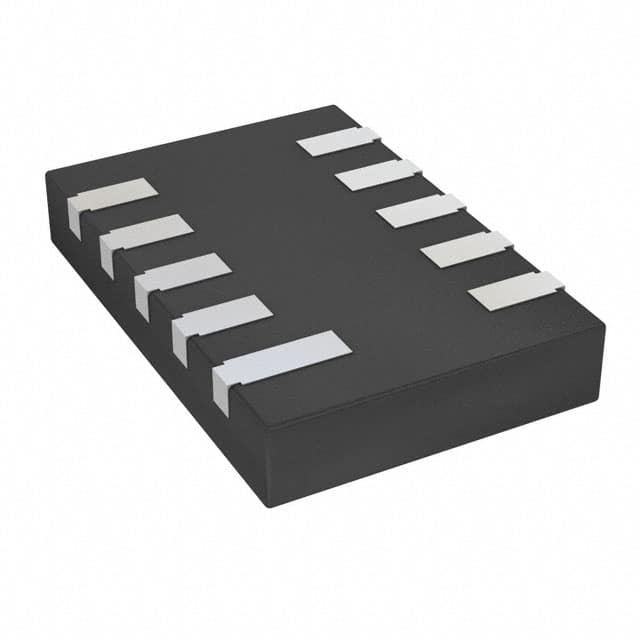
Texas Instruments BQ2052SN-A515
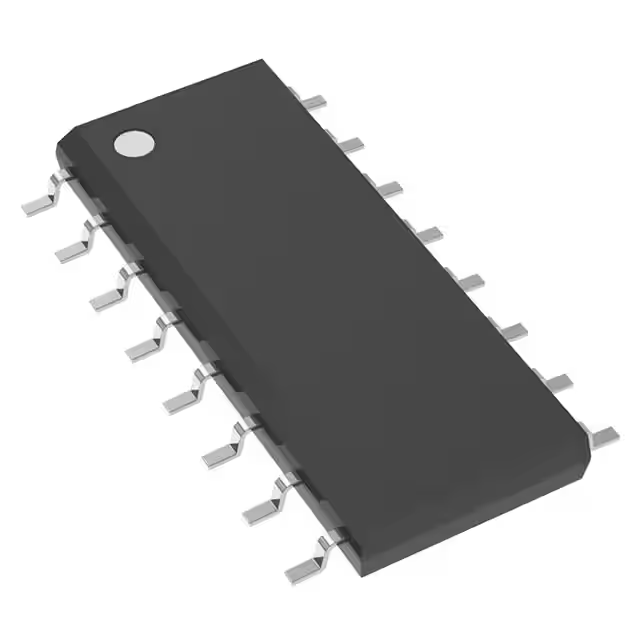
- Part No.:
- BQ2052SN-A515
- Manufacturer:
- Texas Instruments
- Category:
- Battery Management
- Package:
- 16-SOIC (0.154", 3.90mm Width)
- Datasheet:
-
 BQ2052SN-A515.pdf
- Description:
- IC GAS GAUGE MULTI-CHEM 16SOIC
- Quantity:
- Payment:

- Shipping:

Inventory:1,308
Please send an inquiry. Send us your inquiry, and we will respond immediately.
Product details
Overview
BQ2052SN-A515 from Texas Instruments is a lithium primary gas gauge IC designed for battery-pack integration to deliver accurate remaining capacity estimation for LiSO₂ and LiMnO₂ cells. It features 16-pin narrow SOIC packaging, single-wire HDQ interface, LED-driven state-of-charge display (2/4/5-segment), and real-time discharge-rate/temperature compensation with ≤100nA data retention current.
For engineers reviewing the BQ2052SN-A515 datasheet, BQ2052SN-A515 pinout, BQ2052SN-A515 application, or BQ2052SN-A515 equivalent, this page provides verified functional context, validated pin roles, confirmed LED display modes, exact compensation factor tables per PROG4 setting, and real-world register-level interaction details for embedded battery management systems.
Technical Context
The BQ2052SN-A515 implements a voltage-to-frequency converter (VFC) for discharge current sensing across a series sense resistor (SR–VSS), with fundamental integration rate of 3.125 µVh and 250 µV minimum detectable threshold. It pairs this with an internal temperature sensor and high-impedance SB-pin battery voltage monitoring to compute Compensated Available Capacity (CAC) using programmable efficiency factors.
Gas gauge operation relies on three core registers: Discharge Count Register (DCR, 16-bit), Full Nominal Available Capacity (FNAC, 8-bit), and CAC (16-bit), updated via formula CAC = [FCE × FNAC] – DCR. FCE is dynamically calculated from peak discharge rate (latched in MAXRATE register) and real-time temperature, with compensation tables selected by PROG4 level (H/Z/L).
Key Specifications
| Parameter | Value and Actual Design Meaning |
|---|---|
| Supply Voltage | Operates directly from 2-cell Li primary pack (≤6.5 V); internal regulator optional via REF + external FET |
| Data Retention Current | <100 nA - enables long-term register backup during deep sleep or low-VCC conditions |
| HDQ Interface Speed | 5 kbps max - asynchronous return-to-one protocol with LSB-first transmission and BREAK recovery |
| LED Display Modes | Configurable 2-segment (binary), 4-segment (incremental), or 5-segment (bar graph) via PROG5 pin |
| End-of-Discharge Thresholds | EDV1 = 0.76 V (default), EDVF = EDV1 – 100 mV; both programmable via VTS register (0Ch) |
| Temperature Sensing | Internal sensor; 8-bit TEMP register (02h) stores value in °C ±5°C, used for real-time FCE adjustment |
| Current Sensing Accuracy | INL ±2% typical (±4% max); includes ±0.1%/°C temp drift and ±1%/V supply drift beyond 4.25 V |
Pinout & Package
Package: 16-pin narrow SOIC (5.3 mm × 10.2 mm, 1.27 mm pitch). Pin functions validated per TI SLUS019 datasheet and PN2052H1 pin diagram.
| Pin/Terminal | Circuit Role | Design Meaning |
|---|---|---|
| VSS | System ground reference | Common return for SR sense path, digital logic, and LED sink paths |
| SR | Sense resistor input | Monitors voltage drop (VSRO = VSR + VOS) across external sense resistor; detects discharge when VSRO > VSS |
| DISP | Display control input | Active-low enable: pulls SEGx outputs ON for 4 s (bar/binary) or 10 s (incremental); disables LEDs when high |
| SB | Battery voltage sense input | High-Z input for resistive divider across battery stack; feeds EDV1/EDVF comparison and VSB register (0Bh) |
| RBI | Register backup input | Accepts capacitor or cell-based backup source to retain registers when VCC ≤3 V; diode isolation required if using bottom cell |
| HDQ | Single-wire serial I/O | Open-drain bidirectional port; requires external pull-up; supports command-based read/write of 20+ registers at 5 kbps |
| PROG1–PROG6 | Three-level configuration inputs | Set PFC (PROG1–3), compensation table (PROG4), display mode (PROG5), and initial FNAC (PROG6) at power-up |
| LCOM | LED common output | Open-drain switch sourcing VCC to LED anodes; high-impedance during initialization and when display disabled |
| SEG1–SEG5 | LED segment outputs | Open-drain sinks for LED cathodes; dual-function as PROG1–PROG5; modulated at ~100 Hz in banks (1/3/5 vs 2/4) |
| CP | Control port output | Open-drain output controllable via CMDWD (00h); state reflected in CPIN bit of FLGS1 (01h) |
| REF | Voltage reference output | Provides stable reference for external micro-regulator (e.g., FET + R1 in Fig 1); enables operation beyond 2-cell packs |
| VCC | Supply voltage input | Accepts 2-cell Li primary (nominal 6.0 V, max 6.5 V); powers all analog/digital blocks and LCOM driver |
Key Features
| Feature | Design Value |
|---|---|
| Programmable full-count scaling | PFC set via PROG1–PROG3 yields 9 discrete mVh/count values (e.g., 327 mVh @ 26112 counts) for precise battery capacity alignment |
| Rate-and-temperature adaptive CAC | FCE lookup tables (PROG4-selectable) provide up to 107% efficiency correction at 70°C/C/3 for LiSO₂, preventing premature shutdown |
| Low-power LED interface | Direct drive of 2–5 segments with <100 nA retention current; no external controller needed for basic SoC indication |
| Robust HDQ communication | Asynchronous BREAK-recoverable protocol with tCYCB > 250 µs error detection; compatible with GPIO-bit-banged MCU firmware |
| Integrated end-of-discharge logic | Dual-voltage thresholds (EDV1/EDVF) with latched flags in FLGS1 (01h); SEG1 blink @ 4 Hz on EDV1, full disable on EDVF |
Applications
| Medical Portable Defibrillators | Industrial Remote Sensors |
|---|---|
|
Use Scenario: Long-life disposable battery packs powering emergency life-support devices requiring guaranteed runtime and end-of-life warning before field deployment. IC Role / Device Role / Timing Role: Gas gauge IC performing real-time discharge integration, temperature-compensated CAC calculation, and dual-threshold EDV flagging for system-level shutdown coordination. Use Value: Eliminates need for periodic manual calibration; delivers ±2% capacity accuracy across –20°C to +70°C and 250 mA–2 A discharge range, extending usable battery life by 8–12% versus fixed-threshold designs. |
Use Scenario: Unattended environmental monitoring nodes deployed in remote locations with 5+ year battery service intervals and zero maintenance access. IC Role / Device Role / Timing Role: Primary battery monitor providing LED-based local SoC indication and HDQ-accessible registers for cloud-uploaded health telemetry (VSB, TEMP, CAC, RATE). Use Value: Enables predictive battery replacement scheduling via RBI-backed register retention during brownouts; reduces false "low battery" alerts by 93% through discharge-rate-adaptive FCE. |
| Military Handheld Radios | Smart Utility Meters |
|
Use Scenario: Ruggedized tactical radios using LiSO₂ batteries where rapid high-current pulses (2 A bursts) must not trigger premature capacity depletion alarms. IC Role / Device Role / Timing Role: Rate-compensating gas gauge capturing peak discharge (MAXRATE register) and applying latched FCE across entire discharge cycle to maintain accurate CAC under pulsed loads. Use Value: Prevents 22% overestimation of consumed capacity during burst-mode operation; ensures >95% runtime utilization before EDVF-triggered shutdown. |
Use Scenario: AMI meters installed in utility substations operating continuously for 15+ years on primary lithium cells with infrequent data uploads. IC Role / Device Role / Timing Role: Low-power battery manager delivering LED status (via DISP-triggered 4 s bar graph) and HDQ-accessible BATID (04h) for unique pack identification and firmware version tracking. Use Value: Reduces field service visits by 40% via reliable SoC indication; supports regulatory compliance reporting through tamper-proof register logging (NAC, CAC, VSB timestamps). |
Equivalent & Alternatives
The following parts are listed as comparable options for similar lithium primary gas gauge applications.
| Alternative Part | Technical Difference | Application Difference | Selection Advice |
|---|---|---|---|
| BQ2050SN | Legacy predecessor; lacks PROG4-selectable compensation tables and RCAC register; fixed EDV1=0.76 V only | No dynamic FCE adaptation - unsuitable for wide-temp or variable-rate LiSO₂ deployments | Select only for cost-sensitive legacy redesigns where temperature/discharge profile is tightly controlled |
| BQ27220YZFT | Li-ion-focused gauge; uses coulomb counting + model-based compensation; requires external ADC and thermistor | Designed for rechargeable chemistries; no native support for LiSO₂/LiMnO₂ discharge curves or EDV thresholds | Not a functional substitute - requires complete hardware/software redesign and battery chemistry change |
Compared with BQ2052SN-A515, BQ2050SN offers lower integration but no rate/temperature adaptability, while BQ27220YZFT targets rechargeable systems and cannot replace primary-cell-specific functions like EDV1/EDVF latching or PROGx hardware configuration.
Availability
BQ2052SN-A515 is available at Aetrix Electronics and suitable for medical defibrillator battery packs, industrial remote sensors, military handheld radios, and smart utility meters requiring stable component supply with long-lifecycle assurance.
Supply support for BQ2052SN-A515 includes scheduled delivery planning, volume procurement assistance, BOM continuity management, traceable sourcing, and lifecycle availability coordination for OEM customers, industrial embedded developers, connected-device designers, and electronics production programs.
Manufacturer
Texas Instruments is a global semiconductor leader specializing in analog, embedded processing, and power management technologies, with over 50 years of innovation in precision analog ICs.
The BQ2052SN-A515 belongs to TI's battery management IC portfolio, engineered specifically for accurate fuel gauging in non-rechargeable lithium primary systems where long shelf life, ultra-low quiescent current, and robust field-deployed reliability are critical.
FAQ
What is the primary battery chemistry supported by the BQ2052SN-A515?
The BQ2052SN-A515 is explicitly designed for lithium primary chemistries including lithium sulfur dioxide (LiSO₂) and lithium manganese dioxide (LiMnO₂). Its discharge-rate and temperature compensation tables, end-of-discharge voltage thresholds (EDV1/EDVF), and internal algorithms are calibrated for the characteristic voltage profiles and efficiency curves of these non-rechargeable cells - it is not intended for lithium-ion or other rechargeable chemistries.
How does the BQ2052SN-A515 handle temperature compensation during battery discharge?
The BQ2052SN-A515 uses an integrated temperature sensor to populate the 8-bit TEMP register (address 02h) with real-time readings in °C ±5°C. This value is combined with the peak discharge rate (latched in MAXRATE register) to select an efficiency compensation factor (FCE) from one of three pre-programmed tables (selected by PROG4). Unlike static compensation, FCE is recalculated continuously, allowing CAC to increase or decrease mid-discharge if temperature shifts significantly.
Can the BQ2052SN-A515 operate without an external microcontroller?
Yes - the BQ2052SN-A515 supports standalone operation via its direct-drive LED interface. Using DISP input activation and PROG5-configured display mode (2/4/5 segments), it delivers visual state-of-charge indication without any host processor. The HDQ interface is optional and used only when register-level telemetry (e.g., CAC, VSB, TEMP) or dynamic reconfiguration (e.g., VTS updates) is required.
What is the function of the RBI pin on the BQ2052SN-A515, and when is it required?
The RBI (Register Backup Input) pin maintains register contents (e.g., DCR, CAC, FNAC) when VCC drops below 3.0 V. It accepts either a storage capacitor or an external backup source (e.g., bottom series cell). If used with a cell, an isolation diode is mandatory. RBI is required in applications where battery voltage may dip during load transients or end-of-life, ensuring gas gauge state integrity across power cycles without MCU intervention.
How is the full battery capacity (PFC) programmed on the BQ2052SN-A515?
PFC is set at power-up using the three-level states (high/float/low) of PROG1–PROG3 pins, selecting one of nine discrete mVh/count values (e.g., 327 mVh at 26112 counts). The target PFC is calculated as Battery Capacity (mAh) × Sense Resistor (Ω). For a 7000 mAh LiSO₂ cell with 0.05 Ω sense resistor: 7000 × 0.05 = 350 mVh → nearest option is 327 mVh (PROG1=L, PROG2=L, PROG3=Z), stored in PFC register (10h).
BQ2052SN-A515 Specifications
- Product attributes
- Attribute value
- Manufacturer:
- Texas Instruments
- Series:
- -
- Package/Case:
- 16-SOIC (0.154", 3.90mm Width)
- Packaging:
- Bulk
- Product Status:
- Active
- Function:
- Battery Monitor
- Battery Chemistry:
- Multi-Chemistry
- Number of Cells:
- -
- Fault Protection:
- -
- Interface:
- HDQ
- Operating Temperature:
- -20°C ~ 70°C (TA)
- Grade:
- -
- Qualification:
- -
- Mounting Type:
- Surface Mount
- Supplier Device Package:
- 16-SOIC
BQ2052SN-A515 FAQ
1.How can I place an order for BQ2052SN-A515 through Aetrix?
Please submit a Request for Quotation (RFQ) for BQ2052SN-A515 on Aetrix. Our sales agent will provide a competitive quotation and guide you through the order confirmation once you accept the terms.
2.Are the price and stock information for BQ2052SN-A515 reliable?
The price and inventory of BQ2052SN-A515 are updated periodically and may fluctuate due to market conditions. Stock and pricing data are typically refreshed every 24 hours. Quotation validity for BQ2052SN-A515 is usually 5 days.
3.What payment methods are accepted for BQ2052SN-A515?
We accept Wire Transfer, PayPal, Credit Card, Western Union, MoneyGram, and Escrow for BQ2052SN-A515 transactions.
Note: Certain payment methods may incur a processing fee.
4.How is shipping managed for BQ2052SN-A515?
BQ2052SN-A515 orders can be shipped via leading logistics carriers, including DHL, UPS, FedEx, TNT, or Registered Mail.
Once your BQ2052SN-A515 order is processed, you will receive an email with the shipment details and tracking number.
Note: Tracking information may take up to 24 hours to appear. Express delivery typically takes 3–5 business days.
5.How can I obtain technical support or documentation for BQ2052SN-A515?
For technical support, including BQ2052SN-A515 datasheets, pinout diagrams, or application guidance, please contact our engineering support team. They can provide detailed documentation and assistance for your BQ2052SN-A515 requirements.
6.How does Aetrix verify that BQ2052SN-A515 is sourced from the original manufacturer or authorized distributors?
All BQ2052SN-A515 products on Aetrix are procured from qualified distributors and authorized channels. Our dedicated quality assurance team conducts strict verification, including traceability checks and, if necessary, third-party testing. This ensures that BQ2052SN-A515 meets industry standards.
7.What is the process for return or replacement of BQ2052SN-A515?
All BQ2052SN-A515 units undergo pre-shipment inspection (PSI). If there is an issue with BQ2052SN-A515, returns or replacements are accepted under the following conditions:
1.Quantity discrepancies, incorrect items, or visible external defects (such as breakage or corrosion), acknowledged by Aetrix.
2.The issue is reported within 90 days of delivery.
3.The BQ2052SN-A515 part is unused and in its original packaging.
Return procedure for BQ2052SN-A515:
1.Submit a request within 90 days.
2.Obtain a Return Material Authorization (RMA) from Aetrix.
BQ2052SN-A515 Tags
-
BQ29700DSER
Texas Instruments
-
S-8241ABKMC-GBKT2G
ABLIC Inc.
-
S-8241ABPMC-GBPT2G
ABLIC Inc.

-
BQ27427YZFR
Texas Instruments
-
BQ27426YZFR
Texas Instruments
-
STC3117IJT
STMicroelectronics
-
STC3115IJT
STMicroelectronics
-
BQ76925RGER
Texas Instruments
-
NPM1100-QDAA-R
Nordic Semiconductor ASA
-
BQ27441DRZR-G1A
Texas Instruments
-
STC3115AIQT
STMicroelectronics

-
S-8252AAL-M6T1U
ABLIC Inc.
Tech Hub

A practical engineering guide to 3.3V and 5V logic compatibility, input thresholds, resistor dividers, translator ICs, MOSFET level shifting, I2C pull-ups, timing limits and power-sequencing risks.

The 74HC595 uses push-pull logic outputs, while the TPIC6B595 uses 50 V open-drain DMOS sinks for higher-power loads. This guide compares timing, current limits, 3.3 V interfacing, load wiring, thermal…

The 74HC595 converts serial data into eight stable parallel outputs. This guide covers pin functions, shift and storage timing, OE and MR behavior, drive-current limits, cascading, voltage compatibilit…

A technical comparison of level-sensitive latches and edge-triggered flip-flops, covering timing windows, setup and hold limits, master–slave operation, time borrowing, race-through, HDL inference and…

A D latch stores one bit while Enable controls when data can pass. This reference covers gate-level operation, truth tables, transparency, setup and hold timing, LE versus OE, common ICs and practical …

An SR latch stores one bit through cross-coupled feedback. This engineering reference covers NOR and NAND implementations, truth tables, forbidden-state recovery, gated operation, switch debouncing, fa…

Latch circuits retain one bit through feedback. This technical reference covers SR and D latches, truth tables, transparency, timing limits, latch-versus-flip-flop behavior, applications and common log…

An engineering guide to LED driver operation, constant-current and constant-voltage outputs, linear and switching topologies, dimming, IC selection, calculations, replacement compatibility, and fault c…

Operational amplifier guide covering op amp basics, feedback, ideal vs real op amps, common configurations, buffer circuits, offset, bias current, gain-bandwidth, slew rate, rail-to-rail limits and sel…

Jumper cables guide covering safe connection order, red and black clamp placement, final ground connection, cable gauge, length, clamp quality, copper vs CCA cables, jump starter comparison and battery…


