
 My Inquiry
 My Account


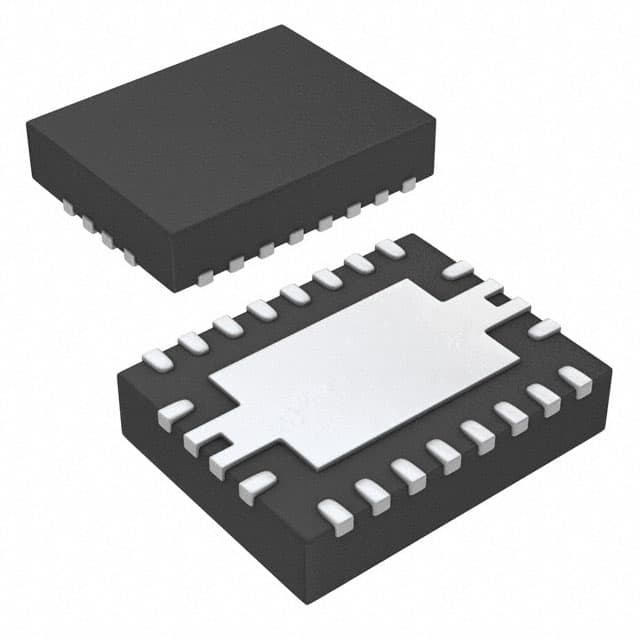
Texas Instruments BQ24070RHLT
- Part No.:
- BQ24070RHLT
- Manufacturer:
- Texas Instruments
- Category:
- Battery Chargers
- Package:
- 20-VFQFN Exposed Pad
- Datasheet:
-
 BQ24070RHLT.pdf
- Description:
- IC BATT CHG LI-ION 1CELL 20VQFN
- Quantity:
- Payment:

- Shipping:

Inventory:3,130
Please send an inquiry. Send us your inquiry, and we will respond immediately.
Product details
Overview
BQ24070RHLT from Texas Instruments is a single-chip Li-ion linear charger and system power-path management IC in a 3.5-mm × 4.5-mm VQFN-20 package. It delivers 4.4-V regulated system output, supports up to 1.5-A battery charge current, integrates dynamic power-path management (DPPM), and enables autonomous AC adapter/battery source selection for portable devices with deeply discharged or absent batteries.
For engineers reviewing the BQ24070RHLT datasheet, BQ24070RHLT pinout, BQ24070RHLT application, or BQ24070RHLT equivalent, key selection considerations include its 4.4-V system regulation voltage, DPPM set-point scaling (2.6–3.8 V × 1.15), thermal regulation at 115°C, ±0.5% battery voltage accuracy, and dual-mode (AC/USB) input current control via MODE/ISET2 pins.
Technical Context
The BQ24070RHLT implements a dual-FET power-path architecture with independent control of Q1 (IN→OUT) and Q2 (BAT→OUT). Its DPPM loop dynamically scales charge current using an external resistor on the DPPM pin and an internal 100-μA current source scaled by 1.15 to maintain system voltage above V(DPPM-REG) = V(DPPM-SET) × SF.
It operates in three primary functional modes: IN mode (high-MODE, up to 2-A total input), USB mode (low-MODE, 100/500-mA input limit), and sleep mode (CE low, 2–5-μA BAT standby current). Charge termination uses a precision 250-mV threshold on ISET1 with 22.5-ms deglitch timing, and thermal regulation activates at 115°C junction temperature to reduce charge current without disabling system power.
Key Specifications
| Parameter | Value and Actual Design Meaning |
|---|---|
| System Output Voltage | Regulated to 4.4 V ±0.1 V - ensures stable 3.3-V/5-V system rail compatibility without external LDO |
| Battery Charge Voltage | 4.2 V ±0.5% - meets JEITA-compliant Li-ion full-charge specification with minimal overvoltage risk |
| Max Battery Charge Current | 1.5 A - programmable via ISET1 resistor; supports fast charging for single-cell 18650/21700 packs |
| DPPM Set-Point Range | 2.6–3.8 V × 1.15 scale factor - enables adaptive system voltage hold-up during AC adapter current limiting |
| Thermal Regulation Threshold | 115°C - reduces charge current before shutdown to sustain system operation under sustained load |
| Input Voltage Range | 4.35 V to 16 V - accommodates 5-V USB, 9-V wall adapters, and 12-V industrial supplies |
| Package | VQFN-20 (3.5 mm × 4.5 mm, 0.5-mm pitch) - surface-mount footprint optimized for space-constrained handheld PCBs |
Pinout & Package
VQFN-20 package with exposed thermal pad (VSS pin 11); 0.5-mm pitch, 0.8-mm max height; RoHS-compliant, halogen-free.
| Pin/Terminal | Circuit Role | Design Meaning |
|---|---|---|
| IN (Pin 4) | DC input supply | Accepts 4.35–16 V; powers system via Q1 and charges battery via Q2 when enabled |
| BAT (Pins 5,6) | Battery interface | Bi-directional node: sinks charge current, sources supplement current to OUT during high-load events |
| OUT (Pins 15,16,17) | System power output | Delivers regulated 4.4 V to load; dynamically sourced from IN or BAT depending on DPPM state |
| ISET1 (Pin 10) | Charge current programming | Sets fast-charge current (100–1500 mA) and termination threshold (250 mV) via resistor-to-ground |
| ISET2 (Pin 7) | USB input current select | Configures IN current limit to 100 mA (low) or 500 mA (high) in USB mode |
| MODE (Pin 8) | Power-source mode control | High = AC adapter mode (up to 2 A); Low = USB mode (current-limited) |
| DPPM (Pin 13) | DPPM set-point input | External resistor programs DPPM regulation voltage (VDPPM-SET × 1.15) |
| CE (Pin 9) | Chip enable | Active-high; disables all functions and reduces BAT standby current to 2–5 μA |
| STAT1/STAT2 (Pins 2,3) | Charge status outputs | Open-drain indicators for charge progress, fault, and termination (e.g., STAT1=low during charge) |
| PG (Pin 18) | Power-good status | Open-drain signal asserting when IN is present and OUT ≥ 4.2 V - used for system boot sequencing |
| TS (Pin 12) | Temperature sense input | Monitors NTC thermistor; triggers thermal fault if VTS < 0.5 V or > 2.5 V (±15 mV thresholds) |
| TMR (Pin 14) | Safety timer programming | Resistor-to-ground sets fast-charge timeout; tied to VREF to disable timer |
| VREF (Pin 1) | Internal reference output | 3.3-V ±5% reference for external circuitry; 20-mA sink capability |
| GND (Pins 19,20) | Signal ground | Primary return path; must be connected to PCB ground plane with low-inductance routing |
| VSS (Pin 11) | Thermal pad ground | Exposed pad electrically tied to VSS; requires solid solder connection to inner ground plane for thermal dissipation |
Key Features
| Feature | Design Value |
|---|---|
| Dynamic Power-Path Management (DPPM) | Prevents system brownout by reducing charge current-not cutting system power-when input current is insufficient |
| Power Supplement Mode | Enables battery to source current to OUT alongside IN, supporting peak loads >2 A without oversized adapters |
| Autonomous Source Selection | Seamlessly switches between AC adapter and battery without firmware or external logic; no system interruption |
| Thermal Regulation | Reduces charge current at 115°C junction temperature while maintaining system output-avoids hard shutdown |
| Reverse Current & Short-Circuit Protection | Prevents backfeed from BAT to IN; limits BAT→OUT short-circuit current to 10 mA for safe recovery |
| Integrated Status Outputs | Three open-drain pins (STAT1, STAT2, PG) drive LEDs or microcontroller GPIOs for real-time charge/fault monitoring |
Applications
| Smartphone Power Management | Digital Camera Charging |
|---|---|
|
Use Scenario: Portable smartphone with removable Li-ion battery requiring simultaneous system operation and battery charging from 5-V USB or 9-V wall adapter. IC Role / Device Role / Timing Role: BQ24070RHLT acts as the primary power-path controller-regulating 4.4-V system rail, managing charge current up to 1.5 A, and enabling instant-on from dead battery via DPPM. Use Value: Eliminates need for separate system PMIC and charger IC; extends battery cycle life by decoupling system load from charge profile. |
Use Scenario: High-resolution digital camera with burst-mode imaging that draws >1 A peak current while charging its 3.7-V Li-ion pack. IC Role / Device Role / Timing Role: BQ24070RHLT supplies regulated 4.4-V system power and supplements transient current from battery during flash charging-preventing voltage droop and image corruption. Use Value: Maintains stable sensor and processor voltage during 200-ms flash pulses without requiring oversized input capacitors or adapter derating. |
| MP3 Player Battery Backup | Internet Appliance UPS Function |
|
Use Scenario: Compact MP3 player operating from micro-USB port with runtime extension via integrated 1200-mAh Li-polymer cell. IC Role / Device Role / Timing Role: BQ24070RHLT provides USB-current-limited (100/500 mA) charging while powering audio codec and flash memory-enabling playback during charge. Use Value: Supports continuous audio playback without interrupting charge; prevents battery over-discharge via precise 2.9–3.1-V precharge threshold. |
Use Scenario: Home internet appliance (e.g., Wi-Fi router) requiring seamless failover to backup battery during AC outage. IC Role / Device Role / Timing Role: BQ24070RHLT serves as automatic switchover controller-maintaining 4.4-V system output from battery within 50 μs of AC loss (tSW-BAT). Use Value: Enables zero-interruption network connectivity; eliminates need for external OR-ing FETs or supervisor ICs. |
Equivalent & Alternatives
The following parts are listed as comparable options for similar Li-ion charge and power-path management applications.
| Alternative Part | Technical Difference | Application Difference | Selection Advice |
|---|---|---|---|
| BQ24072RHLT | Same VQFN-20 package and pinout; fixed 4.4-V system output but lacks DPPM functionality and uses different ISET1 termination scheme (200 mV vs. 250 mV) | Requires external DPPM circuitry for adaptive load management; suitable only where system load is strictly bounded and no battery supplement is needed | Select BQ24072RHLT only if DPPM is unnecessary and cost reduction is prioritized over dynamic power sharing |
| BQ24075RHLR | Identical feature set and pinout; differs only in tape-and-reel packaging (RHLR vs. RHLT) and slightly relaxed thermal regulation threshold (120°C vs. 115°C) | No functional difference in circuit design; compatible drop-in replacement for volume production with automated placement | Choose BQ24075RHLR for high-volume manufacturing where reel packaging and marginally higher thermal tolerance are acceptable |
Compared with BQ24070RHLT, the BQ24072RHLT omits critical DPPM control-requiring external compensation for input current limiting-while the BQ24075RHLR offers identical functionality in reel format with minor thermal spec relaxation, making it a direct production alternative.
Availability
BQ24070RHLT is available at Aetrix Electronics and suitable for smartphone power management, digital camera charging, MP3 player battery backup, and internet appliance UPS functions requiring stable component supply across design-in, prototyping, and production phases.
Supply support for BQ24070RHLT includes scheduled delivery planning, volume procurement assistance, BOM continuity management, traceable sourcing, and lifecycle availability coordination for OEM customers, industrial embedded developers, connected-device designers, and electronics production programs.
Manufacturer
Texas Instruments is a global semiconductor leader specializing in analog, embedded processing, and power management technologies, with over 50 years of innovation in energy-efficient IC design.
The BQ24070RHLT belongs to TI's bq2407x family of single-chip Li-ion chargers, engineered specifically for space-constrained portable electronics needing autonomous power-path control, battery health preservation, and seamless AC/USB source transition.
FAQ
What is the system output voltage regulation accuracy of the BQ24070RHLT?
The BQ24070RHLT regulates its OUT pin to 4.4 V with a typical tolerance of ±0.1 V across temperature and load. This specification ensures stable power delivery to downstream 3.3-V or 5-V logic rails without requiring additional regulation. The BQ24070RHLT achieves this via an internal precision bandgap reference and low-drift error amplifier, maintaining consistent performance from –40°C to 125°C junction temperature.
How does the BQ24070RHLT handle a deeply discharged battery during system startup?
The BQ24070RHLT enables instant system turn-on from an external power source-even with a 0-V battery-by powering the OUT rail directly from the IN supply through Q1. It then initiates precharge at 10–150 mA once BAT voltage exceeds 2.9 V, preventing lithium plating. This behavior is intrinsic to the BQ24070RHLT's power-path architecture and requires no host intervention or firmware configuration.
Can the BQ24070RHLT be used with a 6-V system output requirement?
No-the BQ24070RHLT is factory-configured for 4.4-V system output regulation. For 6-V operation, TI specifies the pin-compatible BQ24071RHLT, which shares identical package, pinout, and functional architecture but delivers 6.0–6.3 V at OUT. Substituting BQ24070RHLT in a 6-V design will result in undervoltage and system malfunction; the BQ24070RHLT must be used only where 4.4-V system rail compliance is confirmed.
What protection features are integrated into the BQ24070RHLT?
The BQ24070RHLT integrates reverse current blocking, short-circuit protection (10-mA BAT→OUT current limit), thermal regulation (115°C activation), overtemperature shutdown (155°C), UVLO (2.5-V lockout), and battery temperature monitoring via TS pin. These protections operate autonomously without software-ensuring robust operation in consumer handhelds where environmental stress and user misuse are common failure vectors for the BQ24070RHLT.
Is the BQ24070RHLT RoHS-compliant and halogen-free?
Yes-the BQ24070RHLT is RoHS-compliant with lead concentration ≤0.1% by weight and uses halogen-free packaging materials (Br/Sb ≤0.1%). Its VQFN-20 package meets JEDEC J-STD-020 moisture sensitivity level 3 (MSL-3) and supports standard lead-free reflow profiles. This compliance is documented in TI's official SLUS694G datasheet and verified in the orderable addendum for the BQ24070RHLT.
BQ24070RHLT Specifications
- Product attributes
- Attribute value
- Manufacturer:
- Texas Instruments
- Series:
- -
- Package/Case:
- 20-VFQFN Exposed Pad
- Packaging:
- Tape & Reel (TR)
- Product Status:
- Active
- Battery Chemistry:
- Lithium Ion/Polymer
- Number of Cells:
- 1
- Current - Charging:
- Constant - Programmable
- Programmable Features:
- Current, Timer
- Fault Protection:
- Over Temperature, Reverse Current, Short Circuit
- Charge Current - Max:
- 1.5A
- Battery Pack Voltage:
- 4.2V
- Voltage - Supply (Max):
- 16V
- Interface:
- -
- Operating Temperature:
- -40°C ~ 125°C (TJ)
- Grade:
- -
- Qualification:
- -
- Mounting Type:
- Surface Mount
- Supplier Device Package:
- 20-VQFN (3.5x4.5)
BQ24070RHLT FAQ
1.How can I place an order for BQ24070RHLT through Aetrix?
Please submit a Request for Quotation (RFQ) for BQ24070RHLT on Aetrix. Our sales agent will provide a competitive quotation and guide you through the order confirmation once you accept the terms.
2.Are the price and stock information for BQ24070RHLT reliable?
The price and inventory of BQ24070RHLT are updated periodically and may fluctuate due to market conditions. Stock and pricing data are typically refreshed every 24 hours. Quotation validity for BQ24070RHLT is usually 5 days.
3.What payment methods are accepted for BQ24070RHLT?
We accept Wire Transfer, PayPal, Credit Card, Western Union, MoneyGram, and Escrow for BQ24070RHLT transactions.
Note: Certain payment methods may incur a processing fee.
4.How is shipping managed for BQ24070RHLT?
BQ24070RHLT orders can be shipped via leading logistics carriers, including DHL, UPS, FedEx, TNT, or Registered Mail.
Once your BQ24070RHLT order is processed, you will receive an email with the shipment details and tracking number.
Note: Tracking information may take up to 24 hours to appear. Express delivery typically takes 3–5 business days.
5.How can I obtain technical support or documentation for BQ24070RHLT?
For technical support, including BQ24070RHLT datasheets, pinout diagrams, or application guidance, please contact our engineering support team. They can provide detailed documentation and assistance for your BQ24070RHLT requirements.
6.How does Aetrix verify that BQ24070RHLT is sourced from the original manufacturer or authorized distributors?
All BQ24070RHLT products on Aetrix are procured from qualified distributors and authorized channels. Our dedicated quality assurance team conducts strict verification, including traceability checks and, if necessary, third-party testing. This ensures that BQ24070RHLT meets industry standards.
7.What is the process for return or replacement of BQ24070RHLT?
All BQ24070RHLT units undergo pre-shipment inspection (PSI). If there is an issue with BQ24070RHLT, returns or replacements are accepted under the following conditions:
1.Quantity discrepancies, incorrect items, or visible external defects (such as breakage or corrosion), acknowledged by Aetrix.
2.The issue is reported within 90 days of delivery.
3.The BQ24070RHLT part is unused and in its original packaging.
Return procedure for BQ24070RHLT:
1.Submit a request within 90 days.
2.Obtain a Return Material Authorization (RMA) from Aetrix.
BQ24070RHLT Tags

-
BQ21040DBVR
Texas Instruments

-
MCP73812T-420I/OT
Microchip Technology
-
MCP73831T-2ACI/OT
Microchip Technology
-
MCP73832T-2ACI/OT
Microchip Technology
-
MCP73831T-2DCI/OT
Microchip Technology
-
MCP73832T-2DCI/OT
Microchip Technology
-
MCP73831T-2ATI/OT
Microchip Technology
-
MCP73832T-2ATI/OT
Microchip Technology
-
MCP73831T-5ACI/OT
Microchip Technology
-
MCP73832T-2ACI/MC
Microchip Technology
-
MCP73831T-2ACI/MC
Microchip Technology
-
MCP73831T-2ATI/MC
Microchip Technology
Tech Hub

A practical engineering guide to 3.3V and 5V logic compatibility, input thresholds, resistor dividers, translator ICs, MOSFET level shifting, I2C pull-ups, timing limits and power-sequencing risks.

The 74HC595 uses push-pull logic outputs, while the TPIC6B595 uses 50 V open-drain DMOS sinks for higher-power loads. This guide compares timing, current limits, 3.3 V interfacing, load wiring, thermal…

The 74HC595 converts serial data into eight stable parallel outputs. This guide covers pin functions, shift and storage timing, OE and MR behavior, drive-current limits, cascading, voltage compatibilit…

A technical comparison of level-sensitive latches and edge-triggered flip-flops, covering timing windows, setup and hold limits, master–slave operation, time borrowing, race-through, HDL inference and…

A D latch stores one bit while Enable controls when data can pass. This reference covers gate-level operation, truth tables, transparency, setup and hold timing, LE versus OE, common ICs and practical …

An SR latch stores one bit through cross-coupled feedback. This engineering reference covers NOR and NAND implementations, truth tables, forbidden-state recovery, gated operation, switch debouncing, fa…

Latch circuits retain one bit through feedback. This technical reference covers SR and D latches, truth tables, transparency, timing limits, latch-versus-flip-flop behavior, applications and common log…

An engineering guide to LED driver operation, constant-current and constant-voltage outputs, linear and switching topologies, dimming, IC selection, calculations, replacement compatibility, and fault c…

Operational amplifier guide covering op amp basics, feedback, ideal vs real op amps, common configurations, buffer circuits, offset, bias current, gain-bandwidth, slew rate, rail-to-rail limits and sel…

Jumper cables guide covering safe connection order, red and black clamp placement, final ground connection, cable gauge, length, clamp quality, copper vs CCA cables, jump starter comparison and battery…


