
 My Inquiry
 My Account


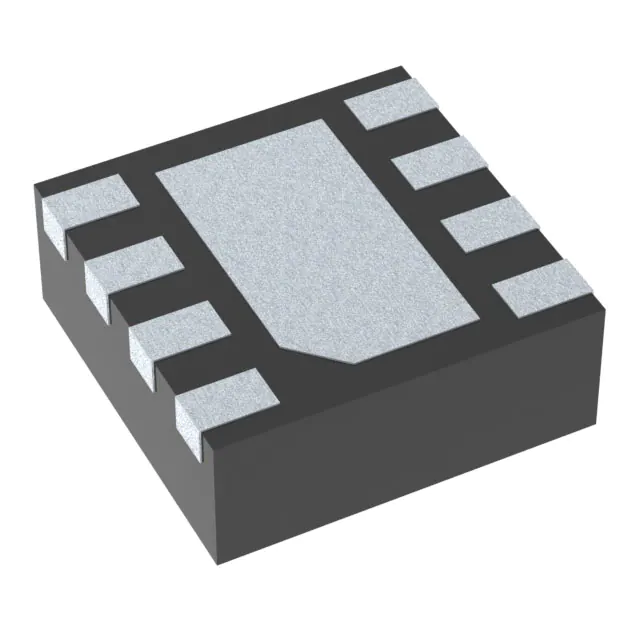
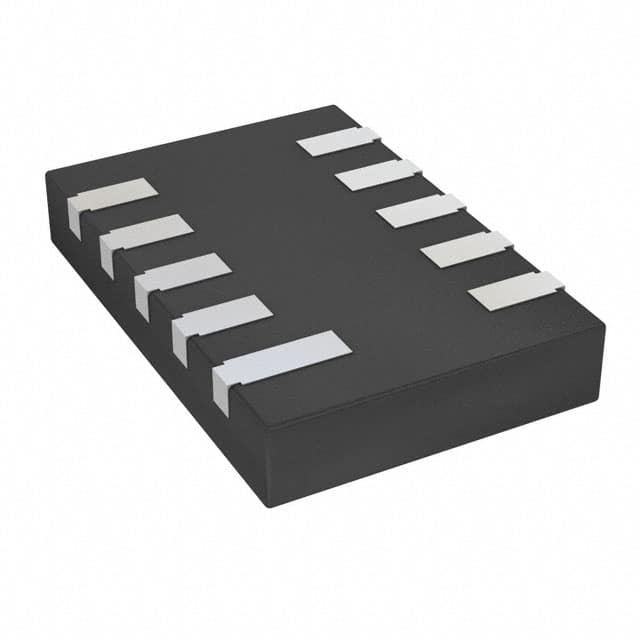
Texas Instruments BQ24304DSGT
- Part No.:
- BQ24304DSGT
- Manufacturer:
- Texas Instruments
- Category:
- Battery Management
- Package:
- 8-WFDFN Exposed Pad
- Datasheet:
-
 BQ24304DSGT.pdf
- Description:
- IC BATT PROTECTION LI-ION 8WSON
- Quantity:
- Payment:

- Shipping:

Inventory:3,684
Please send an inquiry. Send us your inquiry, and we will respond immediately.
Product details
Overview
BQ24304DSGT from Texas Instruments is a Li-ion battery front-end protection IC designed for low-power handheld devices. It provides simultaneous input overvoltage (10.5 V), input overcurrent (300 mA), and battery overvoltage (4.35 V) protection with 4.5 V regulated output, thermal shutdown, and enable control - all in an 8-pin 2 mm × 2 mm WSON package.
For engineers reviewing the BQ24304DSGT datasheet, BQ24304DSGT pinout, BQ24304DSGT application, or BQ24304DSGT equivalent, this device serves as a critical safety guard between AC adapters and Li-ion charging circuits - especially where compact size, fast transient immunity, and precise voltage clamping are required.
Technical Context
The BQ24304DSGT operates as a linear regulator with internal N-channel FET (Q1) between IN and OUT, delivering regulated 4.5 V output up to 250 mA while continuously monitoring VIN, IIN, and VBAT. Its protection logic includes deglitch timers (tDGL(PGOOD) = 8 ms, tDGL(BOVP) = 176 μs), blanking windows (tBLANK(OVP) = 64 μs, tBLANK(OCP) = 5 ms), and soft-start/soft-stop gate control to suppress inrush and ringing.
It supports optional reverse-polarity protection via external P-FET driven by PGATE (clamped at 15 V typical), features CE-active-low enable with internal 200 kΩ pull-down, and senses battery voltage through high-impedance VBAT pin (IVBAT = 10 nA) with 275 mV hysteresis on battery OVP.
Key Specifications
| Parameter | Value and Actual Design Meaning |
|---|---|
| Output Regulation Voltage | 4.5 V ±0.14 V - maintains stable 4.5 V supply to downstream charger ICs under varying input conditions. |
| Input Overvoltage Threshold | 10.5 V ±0.3 V - triggers protection against adapter surges while tolerating 100 μs transients via 64 μs blanking window. |
| Input Overcurrent Limit | 300 mA ±50 mA - limits fault current to safe level before disabling output after 5 ms blanking period. |
| Battery Overvoltage Threshold | 4.35 V ±0.05 V - shuts down output if Li-ion cell voltage exceeds safe charge termination, with 275 mV hysteresis. |
| Dropout Voltage | 75 mV max at 250 mA - ensures minimal power loss and efficient regulation even near input-output crossover. |
| Thermal Shutdown | 150 °C ±10 °C - disables output when die temperature exceeds safe operating limit, re-enabling at 130 °C. |
| Supply Current (Active) | 410–500 μA - ultra-low quiescent draw enables use in always-on battery-powered systems. |
Pinout & Package
Package: 2 mm × 2 mm, 8-pin WSON (DSG) with exposed thermal pad connected to VSS - requires PCB copper pad and thermal vias for reliable heat dissipation and EMI control.
| Pin/Terminal | Circuit Role | Design Meaning |
|---|---|---|
| 1 - IN | Power input | Accepts 3.3–26 V DC; requires ≥0.1 μF ceramic bypass capacitor to VSS for stability and surge suppression. |
| 2 - VSS | Ground reference | Main signal and power ground; electrically tied to exposed thermal pad - must be solidly connected to PCB ground plane. |
| 3 - PGATE | P-FET gate driver | Drives external P-channel MOSFET for reverse-polarity protection; clamped at 15 V to limit VGS stress. |
| 4, 7 - NC | No-connect | Internally unused; must remain unconnected per TI design guidelines to avoid parasitic coupling or test-mode activation. |
| 5 - CE | Chip enable | Active-low control with internal 200 kΩ pull-down; floating or grounded for permanent enable; driven high to disable output. |
| 6 - VBAT | Battery voltage sense | High-impedance input (10 nA bias) for Li-ion cell monitoring; requires 100–470 kΩ series resistor for fault isolation. |
| 8 - OUT | Regulated output | Delivers 4.5 V to downstream charger; requires ≥1 μF ceramic capacitor to VSS for transient response and decoupling. |
Key Features
| Feature | Design Value |
|---|---|
| Triple-protection architecture | Simultaneous real-time monitoring of input voltage, input current, and battery voltage - prevents cascading failure in Li-ion charging paths. |
| Transient-immune OVP/OCP | 64 μs OVP blanking and 5 ms OCP blanking prevent false triggering from ESD or cable-induced spikes without compromising safety. |
| Soft-start / soft-stop gate control | Gradual turn-on/turn-off of internal FET eliminates inrush current and output voltage overshoot during power transitions. |
| Optional reverse-polarity support | PGATE output enables robust −30 V input tolerance using external P-FET - critical for field-replaceable adapter interfaces. |
| Low-power standby mode | 95 μA max standby current (CE = high) extends battery life in host systems requiring persistent protection circuitry. |
Applications
| Bluetooth Headsets | Low-Power Handheld Devices |
|---|---|
Use Scenario: Compact wireless audio device powered by single-cell Li-ion and charged via micro-USB adapter. IC Role / Device Role / Timing Role: Front-end protector between adapter and bq24080 charger IC - regulates input to 4.5 V and blocks overvoltage/overcurrent events before reaching battery. Use Value: Prevents thermal runaway or cell damage from faulty wall adapters; enables use of cost-effective non-isolated chargers without sacrificing safety. |
Use Scenario: Portable medical sensor with USB-C charging and embedded fuel gauge. IC Role / Device Role / Timing Role: Safety supervisor that monitors VBAT during charging and enforces 4.35 V cutoff - independent of charger IC's internal BVOVP logic. Use Value: Adds redundant battery overvoltage protection layer, meeting IEC 62368-1 secondary protection requirements for portable Li-ion systems. |
| USB-Powered Wearables | Industrial Handheld Scanners |
Use Scenario: Fitness tracker with integrated USB charging and sleep-mode current <10 μA. IC Role / Device Role / Timing Role: Always-on protection element that remains active during host MCU deep-sleep - detects and blocks input faults without waking system. Use Value: Maintains system safety at ultra-low power; 95 μA standby current avoids depleting battery during weeks-long storage. |
Use Scenario: Rugged barcode scanner used in warehouse environments with frequent hot-plug AC adapter connections. IC Role / Device Role / Timing Role: Input interface guard that absorbs repeated 12 V transients and reverse-connection attempts via external P-FET driven by PGATE. Use Value: Eliminates need for discrete TVS diodes and reverse-blocking MOSFETs - reduces BOM count and PCB area in space-constrained designs. |
Equivalent & Alternatives
The following parts are listed as comparable options for similar Li-ion front-end protection applications.
| Alternative Part | Technical Difference | Application Difference | Selection Advice |
|---|---|---|---|
| BQ24300DSGT | 5.5 V output regulation; higher OVP threshold (10.5 V same), identical pinout and protection features. | Suitable for systems requiring higher regulated rail (e.g., powering 5 V LDOs or USB peripherals). | Select when downstream circuitry needs 5.5 V instead of 4.5 V - no layout change required. |
| BQ24305DSGT | 5.0 V output regulation; same package, timing, and protection thresholds except VO(REG) and BVOVP (4.35 V unchanged). | Used where charger IC or PMIC expects 5.0 V input (e.g., with bq24170 or TPS65023). | Choose for compatibility with 5 V-input charging solutions - shares footprint and enable logic with BQ24304DSGT. |
Compared with BQ24304DSGT, BQ24300DSGT delivers +1.0 V higher regulated output but same protection timing and thermal behavior, while BQ24305DSGT offers intermediate 5.0 V regulation - all three share identical pinout, package, and functional safety architecture for drop-in voltage-scaling flexibility.
Availability
BQ24304DSGT is available at Aetrix Electronics and suitable for Bluetooth headsets, low-power handheld devices, USB-powered wearables, industrial handheld scanners, and portable medical sensors requiring stable component supply across production lifecycles.
Supply support for BQ24304DSGT includes scheduled delivery planning, volume procurement assistance, BOM continuity management, traceable sourcing, and lifecycle availability coordination for OEM customers, industrial embedded developers, connected-device designers, and electronics production programs.
Manufacturer
Texas Instruments is a global semiconductor leader specializing in analog, embedded processing, and power management technologies - with decades of expertise in battery management and protection ICs.
The bq2430x family was engineered specifically for front-end safety in single-cell Li-ion charging systems - delivering integrated overvoltage, overcurrent, and battery overvoltage protection in miniature WSON packages for space-constrained portable electronics.
FAQ
What is the primary function of the BQ24304DSGT in a Li-ion charging system?
The BQ24304DSGT acts as a dedicated front-end protection IC placed between the AC adapter and the main charger IC (e.g., bq24080). It continuously monitors input voltage, input current, and battery voltage - regulating output to 4.5 V while disabling power delivery upon detection of overvoltage (10.5 V), overcurrent (300 mA), or battery overvoltage (4.35 V). Its role is purely protective and does not perform charging algorithm control.
Does the BQ24304DSGT require external components to operate, and which ones are mandatory?
Yes - the BQ24304DSGT requires three mandatory external components: a ≥0.1 μF ceramic capacitor from IN to VSS, a ≥1 μF ceramic capacitor from OUT to VSS, and a 100–470 kΩ resistor (RBAT) between VBAT and the Li-ion pack positive terminal. The RBAT resistor is critical for fault isolation; omitting it risks exposing the battery to up to 30 V during IC failure.
How does the BQ24304DSGT handle input voltage transients, and what is its immunity specification?
The BQ24304DSGT uses a 64 μs blanking window (tBLANK(OVP)) after detecting an overvoltage event - allowing brief transients (e.g., ≤100 ns spikes from cable inductance) to pass without triggering shutdown. It also achieves 15 kV ESD immunity on the IN pin per IEC 61000-4-2 (contact discharge) when bypassed with a 1.0 μF low-ESR ceramic capacitor, making it robust in real-world adapter plug/unplug scenarios.
Can the BQ24304DSGT be used without the VBAT connection, and what is the impact?
Yes - if battery overvoltage protection is not required, the VBAT pin must be connected directly to VSS (not left floating). Doing so disables the BVOVP function while preserving all other protections (OVP, OCP, thermal shutdown). Leaving VBAT unconnected violates the datasheet and may cause undefined behavior or reduced reliability due to internal node floating.
What is the thermal performance limit of the BQ24304DSGT, and how is thermal management implemented on PCB?
The BQ24304DSGT shuts down at 150 °C junction temperature (TJ(OFF)) and re-enables at 130 °C (150 °C – 20 °C hysteresis). To maintain safe operation, the exposed thermal pad must be soldered to a PCB copper area connected to the VSS plane via ≥6 thermal vias (0.3 mm diameter, 0.6 mm pitch). With this layout, RθJA is 75 °C/W - enabling continuous 250 mA operation at ambient ≤65 °C.
BQ24304DSGT Specifications
- Product attributes
- Attribute value
- Manufacturer:
- Texas Instruments
- Series:
- -
- Package/Case:
- 8-WFDFN Exposed Pad
- Packaging:
- Tape & Reel (TR)
- Product Status:
- Obsolete
- Function:
- Battery Protection
- Battery Chemistry:
- Lithium Ion
- Number of Cells:
- -
- Fault Protection:
- Over Current, Over Temperature, Over/Under Voltage
- Interface:
- -
- Operating Temperature:
- 0°C ~ 125°C (TJ)
- Grade:
- -
- Qualification:
- -
- Mounting Type:
- Surface Mount
- Supplier Device Package:
- 8-WSON (2x2)
BQ24304DSGT FAQ
1.How can I place an order for BQ24304DSGT through Aetrix?
Please submit a Request for Quotation (RFQ) for BQ24304DSGT on Aetrix. Our sales agent will provide a competitive quotation and guide you through the order confirmation once you accept the terms.
2.Are the price and stock information for BQ24304DSGT reliable?
The price and inventory of BQ24304DSGT are updated periodically and may fluctuate due to market conditions. Stock and pricing data are typically refreshed every 24 hours. Quotation validity for BQ24304DSGT is usually 5 days.
3.What payment methods are accepted for BQ24304DSGT?
We accept Wire Transfer, PayPal, Credit Card, Western Union, MoneyGram, and Escrow for BQ24304DSGT transactions.
Note: Certain payment methods may incur a processing fee.
4.How is shipping managed for BQ24304DSGT?
BQ24304DSGT orders can be shipped via leading logistics carriers, including DHL, UPS, FedEx, TNT, or Registered Mail.
Once your BQ24304DSGT order is processed, you will receive an email with the shipment details and tracking number.
Note: Tracking information may take up to 24 hours to appear. Express delivery typically takes 3–5 business days.
5.How can I obtain technical support or documentation for BQ24304DSGT?
For technical support, including BQ24304DSGT datasheets, pinout diagrams, or application guidance, please contact our engineering support team. They can provide detailed documentation and assistance for your BQ24304DSGT requirements.
6.How does Aetrix verify that BQ24304DSGT is sourced from the original manufacturer or authorized distributors?
All BQ24304DSGT products on Aetrix are procured from qualified distributors and authorized channels. Our dedicated quality assurance team conducts strict verification, including traceability checks and, if necessary, third-party testing. This ensures that BQ24304DSGT meets industry standards.
7.What is the process for return or replacement of BQ24304DSGT?
All BQ24304DSGT units undergo pre-shipment inspection (PSI). If there is an issue with BQ24304DSGT, returns or replacements are accepted under the following conditions:
1.Quantity discrepancies, incorrect items, or visible external defects (such as breakage or corrosion), acknowledged by Aetrix.
2.The issue is reported within 90 days of delivery.
3.The BQ24304DSGT part is unused and in its original packaging.
Return procedure for BQ24304DSGT:
1.Submit a request within 90 days.
2.Obtain a Return Material Authorization (RMA) from Aetrix.
BQ24304DSGT Tags
-
BQ29700DSER
Texas Instruments
-
S-8241ABKMC-GBKT2G
ABLIC Inc.
-
S-8241ABPMC-GBPT2G
ABLIC Inc.

-
BQ27427YZFR
Texas Instruments
-
BQ27426YZFR
Texas Instruments
-
STC3117IJT
STMicroelectronics
-
STC3115IJT
STMicroelectronics
-
BQ76925RGER
Texas Instruments
-
NPM1100-QDAA-R
Nordic Semiconductor ASA
-
BQ27441DRZR-G1A
Texas Instruments
-
STC3115AIQT
STMicroelectronics

-
S-8252AAL-M6T1U
ABLIC Inc.
Tech Hub

A practical engineering guide to 3.3V and 5V logic compatibility, input thresholds, resistor dividers, translator ICs, MOSFET level shifting, I2C pull-ups, timing limits and power-sequencing risks.

The 74HC595 uses push-pull logic outputs, while the TPIC6B595 uses 50 V open-drain DMOS sinks for higher-power loads. This guide compares timing, current limits, 3.3 V interfacing, load wiring, thermal…

The 74HC595 converts serial data into eight stable parallel outputs. This guide covers pin functions, shift and storage timing, OE and MR behavior, drive-current limits, cascading, voltage compatibilit…

A technical comparison of level-sensitive latches and edge-triggered flip-flops, covering timing windows, setup and hold limits, master–slave operation, time borrowing, race-through, HDL inference and…

A D latch stores one bit while Enable controls when data can pass. This reference covers gate-level operation, truth tables, transparency, setup and hold timing, LE versus OE, common ICs and practical …

An SR latch stores one bit through cross-coupled feedback. This engineering reference covers NOR and NAND implementations, truth tables, forbidden-state recovery, gated operation, switch debouncing, fa…

Latch circuits retain one bit through feedback. This technical reference covers SR and D latches, truth tables, transparency, timing limits, latch-versus-flip-flop behavior, applications and common log…

An engineering guide to LED driver operation, constant-current and constant-voltage outputs, linear and switching topologies, dimming, IC selection, calculations, replacement compatibility, and fault c…

Operational amplifier guide covering op amp basics, feedback, ideal vs real op amps, common configurations, buffer circuits, offset, bias current, gain-bandwidth, slew rate, rail-to-rail limits and sel…

Jumper cables guide covering safe connection order, red and black clamp placement, final ground connection, cable gauge, length, clamp quality, copper vs CCA cables, jump starter comparison and battery…


