
 My Inquiry
 My Account


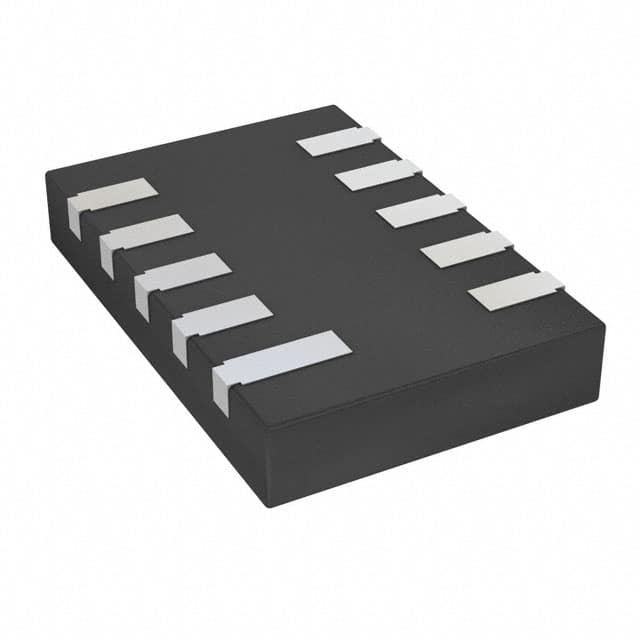
Texas Instruments BQ24770RUYT
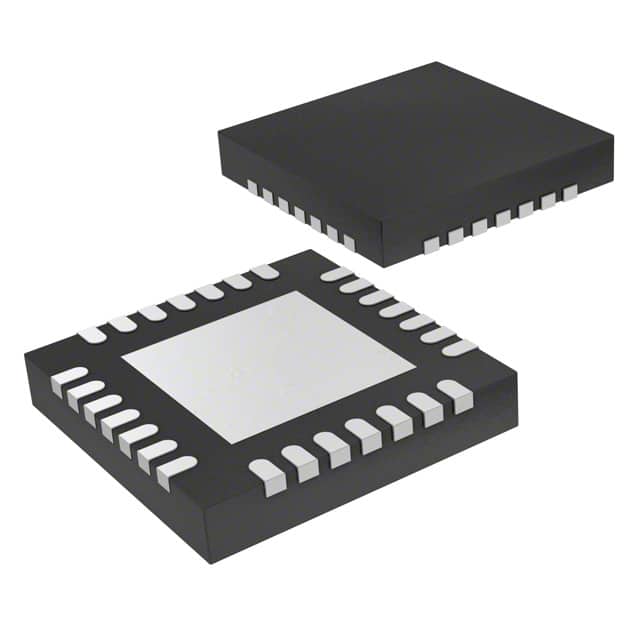
- Part No.:
- BQ24770RUYT
- Manufacturer:
- Texas Instruments
- Category:
- Battery Management
- Package:
- 28-WFQFN Exposed Pad
- Datasheet:
-
 BQ24770RUYT.pdf
- Description:
- IC BATT MFUNC MULTI-CHEM 28WQFN
- Quantity:
- Payment:

- Shipping:

Inventory:234
Please send an inquiry. Send us your inquiry, and we will respond immediately.
Product details
Overview
BQ24770RUYT from Texas Instruments is a host-controlled, SMBus-interface NVDC (Narrow Voltage DC) battery charge controller for 1S–4S Li-ion/Li-polymer systems with 4.5–24 V input range. It integrates NMOS ACFET/RBFET drivers, PMOS BATFET gate driver, and high-accuracy power/current monitoring (IADP, IBAT, PMON) for CPU thermal throttling via PROCHOT. It enables system instant-on without battery and supports supplement mode during adapter overload.
For engineers reviewing the BQ24770RUYT datasheet, BQ24770RUYT pinout, BQ24770RUYT application, or BQ24770RUYT equivalent, key selection criteria include ±0.5% charge voltage accuracy, ultra-fast 100 µs input current DPM response, 600 µA quiescent current in standby, programmable 600–1200 kHz switching frequency, and integrated system power monitoring for real-time CPU throttling coordination.
Technical Context
The BQ24770RUYT implements a synchronous buck-boost topology with independent control of NMOS ACFET/RBFET and external PMOS BATFET to enable NVDC architecture-regulating system voltage at battery level while maintaining minimum system voltage (programmable down to 1.024 V). Its dual-path power management allows battery to supplement adapter current during peak loads without system brownout.
It features three precision current-sense amplifiers: 40×/80× scalable gain for IADP (adapter current), 20× for IBAT charge / 8×/16× for discharge, and configurable PMON output proportional to total system power (adapter + battery). All monitors feed into a flexible PROCHOT profile with deglitching and 10-ms minimum pulse width.
Key Specifications
| Parameter | Value and Actual Design Meaning |
|---|---|
| Input Voltage Range | 4.5 V to 24 V - supports wide-range AC adapters and industrial DC supplies |
| Charge Voltage Accuracy | ±0.5% - ensures tight cell voltage regulation critical for Li-ion safety and cycle life |
| Input Current Regulation Accuracy | ±2% at 4.096 A - enables precise adapter current limiting to prevent wall-adapter overload |
| Quiescent Current (Standby) | 27 µA typical - meets Energy Star/ErP Lot 6 low-power requirements |
| Switching Frequency | 600–1200 kHz programmable - balances efficiency, EMI, and inductor size |
| PROCHOT Response Time | <100 µs - triggers immediate CPU throttling on overcurrent or overtemperature events |
| System Power Monitor Gain | 0.25 µA/W or 1 µA/W selectable - provides calibrated analog output for real-time power budgeting |
Pinout & Package
Package: 28-pin WQFN (RUY), 4.0 mm × 4.0 mm, 0.4 mm pitch, thermally enhanced exposed pad.
| Pin/Terminal | Circuit Role | Design Meaning |
|---|---|---|
| ACN / ACP | Differential input for adapter current sense resistor | Enables high-accuracy input current monitoring (IADP) with 40×/80× gain scaling |
| SRN / SRP | Differential input for battery charge/discharge current sense resistor | Supports bidirectional current sensing: 20× for charge, 8×/16× for discharge |
| BATDRV | P-channel BATFET gate driver output | Controls linear-mode regulation during battery depletion and fast-switching during charge/supplement |
| ACDRV | NMOS ACFET/RBFET charge pump driver | Provides 6 V gate drive above CMSRC to fully enhance external n-channel FETs |
| PMON / IADP / IBAT | Analog monitor outputs | Provide buffered, clamped (≤3.3 V), capacitor-limited (≤100 pF) analog signals for system-level power management |
| SCL / SDA | SMBus interface pins | Enable full configuration and real-time telemetry (voltage, current, status) via 7-bit address 0x12 |
| PROCHOT | Open-drain processor hot indicator | Asserts active-low signal directly to CPU upon violation of any programmed thermal/power threshold |
Key Features
| Feature | Design Value |
|---|---|
| Ultra-fast Input Current DPM | 100 µs response time prevents adapter overcurrent shutdown during transient load steps |
| Host-Controlled NVDC Architecture | Enables system operation with zero or deeply discharged battery while maintaining regulated SYS voltage |
| High-Accuracy System Power Monitoring | PMON output calibrated to ±5% accuracy across 19.5 V/65 W and 11 V/44 W operating points |
| Programmable Minimum System Voltage | 1.024 V to 19.2 V range with ±2–3% regulation accuracy ensures stable SoC operation under all battery states |
| Integrated FET Drivers | Drives external NMOS ACFET/RBFET and PMOS BATFET - eliminates need for discrete gate drivers and reduces BOM count |
Applications
| Ultrabook Power Management | Industrial Tablet Battery Control |
|---|---|
Use Scenario: Dual-input (adapter + battery) power path in fanless ultrabooks requiring instant-on, thermal-aware CPU throttling, and battery learn functionality. IC Role / Device Role / Timing Role: Primary NVDC charge controller managing system voltage regulation, adapter/battery current arbitration, and PROCHOT signaling to Intel PCH. Use Value: Enables >12-hour runtime with adaptive power budgeting and eliminates system hang during battery removal or deep discharge. |
Use Scenario: Ruggedized tablet used in field diagnostics with variable input sources (vehicle DC, USB-C PD, external adapter) and mission-critical uptime requirements. IC Role / Device Role / Timing Role: Central battery management unit providing input current DPM, battery state-of-charge monitoring, and fail-safe system power hold-up during input switchover. Use Value: Guarantees uninterrupted operation during hot-swap of power sources and prevents data loss during transient brownouts. |
| Medical Handheld Device | Detachable 2-in-1 Platform |
Use Scenario: Portable ultrasound or patient monitor requiring UL60601-compliant low-leakage standby, accurate battery fuel gauging, and rapid adapter detection. IC Role / Device Role / Timing Role: Safety-critical charge controller with OVP/OCP/FET short protection, <27 µA battery-off quiescent current, and automatic trickle-charge wake-up for gas gauge ICs. Use Value: Extends shelf life between charges and ensures reliable boot after long storage without manual reset. |
Use Scenario: Detachable keyboard design where system must remain powered during hinge separation, with seamless transition between battery-only and adapter-powered modes. IC Role / Device Role / Timing Role: Dual-role power manager handling both charging (when docked) and system power arbitration (during detachment) using BATFET linear regulation. Use Value: Eliminates reboot or display flicker during detach/attach cycles by maintaining stable SYS voltage through dynamic power path reconfiguration. |
Equivalent & Alternatives
The following parts are listed as comparable options for similar battery charge controller applications.
| Alternative Part | Technical Difference | Application Difference | Selection Advice |
|---|---|---|---|
| BQ24773RUYT | I²C interface (vs. SMBus), default 1.2 MHz switching, 2944 mA default input limit, device ID 0x41H | Requires I²C host support; higher base switching frequency suits smaller inductors but increases light-load losses | Select when host lacks SMBus controller but supports I²C, and system prioritizes compact magnetics over ultra-low quiescent current |
| BQ24780SRUYT | Includes integrated 32-V, 10-mΩ ACFET and 20-mΩ BATFET; adds battery temperature monitoring (TS pin); no RBFET driver | Reduces external FET count and PCB area; requires thermal sensor integration; lacks reverse-blocking FET for adapter isolation | Choose for cost-sensitive, space-constrained designs where integrated FETs offset BOM complexity and TS-based charge termination is required |
Compared with BQ24770RUYT, BQ24773RUYT offers interface flexibility at the cost of slightly higher standby current, while BQ24780SRUYT trades discrete FET control for integration and thermal awareness-making BQ24770RUYT optimal for designs requiring maximum configurability, ultra-low quiescent current, and full external FET autonomy.
Availability
BQ24770RUYT is available at Aetrix Electronics and suitable for ultrabook power management, industrial tablet battery control, and medical handheld device applications requiring stable component supply, long-term lifecycle support, and traceable sourcing.
Supply support for BQ24770RUYT includes scheduled delivery planning, volume procurement assistance, BOM continuity management, traceable sourcing, and lifecycle availability coordination for OEM customers, industrial embedded developers, connected-device designers, and electronics production programs.
Manufacturer
Texas Instruments is a global semiconductor leader delivering analog, embedded processing, and connectivity solutions for industrial, automotive, and personal electronics markets.
The BQ24770RUYT belongs to TI's bq247xx NVDC charge controller product line, engineered specifically for high-efficiency, host-managed battery charging in space-constrained portable computing platforms with stringent thermal and energy-efficiency requirements.
FAQ
What communication interface does the BQ24770RUYT use?
The BQ24770RUYT uses a standard SMBus 2.0 interface with fixed 7-bit address 0x12 (0x00010010). It supports full register read/write access for configuring charge parameters, reading real-time telemetry (IADP, IBAT, PMON), and monitoring status flags. Unlike the pin-compatible BQ24773RUYT, it does not support I²C protocol.
Does the BQ24770RUYT support battery learn mode?
Yes, the BQ24770RUYT supports battery learn mode to calibrate gas gauge ICs. When BATPRES transitions from LOW to HIGH (battery insertion), the device exits learn mode and disables charging until explicitly enabled via SMBus. This ensures safe initialization of fuel gauges before full-rate charging begins.
What is the minimum system voltage regulation range of the BQ24770RUYT?
The BQ24770RUYT supports programmable minimum system voltage regulation from 1.024 V to 19.2 V via register 0x3E. At 9.216 V setting, regulation accuracy is ±2%; at 6.144 V and 3.584 V settings, accuracy is ±3%. This enables stable SoC operation across diverse battery chemistries and system rail requirements.
How does the BQ24770RUYT handle adapter overvoltage protection?
The BQ24770RUYT includes an internal ACOVP comparator with rising threshold of 24–28 V and falling threshold of 22–27.5 V. Upon overvoltage detection, it disables ACDRV within 100 µs to turn off ACFET/RBFET and isolate the adapter, then asserts ACOK LOW. Recovery occurs after 3 ms deglitch delay once VCC falls below the falling threshold.
Can the BQ24770RUYT operate without a battery installed?
Yes, the BQ24770RUYT supports true system instant-on operation with no battery or deeply discharged battery. Its NVDC architecture regulates SYS directly from the adapter while maintaining minimum system voltage. The BATPRES pin detects battery presence, and the device remains in adapter-only mode until a valid battery is detected and charging is enabled via SMBus.
BQ24770RUYT Specifications
- Product attributes
- Attribute value
- Manufacturer:
- Texas Instruments
- Series:
- -
- Package/Case:
- 28-WFQFN Exposed Pad
- Packaging:
- Tape & Reel (TR)
- Product Status:
- Active
- Function:
- Multi-Function Controller
- Battery Chemistry:
- Multi-Chemistry
- Number of Cells:
- -
- Fault Protection:
- -
- Interface:
- SMBus
- Operating Temperature:
- -40°C ~ 85°C (TA)
- Grade:
- -
- Qualification:
- -
- Mounting Type:
- Surface Mount
- Supplier Device Package:
- 28-WQFN (4x4)
BQ24770RUYT FAQ
1.How can I place an order for BQ24770RUYT through Aetrix?
Please submit a Request for Quotation (RFQ) for BQ24770RUYT on Aetrix. Our sales agent will provide a competitive quotation and guide you through the order confirmation once you accept the terms.
2.Are the price and stock information for BQ24770RUYT reliable?
The price and inventory of BQ24770RUYT are updated periodically and may fluctuate due to market conditions. Stock and pricing data are typically refreshed every 24 hours. Quotation validity for BQ24770RUYT is usually 5 days.
3.What payment methods are accepted for BQ24770RUYT?
We accept Wire Transfer, PayPal, Credit Card, Western Union, MoneyGram, and Escrow for BQ24770RUYT transactions.
Note: Certain payment methods may incur a processing fee.
4.How is shipping managed for BQ24770RUYT?
BQ24770RUYT orders can be shipped via leading logistics carriers, including DHL, UPS, FedEx, TNT, or Registered Mail.
Once your BQ24770RUYT order is processed, you will receive an email with the shipment details and tracking number.
Note: Tracking information may take up to 24 hours to appear. Express delivery typically takes 3–5 business days.
5.How can I obtain technical support or documentation for BQ24770RUYT?
For technical support, including BQ24770RUYT datasheets, pinout diagrams, or application guidance, please contact our engineering support team. They can provide detailed documentation and assistance for your BQ24770RUYT requirements.
6.How does Aetrix verify that BQ24770RUYT is sourced from the original manufacturer or authorized distributors?
All BQ24770RUYT products on Aetrix are procured from qualified distributors and authorized channels. Our dedicated quality assurance team conducts strict verification, including traceability checks and, if necessary, third-party testing. This ensures that BQ24770RUYT meets industry standards.
7.What is the process for return or replacement of BQ24770RUYT?
All BQ24770RUYT units undergo pre-shipment inspection (PSI). If there is an issue with BQ24770RUYT, returns or replacements are accepted under the following conditions:
1.Quantity discrepancies, incorrect items, or visible external defects (such as breakage or corrosion), acknowledged by Aetrix.
2.The issue is reported within 90 days of delivery.
3.The BQ24770RUYT part is unused and in its original packaging.
Return procedure for BQ24770RUYT:
1.Submit a request within 90 days.
2.Obtain a Return Material Authorization (RMA) from Aetrix.
BQ24770RUYT Tags
-
BQ29700DSER
Texas Instruments
-
S-8241ABKMC-GBKT2G
ABLIC Inc.
-
S-8241ABPMC-GBPT2G
ABLIC Inc.

-
BQ27427YZFR
Texas Instruments
-
BQ27426YZFR
Texas Instruments
-
STC3117IJT
STMicroelectronics
-
STC3115IJT
STMicroelectronics
-
BQ76925RGER
Texas Instruments
-
NPM1100-QDAA-R
Nordic Semiconductor ASA
-
BQ27441DRZR-G1A
Texas Instruments
-
STC3115AIQT
STMicroelectronics

-
S-8252AAL-M6T1U
ABLIC Inc.
Tech Hub

A practical engineering guide to 3.3V and 5V logic compatibility, input thresholds, resistor dividers, translator ICs, MOSFET level shifting, I2C pull-ups, timing limits and power-sequencing risks.

The 74HC595 uses push-pull logic outputs, while the TPIC6B595 uses 50 V open-drain DMOS sinks for higher-power loads. This guide compares timing, current limits, 3.3 V interfacing, load wiring, thermal…

The 74HC595 converts serial data into eight stable parallel outputs. This guide covers pin functions, shift and storage timing, OE and MR behavior, drive-current limits, cascading, voltage compatibilit…

A technical comparison of level-sensitive latches and edge-triggered flip-flops, covering timing windows, setup and hold limits, master–slave operation, time borrowing, race-through, HDL inference and…

A D latch stores one bit while Enable controls when data can pass. This reference covers gate-level operation, truth tables, transparency, setup and hold timing, LE versus OE, common ICs and practical …

An SR latch stores one bit through cross-coupled feedback. This engineering reference covers NOR and NAND implementations, truth tables, forbidden-state recovery, gated operation, switch debouncing, fa…

Latch circuits retain one bit through feedback. This technical reference covers SR and D latches, truth tables, transparency, timing limits, latch-versus-flip-flop behavior, applications and common log…

An engineering guide to LED driver operation, constant-current and constant-voltage outputs, linear and switching topologies, dimming, IC selection, calculations, replacement compatibility, and fault c…

Operational amplifier guide covering op amp basics, feedback, ideal vs real op amps, common configurations, buffer circuits, offset, bias current, gain-bandwidth, slew rate, rail-to-rail limits and sel…

Jumper cables guide covering safe connection order, red and black clamp placement, final ground connection, cable gauge, length, clamp quality, copper vs CCA cables, jump starter comparison and battery…


