
 My Inquiry
 My Account


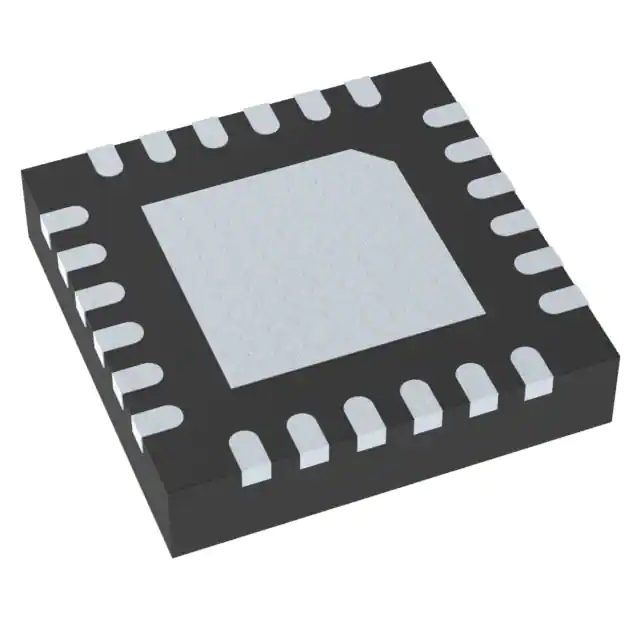
Texas Instruments BQ25883RGET
- Part No.:
- BQ25883RGET
- Manufacturer:
- Texas Instruments
- Category:
- Battery Chargers
- Package:
- 24-VFQFN Exposed Pad
- Datasheet:
-
 BQ25883RGET.pdf
- Description:
- IC BATT CHG LI-ION 2CELL 24VQFN
- Quantity:
- Payment:

- Shipping:

Inventory:238
Please send an inquiry. Send us your inquiry, and we will respond immediately.
Product details
Overview
BQ25883RGET from Texas Instruments is a 2-cell (2s) Li-ion battery charger IC with integrated power path management, USB On-The-Go (OTG) buck boost, and I²C control. It delivers 2-A charging current, supports 3.9–6.2 V USB input, regulates charge voltage up to 9.2 V ±0.5%, and enables instant-on system operation with deeply discharged or absent batteries - used in portable POS terminals and wireless security cameras.
For engineers reviewing the BQ25883RGET datasheet, BQ25883RGET pinout, BQ25883RGET application, or BQ25883RGET equivalent, key selection considerations include its 1.5 MHz boost-mode switching frequency, integrated 16-bit ADC for dual-cell voltage monitoring, NVDC power path architecture, and USB D+/D− auto-detection for SDP/CDP/DCP compliance.
Technical Context
The BQ25883RGET implements a synchronous boost-mode charger topology optimized for 2s Li-ion batteries, with independent regulation of charge voltage (6.8–9.2 V) and current (100–2200 mA). Its power path uses a 17 mΩ BATFET to enable simultaneous charging and system operation while maintaining narrow VDC (NVDC) behavior.
USB OTG functionality is realized via an internal buck converter delivering 4.5–5.5 V at up to 2 A with ±3% output voltage accuracy and CC regulation. Input current optimization (ICO) and JEITA-compliant thermistor-based temperature monitoring operate concurrently with I²C-configurable registers for full system-level control.
Key Specifications
| Parameter | Value and Actual Design Meaning |
|---|---|
| Charge Voltage Range | 6.8 V to 9.2 V - supports full 2s Li-ion stack (7.2 V nominal to 8.4 V fully charged) with ±0.5% regulation accuracy |
| Max Charge Current | 2.2 A - enables fast recharge of high-capacity 2s packs in portable industrial devices |
| Input Voltage Range | 3.9 V to 6.2 V - compatible with USB 2.0/3.0 hosts and standard wall adapters; 20 V absolute max rating protects against transients |
| Switching Frequency | 1.5 MHz (±15%) - allows use of compact 1 µH inductors and reduces EMI filtering requirements |
| OTG Output Range | 4.5 V to 5.5 V at up to 2 A - powers USB peripherals directly from battery with 94% efficiency at 5 V/1 A |
| ADC Resolution | 16-bit - measures bus voltage, SYS voltage, each cell voltage, charge/discharge current, NTC, and die temperature with sub-mV/mA precision |
| Thermal Regulation | 120 °C junction limit - dynamically throttles charge current to prevent thermal runaway during sustained high-power operation |
Pinout & Package
Package: VQFN-24 (4.0 mm × 4.0 mm, 0.5 mm pitch), thermally enhanced with exposed thermal pad.
| Pin/Terminal | Circuit Role | Design Meaning |
|---|---|---|
| D+, D− | USB data interface | Auto-detects USB host type (SDP/CDP/DCP) and enables data contact detection per BC1.2; requires no external USB ID resistor |
| STAT, /PG, /INT | Open-drain status outputs | STAT signals charge state (low = active); /PG indicates valid input source; /INT pulses 256 µs low on fault or status change |
| ILIM | Analog input for input current limit | Sets IINDPM from 500 mA to 3.3 A via resistor divider; voltage-regulated at 0.8 V for precise current programming |
| TS | Analog thermistor input | Connects to NTC thermistor; enables JEITA-compliant 5-zone battery temperature qualification (0°C to 60°C) for safe charge/discharge control |
| SW, BTST, REGN | Power switch node & gate drive supplies | SW connects to external inductor; BTST powers high-side driver via 47 nF bootstrap cap; REGN provides 4.8 V ±3% bias for internal MOSFET drivers |
| BAT, SYS, PMID, VBUS | Power domain connections | BAT: 2s battery terminal; SYS: regulated system rail; PMID: input blocking FET drain; VBUS: USB input supply - all support >10 µF local ceramic decoupling |
Key Features
| Feature | Design Value |
|---|---|
| Integrated Power Path with NVDC | Enables system boot without battery and maintains stable SYS voltage during battery depletion using internal 17 mΩ BATFET |
| USB OTG Buck Converter | Delivers regulated 4.5–5.5 V at up to 2 A from battery with ±3% voltage accuracy and short-circuit protection |
| I²C Programmable Registers | Allows real-time configuration of charge parameters, safety thresholds, JEITA zones, and OTG settings without hardware changes |
| 16-bit Precision ADC | Monitors VBUS, VSYS, VBAT (per cell), IBAT, IBUS, TS, and die temperature - eliminates need for external sensing components |
| Input Current Optimizer (ICO) | Automatically adjusts input current limit to maximize power extraction from weak USB sources without triggering undervoltage lockout |
Applications
| Bluetooth Speaker | EPOS Printer |
|---|---|
Use Scenario: Portable speaker with USB-C input, 2s Li-ion pack, and audio subsystem requiring uninterrupted power during charging. IC Role / Device Role / Timing Role: BQ25883RGET manages battery charging, powers audio SoC via SYS rail, and enables OTG mode to act as USB host for firmware updates. Use Value: Instant-on operation ensures speaker powers up even with dead battery; NVDC prevents audio dropouts during charge/discharge transitions. | Use Scenario: Battery-powered electronic point-of-sale printer supporting USB host mode for receipt printing and peripheral attachment. IC Role / Device Role / Timing Role: BQ25883RGET regulates 2s battery charging, supplies stable 7.6 V SYS rail to thermal print head driver, and powers USB peripherals via OTG buck output. Use Value: Integrated 16-bit ADC monitors cell voltages individually, preventing imbalance-induced capacity loss in multi-cycle deployments. |
| Portable POS Terminal | Wireless Security Camera |
Use Scenario: Handheld retail terminal with barcode scanner, touchscreen, and cellular modem - all powered from 2s battery and charged via USB. IC Role / Device Role / Timing Role: BQ25883RGET handles USB input detection, charges battery at 2 A, maintains SYS voltage during modem transmit bursts, and enables OTG for peripheral docking. Use Value: 1.5 MHz switching minimizes inductor size and layout area - critical for slim handheld form factors with tight EMI constraints. | Use Scenario: Outdoor IP camera with motion-triggered recording, Wi-Fi connectivity, and solar-assisted USB charging. IC Role / Device Role / Timing Role: BQ25883RGET accepts variable USB input (e.g., solar charge controller), regulates 2s battery charge with JEITA thermal profiling, and powers Wi-Fi SoC via SYS rail. Use Value: Input current optimizer (ICO) maximizes energy harvest from low-current solar sources by dynamically adjusting IINDPM without adapter overloading. |
Equivalent & Alternatives
The following parts are listed as comparable options for similar battery charger applications.
| Alternative Part | Technical Difference | Application Difference | Selection Advice |
|---|---|---|---|
| BQ25882RGET | Same 2s boost charger architecture but lacks integrated 16-bit ADC and has WCSP-25 package (2.1 × 2.1 mm) | Lower component count where cell-level voltage monitoring is not required; smaller footprint but less thermal mass | Select BQ25882RGET when system-level telemetry is handled externally and board space is constrained |
| BQ25887RGET | Includes cell balancing circuitry and same VQFN-24 package; no OTG buck capability; standalone control (no I²C) | Targeted at 2s battery packs requiring passive balancing but no host-controlled USB OTG functionality | Choose BQ25887RGET only if cell balancing is mandatory and I²C configurability is unnecessary |
Compared with BQ25882RGET and BQ25887RGET, the BQ25883RGET uniquely combines full I²C programmability, integrated 16-bit ADC, and bidirectional USB OTG buck - making it optimal for feature-rich portable systems needing real-time battery health monitoring and peripheral hosting.
Availability
BQ25883RGET is available at Aetrix Electronics and suitable for portable POS terminals, wireless security cameras, Bluetooth speakers, and EPOS printers requiring stable component supply across production lifecycles.
Supply support for BQ25883RGET includes scheduled delivery planning, volume procurement assistance, BOM continuity management, traceable sourcing, and lifecycle availability coordination for OEM customers, industrial embedded developers, connected-device designers, and electronics production programs.
Manufacturer
Texas Instruments is a global semiconductor leader specializing in analog, embedded processing, and power management technologies with over 90 years of innovation in high-reliability IC design.
The BQ25883RGET belongs to TI's battery management IC portfolio, engineered specifically for space-constrained, USB-powered 2s Li-ion applications demanding high integration, thermal safety, and host-controllable power path behavior.
FAQ
What is the maximum supported battery voltage for the BQ25883RGET?
The BQ25883RGET supports a maximum charge voltage of 9.2 V with ±0.5% regulation accuracy, designed explicitly for 2-cell Li-ion or Li-polymer batteries (nominal 7.2 V, fully charged 8.4 V). It includes battery overvoltage protection that triggers at 104% of the programmed VREG, ensuring safe operation even under transient conditions. This specification is confirmed in Section 7.5 of the SLUSDL3A datasheet.
Does the BQ25883RGET support USB Type-C input detection?
The BQ25883RGET does not implement native USB Type-C CC logic or PD negotiation; it relies on D+/D− line detection per USB BC1.2 to identify SDP, CDP, and DCP sources. When paired with a Type-C-to-USB-A adapter or legacy port, it correctly identifies the source type and configures input current limits accordingly. For full USB-C PD compatibility, an external PD controller must be used alongside the BQ25883RGET.
How does the BQ25883RGET handle battery temperature monitoring during OTG mode?
During OTG buck operation, the BQ25883RGET continues monitoring the TS pin using cold/hot thermistor comparators (VBHOT0/VBCOLD0 thresholds) to suspend OTG output if battery temperature exceeds JEITA-defined safe limits. This dual-mode thermal supervision - active in both charge and discharge - ensures consistent safety compliance regardless of power flow direction, as detailed in Sections 7.5 and 8.3 of the datasheet.
Can the BQ25883RGET operate without an I²C host controller?
Yes, the BQ25883RGET can operate in standalone mode using default register values: charge voltage defaults to 8.4 V, charge current to 500 mA, and OTG output to 5.0 V. However, full functionality - including input current limit adjustment, JEITA zone reconfiguration, ADC readback, and fault logging - requires I²C communication. The CE pin allows hardware enable/disable of charging independent of I²C.
What is the purpose of the PMID pin on the BQ25883RGET?
The PMID pin on the BQ25883RGET connects to the drain of the internal input blocking MOSFET (Q1), enabling reverse-current protection and isolation between VBUS and the system rail. It requires ≥10 µF low-ESR capacitance (split between VBUS and PMID) to stabilize input ripple during high-frequency switching. Unlike a simple bypass node, PMID serves as the controlled power entry point into the device's internal power domains.
BQ25883RGET Specifications
- Product attributes
- Attribute value
- Manufacturer:
- Texas Instruments
- Series:
- -
- Package/Case:
- 24-VFQFN Exposed Pad
- Packaging:
- Tape & Reel (TR)
- Product Status:
- Active
- Battery Chemistry:
- Lithium Ion/Polymer
- Number of Cells:
- 2
- Current - Charging:
- Constant
- Programmable Features:
- Current
- Fault Protection:
- Over Current, Over Temperature, Over Voltage, Short Circuit
- Charge Current - Max:
- 2.2A
- Battery Pack Voltage:
- 9.2V (Max)
- Voltage - Supply (Max):
- 6.2V
- Interface:
- I2C, USB
- Operating Temperature:
- -40°C ~ 85°C (TA)
- Grade:
- -
- Qualification:
- -
- Mounting Type:
- Surface Mount
- Supplier Device Package:
- 24-VQFN (4x4)
BQ25883RGET FAQ
1.How can I place an order for BQ25883RGET through Aetrix?
Please submit a Request for Quotation (RFQ) for BQ25883RGET on Aetrix. Our sales agent will provide a competitive quotation and guide you through the order confirmation once you accept the terms.
2.Are the price and stock information for BQ25883RGET reliable?
The price and inventory of BQ25883RGET are updated periodically and may fluctuate due to market conditions. Stock and pricing data are typically refreshed every 24 hours. Quotation validity for BQ25883RGET is usually 5 days.
3.What payment methods are accepted for BQ25883RGET?
We accept Wire Transfer, PayPal, Credit Card, Western Union, MoneyGram, and Escrow for BQ25883RGET transactions.
Note: Certain payment methods may incur a processing fee.
4.How is shipping managed for BQ25883RGET?
BQ25883RGET orders can be shipped via leading logistics carriers, including DHL, UPS, FedEx, TNT, or Registered Mail.
Once your BQ25883RGET order is processed, you will receive an email with the shipment details and tracking number.
Note: Tracking information may take up to 24 hours to appear. Express delivery typically takes 3–5 business days.
5.How can I obtain technical support or documentation for BQ25883RGET?
For technical support, including BQ25883RGET datasheets, pinout diagrams, or application guidance, please contact our engineering support team. They can provide detailed documentation and assistance for your BQ25883RGET requirements.
6.How does Aetrix verify that BQ25883RGET is sourced from the original manufacturer or authorized distributors?
All BQ25883RGET products on Aetrix are procured from qualified distributors and authorized channels. Our dedicated quality assurance team conducts strict verification, including traceability checks and, if necessary, third-party testing. This ensures that BQ25883RGET meets industry standards.
7.What is the process for return or replacement of BQ25883RGET?
All BQ25883RGET units undergo pre-shipment inspection (PSI). If there is an issue with BQ25883RGET, returns or replacements are accepted under the following conditions:
1.Quantity discrepancies, incorrect items, or visible external defects (such as breakage or corrosion), acknowledged by Aetrix.
2.The issue is reported within 90 days of delivery.
3.The BQ25883RGET part is unused and in its original packaging.
Return procedure for BQ25883RGET:
1.Submit a request within 90 days.
2.Obtain a Return Material Authorization (RMA) from Aetrix.
BQ25883RGET Tags

-
BQ21040DBVR
Texas Instruments

-
MCP73812T-420I/OT
Microchip Technology
-
MCP73831T-2ACI/OT
Microchip Technology
-
MCP73832T-2ACI/OT
Microchip Technology
-
MCP73831T-2DCI/OT
Microchip Technology
-
MCP73832T-2DCI/OT
Microchip Technology
-
MCP73831T-2ATI/OT
Microchip Technology
-
MCP73832T-2ATI/OT
Microchip Technology
-
MCP73831T-5ACI/OT
Microchip Technology
-
MCP73832T-2ACI/MC
Microchip Technology
-
MCP73831T-2ACI/MC
Microchip Technology
-
MCP73831T-2ATI/MC
Microchip Technology
Tech Hub

A practical engineering guide to 3.3V and 5V logic compatibility, input thresholds, resistor dividers, translator ICs, MOSFET level shifting, I2C pull-ups, timing limits and power-sequencing risks.

The 74HC595 uses push-pull logic outputs, while the TPIC6B595 uses 50 V open-drain DMOS sinks for higher-power loads. This guide compares timing, current limits, 3.3 V interfacing, load wiring, thermal…

The 74HC595 converts serial data into eight stable parallel outputs. This guide covers pin functions, shift and storage timing, OE and MR behavior, drive-current limits, cascading, voltage compatibilit…

A technical comparison of level-sensitive latches and edge-triggered flip-flops, covering timing windows, setup and hold limits, master–slave operation, time borrowing, race-through, HDL inference and…

A D latch stores one bit while Enable controls when data can pass. This reference covers gate-level operation, truth tables, transparency, setup and hold timing, LE versus OE, common ICs and practical …

An SR latch stores one bit through cross-coupled feedback. This engineering reference covers NOR and NAND implementations, truth tables, forbidden-state recovery, gated operation, switch debouncing, fa…

Latch circuits retain one bit through feedback. This technical reference covers SR and D latches, truth tables, transparency, timing limits, latch-versus-flip-flop behavior, applications and common log…

An engineering guide to LED driver operation, constant-current and constant-voltage outputs, linear and switching topologies, dimming, IC selection, calculations, replacement compatibility, and fault c…

Operational amplifier guide covering op amp basics, feedback, ideal vs real op amps, common configurations, buffer circuits, offset, bias current, gain-bandwidth, slew rate, rail-to-rail limits and sel…

Jumper cables guide covering safe connection order, red and black clamp placement, final ground connection, cable gauge, length, clamp quality, copper vs CCA cables, jump starter comparison and battery…


