
 My Inquiry
 My Account


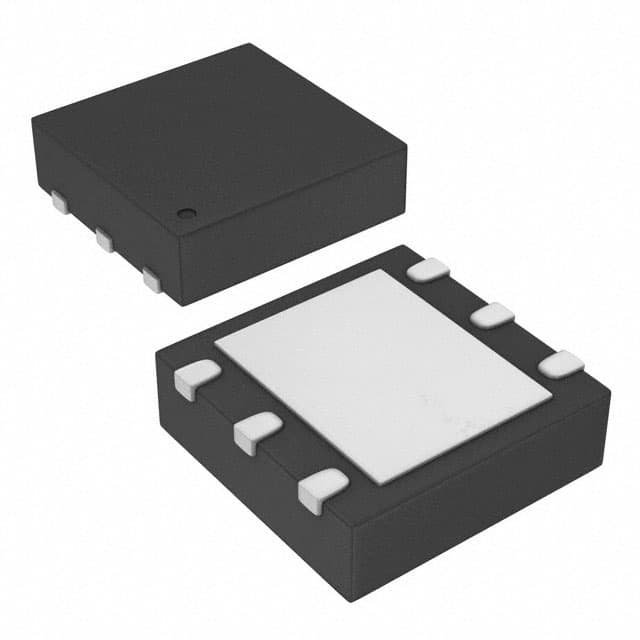
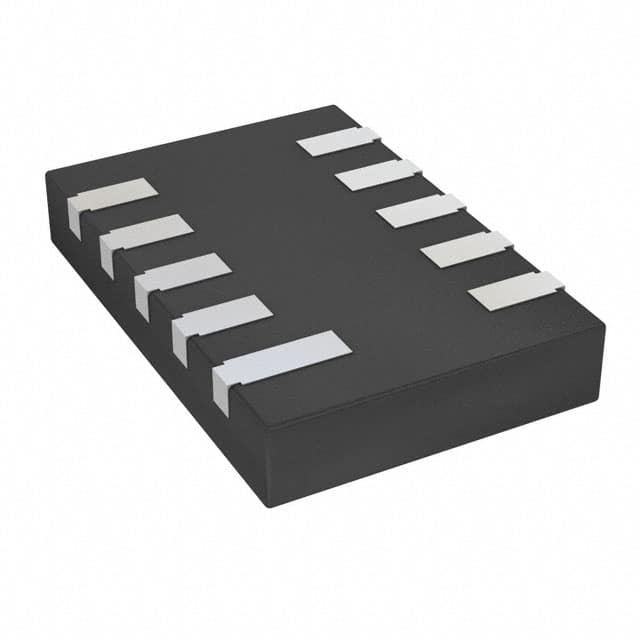
Texas Instruments BQ26100DRPR
- Part No.:
- BQ26100DRPR
- Manufacturer:
- Texas Instruments
- Category:
- Battery Management
- Package:
- 6-VDFN Exposed Pad
- Datasheet:
-
 BQ26100DRPR.pdf
- Description:
- IC BATT AUTHORIZATION 6VSON
- Quantity:
- Payment:

- Shipping:

Inventory:6,000
Please send an inquiry. Send us your inquiry, and we will respond immediately.
Product details
Overview
BQ26100DRPR from Texas Instruments is a SHA-1/HMAC-based security and authentication IC for battery pack validation, featuring 160-byte one-time programmable (OTP) memory, 16-byte EEPROM, internal time-base (no external crystal required), single-wire SDQ interface, and bus-powered operation. It enables secure host-side authentication of authorized battery packs in portable electronics.
For engineers reviewing the BQ26100DRPR datasheet, BQ26100DRPR pinout, BQ26100DRPR application, or BQ26100DRPR equivalent, key selection considerations include SDQ bus timing compliance (5 kbits/s), OTP/EPPROM memory partitioning, HMAC digest generation latency, sleep current (8 μA typical), and VSON-6 package thermal performance (RθJA = 51.7°C/W).
Technical Context
The BQ26100DRPR implements FIPS 180-2–compliant SHA-1 hashing within a keyed-HMAC construction using a unique 128-bit device key stored across two lockable 64-bit OTP segments. Authentication requires host-initiated challenge transmission and returns a 160-bit digest computed as H[KD || H(KD || M)].
It operates via a parasitic power architecture: energy is harvested from the SDQ bus line through an external capacitor connected to the PWR pin, eliminating need for dedicated VDD. Communication uses a deterministic 1-wire SDQ protocol with automatic arbitration, 64-bit unique ID (family code 0x09), and CRC-8 (polynomial x⁸+x⁵+x⁴+1) for data integrity.
Key Specifications
| Parameter | Value and Actual Design Meaning |
|---|---|
| Authentication Engine | SHA-1/HMAC core compliant with FIPS 180-2; computes 160-bit digest from 128-bit key + host challenge |
| Memory | 160-byte OTP (5 × 32-byte pages) + 16-byte EEPROM; OTP requires 7-V programming pulse; EEPROM supports field rewrites |
| Interface | Single-wire SDQ at 5 kbits/s; includes reset, presence detect, bit timing, and CRC-8 error checking |
| Power Architecture | Bus-powered via SDQ line; external 0.1 μF capacitor on PWR pin enables parasitic operation-no VDD supply needed |
| Current Consumption | Sleep mode: 8 μA typical; Active mode (non-authenticating): <50 μA; Peak programming current: 83 μA |
| Operating Range | –40°C to +85°C ambient; SDQ pull-up voltage 2.5 V to 5.0 V; Absolute max SDQ voltage: 7.7 V |
| Package | VSON-6 (DRP), 3.0 mm × 3.0 mm body, 0.5-mm pitch, exposed thermal pad |
Pinout & Package
6-pin VSON (DRP) package with 3.0 mm × 3.0 mm body, 0.5-mm lead pitch, and exposed thermal pad for enhanced thermal dissipation (RθJB = 24.9°C/W). Pin 1 is PWR; Pin 6 is SDQ; Pins 2–5 are VSS (ground) - four dedicated ground terminals improve noise immunity and power integrity in battery-pack environments.
| Pin/Terminal | Circuit Role | Design Meaning |
|---|---|---|
| PWR (Pin 1) | Power capacitor connection | Connects external 0.1 μF capacitor to harvest and store energy from SDQ bus for parasitic operation |
| SDQ (Pin 6) | Single-wire bidirectional interface | Carries reset, presence detect, data, clock, and power; supports multi-drop topology with 64-bit addressing |
| VSS (Pins 2, 3, 4, 5) | Ground reference | Four independent ground connections reduce impedance, suppress noise coupling, and stabilize SDQ signal integrity |
Key Features
| Feature | Design Value |
|---|---|
| SHA-1/HMAC authentication | Enables cryptographically secure battery pack validation using device-specific 128-bit key split across two independently lockable OTP segments |
| OTP page locking | Per-page write-protection (PAGE0–PAGE4 bits) prevents accidental overwrites after factory programming; LOCKK0/LOCKK1 permanently secure key halves |
| Page redirection capability | Host-configurable 1's-complement pointers (addresses 0x0001–0x0005) allow recovery from OTP corruption by remapping reads/writes to alternate pages |
| Bus-powered SDQ interface | Eliminates need for separate power rail-reduces BOM count and PCB footprint in space-constrained battery modules |
| Low-power sleep mode | 8 μA typical quiescent current extends battery shelf life and minimizes self-discharge impact during storage |
Applications
| Cellular Phone Battery Authentication | PDA / Smartphone Accessory Validation |
|---|---|
Use Scenario: Host processor authenticates removable Li-ion battery pack before enabling charging or power delivery. IC Role / Device Role / Timing Role: BQ26100DRPR acts as tamper-resistant identity token; responds to host challenge with HMAC digest within defined SDQ timing windows (tSLOT = 60–120 μs). Use Value: Prevents use of counterfeit batteries by validating cryptographic signature against factory-programmed secret key-no software stack modification required on host side. | Use Scenario: Tablet or PDA verifies authenticity of third-party stylus or keyboard dock before enabling accessory features. IC Role / Device Role / Timing Role: BQ26100DRPR serves as secure credential store; communicates via SDQ bus shared with other accessories, using 64-bit ROM ID for arbitration. Use Value: Enables OEM-controlled accessory ecosystem without adding MCU or firmware overhead-authentication occurs in hardware with <50 μA active current. |
| MP3 Player Battery Pack Security | Digital Camera Power Module Authentication |
Use Scenario: Portable audio player validates OEM battery before permitting fast-charge protocols or full system boot. IC Role / Device Role / Timing Role: BQ26100DRPR resides inside battery pack housing; powers from SDQ line only-no internal battery tap required. Use Value: Reduces bill-of-materials by eliminating discrete LDO and decoupling capacitors; 3.0 mm × 3.0 mm VSON package fits tight battery cavity constraints. | Use Scenario: DSLR or mirrorless camera confirms genuine extended-grip battery module before enabling high-current video recording mode. IC Role / Device Role / Timing Role: BQ26100DRPR provides secure handshake during hot-plug detection; uses EEPROM (0x0000–0x000F) to store runtime parameters like cycle count or temperature history. Use Value: Supports field-updatable battery metadata without OTP reprogramming-EEPROM writes require no external HV supply and complete in ≤50 ms. |
Equivalent & Alternatives
The following parts are listed as comparable options for similar battery authentication applications.
| Alternative Part | Technical Difference | Application Difference | Selection Advice |
|---|---|---|---|
| BQ26200DRPR | Same VSON-6 package and SDQ interface; adds 256-byte OTP and integrated temperature sensor (±2°C accuracy) | Required when battery pack design mandates thermal monitoring alongside authentication | Select BQ26200DRPR if temperature telemetry is needed; otherwise BQ26100DRPR offers lower cost and identical security core |
| DS2432+T&R | Maxim 1-Wire EEPROM with SHA-1 engine; 1024-bit EEPROM + 512-bit OTP; TO-92 and TDFN packages; no internal oscillator | Requires external crystal for time-base; different command set and memory map; not pin-compatible | Choose DS2432+T&R only if legacy 1-Wire infrastructure exists; BQ26100DRPR provides superior integration with TI battery management ecosystems |
Compared with BQ26200DRPR, the BQ26100DRPR omits temperature sensing but reduces OTP size and cost-ideal for cost-sensitive authentication-only use cases. Against DS2432+T&R, it delivers tighter SDQ timing control, lower sleep current, and eliminates external crystal dependency.
Availability
BQ26100DRPR is available at Aetrix Electronics and suitable for cellular phone battery authentication, PDA accessory validation, MP3 player security, digital camera power modules, and handheld device OEM programs requiring stable component supply and long-term lifecycle support.
Supply support for BQ26100DRPR includes scheduled delivery planning, volume procurement assistance, BOM continuity management, traceable sourcing, and lifecycle availability coordination for OEM customers, industrial embedded developers, connected-device designers, and electronics production programs.
Manufacturer
Texas Instruments is a global semiconductor company specializing in analog, embedded processing, and connectivity technologies, with leadership in power management and battery solutions.
The BQ26100DRPR belongs to TI's battery authentication IC product line, designed specifically to enable secure, low-cost, and space-efficient validation of removable battery packs and accessories in consumer portable electronics.
FAQ
What is the primary function of the BQ26100DRPR in battery pack designs?
The BQ26100DRPR serves as a secure authentication token embedded inside battery packs. It uses a hardware SHA-1/HMAC engine and a unique 128-bit device key to generate cryptographically verifiable responses to host challenges-ensuring only authorized, OEM-manufactured packs operate with the host system. Its bus-powered SDQ interface and VSON-6 footprint make it ideal for compact, cost-sensitive battery modules where BOM reduction is critical.
Does the BQ26100DRPR require an external power supply or crystal oscillator?
No, the BQ26100DRPR does not require either. It derives all operating power parasitically from the SDQ bus line via an external 0.1 μF capacitor connected to the PWR pin. Its internal time-base eliminates the need for an external crystal oscillator-simplifying design, reducing component count, and improving reliability in space-constrained battery applications.
How is memory organized in the BQ26100DRPR, and what are the programming requirements?
The BQ26100DRPR contains 160 bytes of one-time programmable (OTP) memory (five 32-byte pages) and 16 bytes of EEPROM. OTP programming requires a 7-V pulse applied to the SDQ line after data write; each OTP page can be individually locked. EEPROM programming uses standard SDQ commands and internal charge-pump voltage generation-no external HV supply needed-and supports multiple rewrites with ≤50 ms write time per byte.
What are the key timing parameters for reliable SDQ communication with the BQ26100DRPR?
Reliable SDQ communication with the BQ26100DRPR requires adherence to tRSTL/tRSTH ≥ 480 μs (reset low/high), tSLOT = 60–120 μs (bit window), tLOW0 = 60–120 μs (host zero), and tRDV = exactly 15 μs (data valid delay). The device also enforces tREC = 1 μs recovery time and uses CRC-8 (polynomial x⁸+x⁵+x⁴+1) for frame-level error detection-critical for robust operation in noisy battery-pack environments.
Can the BQ26100DRPR support multiple devices on the same SDQ bus, and how is device addressing handled?
Yes, the BQ26100DRPR supports multi-drop SDQ bus configurations. Each device has a unique 64-bit ROM ID composed of an 8-bit family code (0x09), 48-bit random value, and 8-bit CRC. Hosts use ROM function commands-including Match ID, Skip ID, Read ID, and Search ID-to identify, select, and communicate with individual devices. The Search ID command enables automatic enumeration of all devices on the bus without prior knowledge of their IDs.
BQ26100DRPR Specifications
- Product attributes
- Attribute value
- Manufacturer:
- Texas Instruments
- Series:
- -
- Package/Case:
- 6-VDFN Exposed Pad
- Packaging:
- Tape & Reel (TR)
- Product Status:
- Active
- Function:
- Battery Authorization
- Battery Chemistry:
- -
- Number of Cells:
- -
- Fault Protection:
- -
- Interface:
- SDQ
- Operating Temperature:
- -40°C ~ 85°C (TA)
- Grade:
- -
- Qualification:
- -
- Mounting Type:
- Surface Mount
- Supplier Device Package:
- 6-VSON (3x3)
BQ26100DRPR FAQ
1.How can I place an order for BQ26100DRPR through Aetrix?
Please submit a Request for Quotation (RFQ) for BQ26100DRPR on Aetrix. Our sales agent will provide a competitive quotation and guide you through the order confirmation once you accept the terms.
2.Are the price and stock information for BQ26100DRPR reliable?
The price and inventory of BQ26100DRPR are updated periodically and may fluctuate due to market conditions. Stock and pricing data are typically refreshed every 24 hours. Quotation validity for BQ26100DRPR is usually 5 days.
3.What payment methods are accepted for BQ26100DRPR?
We accept Wire Transfer, PayPal, Credit Card, Western Union, MoneyGram, and Escrow for BQ26100DRPR transactions.
Note: Certain payment methods may incur a processing fee.
4.How is shipping managed for BQ26100DRPR?
BQ26100DRPR orders can be shipped via leading logistics carriers, including DHL, UPS, FedEx, TNT, or Registered Mail.
Once your BQ26100DRPR order is processed, you will receive an email with the shipment details and tracking number.
Note: Tracking information may take up to 24 hours to appear. Express delivery typically takes 3–5 business days.
5.How can I obtain technical support or documentation for BQ26100DRPR?
For technical support, including BQ26100DRPR datasheets, pinout diagrams, or application guidance, please contact our engineering support team. They can provide detailed documentation and assistance for your BQ26100DRPR requirements.
6.How does Aetrix verify that BQ26100DRPR is sourced from the original manufacturer or authorized distributors?
All BQ26100DRPR products on Aetrix are procured from qualified distributors and authorized channels. Our dedicated quality assurance team conducts strict verification, including traceability checks and, if necessary, third-party testing. This ensures that BQ26100DRPR meets industry standards.
7.What is the process for return or replacement of BQ26100DRPR?
All BQ26100DRPR units undergo pre-shipment inspection (PSI). If there is an issue with BQ26100DRPR, returns or replacements are accepted under the following conditions:
1.Quantity discrepancies, incorrect items, or visible external defects (such as breakage or corrosion), acknowledged by Aetrix.
2.The issue is reported within 90 days of delivery.
3.The BQ26100DRPR part is unused and in its original packaging.
Return procedure for BQ26100DRPR:
1.Submit a request within 90 days.
2.Obtain a Return Material Authorization (RMA) from Aetrix.
BQ26100DRPR Tags
-
BQ29700DSER
Texas Instruments
-
S-8241ABKMC-GBKT2G
ABLIC Inc.
-
S-8241ABPMC-GBPT2G
ABLIC Inc.

-
BQ27427YZFR
Texas Instruments
-
BQ27426YZFR
Texas Instruments
-
STC3117IJT
STMicroelectronics
-
STC3115IJT
STMicroelectronics
-
BQ76925RGER
Texas Instruments
-
NPM1100-QDAA-R
Nordic Semiconductor ASA
-
BQ27441DRZR-G1A
Texas Instruments
-
STC3115AIQT
STMicroelectronics

-
S-8252AAL-M6T1U
ABLIC Inc.
Tech Hub

A practical engineering guide to 3.3V and 5V logic compatibility, input thresholds, resistor dividers, translator ICs, MOSFET level shifting, I2C pull-ups, timing limits and power-sequencing risks.

The 74HC595 uses push-pull logic outputs, while the TPIC6B595 uses 50 V open-drain DMOS sinks for higher-power loads. This guide compares timing, current limits, 3.3 V interfacing, load wiring, thermal…

The 74HC595 converts serial data into eight stable parallel outputs. This guide covers pin functions, shift and storage timing, OE and MR behavior, drive-current limits, cascading, voltage compatibilit…

A technical comparison of level-sensitive latches and edge-triggered flip-flops, covering timing windows, setup and hold limits, master–slave operation, time borrowing, race-through, HDL inference and…

A D latch stores one bit while Enable controls when data can pass. This reference covers gate-level operation, truth tables, transparency, setup and hold timing, LE versus OE, common ICs and practical …

An SR latch stores one bit through cross-coupled feedback. This engineering reference covers NOR and NAND implementations, truth tables, forbidden-state recovery, gated operation, switch debouncing, fa…

Latch circuits retain one bit through feedback. This technical reference covers SR and D latches, truth tables, transparency, timing limits, latch-versus-flip-flop behavior, applications and common log…

An engineering guide to LED driver operation, constant-current and constant-voltage outputs, linear and switching topologies, dimming, IC selection, calculations, replacement compatibility, and fault c…

Operational amplifier guide covering op amp basics, feedback, ideal vs real op amps, common configurations, buffer circuits, offset, bias current, gain-bandwidth, slew rate, rail-to-rail limits and sel…

Jumper cables guide covering safe connection order, red and black clamp placement, final ground connection, cable gauge, length, clamp quality, copper vs CCA cables, jump starter comparison and battery…


