
 My Inquiry
 My Account


Texas Instruments BQ26220PWR
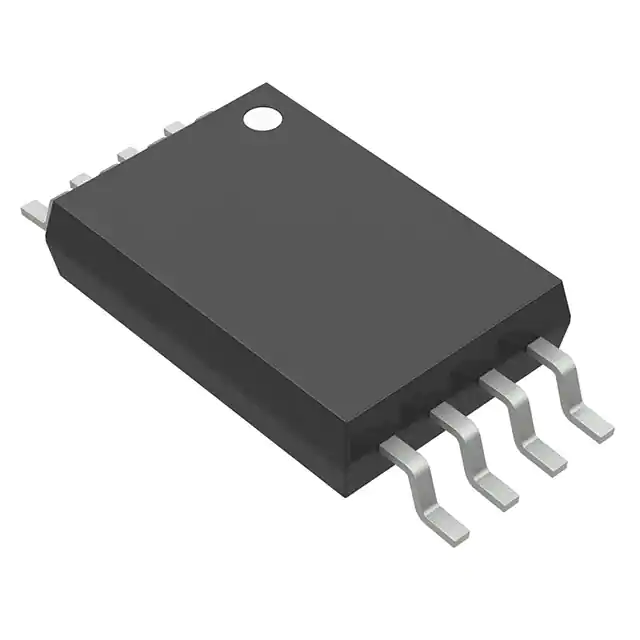
- Part No.:
- BQ26220PWR
- Manufacturer:
- Texas Instruments
- Category:
- Battery Management
- Package:
- 8-TSSOP (0.173", 4.40mm Width)
- Datasheet:
-
 BQ26220PWR.pdf
- Description:
- IC BATT MON LI-ION 1CELL 8TSSOP
- Quantity:
- Payment:

- Shipping:

Inventory:4,519
Please send an inquiry. Send us your inquiry, and we will respond immediately.
Product details
Overview
BQ26220PWR from Texas Instruments is a multifunction battery monitoring IC designed for integration into rechargeable Li-ion battery packs. It provides coulometric charge/discharge current integration (3.05 µVH LSB), 11-bit battery voltage measurement (2.44 mV LSB), and internal temperature sensing (±4 K accuracy) - all operating from a single-cell supply (2.8 V to 4.5 V) in portable electronics.
For engineers reviewing the BQ26220PWR datasheet, BQ26220PWR pinout, BQ26220PWR application, or BQ26220PWR equivalent, this device supports HDQ-based host-controlled gas gauging, flash-backed RAM/flash data retention during deep discharge, and automatic VSR offset compensation - critical for accurate state-of-charge estimation in space-constrained battery management systems.
Technical Context
The BQ26220PWR implements a precision voltage-to-frequency converter (VFC) for current sensing with 88–94 Hz/V gain and ±0.5% INL, paired with an autocalibrating 11-bit ADC for battery voltage. Its internal temperature-compensated oscillator eliminates external crystals while enabling self-discharge modeling via a dedicated SCR register that doubles count rate per +10°C above 25°C.
Communication occurs over a single-wire HDQ interface (5 kbit/s max) with break-detect timing (tB ≥ 190 µs), supporting register read/write, flash programming, and sleep/hibernate control. All nonvolatile storage - 96 bytes of flash (including 32-byte shadow RAM) and 8-byte ID ROM - retains battery identification, chemistry, and warranty data even during pack short-circuit events.
Key Specifications
| Parameter | Value and Actual Design Meaning |
|---|---|
| VCC Range | 2.8 V to 4.5 V - enables direct operation from single Li-ion cell without LDO |
| Current Sensing | ±100 mV differential input (SRP/SRN) with auto-offset compensation - no host calibration required |
| Voltage ADC | 11-bit resolution, 2.44 mV LSB, ±15 LSB max error - optimized for 2.6–4.5 V battery range |
| Temperature Accuracy | ±4 K over −20°C to 70°C - enables reliable self-discharge modeling across storage conditions |
| Power Modes | 30 µA active, 1 µA sleep, 600 nA hibernate - extends pack shelf life during storage |
| Memory | 32 B RAM (flash-shadowed), 96 B flash (64 B user + 32 B shadow), 8 B ID ROM - stores calibrated parameters and pack identity |
| Interface | Single-wire HDQ (5 kbit/s) - reduces PCB routing complexity vs. I²C/SPI |
Pinout & Package
Package: TSSOP-8 (PW), 3.0 mm × 4.4 mm, 0.65 mm pitch, tape-and-reel (R suffix).
| Pin/Terminal | Circuit Role | Design Meaning |
|---|---|---|
| BAT | Battery voltage sense input | Direct connection to cell anode for 11-bit ADC measurement; supports 2.6–4.5 V range |
| RBI | Register backup input | Accepts capacitor or auxiliary supply to retain RAM/register state when VCC drops below POR (1.9–2.45 V) |
| VCC | Supply voltage input | Primary power rail; powers analog/digital blocks and enables operation down to 2.8 V |
| VSS | Ground reference | Common return path for BAT, SRP, SRN, and HDQ; must be low-impedance for ADC/VFC accuracy |
| HDQ | Single-wire serial interface | Bidirectional communication port requiring external pull-up; handles command/data exchange and break detection |
| GPIO | Programmable digital I/O | Configurable as input or output via HDQ; usable for status signaling or external control |
| SRP | Current sense positive input | Connects to sense resistor high side; polarity determines charge (VSRP > VSRN) vs. discharge |
| SRN | Current sense negative input | Connects to sense resistor low side and pack negative terminal; forms differential pair with SRP |
Key Features
| Feature | Design Value |
|---|---|
| Autocalibrating VFC | Eliminates manual offset trimming and drift correction - maintains <±20 µV auto-compensated offset over life |
| Flash-shadowed RAM | 32 bytes of volatile RAM backed by on-chip flash - preserves SOC, cycle count, and fault logs across power loss |
| Integrated temperature sensor | Die-temperature reporting (±4 K) enables dynamic self-discharge modeling without external thermistor |
| Low-power hibernate mode | 600 nA quiescent current with RBI-supplied RAM retention - supports multi-year shelf-life in shipped battery packs |
| HDQ protocol robustness | Break-detect recovery (tB ≥ 190 µs) and glitch immunity (>5 ns rejection) ensure reliable communication in noisy environments |
Applications
| Smartphone Battery Pack | PDA Power Management |
|---|---|
|
Use Scenario: Integrated into single-cell Li-ion battery pack for real-time SOC estimation and health monitoring. IC Role / Device Role / Timing Role: Gas gauge controller performing coulomb counting, voltage sampling, and temperature-aware self-discharge compensation. Use Value: Enables accurate remaining runtime prediction and end-of-life alerts using on-chip VFC, ADC, and SCR registers - no host CPU overhead for analog processing. |
Use Scenario: Embedded in handheld PDA battery module to support hot-swap detection and adaptive charging profiles. IC Role / Device Role / Timing Role: Battery monitor providing HDQ-accessible voltage, temperature, and charge/discharge counters to host PMIC. Use Value: Delivers calibrated 11-bit voltage data (2.44 mV LSB) and time-stamped CCR/DCR values - enabling precise charge termination and thermal derating. |
| Wearable Device Battery | Medical Portable Monitor |
|
Use Scenario: Used in compact wearable battery pack where PCB area and power budget are severely constrained. IC Role / Device Role / Timing Role: Low-power battery manager operating in hibernate mode (<600 nA) during standby, waking only for HDQ polling. Use Value: Extends shelf life via RBI-backed RAM retention and eliminates need for external crystal or thermistor - reduces BOM count by 3 components. |
Use Scenario: Deployed in certified medical-grade portable monitor battery to log usage history and detect abnormal discharge patterns. IC Role / Device Role / Timing Role: Data logger storing calibrated voltage, temperature, and cycle counts in 96-byte flash with write-cycle endurance (10,000 cycles). Use Value: Maintains traceable battery lifecycle records (chemistry, manufacturing date, capacity decay) in nonvolatile memory - supports regulatory audit requirements. |
Equivalent & Alternatives
The following parts are listed as comparable options for similar battery monitoring applications.
| Alternative Part | Technical Difference | Application Difference | Selection Advice |
|---|---|---|---|
| BQ26100PWR | Legacy 8-pin variant with identical pinout but no flash memory - only 32 B RAM, no nonvolatile storage | Lacks flash-backed data retention; unsuitable for long-term pack identity or warranty logging | Select BQ26220PWR when firmware-updatable calibration, SOC history, or tamper-proof ID storage is required. |
| BQ27220YZFT | DSBGA-12 package; adds integrated fuel-gauge algorithm and SHA-1 authentication - not pin-compatible | Requires host-side cryptographic support; targets secure battery authentication in OEM supply chains | Choose BQ26220PWR for cost-sensitive, space-constrained designs needing basic gas gauging without security features. |
Compared with BQ26100PWR and BQ27220YZFT, the BQ26220PWR uniquely balances minimal footprint (TSSOP-8), flash-based data persistence, and host-managed flexibility - making it optimal for mid-tier portable devices where reliability and field-upgradable calibration matter more than cryptographic security or algorithmic autonomy.
Availability
BQ26220PWR is available at Aetrix Electronics and suitable for smartphone battery packs, PDA power modules, wearable energy storage, medical portable monitors, and industrial handheld terminals requiring stable component supply and long-term lifecycle support.
Supply support for BQ26220PWR includes scheduled delivery planning, volume procurement assistance, BOM continuity management, traceable sourcing, and lifecycle availability coordination for OEM customers, industrial embedded developers, connected-device designers, and electronics production programs.
Manufacturer
Texas Instruments is a global semiconductor leader focused on analog and embedded processing technologies, serving automotive, industrial, and personal electronics markets with high-reliability, application-optimized ICs.
The BQ26220PWR belongs to TI's battery management analog front-end (AFE) product line, engineered specifically for accurate, low-power, host-coordinated gas gauging in consumer Li-ion battery packs - emphasizing integration, calibration stability, and supply resilience.
FAQ
What is the primary function of the BQ26220PWR in a battery system?
The BQ26220PWR serves as a host-coordinated battery monitor IC, performing coulomb counting via its autocalibrating VFC, measuring battery voltage with an 11-bit ADC, and reporting die temperature - all to enable accurate state-of-charge estimation in Li-ion packs. The BQ26220PWR does not execute fuel-gauge algorithms autonomously; instead, it supplies raw and calibrated data to the host controller for final SOC calculation.
Does the BQ26220PWR require an external crystal oscillator?
No, the BQ26220PWR integrates a high-accuracy internal timebase that eliminates the need for an external crystal oscillator. This internal oscillator supports all timing functions - including VFC integration, self-discharge counting, and HDQ communication timing - with sufficient stability for battery gauging applications across −20°C to 70°C. The BQ26220PWR achieves this while maintaining only 30 µA active current consumption.
How does the BQ26220PWR handle battery voltage measurement accuracy?
The BQ26220PWR uses an 11-bit ADC with 2.44 mV LSB resolution and built-in gain/offset correction. Factory-programmed calibration data (LSB correction factor and 4-bit signed offset) is stored in the 8-byte ID ROM (addresses 0x78–0x7F). The host applies these corrections to raw BATH/BATL register values to compute accurate voltage: Correct VBAT = VBAT × (2.44 + LSB correction) − offset. The BQ26220PWR specifies ±15 LSB maximum error before correction.
What memory resources does the BQ26220PWR provide for battery data storage?
The BQ26220PWR provides 32 bytes of flash-shadowed RAM (retained via RBI during VCC dropout), 64 bytes of general-purpose flash (user-programmable for chemistry, serial number, or self-discharge rates), and 8 bytes of factory-programmed ID ROM (containing device code and ADC calibration data). Flash endurance is rated at 10,000 write cycles, and data retention exceeds 5 years - ensuring reliable storage of pack identity and usage history. All memory is accessible via the HDQ interface.
Can the BQ26220PWR operate directly from a single Li-ion cell?
Yes, the BQ26220PWR operates natively from a single Li-ion cell with a supply range of 2.8 V to 4.5 V - matching typical cell voltage under load and full charge. Its 600 nA hibernate current and RBI pin allow RAM retention even when the cell voltage drops below the 1.9–2.45 V power-on reset threshold. This enables the BQ26220PWR to maintain SOC state during deep discharge or shipping, without requiring auxiliary biasing circuitry.
BQ26220PWR Specifications
- Product attributes
- Attribute value
- Manufacturer:
- Texas Instruments
- Series:
- -
- Package/Case:
- 8-TSSOP (0.173", 4.40mm Width)
- Packaging:
- Tape & Reel (TR)
- Product Status:
- Active
- Function:
- Battery Monitor
- Battery Chemistry:
- Lithium Ion
- Number of Cells:
- 1
- Fault Protection:
- -
- Interface:
- HDQ
- Operating Temperature:
- -20°C ~ 70°C (TA)
- Grade:
- -
- Qualification:
- -
- Mounting Type:
- Surface Mount
- Supplier Device Package:
- 8-TSSOP
BQ26220PWR FAQ
1.How can I place an order for BQ26220PWR through Aetrix?
Please submit a Request for Quotation (RFQ) for BQ26220PWR on Aetrix. Our sales agent will provide a competitive quotation and guide you through the order confirmation once you accept the terms.
2.Are the price and stock information for BQ26220PWR reliable?
The price and inventory of BQ26220PWR are updated periodically and may fluctuate due to market conditions. Stock and pricing data are typically refreshed every 24 hours. Quotation validity for BQ26220PWR is usually 5 days.
3.What payment methods are accepted for BQ26220PWR?
We accept Wire Transfer, PayPal, Credit Card, Western Union, MoneyGram, and Escrow for BQ26220PWR transactions.
Note: Certain payment methods may incur a processing fee.
4.How is shipping managed for BQ26220PWR?
BQ26220PWR orders can be shipped via leading logistics carriers, including DHL, UPS, FedEx, TNT, or Registered Mail.
Once your BQ26220PWR order is processed, you will receive an email with the shipment details and tracking number.
Note: Tracking information may take up to 24 hours to appear. Express delivery typically takes 3–5 business days.
5.How can I obtain technical support or documentation for BQ26220PWR?
For technical support, including BQ26220PWR datasheets, pinout diagrams, or application guidance, please contact our engineering support team. They can provide detailed documentation and assistance for your BQ26220PWR requirements.
6.How does Aetrix verify that BQ26220PWR is sourced from the original manufacturer or authorized distributors?
All BQ26220PWR products on Aetrix are procured from qualified distributors and authorized channels. Our dedicated quality assurance team conducts strict verification, including traceability checks and, if necessary, third-party testing. This ensures that BQ26220PWR meets industry standards.
7.What is the process for return or replacement of BQ26220PWR?
All BQ26220PWR units undergo pre-shipment inspection (PSI). If there is an issue with BQ26220PWR, returns or replacements are accepted under the following conditions:
1.Quantity discrepancies, incorrect items, or visible external defects (such as breakage or corrosion), acknowledged by Aetrix.
2.The issue is reported within 90 days of delivery.
3.The BQ26220PWR part is unused and in its original packaging.
Return procedure for BQ26220PWR:
1.Submit a request within 90 days.
2.Obtain a Return Material Authorization (RMA) from Aetrix.
BQ26220PWR Tags
-
BQ29700DSER
Texas Instruments
-
S-8241ABKMC-GBKT2G
ABLIC Inc.
-
S-8241ABPMC-GBPT2G
ABLIC Inc.

-
BQ27427YZFR
Texas Instruments
-
BQ27426YZFR
Texas Instruments
-
STC3117IJT
STMicroelectronics
-
STC3115IJT
STMicroelectronics
-
BQ76925RGER
Texas Instruments
-
NPM1100-QDAA-R
Nordic Semiconductor ASA
-
BQ27441DRZR-G1A
Texas Instruments
-
STC3115AIQT
STMicroelectronics

-
S-8252AAL-M6T1U
ABLIC Inc.
Tech Hub

A practical engineering guide to 3.3V and 5V logic compatibility, input thresholds, resistor dividers, translator ICs, MOSFET level shifting, I2C pull-ups, timing limits and power-sequencing risks.

The 74HC595 uses push-pull logic outputs, while the TPIC6B595 uses 50 V open-drain DMOS sinks for higher-power loads. This guide compares timing, current limits, 3.3 V interfacing, load wiring, thermal…

The 74HC595 converts serial data into eight stable parallel outputs. This guide covers pin functions, shift and storage timing, OE and MR behavior, drive-current limits, cascading, voltage compatibilit…

A technical comparison of level-sensitive latches and edge-triggered flip-flops, covering timing windows, setup and hold limits, master–slave operation, time borrowing, race-through, HDL inference and…

A D latch stores one bit while Enable controls when data can pass. This reference covers gate-level operation, truth tables, transparency, setup and hold timing, LE versus OE, common ICs and practical …

An SR latch stores one bit through cross-coupled feedback. This engineering reference covers NOR and NAND implementations, truth tables, forbidden-state recovery, gated operation, switch debouncing, fa…

Latch circuits retain one bit through feedback. This technical reference covers SR and D latches, truth tables, transparency, timing limits, latch-versus-flip-flop behavior, applications and common log…

An engineering guide to LED driver operation, constant-current and constant-voltage outputs, linear and switching topologies, dimming, IC selection, calculations, replacement compatibility, and fault c…

Operational amplifier guide covering op amp basics, feedback, ideal vs real op amps, common configurations, buffer circuits, offset, bias current, gain-bandwidth, slew rate, rail-to-rail limits and sel…

Jumper cables guide covering safe connection order, red and black clamp placement, final ground connection, cable gauge, length, clamp quality, copper vs CCA cables, jump starter comparison and battery…


