
 My Inquiry
 My Account


Texas Instruments BQ26501PW
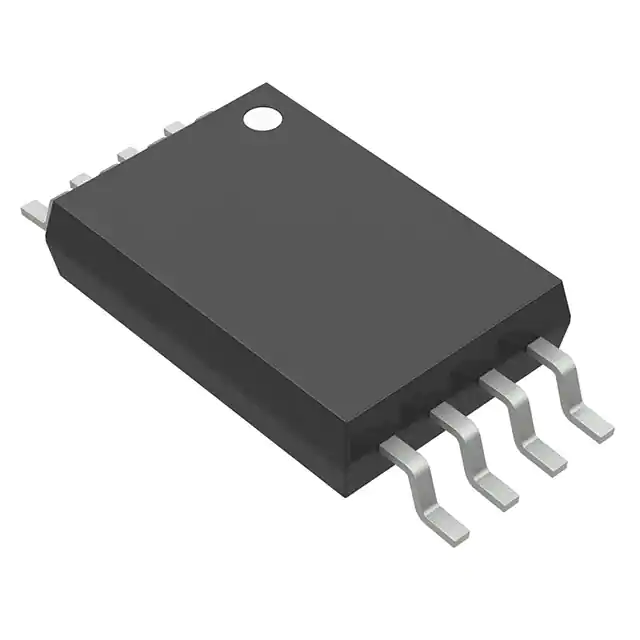
- Part No.:
- BQ26501PW
- Manufacturer:
- Texas Instruments
- Category:
- Battery Management
- Package:
- 8-TSSOP (0.173", 4.40mm Width)
- Datasheet:
-
 BQ26501PW.pdf
- Description:
- IC GAS GAUGE LI-ION/LIPOL 8TSSOP
- Quantity:
- Payment:

- Shipping:

Inventory:2,153
Please send an inquiry. Send us your inquiry, and we will respond immediately.
Product details
Overview
BQ26501PW from Texas Instruments is a standalone single-cell Li-Ion/Li-Pol battery gas gauge IC that reports accurate state-of-charge (SoC), voltage (±20 mV), temperature (±3 °K), and time-to-empty without host processor calculations. It integrates a differential voltage-to-frequency converter (VFC) for coulometric integration, internal temperature sensor, and HDQ one-wire interface. Used in space-constrained portable devices like smartphones and digital cameras.
For engineers reviewing the BQ26501PW datasheet, BQ26501PW pinout, BQ26501PW application, or BQ26501PW equivalent, key selection criteria include its 8-pin TSSOP package, <1.5 µA hibernate current, HDQ 5-kbits/s serial interface, auto-calibrating VFC architecture, and support for battery pack-level capacity learning via full-discharge cycles.
Technical Context
The BQ26501PW implements a fully differential, dynamically balanced voltage-to-frequency converter (VFC) for charge/discharge current integration with automatic offset cancellation-no external calibration required. Its analog front-end measures voltage across a series sense resistor (±100 mV range) and uses an integrated bandgap-referenced ADC for battery voltage (1 mV resolution) and die temperature (0.25 °K resolution).
It operates in four low-power modes (Active <100 µA, Sleep <2.5 µA, Ship <1.7 µA, Hibernate <1.5 µA) and communicates via a bi-directional HDQ interface at 5 kbits/s. Internal EEPROM stores compensation constants (TCOMP, DCOMP), EDV thresholds, and DMF settings; RAM retains NAC, LMD, and FLAGS with RBI-supplied backup during VCC brownout.
Key Specifications
| Parameter | Value and Actual Design Meaning |
|---|---|
| Supply Voltage Range | 2.6 V to 4.5 V - Operates directly from single-cell Li-Ion/Li-Pol without external regulator |
| Current Sense Input Range | ±100 mV differential - Supports typical 10–50 mΩ sense resistors for 200 mA–5 A current measurement |
| Voltage Measurement Accuracy | ±20 mV - Enables reliable end-of-discharge detection at EDV1/EDVF thresholds |
| Temperature Accuracy | ±3 °K - Sufficient for discharge-rate and self-discharge compensation in consumer battery packs |
| HDQ Interface Speed | 5 kbits/s - Reduces microcontroller overhead vs. I²C/SPI; supports simple one-wire host communication |
| Hibernate Current | <1.5 µA - Extends shelf life in shipped battery packs; enables multi-year storage without capacity drift |
| Digital Magnitude Filter | Programmable in 6 µV steps - Suppresses false counting from PCB layout-induced offsets below threshold |
Pinout & Package
Package: 8-pin TSSOP (PW), 3.0 mm × 4.4 mm, 0.65 mm pitch, surface-mount. RoHS-compliant, tape-and-reel packaging available with "R" suffix (e.g., BQ26501PWR).
| Pin/Terminal | Circuit Role | Design Meaning |
|---|---|---|
| BAT | Battery voltage sense input | Monitors cell voltage for EDV detection and SoC calculation; 10 MΩ input impedance minimizes loading |
| GPIO | General-purpose I/O port | Configurable as open-drain output or input; used for status signaling or system control in battery packs |
| HDQ | HDQ serial interface I/O | Single-wire bi-directional bus; internal pull-down ensures automatic sleep on pack removal or power-off |
| RBI | Register back-up input | Connects to external capacitor to retain RAM data (NAC, LMD) during VCC drop below 2.05 V POR threshold |
| SRN | Current sense negative input | Differential input paired with SRP; Kelvin connection critical to reject PCB trace resistance errors |
| SRP | Current sense positive input | Differential input paired with SRN; accepts ±100 mV signal for high-accuracy coulometric integration |
| VCC | Power supply input | Accepts 2.6–4.5 V; powers internal circuitry including VFC, ADC, EEPROM, and HDQ transceiver |
| VSS | Ground reference | Low-impedance return path; must be isolated from high-current discharge paths to prevent VFC offset errors |
Key Features
| Feature | Design Value |
|---|---|
| Auto-calibrating VFC architecture | Eliminates need for factory offset trimming or user calibration; cancels internal VFC offset in real time |
| Integrated temperature sensor | Enables real-time discharge-rate and self-discharge compensation without external thermistor or ADC |
| Four programmable low-power modes | Ship mode (<1.7 µA) and Hibernate (<1.5 µA) extend battery shelf life; Sleep mode (<2.5 µA) enables periodic monitoring |
| HDQ one-wire interface | Reduces PCB routing complexity and host GPIO usage; eliminates need for dedicated clock or address lines |
| RAM register backup via RBI | Maintains NAC and LMD values across brownout events down to 1.3 V, preserving learned capacity accuracy |
| Digital magnitude filter (DMF) | Programmable 6-µV-step threshold prevents false capacity accumulation from residual PCB or device offsets |
Applications
| Smartphone Battery Packs | Digital Camera Power Management |
|---|---|
|
Use Scenario: Real-time SoC reporting during active video recording and display backlight operation. IC Role / Device Role / Timing Role: Standalone gas gauge providing RSOC (%) and ARTTE (minutes) via HDQ, eliminating host CPU load for coulomb counting. Use Value: Delivers ±3% SoC accuracy across temperature and discharge rates, enabling precise low-battery warnings and UI battery bars. |
Use Scenario: Monitoring capacity during burst-mode flash charging and high-current image sensor operation. IC Role / Device Role / Timing Role: Measures charge/discharge current via SRP/SRN differential inputs and compensates for self-discharge during standby. Use Value: Maintains <1.5 µA hibernate current during storage, preventing >5% capacity loss over 6 months at 25°C. |
| MP3 Player Runtime Estimation | PDA System-Level Power Reporting |
|
Use Scenario: Predicting remaining playback time under variable audio decode loads (e.g., MP3 vs. FLAC). IC Role / Device Role / Timing Role: Uses host-written AR registers to compute ARTTE at user-specified discharge currents. Use Value: Reports time-to-empty with <2-minute error at 100 mA discharge, enabling accurate runtime displays without firmware math. |
Use Scenario: Supporting hot-swap battery replacement while retaining learned LMD and NAC values across power cycles. IC Role / Device Role / Timing Role: Leverages RBI-backed RAM and EEPROM-stored TCOMP/DCOMP to preserve calibration across insertions. Use Value: Ensures consistent SoC reporting after battery swap-no relearning required if RBI capacitor retains charge above 1.3 V. |
Equivalent & Alternatives
The following parts are listed as comparable options for similar battery fuel gauge applications.
| Alternative Part | Technical Difference | Application Difference | Selection Advice |
|---|---|---|---|
| BQ27210DRVR | Uses I²C interface instead of HDQ; includes integrated sense resistor; lower hibernate current (1 µA) | Designed for compact single-cell packs where PCB area is more constrained than host interface compatibility | Select when I²C host interface exists and integrated sensing simplifies layout; not pin-compatible with BQ26501PW |
| MAX17043G+T | Employs ModelGauge™ m3 algorithm; supports Li-Ion only; higher voltage accuracy (±10 mV); no HDQ interface | Targets high-precision SoC in wearables and medical devices requiring tighter voltage tolerance | Choose when ±10 mV voltage accuracy and advanced impedance-track compensation are required; requires I²C or SMBus host |
Compared with BQ26501PW, BQ27210DRVR reduces BOM count via integrated sense resistor but lacks HDQ compatibility, while MAX17043G+T delivers superior voltage accuracy and algorithmic compensation at the cost of interface flexibility and higher minimum system integration effort.
Availability
BQ26501PW is available at Aetrix Electronics and suitable for smartphone battery packs, digital camera power systems, MP3 player runtime estimation, and PDA system-level power reporting requiring stable component supply and long-term lifecycle support.
Supply support for BQ26501PW includes scheduled delivery planning, volume procurement assistance, BOM continuity management, traceable sourcing, and lifecycle availability coordination for OEM customers, industrial embedded developers, connected-device designers, and electronics production programs.
Manufacturer
Texas Instruments is a global semiconductor leader specializing in analog, embedded processing, and power management technologies, serving automotive, industrial, and consumer markets since 1930.
The BQ26501PW belongs to TI's bqJUNIOR family of standalone battery gas gauge ICs, designed specifically for space-limited handheld applications requiring accurate, low-power, self-contained capacity monitoring without host processor intervention.
FAQ
What is the primary function of the BQ26501PW in a battery pack?
The BQ26501PW serves as a standalone fuel gauge IC that autonomously monitors single-cell Li-Ion/Li-Pol battery capacity using coulometric integration, temperature-compensated discharge modeling, and voltage-based end-of-discharge detection. It reports state-of-charge, time-to-empty, voltage, and temperature over the HDQ interface-eliminating the need for host-side calculations in devices like smartphones and digital cameras. The BQ26501PW performs all core gas gauge functions internally, including autocalibration and learning of full-pack capacity during discharge cycles.
Does the BQ26501PW require external calibration components or trim adjustments?
No, the BQ26501PW does not require external calibration components or manual trim adjustments. Its voltage-to-frequency converter (VFC) features automatic internal offset cancellation, and the ADC for voltage and temperature measurements is factory-trimmed. Layout-induced offsets are managed via the programmable Digital Magnitude Filter (DMF), set in EEPROM in 6 µV increments. The BQ26501PW learns battery capacity during full discharge cycles and applies temperature, rate, and self-discharge compensation using stored EEPROM constants-no user calibration is needed before deployment.
How does the BQ26501PW maintain data integrity during power interruptions?
The BQ26501PW maintains RAM register integrity-including NAC (Nominal Available Capacity) and LMD (Last Measured Discharge)-using the RBI (Register Back-up Input) pin. When VCC drops below the 2.05 V power-on-reset threshold, the RBI pin draws charge from an external capacitor to sustain RAM retention down to 1.3 V. Upon reset, the BQ26501PW validates redundant NAC and LMD copies and checkbytes; if valid, it preserves learned capacity. This ensures the BQ26501PW resumes accurate SoC reporting immediately after recovery without requiring relearning.
What are the key power modes supported by the BQ26501PW and their typical use cases?
The BQ26501PW supports four low-power operating modes: Active (<100 µA) for real-time monitoring during device use; Sleep (<2.5 µA) for periodic background updates; Ship (<1.7 µA) for extended storage; and Hibernate (<1.5 µA) for minimal current draw during long-term shelf life. Ship mode is activated via the SHIP command in the MODE register and is commonly used by battery pack manufacturers prior to distribution. Hibernate activates automatically when HDQ is idle and VCC remains stable, making it ideal for unpowered battery packs awaiting insertion into host devices.
Can the BQ26501PW interface with non-TI host processors, or is it limited to OMAP devices?
The BQ26501PW is not limited to TI OMAP processors. While it was optimized for direct communication with TI's integrated HDQ engine, its HDQ interface is a standard 5-kbits/s, single-wire, bi-directional serial protocol compatible with any host microcontroller implementing the HDQ timing specifications (e.g., t(B), t(HW0), t(RSPS)). Reference designs confirm interoperability with ARM Cortex-M and proprietary MCU platforms using bit-banged GPIO. The BQ26501PW requires no proprietary IP or license-its register map and command structure are fully documented in SLUS586B for third-party integration.
BQ26501PW Specifications
- Product attributes
- Attribute value
- Manufacturer:
- Texas Instruments
- Series:
- bqJUNIOR™
- Package/Case:
- 8-TSSOP (0.173", 4.40mm Width)
- Packaging:
- Bulk
- Product Status:
- Active
- Function:
- Battery Monitor
- Battery Chemistry:
- Lithium Ion/Polymer
- Number of Cells:
- 1
- Fault Protection:
- -
- Interface:
- HDQ
- Operating Temperature:
- -20°C ~ 70°C (TA)
- Grade:
- -
- Qualification:
- -
- Mounting Type:
- Surface Mount
- Supplier Device Package:
- 8-TSSOP
BQ26501PW FAQ
1.How can I place an order for BQ26501PW through Aetrix?
Please submit a Request for Quotation (RFQ) for BQ26501PW on Aetrix. Our sales agent will provide a competitive quotation and guide you through the order confirmation once you accept the terms.
2.Are the price and stock information for BQ26501PW reliable?
The price and inventory of BQ26501PW are updated periodically and may fluctuate due to market conditions. Stock and pricing data are typically refreshed every 24 hours. Quotation validity for BQ26501PW is usually 5 days.
3.What payment methods are accepted for BQ26501PW?
We accept Wire Transfer, PayPal, Credit Card, Western Union, MoneyGram, and Escrow for BQ26501PW transactions.
Note: Certain payment methods may incur a processing fee.
4.How is shipping managed for BQ26501PW?
BQ26501PW orders can be shipped via leading logistics carriers, including DHL, UPS, FedEx, TNT, or Registered Mail.
Once your BQ26501PW order is processed, you will receive an email with the shipment details and tracking number.
Note: Tracking information may take up to 24 hours to appear. Express delivery typically takes 3–5 business days.
5.How can I obtain technical support or documentation for BQ26501PW?
For technical support, including BQ26501PW datasheets, pinout diagrams, or application guidance, please contact our engineering support team. They can provide detailed documentation and assistance for your BQ26501PW requirements.
6.How does Aetrix verify that BQ26501PW is sourced from the original manufacturer or authorized distributors?
All BQ26501PW products on Aetrix are procured from qualified distributors and authorized channels. Our dedicated quality assurance team conducts strict verification, including traceability checks and, if necessary, third-party testing. This ensures that BQ26501PW meets industry standards.
7.What is the process for return or replacement of BQ26501PW?
All BQ26501PW units undergo pre-shipment inspection (PSI). If there is an issue with BQ26501PW, returns or replacements are accepted under the following conditions:
1.Quantity discrepancies, incorrect items, or visible external defects (such as breakage or corrosion), acknowledged by Aetrix.
2.The issue is reported within 90 days of delivery.
3.The BQ26501PW part is unused and in its original packaging.
Return procedure for BQ26501PW:
1.Submit a request within 90 days.
2.Obtain a Return Material Authorization (RMA) from Aetrix.
BQ26501PW Tags
-
BQ29700DSER
Texas Instruments
-
S-8241ABKMC-GBKT2G
ABLIC Inc.
-
S-8241ABPMC-GBPT2G
ABLIC Inc.

-
BQ27427YZFR
Texas Instruments
-
BQ27426YZFR
Texas Instruments
-
STC3117IJT
STMicroelectronics
-
STC3115IJT
STMicroelectronics
-
BQ76925RGER
Texas Instruments
-
NPM1100-QDAA-R
Nordic Semiconductor ASA
-
BQ27441DRZR-G1A
Texas Instruments
-
STC3115AIQT
STMicroelectronics

-
S-8252AAL-M6T1U
ABLIC Inc.
Tech Hub

A practical engineering guide to 3.3V and 5V logic compatibility, input thresholds, resistor dividers, translator ICs, MOSFET level shifting, I2C pull-ups, timing limits and power-sequencing risks.

The 74HC595 uses push-pull logic outputs, while the TPIC6B595 uses 50 V open-drain DMOS sinks for higher-power loads. This guide compares timing, current limits, 3.3 V interfacing, load wiring, thermal…

The 74HC595 converts serial data into eight stable parallel outputs. This guide covers pin functions, shift and storage timing, OE and MR behavior, drive-current limits, cascading, voltage compatibilit…

A technical comparison of level-sensitive latches and edge-triggered flip-flops, covering timing windows, setup and hold limits, master–slave operation, time borrowing, race-through, HDL inference and…

A D latch stores one bit while Enable controls when data can pass. This reference covers gate-level operation, truth tables, transparency, setup and hold timing, LE versus OE, common ICs and practical …

An SR latch stores one bit through cross-coupled feedback. This engineering reference covers NOR and NAND implementations, truth tables, forbidden-state recovery, gated operation, switch debouncing, fa…

Latch circuits retain one bit through feedback. This technical reference covers SR and D latches, truth tables, transparency, timing limits, latch-versus-flip-flop behavior, applications and common log…

An engineering guide to LED driver operation, constant-current and constant-voltage outputs, linear and switching topologies, dimming, IC selection, calculations, replacement compatibility, and fault c…

Operational amplifier guide covering op amp basics, feedback, ideal vs real op amps, common configurations, buffer circuits, offset, bias current, gain-bandwidth, slew rate, rail-to-rail limits and sel…

Jumper cables guide covering safe connection order, red and black clamp placement, final ground connection, cable gauge, length, clamp quality, copper vs CCA cables, jump starter comparison and battery…


