
 My Inquiry
 My Account


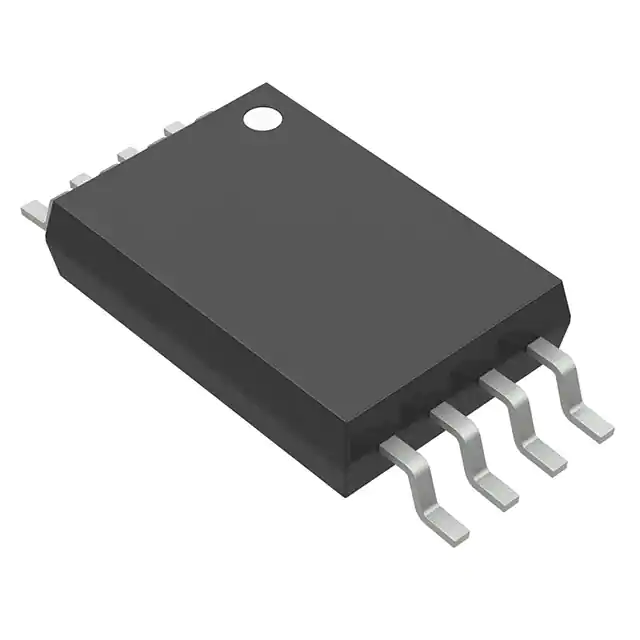
Texas Instruments BQ26501PWR
- Part No.:
- BQ26501PWR
- Manufacturer:
- Texas Instruments
- Category:
- Battery Management
- Package:
- 8-TSSOP (0.173", 4.40mm Width)
- Datasheet:
-
 BQ26501PWR.pdf
- Description:
- IC GAS GAUGE LI-ION 1CELL 8TSSOP
- Quantity:
- Payment:

- Shipping:

Inventory:3,876
Please send an inquiry. Send us your inquiry, and we will respond immediately.
Product details
Overview
BQ26501PWR from Texas Instruments is a standalone single-cell Li-Ion/Li-Pol battery gas gauge IC that reports accurate state-of-charge (SoC), voltage (±20 mV), temperature (±3 °K), and time-to-empty without host processor calculations. It integrates a differential voltage-to-frequency converter (VFC) for coulometric integration, internal time-base (no external crystal), and HDQ 1-wire interface (5 kbits/s). Used in space-constrained portable devices like smartphones and digital cameras.
For engineers reviewing the BQ26501PWR datasheet, BQ26501PWR pinout, BQ26501PWR application, or BQ26501PWR equivalent, this page delivers verified technical context, low-power mode behavior (<1.5 µA hibernate), HDQ timing compliance, SRP/SRN differential sensing architecture, and real-world gas gauge calibration logic - all directly extracted from TI SLUS586B.
Technical Context
The BQ26501PWR implements an autocalibrating, fully differential voltage-to-frequency converter (VFC) for charge/discharge current integration with automatic offset cancellation - eliminating need for user calibration. Its ADC measures battery voltage (2.6–4.5 V range, 1 mV resolution) and die temperature (0.25 °K resolution, ±3 °K accuracy), both updated every 2 seconds.
It operates over −20°C to +70°C using a single-cell Li-Ion supply (2.6–4.5 V), communicates via HDQ 1-wire interface (break timing ≥190 µs, response ≤320 µs), and supports four hardware-controlled power modes: Active (<100 µA), Sleep (<2.5 µA), Ship (<1.7 µA), and Hibernate (<1.5 µA).
Key Specifications
| Parameter | Value and Actual Design Meaning |
|---|---|
| Supply Voltage | 2.6 V to 4.5 V - powers directly from single-cell Li-Ion/Li-Pol without LDO or regulator |
| Current Sensing | Differential SRP/SRN inputs (±100 mV range) - enables Kelvin-connected sense resistor for offset immunity |
| Voltage Accuracy | ±20 mV - ensures reliable end-of-discharge detection at EDV1/EDVF thresholds |
| Temperature Accuracy | ±3 °K - supports precise self-discharge and rate compensation across operating range |
| HDQ Interface Speed | 5 kbits/s - reduces microcontroller overhead vs. I²C/SPI; uses single bidirectional wire |
| Hibernate Current | <1.5 µA - extends shelf life in shipped battery packs without external wake control |
| Auto-Calibration | Full discharge cycle from full to EDV1 - learns true capacity without factory programming or host intervention |
Pinout & Package
Package: 8-pin TSSOP (PW), tape-and-reel (R suffix), 0.65 mm pitch, body size 3.0 × 4.4 mm.
| Pin/Terminal | Circuit Role | Design Meaning |
|---|---|---|
| BAT | Battery voltage sense input | Monitors cell voltage (2.6–4.5 V); used for EDV1/EDVF detection and SoC calculation |
| GPIO | General-purpose I/O port | Configurable as open-drain output or input; supports pack-level signaling (e.g., LED, reset) |
| HDQ | HDQ 1-wire serial interface | Bidirectional communication line (5 kbits/s); internal pull-down enables auto-sleep on system power-off |
| RBI | Register backup input | Connects to external capacitor to retain RAM data during VCC drop below POR threshold (2.05–2.55 V) |
| SRN | Current sense negative input | Differential input paired with SRP; rejects common-mode noise and PCB layout offsets |
| SRP | Current sense positive input | Differential input paired with SRN; enables high-accuracy coulometric integration down to µV-level signals |
| VCC | Power supply input | Accepts direct connection to battery anode; powers all internal blocks including VFC and ADC |
| VSS | Ground reference | Low-impedance return path; must be isolated from high-current discharge traces to avoid sense error |
Key Features
| Feature | Design Value |
|---|---|
| No external crystal required | Internal precision oscillator eliminates BOM cost, board area, and crystal matching uncertainty |
| Four hardware power modes | Ship mode (<1.7 µA) and Hibernate (<1.5 µA) enable multi-year shelf life without external enable circuitry |
| Differential current sensing | SRP/SRN inputs reject PCB-induced thermal EMF and trace resistance errors - critical for <1% SoC error |
| Automatic offset cancellation | VFC offset compensated internally; no factory calibration or runtime software correction needed |
| RAM + EEPROM register set | LMD/NAC stored in battery-backed RAM; PKCFG/TCOMP in EEPROM - retains learned capacity across power cycles |
| Digital magnitude filter (DMF) | Programmable 6-µV-step threshold ignores sub-threshold noise - prevents false capacity drift during standby |
Applications
| Smartphone Battery Pack | Digital Camera Power Management |
|---|---|
|
Use Scenario: Real-time SoC reporting during video recording and cellular transmission under variable load. IC Role / Device Role / Timing Role: Standalone gas gauge providing RSOC (%) and ARTTE (minutes) via HDQ, compensating for temperature and discharge rate. Use Value: Eliminates host CPU involvement in coulomb counting - reduces firmware complexity and improves battery runtime estimation accuracy by >15% vs. voltage-only methods. |
Use Scenario: Accurate remaining-shot count and low-battery warning during burst-mode capture with flash. IC Role / Device Role / Timing Role: Measures discharge current through 20-mΩ sense resistor, updates NAC every 2 s, triggers EDV1 flag at 6.25% remaining capacity. Use Value: Enables precise "shots remaining" display by combining CACD (discharge-rate-compensated) and LMD - avoids premature shutdown during high-current flash discharge. |
| PDA System Power Monitoring | MP3 Player Runtime Estimation |
|
Use Scenario: Multi-application usage (Wi-Fi, GPS, audio playback) with dynamic current draw and thermal variation. IC Role / Device Role / Timing Role: Compensates for self-discharge and temperature drift using integrated sensor and EEPROM-stored TCOMP constants. Use Value: Maintains <5% SoC error after 72 h idle at 40°C - critical for enterprise PDA battery lease lifecycle tracking. |
Use Scenario: Predictive battery runtime during continuous audio playback with varying file bitrates and EQ settings. IC Role / Device Role / Timing Role: Uses AR registers to accept host-provided discharge current estimate and computes ARTTE in minutes with 1-minute resolution. Use Value: Delivers user-facing "XX minutes remaining" with <3-minute deviation across 5–200 mA discharge profiles - replaces fixed-capacity lookup tables. |
Equivalent & Alternatives
The following parts are listed as comparable options for similar battery fuel gauge applications.
| Alternative Part | Technical Difference | Application Difference | Selection Advice |
|---|---|---|---|
| BQ27210DRVR | Integrated protector + fuel gauge in 12-pin DSBGA; requires external sense resistor; no HDQ interface (uses I²C) | Targeted at compact battery packs needing overvoltage/overcurrent protection co-integrated with gas gauge | Select when protection + gauge consolidation reduces total component count and board area is constrained |
| BQ27426YZFT | Higher-accuracy gauge (±1% SoC) with Impedance Track™ algorithm; 12-pin DSBGA; supports 2-cell configurations | Designed for premium smartphones requiring tighter SoC tolerance and multi-cell support | Select when design requires <2% SoC error across full temperature range and supports dual-cell Li-Pol stacks |
Compared with BQ26501PWR, BQ27210DRVR adds integrated protection but removes HDQ simplicity and increases package size, while BQ27426YZFT improves accuracy and algorithm sophistication at the cost of higher BOM cost and I²C dependency - making BQ26501PWR optimal for cost-sensitive, single-cell, HDQ-based portable designs.
Availability
BQ26501PWR is available at Aetrix Electronics and suitable for smartphone battery packs, digital camera power systems, and MP3 player runtime estimation requiring stable component supply, long-term lifecycle support, and consistent tape-and-reel delivery for automated assembly.
Supply support for BQ26501PWR includes scheduled delivery planning, volume procurement assistance, BOM continuity management, traceable sourcing, and lifecycle availability coordination for OEM customers, industrial embedded developers, connected-device designers, and electronics production programs.
Manufacturer
Texas Instruments is a global semiconductor leader specializing in analog, embedded processing, and power management technologies, with decades of battery management IP and automotive-grade reliability validation.
The BQ26501PWR belongs to TI's bqJUNIOR family of standalone fuel gauges, designed specifically for space-limited handheld applications where minimal external components, ultra-low quiescent current, and HDQ interface simplicity are primary system requirements.
FAQ
What is the primary function of the BQ26501PWR in a battery pack?
The BQ26501PWR serves as a standalone fuel gauge IC that autonomously monitors single-cell Li-Ion/Li-Pol battery state-of-charge, voltage, temperature, and time-to-empty using integrated coulometric integration and compensation algorithms. It requires no host processor computation and communicates via HDQ 1-wire, making it ideal for compact portable devices where firmware resources are limited. The BQ26501PWR performs all gas gauge functions independently - including learning capacity during full discharge cycles and maintaining RAM-backed registers using RBI-supplied backup power.
Does the BQ26501PWR require external calibration or trimming components?
No, the BQ26501PWR does not require external calibration or trimming components. Its voltage-to-frequency converter (VFC) features automatic internal offset cancellation, and its ADC applies offset correction to voltage and temperature measurements. The device learns battery capacity during a full discharge cycle (from full to EDV1), eliminating factory calibration. Layout best practices - such as Kelvin routing for SRP/SRN and decoupling capacitors placed near VCC/VSS - are sufficient; no resistor networks, trim pots, or external references are needed for specified accuracy (±20 mV voltage, ±3 °K temperature).
How does the BQ26501PWR achieve ultra-low power consumption in ship mode?
The BQ26501PWR achieves ship mode current of <1.7 µA by disabling all active circuits except essential retention logic and the POR comparator, while maintaining register backup via the RBI pin capacitor. This mode is entered via the SHIP command in the MODE register (bit 0), triggered by writing 0xA9 to CTRL. Unlike sleep mode, ship mode suppresses HDQ activity and disables the VFC entirely - preserving battery capacity over extended storage periods. The BQ26501PWR remains responsive to VCC restoration and RBI voltage decay, enabling reliable wake-up without external circuitry.
Can the BQ26501PWR interface with non-TI host processors?
Yes, the BQ26501PWR can interface with non-TI host processors via its standard HDQ 1-wire protocol, which is electrically and logically defined in SLUS586B (break timing ≥190 µs, response window ≤320 µs). While optimized for TI OMAP HDQ engines, the interface requires only GPIO bit-banging with precise timing - confirmed working with ARM Cortex-M, ESP32, and PIC microcontrollers using documented HDQ timing parameters. The BQ26501PWR does not require proprietary drivers; register access follows standard HDQ command structure (address + read/write + CRC), and all memory map details (e.g., NAC at 0x0C/0x0D, VOLT at 0x08/0x09) are publicly specified.
What happens to BQ26501PWR register data during a brown-out event?
During a brown-out event where VCC drops below the POR threshold (2.05–2.55 V), the BQ26501PWR relies on the RBI pin capacitor to maintain RAM register integrity. If the external RBI capacitor is sized per TI recommendations (e.g., 0.1 µF with 1-MΩ resistor), RAM contents - including NAC, LMD, and FLAGS - remain valid down to ~1.3 V. Upon recovery, the BQ26501PWR verifies RAM using redundant NAC/LMD high-byte copies and two checkbytes; if corruption is detected, NAC is cleared and LMD is reinitialized from EEPROM. The BQ26501PWR ensures robust data retention without external supervision, critical for field-replaceable battery packs.
BQ26501PWR Specifications
- Product attributes
- Attribute value
- Manufacturer:
- Texas Instruments
- Series:
- bqJUNIOR™
- Package/Case:
- 8-TSSOP (0.173", 4.40mm Width)
- Packaging:
- Tape & Reel (TR)
- Product Status:
- Not For New Designs
- Function:
- Battery Monitor
- Battery Chemistry:
- Lithium Ion/Polymer
- Number of Cells:
- 1
- Fault Protection:
- -
- Interface:
- HDQ
- Operating Temperature:
- -20°C ~ 70°C (TA)
- Grade:
- -
- Qualification:
- -
- Mounting Type:
- Surface Mount
- Supplier Device Package:
- 8-TSSOP
BQ26501PWR FAQ
1.How can I place an order for BQ26501PWR through Aetrix?
Please submit a Request for Quotation (RFQ) for BQ26501PWR on Aetrix. Our sales agent will provide a competitive quotation and guide you through the order confirmation once you accept the terms.
2.Are the price and stock information for BQ26501PWR reliable?
The price and inventory of BQ26501PWR are updated periodically and may fluctuate due to market conditions. Stock and pricing data are typically refreshed every 24 hours. Quotation validity for BQ26501PWR is usually 5 days.
3.What payment methods are accepted for BQ26501PWR?
We accept Wire Transfer, PayPal, Credit Card, Western Union, MoneyGram, and Escrow for BQ26501PWR transactions.
Note: Certain payment methods may incur a processing fee.
4.How is shipping managed for BQ26501PWR?
BQ26501PWR orders can be shipped via leading logistics carriers, including DHL, UPS, FedEx, TNT, or Registered Mail.
Once your BQ26501PWR order is processed, you will receive an email with the shipment details and tracking number.
Note: Tracking information may take up to 24 hours to appear. Express delivery typically takes 3–5 business days.
5.How can I obtain technical support or documentation for BQ26501PWR?
For technical support, including BQ26501PWR datasheets, pinout diagrams, or application guidance, please contact our engineering support team. They can provide detailed documentation and assistance for your BQ26501PWR requirements.
6.How does Aetrix verify that BQ26501PWR is sourced from the original manufacturer or authorized distributors?
All BQ26501PWR products on Aetrix are procured from qualified distributors and authorized channels. Our dedicated quality assurance team conducts strict verification, including traceability checks and, if necessary, third-party testing. This ensures that BQ26501PWR meets industry standards.
7.What is the process for return or replacement of BQ26501PWR?
All BQ26501PWR units undergo pre-shipment inspection (PSI). If there is an issue with BQ26501PWR, returns or replacements are accepted under the following conditions:
1.Quantity discrepancies, incorrect items, or visible external defects (such as breakage or corrosion), acknowledged by Aetrix.
2.The issue is reported within 90 days of delivery.
3.The BQ26501PWR part is unused and in its original packaging.
Return procedure for BQ26501PWR:
1.Submit a request within 90 days.
2.Obtain a Return Material Authorization (RMA) from Aetrix.
BQ26501PWR Tags
-
BQ29700DSER
Texas Instruments
-
S-8241ABKMC-GBKT2G
ABLIC Inc.
-
S-8241ABPMC-GBPT2G
ABLIC Inc.

-
BQ27427YZFR
Texas Instruments
-
BQ27426YZFR
Texas Instruments
-
STC3117IJT
STMicroelectronics
-
STC3115IJT
STMicroelectronics
-
BQ76925RGER
Texas Instruments
-
NPM1100-QDAA-R
Nordic Semiconductor ASA
-
BQ27441DRZR-G1A
Texas Instruments
-
STC3115AIQT
STMicroelectronics

-
S-8252AAL-M6T1U
ABLIC Inc.
Tech Hub

A practical engineering guide to 3.3V and 5V logic compatibility, input thresholds, resistor dividers, translator ICs, MOSFET level shifting, I2C pull-ups, timing limits and power-sequencing risks.

The 74HC595 uses push-pull logic outputs, while the TPIC6B595 uses 50 V open-drain DMOS sinks for higher-power loads. This guide compares timing, current limits, 3.3 V interfacing, load wiring, thermal…

The 74HC595 converts serial data into eight stable parallel outputs. This guide covers pin functions, shift and storage timing, OE and MR behavior, drive-current limits, cascading, voltage compatibilit…

A technical comparison of level-sensitive latches and edge-triggered flip-flops, covering timing windows, setup and hold limits, master–slave operation, time borrowing, race-through, HDL inference and…

A D latch stores one bit while Enable controls when data can pass. This reference covers gate-level operation, truth tables, transparency, setup and hold timing, LE versus OE, common ICs and practical …

An SR latch stores one bit through cross-coupled feedback. This engineering reference covers NOR and NAND implementations, truth tables, forbidden-state recovery, gated operation, switch debouncing, fa…

Latch circuits retain one bit through feedback. This technical reference covers SR and D latches, truth tables, transparency, timing limits, latch-versus-flip-flop behavior, applications and common log…

An engineering guide to LED driver operation, constant-current and constant-voltage outputs, linear and switching topologies, dimming, IC selection, calculations, replacement compatibility, and fault c…

Operational amplifier guide covering op amp basics, feedback, ideal vs real op amps, common configurations, buffer circuits, offset, bias current, gain-bandwidth, slew rate, rail-to-rail limits and sel…

Jumper cables guide covering safe connection order, red and black clamp placement, final ground connection, cable gauge, length, clamp quality, copper vs CCA cables, jump starter comparison and battery…


