
 My Inquiry
 My Account


Texas Instruments BQ27220YZFT
- Part No.:
- BQ27220YZFT
- Manufacturer:
- Texas Instruments
- Category:
- Battery Management
- Package:
- 9-UFBGA, DSBGA
- Datasheet:
-
 BQ27220YZFT.pdf
- Description:
- IC BATT MON LI-ION 1CELL 9DSBGA
- Quantity:
- Payment:

- Shipping:

Inventory:1,864
Please send an inquiry. Send us your inquiry, and we will respond immediately.
Product details
Overview
BQ27220YZFT from Texas Instruments is a single-cell Li-ion battery fuel gauge IC using Compensated End-of-Discharge Voltage (CEDV) algorithm. It resides in the battery pack or on the system board, powers directly from the battery via integrated 1.8-V LDO, supports 10-mΩ external sense resistor, and reports remaining capacity (mAh), state-of-charge (%), runtime-to-empty (min), voltage (mV), temperature (°C), and state-of-health (%). It targets space-constrained portable electronics requiring accurate, low-power fuel gauging.
For engineers reviewing the BQ27220YZFT datasheet, BQ27220YZFT pinout, BQ27220YZFT application, or BQ27220YZFT equivalent, key selection considerations include ultra-low power consumption (50 µA NORMAL / 9 µA SLEEP), I²C interface timing compliance (400 kHz Fast Mode), CEDV-based aging compensation, integrated LDO regulation, and DSBGA-9 package compatibility with high-density PCB layouts.
Technical Context
The BQ27220YZFT implements a CEDV-based fuel gauging model that correlates open-circuit voltage (OCV), temperature, current, and impedance to estimate remaining capacity - requiring full discharge for FCC update. Its integrating ADC provides 16-bit resolution for coulomb counting across SRP/SRN differential inputs, while a separate 15-bit ADC measures BAT voltage and temperature.
It operates in three functional modes: INITIALIZATION (firmware boot), NORMAL (active gauging), and SLEEP (ultra-low-power monitoring), with automatic transitions triggered by I²C activity or wake events. The GPOUT pin serves dual roles - configurable as BAT_LOW interrupt or SOC_INT pulse output - and functions as a wake-up input when pulled high during SHUTDOWN mode.
Key Specifications
| Parameter | Value and Actual Design Meaning |
|---|---|
| Supply Current (NORMAL) | 50 µA - enables extended battery runtime without compromising real-time SoC updates |
| Supply Current (SLEEP) | 9 µA - maintains accurate fuel gauge state during system idle periods |
| I²C Interface Speed | 400 kHz Fast Mode - supports high-speed host communication with minimal bus overhead |
| Coulomb Counter Resolution | 16-bit effective - delivers precise charge/discharge integration over wide dynamic range |
| BAT Voltage ADC Resolution | 15-bit effective - ensures <0.45% voltage accuracy error across –40°C to +85°C |
| LDO Output Voltage | 1.85 V nominal - powers internal circuitry and provides stable reference for analog blocks |
| Operating Temperature | –40°C to +85°C - validated for industrial and consumer portable device environments |
| Undervoltage Lockout | UVLOIT+ = 2.0 V, UVLOIT– = 1.95 V - prevents erroneous operation during deep battery discharge |
Pinout & Package
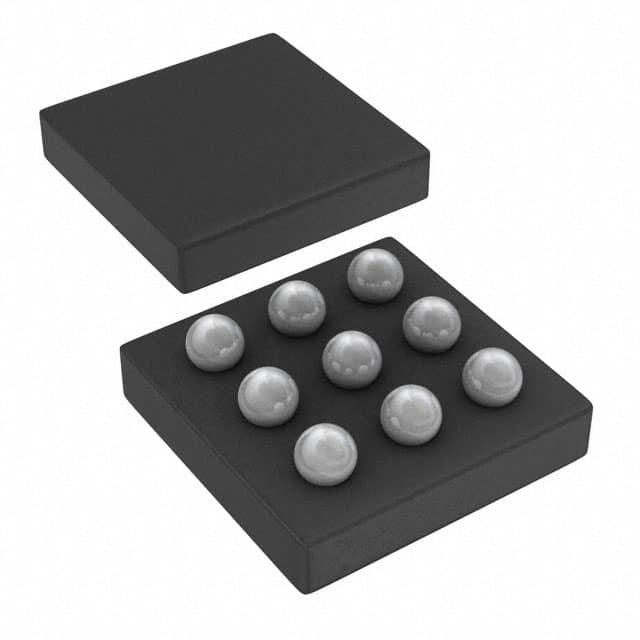
Package: DSBGA-9 (NanoFree™ chip-scale), 1.62 mm × 1.58 mm, 0.5-mm pitch - optimized for ultra-compact battery pack or system-board integration.
| Pin/Terminal | Circuit Role | Design Meaning |
|---|---|---|
| BAT | LDO input & battery voltage sense | Kelvin-connected to PACK+, enables direct battery-powered operation and accurate OCV measurement with 1 µF decoupling |
| SCL | I²C clock input (open-drain) | Supports 400 kHz Fast Mode; requires external 10-kΩ pullup to VPU (1.62–3.6 V) |
| SDA | I²C data bidirectional (open-drain) | Shares same pullup requirement as SCL; handles command/data exchange including subcommands and status reads |
| GPOUT | Configurable open-drain output/input | Default: SOC_INT pulse; configurable as BAT_LOW warning; also wakes device from SHUTDOWN when pulled high |
| BIN | Battery insertion detection / thermistor input | Detects removable pack presence; accepts 10-kΩ NTC thermistor (R25 = 10 kΩ ±1%) for external temperature sensing |
| SRP / SRN | Coulomb counter differential inputs | Accepts 10-mΩ, 1% sense resistor; Kelvin-connected to PACK+/VSYS for system-side or PACK–/Cell– for pack-side low-side sensing |
| VDD | 1.8-V LDO output | Supplies internal logic and analog circuits; decoupled with 2.2 µF ceramic capacitor to VSS; not for powering external loads |
| VSS | Ground reference | Common return path for all analog and digital circuitry; must be low-impedance connection to battery negative |
Key Features
| Feature | Design Value |
|---|---|
| CEDV fuel gauging algorithm | Automatically compensates for battery aging, self-discharge, temperature drift, and load-rate changes - no host firmware calibration required |
| Integrated 1.8-V LDO regulator | Eliminates need for external bias supply; draws power directly from battery; includes UVLO with hysteresis (2.0 V / 1.95 V) |
| Ultra-low-power operation | 9 µA SLEEP mode current extends battery life in always-on devices like wearables and medical handsets |
| Flexible temperature sensing | Supports internal sensor, host-reported values, or external 10-kΩ NTC thermistor on BIN pin - enabling optimal thermal modeling per application |
| One-Time Programmable (OTP) memory | Stores custom CEDV chemistry parameters generated via TI's GAUGEPARCAL tool - eliminates runtime host programming dependency |
| I²C interrupt signaling | GPOUT delivers configurable SOC change or BAT_LOW alerts - reduces host polling overhead and system power consumption |
Applications
| Smartphones | Wearables |
|---|---|
Use Scenario: Real-time battery level display and low-battery warning during active use and standby. IC Role / Device Role / Timing Role: Fuel gauge IC providing mAh remaining, % SoC, and runtime-to-empty estimates via I²C to application processor. Use Value: Enables accurate battery life prediction and adaptive power management without host-side algorithm development. | Use Scenario: Continuous SoC tracking in compact fitness trackers with limited PCB area and strict power budgets. IC Role / Device Role / Timing Role: System-side fuel gauge operating in SLEEP mode (9 µA) between periodic sensor readings. Use Value: Delivers >30-day runtime on small Li-ion cells while maintaining <2% SoC error across temperature and aging. |
| Portable Medical Handsets | Tablets |
Use Scenario: Reliable battery state reporting for FDA-regulated handheld diagnostic tools requiring predictable shutdown behavior. IC Role / Device Role / Timing Role: Pack-integrated fuel gauge with OTP-stored chemistry parameters and internal temperature sensing. Use Value: Ensures consistent fuel gauging performance across production units and battery replacements without recalibration. | Use Scenario: High-accuracy capacity estimation during video playback, gaming, and multitasking under variable load conditions. IC Role / Device Role / Timing Role: Coulomb-counting fuel gauge with 16-bit integrating ADC and CEDV correction for dynamic current profiles. Use Value: Maintains <3% SoC error after 500 cycles by adapting to impedance changes and capacity fade. |
Equivalent & Alternatives
The following parts are listed as comparable options for similar fuel gauge applications.
| Alternative Part | Technical Difference | Application Difference | Selection Advice |
|---|---|---|---|
| BQ27426YZFT | Higher integration: includes protection FET drivers and enhanced safety features; 20-pin WSON vs. 9-ball DSBGA | Targeted at battery packs requiring integrated protection; larger footprint and higher BOM cost | Select BQ27426YZFT only if pack-level overcurrent/short-circuit protection is needed alongside fuel gauging |
| BQ27510-G3YZFT | Uses Impedance Track™ instead of CEDV; supports multi-cell configurations; requires host calibration | Better suited for applications needing cycle-life prediction and dynamic load compensation beyond CEDV scope | Choose BQ27510-G3YZFT when advanced aging diagnostics and host-controlled parameter tuning are required |
Compared with BQ27220YZFT, BQ27426YZFT adds hardware protection control but increases size and complexity, while BQ27510-G3YZFT offers superior long-term aging modeling at the cost of host firmware involvement and reduced out-of-box simplicity.
Availability
BQ27220YZFT is available at Aetrix Electronics and suitable for smartphones, wearables, and portable medical handsets requiring stable component supply, long-lifecycle support, and consistent factory-programmed CEDV parameters.
Supply support for BQ27220YZFT includes scheduled delivery planning, volume procurement assistance, BOM continuity management, traceable sourcing, and lifecycle availability coordination for OEM customers, industrial embedded developers, connected-device designers, and electronics production programs.
Manufacturer
Texas Instruments is a global semiconductor company specializing in analog and embedded processing technologies, with leadership in battery management, power conversion, and signal chain solutions.
The BQ27220YZFT belongs to TI's bq27xxx fuel gauge product line, designed specifically for low-power, single-cell Li-ion applications where minimal host intervention, small form factor, and field-proven CEDV accuracy are critical.
FAQ
What is the primary fuel gauging algorithm used by the BQ27220YZFT?
The BQ27220YZFT uses the Compensated End-of-Discharge Voltage (CEDV) algorithm, which models battery open-circuit voltage as a function of state-of-charge, temperature, and current. This enables automatic compensation for aging, self-discharge, and rate effects without host calibration. The BQ27220YZFT implements this algorithm in hardware with preloaded ROM parameters or customer-defined OTP values generated via TI's GAUGEPARCAL tool.
Does the BQ27220YZFT require an external sense resistor, and what value is supported?
Yes, the BQ27220YZFT requires an external sense resistor connected between SRP and SRN pins. It is pre-calibrated for a standard 10-mΩ, 1% tolerance resistor - no calibration is needed. The device supports Kelvin connections for both system-side (SRP to PACK+, SRN to VSYS) and pack-side low-side (SRP to PACK–, SRN to Cell–) configurations, ensuring accurate coulomb counting across diverse implementations.
How does the BQ27220YZFT manage power consumption in low-duty-cycle applications?
The BQ27220YZFT achieves ultra-low power operation with 9 µA in SLEEP mode and 50 µA in NORMAL mode. It automatically transitions between INITIALIZATION, NORMAL, and SLEEP based on I²C activity and wake events. GPOUT can trigger wake-up from SHUTDOWN (0.6 µA), and configurable interrupts reduce host polling. This makes the BQ27220YZFT ideal for wearables and medical devices where battery life is constrained by quiescent current.
Can the BQ27220YZFT operate without an external microcontroller?
No - the BQ27220YZFT is a microcontroller peripheral requiring I²C host interaction for configuration, parameter loading, and data retrieval. It does not execute autonomous state-machine logic. However, it minimizes host firmware burden: default CEDV parameters are stored in ROM, OTP programming eliminates runtime setup, and standard commands (e.g., Control(), DataFlash()) abstract low-level register access. The BQ27220YZFT relies on the host for temperature reporting (if not using internal sensor or BIN thermistor) and initial OTP programming.
What package type and dimensions does the BQ27220YZFT use?
The BQ27220YZFT uses a NanoFree™ DSBGA-9 package (orderable code YZF) with nominal body size 1.62 mm × 1.58 mm and 0.5-mm ball pitch. This chip-scale construction enables direct mounting on battery flex circuits or ultra-dense system boards. The package has nine solder balls arranged in a 3×3 grid, with VSS (B2), VDD (B3), BAT (C3), SRP (C1), SRN (C2), SCL (A3), SDA (A2), GPOUT (A1), and BIN (B1) - verified from TI's official pinout diagram and mechanical drawings.
BQ27220YZFT Specifications
- Product attributes
- Attribute value
- Manufacturer:
- Texas Instruments
- Series:
- -
- Package/Case:
- 9-UFBGA, DSBGA
- Packaging:
- Tape & Reel (TR)
- Product Status:
- Active
- Function:
- Battery Monitor
- Battery Chemistry:
- Lithium Ion
- Number of Cells:
- 1
- Fault Protection:
- -
- Interface:
- I2C
- Operating Temperature:
- -40°C ~ 85°C (TA)
- Grade:
- -
- Qualification:
- -
- Mounting Type:
- Surface Mount
- Supplier Device Package:
- 9-DSBGA
BQ27220YZFT FAQ
1.How can I place an order for BQ27220YZFT through Aetrix?
Please submit a Request for Quotation (RFQ) for BQ27220YZFT on Aetrix. Our sales agent will provide a competitive quotation and guide you through the order confirmation once you accept the terms.
2.Are the price and stock information for BQ27220YZFT reliable?
The price and inventory of BQ27220YZFT are updated periodically and may fluctuate due to market conditions. Stock and pricing data are typically refreshed every 24 hours. Quotation validity for BQ27220YZFT is usually 5 days.
3.What payment methods are accepted for BQ27220YZFT?
We accept Wire Transfer, PayPal, Credit Card, Western Union, MoneyGram, and Escrow for BQ27220YZFT transactions.
Note: Certain payment methods may incur a processing fee.
4.How is shipping managed for BQ27220YZFT?
BQ27220YZFT orders can be shipped via leading logistics carriers, including DHL, UPS, FedEx, TNT, or Registered Mail.
Once your BQ27220YZFT order is processed, you will receive an email with the shipment details and tracking number.
Note: Tracking information may take up to 24 hours to appear. Express delivery typically takes 3–5 business days.
5.How can I obtain technical support or documentation for BQ27220YZFT?
For technical support, including BQ27220YZFT datasheets, pinout diagrams, or application guidance, please contact our engineering support team. They can provide detailed documentation and assistance for your BQ27220YZFT requirements.
6.How does Aetrix verify that BQ27220YZFT is sourced from the original manufacturer or authorized distributors?
All BQ27220YZFT products on Aetrix are procured from qualified distributors and authorized channels. Our dedicated quality assurance team conducts strict verification, including traceability checks and, if necessary, third-party testing. This ensures that BQ27220YZFT meets industry standards.
7.What is the process for return or replacement of BQ27220YZFT?
All BQ27220YZFT units undergo pre-shipment inspection (PSI). If there is an issue with BQ27220YZFT, returns or replacements are accepted under the following conditions:
1.Quantity discrepancies, incorrect items, or visible external defects (such as breakage or corrosion), acknowledged by Aetrix.
2.The issue is reported within 90 days of delivery.
3.The BQ27220YZFT part is unused and in its original packaging.
Return procedure for BQ27220YZFT:
1.Submit a request within 90 days.
2.Obtain a Return Material Authorization (RMA) from Aetrix.
BQ27220YZFT Tags
-
BQ29700DSER
Texas Instruments
-
S-8241ABKMC-GBKT2G
ABLIC Inc.
-
S-8241ABPMC-GBPT2G
ABLIC Inc.

-
BQ27427YZFR
Texas Instruments
-
BQ27426YZFR
Texas Instruments
-
STC3117IJT
STMicroelectronics
-
STC3115IJT
STMicroelectronics
-
BQ76925RGER
Texas Instruments
-
NPM1100-QDAA-R
Nordic Semiconductor ASA
-
BQ27441DRZR-G1A
Texas Instruments
-
STC3115AIQT
STMicroelectronics

-
S-8252AAL-M6T1U
ABLIC Inc.
Tech Hub

A practical engineering guide to 3.3V and 5V logic compatibility, input thresholds, resistor dividers, translator ICs, MOSFET level shifting, I2C pull-ups, timing limits and power-sequencing risks.

The 74HC595 uses push-pull logic outputs, while the TPIC6B595 uses 50 V open-drain DMOS sinks for higher-power loads. This guide compares timing, current limits, 3.3 V interfacing, load wiring, thermal…

The 74HC595 converts serial data into eight stable parallel outputs. This guide covers pin functions, shift and storage timing, OE and MR behavior, drive-current limits, cascading, voltage compatibilit…

A technical comparison of level-sensitive latches and edge-triggered flip-flops, covering timing windows, setup and hold limits, master–slave operation, time borrowing, race-through, HDL inference and…

A D latch stores one bit while Enable controls when data can pass. This reference covers gate-level operation, truth tables, transparency, setup and hold timing, LE versus OE, common ICs and practical …

An SR latch stores one bit through cross-coupled feedback. This engineering reference covers NOR and NAND implementations, truth tables, forbidden-state recovery, gated operation, switch debouncing, fa…

Latch circuits retain one bit through feedback. This technical reference covers SR and D latches, truth tables, transparency, timing limits, latch-versus-flip-flop behavior, applications and common log…

An engineering guide to LED driver operation, constant-current and constant-voltage outputs, linear and switching topologies, dimming, IC selection, calculations, replacement compatibility, and fault c…

Operational amplifier guide covering op amp basics, feedback, ideal vs real op amps, common configurations, buffer circuits, offset, bias current, gain-bandwidth, slew rate, rail-to-rail limits and sel…

Jumper cables guide covering safe connection order, red and black clamp placement, final ground connection, cable gauge, length, clamp quality, copper vs CCA cables, jump starter comparison and battery…


