
 My Inquiry
 My Account


Texas Instruments BQ27320YZFT

- Part No.:
- BQ27320YZFT
- Manufacturer:
- Texas Instruments
- Category:
- Battery Management
- Package:
- 15-UFBGA, DSBGA
- Datasheet:
-
 BQ27320YZFT.pdf
- Description:
- IC BATT MON LI-ION 1CELL 15DSBGA
- Quantity:
- Payment:

- Shipping:

Inventory:714
Please send an inquiry. Send us your inquiry, and we will respond immediately.
Product details
Overview
BQ27320YZFT from Texas Instruments is a single-cell Li-ion battery fuel gauge IC implementing Compensated End-of-Discharge Voltage (CEDV) algorithm for accurate state-of-charge (SOC), remaining capacity (mAh), time-to-empty (min), and state-of-health estimation. It supports 100–14,500 mAh battery packs, operates from –40°C to 85°C, and interfaces via 400-kHz I²C and SDQ protocols. It is used in space-constrained portable electronics requiring precise battery telemetry without host firmware overhead.
For engineers reviewing the BQ27320YZFT datasheet, BQ27320YZFT pinout, BQ27320YZFT application, or BQ27320YZFT equivalent, key selection considerations include its CEDV-based gauging accuracy across aging/temperature/rate variations, dual temperature sensing (external thermistor or internal sensor), integrated 2.5-V LDO, 15-ball NanoFree™ DSBGA package, and support for up to four swappable battery profiles.
Technical Context
The BQ27320YZFT performs real-time coulomb counting using a 14–15-bit integrating ADC with ±10 µV input offset and 125-ms conversion time for voltage/temperature, plus 1-s conversion for current sense. Its CEDV algorithm models cell OCV as a function of SOC, temperature, and current using seven calibrated parameters (EMF, C0, R0, T0, R1, TC, C1), enabling runtime prediction under dynamic load and aging conditions.
It integrates a 2.5-V LDO (2.3–2.6 V output, 16 mA max), dual oscillators (8.389 MHz HF, 32.768 kHz LF), 32-byte scratch-pad FLASH NVM, and configurable interrupts (SOC_INT, BAT_GD). Power management includes five operational modes-NORMAL (118 µA), SNOOZE (62 µA), SLEEP (23 µA), HIBERNATE (8 µA), and SHUTDOWN (1 µA)-triggered automatically or by host command.
Key Specifications
| Parameter | Value and Actual Design Meaning |
|---|---|
| Supply Voltage | 2.8–4.5 V on REGIN; supports operation down to 2.45 V during low-battery conditions |
| Operating Temperature | –40°C to +85°C ambient; functional range extends to +110°C for internal monitoring |
| I²C Interface | 400-kHz maximum clock rate; open-drain SDA/SCL with 10-kΩ pull-up; supports standard 2-byte command protocol |
| Coulomb Counter Accuracy | ±0.007% integral nonlinearity; 5-mΩ to 20-mΩ sense resistor range; Kelvin-connected SRP/SRN inputs |
| ADC Resolution | 14–15 bits for both cell voltage (BAT) and temperature (TS); 125-ms conversion time per sample |
| Package | 15-pin NanoFree™ DSBGA (YZF); 1.375 mm × 2.75 mm × 1.75 mm body size; ball pitch 0.4 mm |
| Data Retention | 10 years for data flash memory; 20,000 write cycles; 2-ms word programming time |
Pinout & Package
The BQ27320YZFT is housed in a 15-ball NanoFree™ (DSBGA) package with 0.4-mm pitch, optimized for ultra-low-profile, high-density PCB layouts in portable devices.
| Pin/Terminal | Circuit Role | Design Meaning |
|---|---|---|
| SRP / SRN | Coulomb counter analog inputs | Kelvin-connected sense pins for 5–20 mΩ shunt; enable high-accuracy current integration with <10 µV offset error |
| VSS | Ground reference | Common return for analog and digital circuits; two dedicated balls (C1, C2) minimize ground impedance |
| VCC | LDO output & core supply | 2.5-V regulated output (2.3–2.6 V); powers internal processor and must be decoupled with 0.47–1 µF ceramic capacitor |
| REGIN | LDO input | Accepts 2.8–4.5 V input; requires 0.1-µF ceramic decoupling to VSS; CE pin disconnects LDO when driven low |
| SOC_INT | State-of-charge interrupt | Open-drain output generating pulse on SOC threshold crossing; enables host to avoid polling and reduce system power |
| BAT_GD | Battery-good indicator | Push-pull active-low output signaling valid battery presence; polarity and enable controlled via OpConfig register |
| CE | Chip enable | Drives LDO into shutdown when low; ESD diode to REGIN requires VCE ≤ VREGIN at all times |
| BAT | Cell voltage input | ADC input for direct cell voltage measurement; supports up to 4.8 V full-scale for precision OCV tracking |
| SCL / SDA | I²C interface | Open-drain clock/data lines; require external 10-kΩ pull-ups to VCC; support 400-kHz communication for fast telemetry reads |
| SDQ | Authentication ID interface | Single-wire SDQ protocol interface to companion authentication IC; 60–120 µs bit cycle time |
| TS | Thermistor voltage sense | ADC input for 10.0 kΩ NTC thermistor (e.g., Semitec 103AT); supports 18.2-kΩ pull-up between BI/TOUT and TS |
| BI/TOUT | Battery insertion detection & thermistor bias | Power pin for thermistor network and multiplexer control; requires >1 MΩ pull-up; enables pack-swap detection |
Key Features
| Feature | Design Value |
|---|---|
| CEDV fuel gauging algorithm | Compensates for battery aging, self-discharge, temperature drift, and load-rate changes to deliver ±5% SOC accuracy over life |
| Dual temperature sensing path | Supports external 10.0 kΩ NTC thermistor (±1% tolerance) or internal sensor; enables thermal-aware gauging and protection decisions |
| Four battery profile storage | Allows seamless swapping of up to four distinct removable battery packs without host reconfiguration or recalibration |
| Configurable interrupt outputs | SOC_INT and BAT_GD provide hardware event signaling-reducing host polling frequency and extending system sleep duration |
| Integrated 2.5-V LDO regulator | Eliminates need for external voltage regulation; delivers stable core supply with 70°C/W junction-to-ambient thermal resistance |
Applications
| Smartphones & Tablets | Wearables |
|---|---|
|
Use Scenario: Real-time battery telemetry in thin-profile mobile devices with removable or embedded Li-ion cells. IC Role / Device Role / Timing Role: Primary fuel gauge IC performing coulomb counting, OCV modeling, and SOC reporting via I²C every 1–5 seconds. Use Value: Enables accurate low-battery warnings, adaptive power management, and battery health reporting without host CPU intervention. |
Use Scenario: Compact wearable electronics (smartwatches, fitness trackers) requiring minimal board area and ultra-low quiescent current. IC Role / Device Role / Timing Role: System-side fuel gauge managing battery state during intermittent BLE connectivity and sensor sampling bursts. Use Value: Delivers <23 µA sleep-mode current and supports thermistor-based thermal derating-extending runtime while maintaining safety compliance. |
| Portable Medical Handsets | Building Automation Sensors |
|
Use Scenario: Battery-powered clinical devices needing traceable, repeatable runtime estimates for regulatory compliance and user trust. IC Role / Device Role / Timing Role: Certified fuel gauge providing SOC, SOH, and time-to-empty with smoothing filter to suppress transient load artifacts. Use Value: Meets IEC 62304 Class B requirements through deterministic CEDV modeling, 10-year data retention, and validated flash integrity. |
Use Scenario: Wireless environmental sensors deployed in HVAC systems or smart lighting nodes operating on primary Li-ion cells. IC Role / Device Role / Timing Role: Pack-side gauge interfacing directly with PACK+ and PACK– terminals; reports capacity degradation over multi-year deployments. Use Value: Supports predictive maintenance alerts via SOH tracking and enables firmware-triggered battery replacement before failure. |
Equivalent & Alternatives
The following parts are listed as comparable options for similar battery fuel gauge applications.
| Alternative Part | Technical Difference | Application Difference | Selection Advice |
|---|---|---|---|
| BQ27426YZFT | Successor device with enhanced CEDV model, lower quiescent current (10 µA sleep), and extended temperature range (–40°C to +110°C) | Requires updated firmware calibration; supports higher-accuracy chem ID matching and faster I²C timing | Select for new designs requiring improved aging compensation and longer-term reliability in high-temp environments |
| BQ27220YZFT | Legacy variant with identical pinout but no SDQ interface, reduced flash (16 bytes), and no BAT_GD output | Lacks authentication capability and battery-good status signaling; limited to basic gauging without host alerting | Consider only for cost-sensitive legacy replacements where SDQ and BAT_GD functionality are unused |
Compared with BQ27426YZFT, the BQ27320YZFT offers proven field reliability and simpler calibration but lacks newer thermal modeling and lower-power sleep modes; versus BQ27220YZFT, it adds critical security and status signaling features required for modern portable systems.
Availability
BQ27320YZFT is available at Aetrix Electronics and suitable for smartphones, wearables, and portable medical handsets requiring stable component supply, long-lifecycle support, and consistent parametric performance across production batches.
Supply support for BQ27320YZFT includes scheduled delivery planning, volume procurement assistance, BOM continuity management, traceable sourcing, and lifecycle availability coordination for OEM customers, industrial embedded developers, connected-device designers, and electronics production programs.
Manufacturer
Texas Instruments is a global semiconductor leader specializing in analog, embedded processing, and power management technologies, with decades of expertise in battery management solutions.
The BQ27320YZFT belongs to TI's CEDV-based fuel gauge product line, designed specifically for single-cell Li-ion systems where high-accuracy runtime prediction, minimal host firmware dependency, and compact packaging are essential.
FAQ
What is the primary gauging algorithm used by the BQ27320YZFT?
The BQ27320YZFT implements the Compensated End-of-Discharge Voltage (CEDV) algorithm, which models cell open-circuit voltage as a function of state-of-charge, temperature, and current using seven calibrated parameters. This enables accurate SOC and time-to-empty estimation across battery aging, self-discharge, and varying load conditions-without requiring full discharge cycles for learning. The BQ27320YZFT uses this method to deliver ±5% SOC accuracy over the battery lifetime.
Does the BQ27320YZFT support external thermistor sensing?
Yes, the BQ27320YZFT supports external NTC thermistor sensing via the TS and BI/TOUT pins, optimized for 10.0 kΩ ±1% thermistors like the Semitec 103AT (B25/85 = 3435K). A 18.2-kΩ pull-up resistor between BI/TOUT and TS is required. The device also supports internal temperature sensing or host-reported temperature, allowing flexible thermal monitoring based on system architecture and accuracy requirements for the BQ27320YZFT.
What communication interfaces does the BQ27320YZFT provide?
The BQ27320YZFT provides two digital interfaces: a 400-kHz I²C-compatible serial interface (SCL/SDA) for high-speed telemetry read/write, and a single-wire SDQ interface (SDQ pin) for authentication ID communication with companion security ICs. Both interfaces operate independently-the I²C bus handles fuel gauge data (e.g., RemainingCapacity(), SOC(), Temperature()), while SDQ manages secure identification. No shared resources or arbitration logic is required between them in the BQ27320YZFT.
How does the BQ27320YZFT handle multiple battery profiles?
The BQ27320YZFT stores up to four independent battery profiles in its data flash memory, enabling seamless swapping of different removable battery packs without host reconfiguration. Each profile retains unique chemistry parameters, learned full-charge capacity, and aging data. Profile selection is performed via Control() subcommands (BATT_SELECT_0 through BATT_SELECT_3), allowing the host to switch contexts dynamically. This capability is integral to the BQ27320YZFT's design for consumer electronics with interchangeable batteries.
What power-saving modes does the BQ27320YZFT support?
The BQ27320YZFT supports five power modes: NORMAL (118 µA), SNOOZE (62 µA), SLEEP (23 µA), HIBERNATE (8 µA), and SHUTDOWN (1 µA). Mode transitions occur automatically based on activity (e.g., no I²C traffic triggers SLEEP) or can be forced via Control() subcommands (SET_SNOOZE, CLEAR_HIBERNATE, etc.). The CE pin disables the internal LDO to enter SHUTDOWN. These modes allow the BQ27320YZFT to minimize system-level power consumption while maintaining accurate gauging fidelity during active use.
BQ27320YZFT Specifications
- Product attributes
- Attribute value
- Manufacturer:
- Texas Instruments
- Series:
- -
- Package/Case:
- 15-UFBGA, DSBGA
- Packaging:
- Tape & Reel (TR)
- Product Status:
- Active
- Function:
- Battery Monitor
- Battery Chemistry:
- Lithium Ion
- Number of Cells:
- 1
- Fault Protection:
- -
- Interface:
- I2C
- Operating Temperature:
- -40°C ~ 85°C (TA)
- Grade:
- -
- Qualification:
- -
- Mounting Type:
- Surface Mount
- Supplier Device Package:
- 15-DSBGA
BQ27320YZFT FAQ
1.How can I place an order for BQ27320YZFT through Aetrix?
Please submit a Request for Quotation (RFQ) for BQ27320YZFT on Aetrix. Our sales agent will provide a competitive quotation and guide you through the order confirmation once you accept the terms.
2.Are the price and stock information for BQ27320YZFT reliable?
The price and inventory of BQ27320YZFT are updated periodically and may fluctuate due to market conditions. Stock and pricing data are typically refreshed every 24 hours. Quotation validity for BQ27320YZFT is usually 5 days.
3.What payment methods are accepted for BQ27320YZFT?
We accept Wire Transfer, PayPal, Credit Card, Western Union, MoneyGram, and Escrow for BQ27320YZFT transactions.
Note: Certain payment methods may incur a processing fee.
4.How is shipping managed for BQ27320YZFT?
BQ27320YZFT orders can be shipped via leading logistics carriers, including DHL, UPS, FedEx, TNT, or Registered Mail.
Once your BQ27320YZFT order is processed, you will receive an email with the shipment details and tracking number.
Note: Tracking information may take up to 24 hours to appear. Express delivery typically takes 3–5 business days.
5.How can I obtain technical support or documentation for BQ27320YZFT?
For technical support, including BQ27320YZFT datasheets, pinout diagrams, or application guidance, please contact our engineering support team. They can provide detailed documentation and assistance for your BQ27320YZFT requirements.
6.How does Aetrix verify that BQ27320YZFT is sourced from the original manufacturer or authorized distributors?
All BQ27320YZFT products on Aetrix are procured from qualified distributors and authorized channels. Our dedicated quality assurance team conducts strict verification, including traceability checks and, if necessary, third-party testing. This ensures that BQ27320YZFT meets industry standards.
7.What is the process for return or replacement of BQ27320YZFT?
All BQ27320YZFT units undergo pre-shipment inspection (PSI). If there is an issue with BQ27320YZFT, returns or replacements are accepted under the following conditions:
1.Quantity discrepancies, incorrect items, or visible external defects (such as breakage or corrosion), acknowledged by Aetrix.
2.The issue is reported within 90 days of delivery.
3.The BQ27320YZFT part is unused and in its original packaging.
Return procedure for BQ27320YZFT:
1.Submit a request within 90 days.
2.Obtain a Return Material Authorization (RMA) from Aetrix.
BQ27320YZFT Tags
-
BQ29700DSER
Texas Instruments
-
S-8241ABKMC-GBKT2G
ABLIC Inc.
-
S-8241ABPMC-GBPT2G
ABLIC Inc.

-
BQ27427YZFR
Texas Instruments
-
BQ27426YZFR
Texas Instruments
-
STC3117IJT
STMicroelectronics
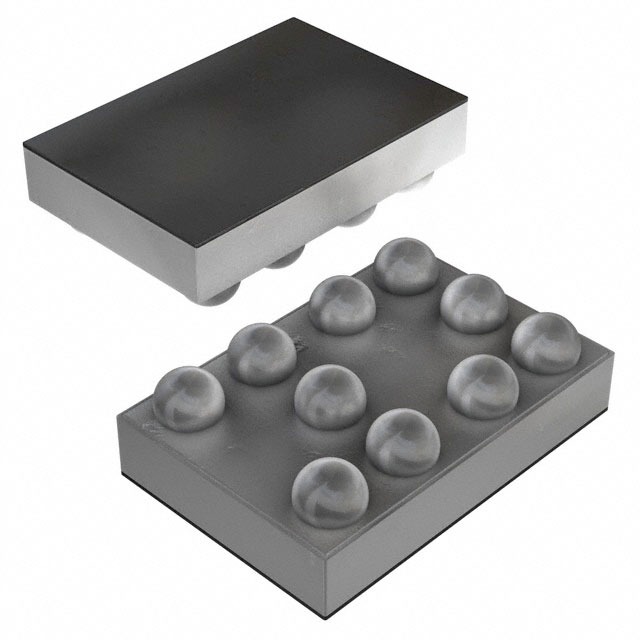
-
STC3115IJT
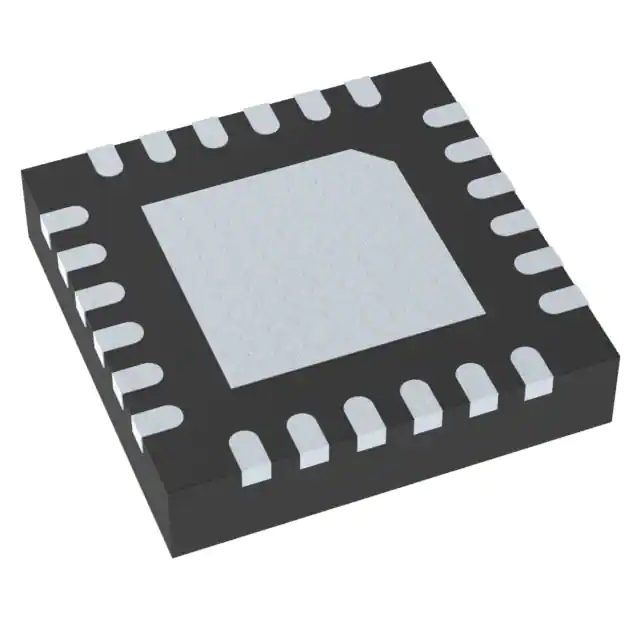
STMicroelectronics
-
BQ76925RGER
Texas Instruments
-
NPM1100-QDAA-R
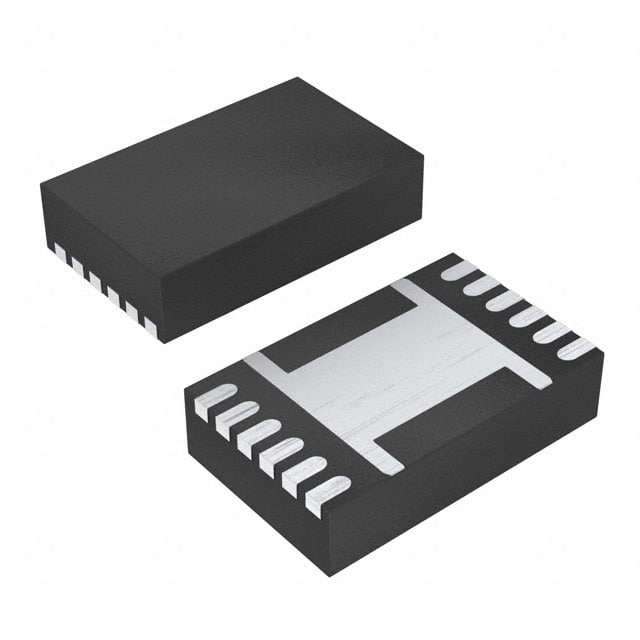
Nordic Semiconductor ASA
-
BQ27441DRZR-G1A
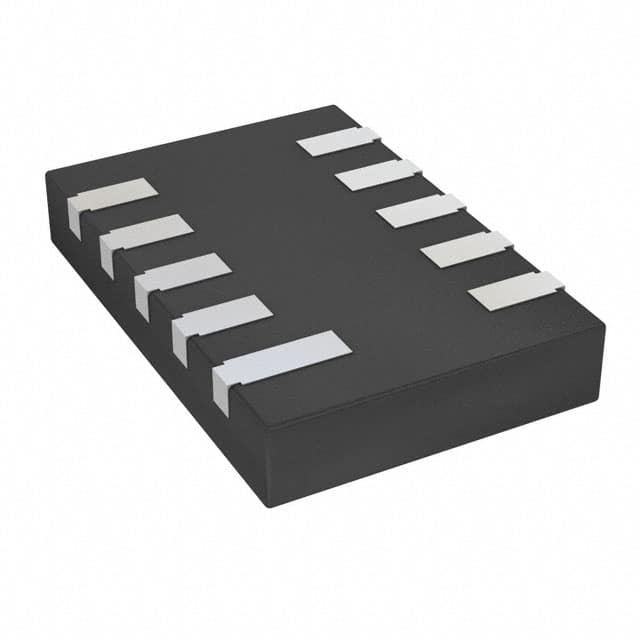
Texas Instruments
-
STC3115AIQT
STMicroelectronics

-
S-8252AAL-M6T1U
ABLIC Inc.
Tech Hub

A practical engineering guide to 3.3V and 5V logic compatibility, input thresholds, resistor dividers, translator ICs, MOSFET level shifting, I2C pull-ups, timing limits and power-sequencing risks.

The 74HC595 uses push-pull logic outputs, while the TPIC6B595 uses 50 V open-drain DMOS sinks for higher-power loads. This guide compares timing, current limits, 3.3 V interfacing, load wiring, thermal…

The 74HC595 converts serial data into eight stable parallel outputs. This guide covers pin functions, shift and storage timing, OE and MR behavior, drive-current limits, cascading, voltage compatibilit…

A technical comparison of level-sensitive latches and edge-triggered flip-flops, covering timing windows, setup and hold limits, master–slave operation, time borrowing, race-through, HDL inference and…

A D latch stores one bit while Enable controls when data can pass. This reference covers gate-level operation, truth tables, transparency, setup and hold timing, LE versus OE, common ICs and practical …

An SR latch stores one bit through cross-coupled feedback. This engineering reference covers NOR and NAND implementations, truth tables, forbidden-state recovery, gated operation, switch debouncing, fa…

Latch circuits retain one bit through feedback. This technical reference covers SR and D latches, truth tables, transparency, timing limits, latch-versus-flip-flop behavior, applications and common log…

An engineering guide to LED driver operation, constant-current and constant-voltage outputs, linear and switching topologies, dimming, IC selection, calculations, replacement compatibility, and fault c…

Operational amplifier guide covering op amp basics, feedback, ideal vs real op amps, common configurations, buffer circuits, offset, bias current, gain-bandwidth, slew rate, rail-to-rail limits and sel…

Jumper cables guide covering safe connection order, red and black clamp placement, final ground connection, cable gauge, length, clamp quality, copper vs CCA cables, jump starter comparison and battery…


