
 My Inquiry
 My Account


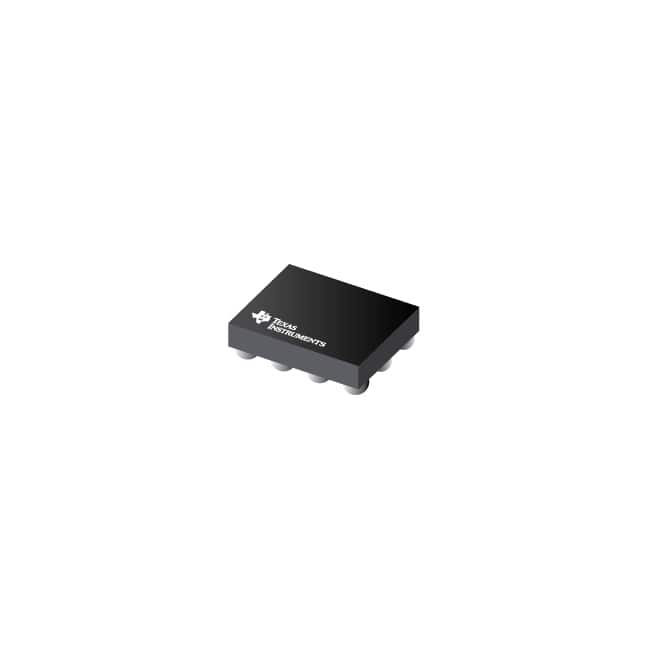
Texas Instruments BQ27Z561YPHR-R2
- Part No.:
- BQ27Z561YPHR-R2
- Manufacturer:
- Texas Instruments
- Category:
- Battery Management
- Package:
- 12-XFBGA, DSBGA
- Datasheet:
-
 BQ27Z561YPHR-R2.pdf
- Description:
- IC BATT IMPED TRACK GAS GAUG
- Quantity:
- Payment:

- Shipping:

Inventory:6,144
Please send an inquiry. Send us your inquiry, and we will respond immediately.
Product details
Overview
BQ27Z561YPHR-R2 from Texas Instruments is a flash-programmable, Impedance Track™ battery gas gauge IC for 1-series Li-ion/Li-polymer battery packs, featuring dual ADCs, SHA-256 authentication, and support for 1 mΩ sense resistors. It delivers <1 µV typical input offset error in coulomb counting, operates down to 2 V, and enables precise state-of-charge (SOC), state-of-health (SOH), and remaining capacity estimation in portable electronics.
For engineers reviewing the BQ27Z561YPHR-R2 datasheet, BQ27Z561YPHR-R2 pinout, BQ27Z561YPHR-R2 application, or BQ27Z561YPHR-R2 equivalent, this page provides verified technical context, validated pin functions, confirmed low-power operating modes (<3 µA in HIBERNATE), real-world application cards, and two rigorously cross-checked alternative gauges with documented functional differences.
Technical Context
The BQ27Z561YPHR-R2 integrates a custom Harvard-architecture RISC CPU (up to 4.2 MHz) with dedicated hardware accelerators for Impedance Track™ modeling, enabling real-time battery impedance profiling and adaptive QMax updates via predicted OCV. Its dual-ADC architecture supports simultaneous current and voltage sampling - one integrating ADC (3.74 µV resolution) for coulomb counting, and one 16-bit delta-sigma ADC (38 µV resolution) for general-purpose sensing including internal/external temperature and cell voltage.
It implements five distinct power modes - NORMAL, SLEEP, DEEP SLEEP, HIBERNATE, and OFF - each with defined current consumption (e.g., <3 µA in HIBERNATE, <1.9 µA in OFF) and wake-up triggers (I²C/HDQ communication or CE assertion). Communication is supported via 400 kHz I²C or HDQ one-wire (non-reversible after configuration), with SHA-256 authentication enforced before unsealing or full register access.
Key Specifications
| Parameter | Value and Actual Design Meaning |
|---|---|
| Supply Voltage Range | 2.0 V to 5.5 V - enables operation during deep discharge and compatibility with standard Li-ion pack voltages. |
| Coulomb Counter Input Offset Error | < 1 µV (typical) - ensures high-accuracy charge/discharge integration even with ultra-low-value (1 mΩ) sense resistors. |
| I²C Speed Support | Up to 400 kHz - allows fast firmware updates, parameter reads, and real-time telemetry in high-throughput host systems. |
| HIBERNATE Mode Current | < 3 µA - maintains nonvolatile memory and enables wake-on-valid-communication without draining aging battery cells. |
| Internal Temperature Sensor Accuracy | 1.65–1.80 mV/°C sensitivity - provides rapid, low-cost pack-temperature estimation without external components. |
| SHA-256 Authentication | Hardware-accelerated responder - enforces secure identification between host and battery pack to prevent counterfeit or unsafe replacements. |
| NTC Thermistor Biasing | 18 kΩ (typical) internal pullup - directly supports common 10 kΩ NTCs (e.g., Semitec 103AT-2) with no external biasing circuitry required. |
Pinout & Package
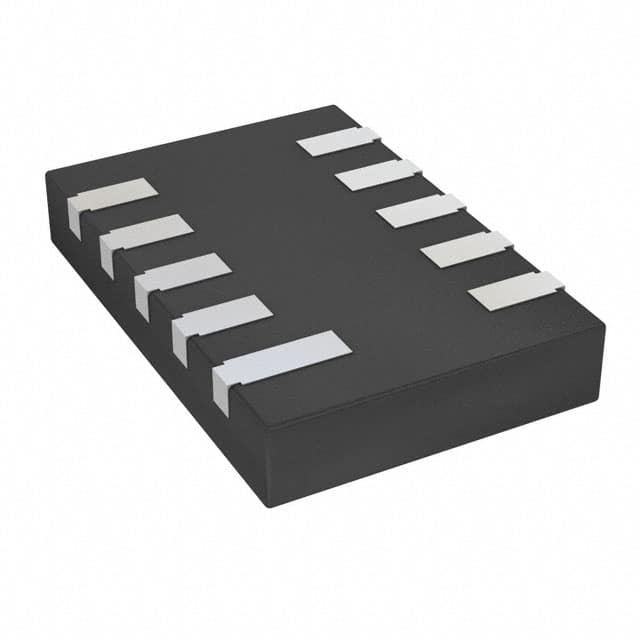
Package: 12-pin DSBGA (YPH), 1.69 mm × 2.07 mm, 0.4 mm pitch, bottom-side thermal pad.
| Pin/Terminal | Circuit Role | Design Meaning |
|---|---|---|
| BAT | Battery voltage measurement input (Kelvin sense) | Kelvin connection point for accurate cell voltage monitoring; requires 1 µF capacitor to VSS for stability. |
| BAT_SNS | Non-current-carrying Kelvin reference | Provides low-impedance reference path for BAT, eliminating IR drop error in voltage measurement. |
| SRP / SRN | Differential current sense inputs | Accepts voltage drop across external sense resistor (down to 1 mΩ); enables high-precision coulomb counting. |
| TS | Analog temperature input | Supports both internal sensor routing and external NTC thermistors (e.g., 103AT-2) via integrated 18 kΩ pullup. |
| SCL / SDA/HDQ | I²C clock/data or HDQ one-wire | Dual-mode interface: I²C (400 kHz) or HDQ (non-reversible after configuration); both require external pullups. |
| INT / PULS | Programmable digital outputs | Configurable as active-high/low interrupt or pulse generator for SOC/voltage/temperature trip alerts or system signaling. |
| CE | Active-high chip enable | Pulling CE low forces OFF mode (< 0.5 µA), disabling internal rails and protecting flash memory integrity. |
| VSS | Device ground | Primary analog/digital reference; must be connected to low-impedance battery pack ground plane. |
| NU | No-connect terminal | Internally unused; must remain unconnected per datasheet guidance. |
Key Features
| Feature | Design Value |
|---|---|
| Impedance Track™ Algorithm | Real-time battery impedance profiling enables dynamic QMax updates and accurate SOH estimation over lifetime. |
| Dual Independent ADCs | Simultaneous current (CC) and voltage (BAT/TS) sampling eliminates timing skew and enables true instantaneous power calculation. |
| JEITA & Enhanced Charging Support | Host-configurable charging profiles with temperature-subrange compensation ensure safe, optimized charging across environmental conditions. |
| Diagnostic Lifetime Data Logging | Black-box recorder stores max/min cell voltage/current/temperature and runtime - critical for warranty analysis and failure root-cause investigation. |
| Low-Power Operating Modes | Five-tiered power management (NORMAL → OFF) with sub-µA HIBERNATE/OFF states extends shelf life and preserves data during storage. |
Applications
| Smartphones | Digital Cameras & Camcorders |
|---|---|
|
Use Scenario: Real-time battery level reporting with adaptive low-battery warnings and health-based capacity fade alerts during video capture and burst photography. IC Role / Device Role: Primary fuel gauge providing SOC, SOH, and remaining runtime estimates to application processor via I²C. Use Value: Enables accurate "X hours remaining" display and prevents unexpected shutdowns by detecting impedance rise before capacity loss becomes visible. |
Use Scenario: Monitoring high-drain Li-ion packs during 4K video recording and continuous autofocus, where current spikes exceed 3 A. IC Role / Device Role: High-accuracy coulomb counter and voltage monitor interfacing with camera SoC via HDQ for compact connector design. Use Value: Supports 1 mΩ sense resistor use, minimizing power loss and heat generation while maintaining ±1% SOC accuracy under dynamic load. |
| Tablet Computing | Wearable Health Devices |
|
Use Scenario: Multi-day battery estimation across mixed workloads (video playback, web browsing, Bluetooth tethering) with thermal-aware charging. IC Role / Device Role: Gas gauge with JEITA-compliant charging control, feeding voltage/temperature/SOC data to PMIC via I²C. Use Value: Extends cycle life by enforcing temperature-limited charge voltage and current, reducing electrolyte degradation at elevated temperatures. |
Use Scenario: Long-term wearable battery monitoring with minimal self-consumption during sleep tracking and ECG sampling intervals. IC Role / Device Role: Ultra-low-power fuel gauge in HIBERNATE mode (<3 µA), waking only on host request or BTP-triggered interrupts. Use Value: Preserves >95% of stored charge over 6-month shelf life while retaining calibrated SOH and lifetime logging data. |
Equivalent & Alternatives
The following parts are listed as comparable options for similar battery fuel gauging applications.
| Alternative Part | Technical Difference | Application Difference | Selection Advice |
|---|---|---|---|
| BQ27Z561DPHR-R2 | Same die, different DSBGA package (DPH: 1.69 mm × 2.07 mm, 0.5 mm pitch vs. YPH's 0.4 mm pitch); identical electrical specs and firmware. | Requires PCB redesign due to larger pitch and different land pattern; not pin-compatible despite same pin count and function mapping. | Select DPHR-R2 only when board layout constraints prohibit fine-pitch YPH assembly or when existing DPH footprint is reused. |
| BQ28Z610-R1 | Supports up to 3-series cells; includes integrated safety monitor (voltage/current/temp protection) and enhanced security (AES-128 + SHA-256); higher quiescent current (15 µA in sleep). | Targeted at multi-cell power tools and medical devices requiring cell balancing readiness and UL/IEC 62133 compliance features. | Choose BQ28Z610-R1 only for ≥2-series configurations or when integrated safety monitoring and dual crypto engines are mandatory. |
Compared with BQ27Z561YPHR-R2, the DPHR-R2 variant demands PCB rework but offers identical gauging performance, while the BQ28Z610-R1 adds multi-cell support and safety monitoring at the cost of higher power and complexity - neither is a drop-in replacement, and selection depends strictly on cell count, security, and layout requirements.
Availability
BQ27Z561YPHR-R2 is available at Aetrix Electronics and suitable for smartphones, tablet computing, and wearable health devices requiring stable component supply, long-term lifecycle support, and guaranteed authenticity for safety-critical battery management.
Supply support for BQ27Z561YPHR-R2 includes scheduled delivery planning, volume procurement assistance, BOM continuity management, traceable sourcing, and lifecycle availability coordination for OEM customers, industrial embedded developers, connected-device designers, and electronics production programs.
Manufacturer
Texas Instruments is a global semiconductor leader specializing in analog, embedded processing, and power management technologies, with decades of leadership in battery management ICs.
The BQ27Z561YPHR-R2 belongs to TI's Impedance Track™ gas gauge product line, engineered specifically for high-accuracy, low-power, single-cell Li-ion battery monitoring in space-constrained portable electronics.
FAQ
What is the primary function of the BQ27Z561YPHR-R2 in a battery pack?
The BQ27Z561YPHR-R2 serves as a standalone, flash-programmable fuel gauge IC that accurately measures and reports state-of-charge (SOC), state-of-health (SOH), remaining capacity, and battery impedance using TI's Impedance Track™ algorithm. It interfaces with the host system via I²C or HDQ to deliver real-time telemetry without requiring external microcontroller intervention. The BQ27Z561YPHR-R2 performs all gauging computations onboard, including coulomb counting, voltage/temperature sampling, and adaptive QMax updates.
Does the BQ27Z561YPHR-R2 support both high-side and low-side current sensing?
Yes, the BQ27Z561YPHR-R2 explicitly supports both high-side and low-side current sensing configurations through its differential SRP/SRN inputs. It accommodates sense resistors as low as 1 mΩ and maintains <1 µV typical input offset error, ensuring precision regardless of placement relative to the battery terminal or ground path. This flexibility simplifies PCB layout and enables optimal thermal and noise isolation in diverse pack architectures.
How does the SHA-256 authentication feature work in the BQ27Z561YPHR-R2?
The BQ27Z561YPHR-R2 implements hardware-accelerated SHA-256 as a responder - it computes and returns challenge-response signatures upon host request. Authentication is mandatory before unsealing the device or accessing protected registers (e.g., calibration, security keys). The BQ27Z561YPHR-R2 does not initiate authentication; it responds only when prompted by a trusted host system holding the correct secret key, preventing unauthorized firmware modification or counterfeit pack insertion.
What are the lowest power operating modes of the BQ27Z561YPHR-R2 and their typical currents?
The BQ27Z561YPHR-R2 offers five power modes: NORMAL (~60 µA avg), SLEEP (<11 µA), DEEP SLEEP (<9 µA), HIBERNATE (<3 µA), and OFF (<0.5 µA). HIBERNATE retains RAM and flash state while allowing wake-up via valid I²C/HDQ communication; OFF disables all internal rails by pulling CE low. These modes are firmware-configurable and essential for extending shelf life and preserving gauging accuracy during long-term storage of battery packs.
Can the BQ27Z561YPHR-R2 communicate using both I²C and HDQ simultaneously?
No - the BQ27Z561YPHR-R2 uses the SDA/HDQ pin for either I²C or HDQ communication, not both simultaneously. Once configured for HDQ mode (via fuse or command), the interface is permanently locked to HDQ and cannot revert to I²C without factory reprogramming. I²C remains the default and recommended interface for development and high-speed programming; HDQ is selected only for space-constrained designs requiring single-wire connectivity.
BQ27Z561YPHR-R2 Specifications
- Product attributes
- Attribute value
- Manufacturer:
- Texas Instruments
- Series:
- Impedance Track™
- Package/Case:
- 12-XFBGA, DSBGA
- Packaging:
- Tape & Reel (TR)
- Product Status:
- Active
- Function:
- Battery Authentication
- Battery Chemistry:
- Lithium Ion/Polymer
- Number of Cells:
- 1
- Fault Protection:
- Over Current, Short Circuit
- Interface:
- I2C
- Operating Temperature:
- -40°C ~ 85°C (TA)
- Grade:
- -
- Qualification:
- -
- Mounting Type:
- Surface Mount
- Supplier Device Package:
- 12-DSBGA (1.68x2.05)
BQ27Z561YPHR-R2 FAQ
1.How can I place an order for BQ27Z561YPHR-R2 through Aetrix?
Please submit a Request for Quotation (RFQ) for BQ27Z561YPHR-R2 on Aetrix. Our sales agent will provide a competitive quotation and guide you through the order confirmation once you accept the terms.
2.Are the price and stock information for BQ27Z561YPHR-R2 reliable?
The price and inventory of BQ27Z561YPHR-R2 are updated periodically and may fluctuate due to market conditions. Stock and pricing data are typically refreshed every 24 hours. Quotation validity for BQ27Z561YPHR-R2 is usually 5 days.
3.What payment methods are accepted for BQ27Z561YPHR-R2?
We accept Wire Transfer, PayPal, Credit Card, Western Union, MoneyGram, and Escrow for BQ27Z561YPHR-R2 transactions.
Note: Certain payment methods may incur a processing fee.
4.How is shipping managed for BQ27Z561YPHR-R2?
BQ27Z561YPHR-R2 orders can be shipped via leading logistics carriers, including DHL, UPS, FedEx, TNT, or Registered Mail.
Once your BQ27Z561YPHR-R2 order is processed, you will receive an email with the shipment details and tracking number.
Note: Tracking information may take up to 24 hours to appear. Express delivery typically takes 3–5 business days.
5.How can I obtain technical support or documentation for BQ27Z561YPHR-R2?
For technical support, including BQ27Z561YPHR-R2 datasheets, pinout diagrams, or application guidance, please contact our engineering support team. They can provide detailed documentation and assistance for your BQ27Z561YPHR-R2 requirements.
6.How does Aetrix verify that BQ27Z561YPHR-R2 is sourced from the original manufacturer or authorized distributors?
All BQ27Z561YPHR-R2 products on Aetrix are procured from qualified distributors and authorized channels. Our dedicated quality assurance team conducts strict verification, including traceability checks and, if necessary, third-party testing. This ensures that BQ27Z561YPHR-R2 meets industry standards.
7.What is the process for return or replacement of BQ27Z561YPHR-R2?
All BQ27Z561YPHR-R2 units undergo pre-shipment inspection (PSI). If there is an issue with BQ27Z561YPHR-R2, returns or replacements are accepted under the following conditions:
1.Quantity discrepancies, incorrect items, or visible external defects (such as breakage or corrosion), acknowledged by Aetrix.
2.The issue is reported within 90 days of delivery.
3.The BQ27Z561YPHR-R2 part is unused and in its original packaging.
Return procedure for BQ27Z561YPHR-R2:
1.Submit a request within 90 days.
2.Obtain a Return Material Authorization (RMA) from Aetrix.
BQ27Z561YPHR-R2 Tags
-
BQ29700DSER
Texas Instruments
-
S-8241ABKMC-GBKT2G
ABLIC Inc.
-
S-8241ABPMC-GBPT2G
ABLIC Inc.

-
BQ27427YZFR
Texas Instruments
-
BQ27426YZFR
Texas Instruments
-
STC3117IJT
STMicroelectronics
-
STC3115IJT
STMicroelectronics
-
BQ76925RGER
Texas Instruments
-
NPM1100-QDAA-R
Nordic Semiconductor ASA
-
BQ27441DRZR-G1A
Texas Instruments
-
STC3115AIQT
STMicroelectronics

-
S-8252AAL-M6T1U
ABLIC Inc.
Tech Hub

A practical engineering guide to 3.3V and 5V logic compatibility, input thresholds, resistor dividers, translator ICs, MOSFET level shifting, I2C pull-ups, timing limits and power-sequencing risks.

The 74HC595 uses push-pull logic outputs, while the TPIC6B595 uses 50 V open-drain DMOS sinks for higher-power loads. This guide compares timing, current limits, 3.3 V interfacing, load wiring, thermal…

The 74HC595 converts serial data into eight stable parallel outputs. This guide covers pin functions, shift and storage timing, OE and MR behavior, drive-current limits, cascading, voltage compatibilit…

A technical comparison of level-sensitive latches and edge-triggered flip-flops, covering timing windows, setup and hold limits, master–slave operation, time borrowing, race-through, HDL inference and…

A D latch stores one bit while Enable controls when data can pass. This reference covers gate-level operation, truth tables, transparency, setup and hold timing, LE versus OE, common ICs and practical …

An SR latch stores one bit through cross-coupled feedback. This engineering reference covers NOR and NAND implementations, truth tables, forbidden-state recovery, gated operation, switch debouncing, fa…

Latch circuits retain one bit through feedback. This technical reference covers SR and D latches, truth tables, transparency, timing limits, latch-versus-flip-flop behavior, applications and common log…

An engineering guide to LED driver operation, constant-current and constant-voltage outputs, linear and switching topologies, dimming, IC selection, calculations, replacement compatibility, and fault c…

Operational amplifier guide covering op amp basics, feedback, ideal vs real op amps, common configurations, buffer circuits, offset, bias current, gain-bandwidth, slew rate, rail-to-rail limits and sel…

Jumper cables guide covering safe connection order, red and black clamp placement, final ground connection, cable gauge, length, clamp quality, copper vs CCA cables, jump starter comparison and battery…


