
 My Inquiry
 My Account


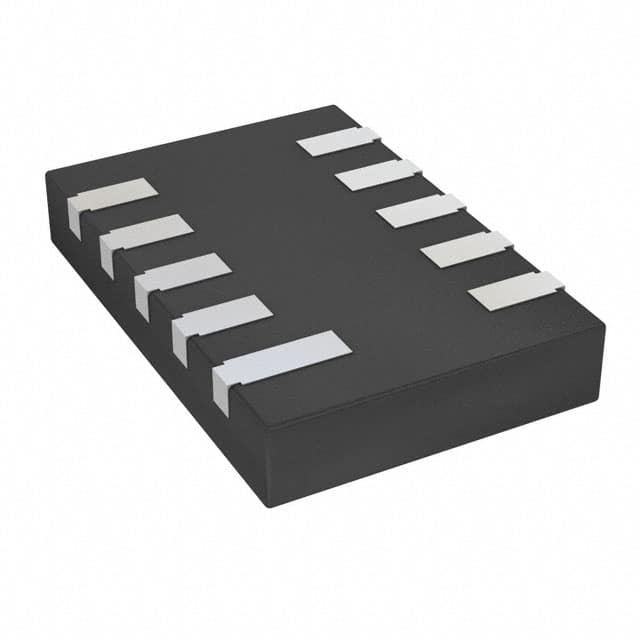
Texas Instruments BQ29413DCTRG4
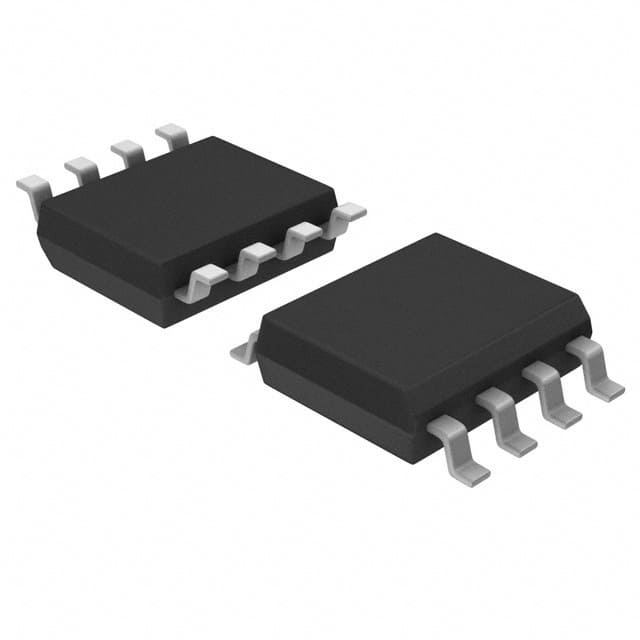
- Part No.:
- BQ29413DCTRG4
- Manufacturer:
- Texas Instruments
- Category:
- Battery Management
- Package:
- 8-LSSOP, 8-MSOP (0.110", 2.80mm Width)
- Datasheet:
-
 BQ29413DCTRG4.pdf
- Description:
- IC BATT PROT LI-ION 2-4CELL SM8
- Quantity:
- Payment:

- Shipping:

Inventory:4,332
Please send an inquiry. Send us your inquiry, and we will respond immediately.
Product details
Overview
BQ29413DCTRG4 from Texas Instruments is a secondary overvoltage protection IC for 2-, 3-, or 4-cell Li-ion battery packs, featuring a fixed 4.50 V per-cell overvoltage threshold, <2 µA supply current, and programmable delay via external capacitor on CD pin. It operates across –40°C to 110°C and drives an external N-channel FET to blow a fuse during overvoltage events in notebook battery packs.
For engineers reviewing the BQ29413DCTRG4 datasheet, BQ29413DCTRG4 pinout, BQ29413DCTRG4 application, or BQ29413DCTRG4 equivalent, key selection criteria include cell count support (2–4 series), precision overvoltage detection accuracy (±50 mV at 25°C), low ICC (<2 µA), CD-pin-based delay timing, and DCT (SSOP-8) package compatibility with existing Li-ion pack layouts.
Technical Context
The BQ29413DCTRG4 implements independent voltage monitoring across up to four stacked cells using VC1–VC4 inputs, comparing each against an internal 4.50 V reference. When any cell exceeds V(PROTECT), a 0.18 µA current source charges the external CD capacitor until 1.2 V is reached, triggering OUT high.
It features 320 mV hysteresis to prevent chatter during recovery, stable operation under pulse charging, and high ripple rejection on VDD and cell inputs. The device remains functional with VDD from 4 V to 25 V and supports differential input ranges up to ±8 V between adjacent VC pins.
Key Specifications
| Parameter | Value and Actual Design Meaning |
|---|---|
| Overvoltage Threshold | 4.50 V per cell - precise second-level protection setpoint for 4S Li-ion packs. |
| Supply Current (ICC) | <2 µA - enables ultra-low-power always-on monitoring without draining battery standby current. |
| Overvoltage Accuracy | ±50 mV at 25°C - ensures reliable trip margin above typical 4.2 V full-charge voltage. |
| Delay Time Programmability | Configured via CD pin capacitor (e.g., 0.22 µF → 1–2 s) - allows tuning of fault response window before fuse activation. |
| Operating Temperature | –40°C to 110°C - supports industrial and portable computing environments with wide thermal excursions. |
| Input Voltage Range (VCn) | 0 V to 25 V - accommodates full stack voltage range of 4-cell Li-ion (up to ~16.8 V) with margin. |
| Hysteresis (Vhys) | 320 mV - prevents oscillation during recovery by requiring cell voltage to drop to 4.18 V before reset. |
Pinout & Package
Package: SSOP-8 (DCT), 3.95 mm × 4.25 mm × 1.3 mm, RoHS-compliant, NIPDAU lead finish, MSL Level-1.
| Pin/Terminal | Circuit Role | Design Meaning |
|---|---|---|
| 1 (VC1) | Most positive cell voltage sense | Connects to top of 4S stack (Vbat+) - monitors highest-potential cell directly. |
| 2 (VC2) | Second most positive cell sense | Connects to node between cell 3 and cell 4 - enables per-cell monitoring in series configuration. |
| 3 (VC3) | Third most positive cell sense | Connects to node between cell 2 and cell 3 - required for accurate 4-cell differential sensing. |
| 4 (GND) | Ground reference | System ground return for all internal comparators and CD discharge path. |
| 5 (VC4) | Least positive cell sense | Connects to bottom of stack (cell 1 negative) - completes 4-cell voltage ladder for balanced monitoring. |
| 6 (CD) | Capacitor delay timer input | Accepts external capacitor (e.g., 0.22 µF) to set overvoltage response time; clamped to GND on reset. |
| 7 (VDD) | Power supply input | Operates from 4 V to 25 V - powered directly from battery stack or regulated auxiliary rail. |
| 8 (OUT) | Open-drain output driver | Drives external NCH FET gate; sinks ≥5 µA at 0.1 V, sources ≤–1 mA at 3 V - activates fuse-blow circuit. |
Key Features
| Feature | Design Value |
|---|---|
| Fixed 4.50 V overvoltage threshold | Guarantees consistent second-level protection for 4S Li-ion systems without trimming or calibration. |
| Programmable delay via CD pin | Enables system-specific fault confirmation windows (1–2 s typical) to reject transient spikes and avoid nuisance trips. |
| Low 2 µA quiescent current | Minimizes parasitic drain on battery during storage or standby, extending shelf life and runtime. |
| 320 mV hysteresis | Ensures clean, chatter-free recovery after overvoltage event by requiring 4.18 V cell voltage to reset. |
| High ripple rejection | Maintains stable detection during charger switching noise or load transients without false triggering. |
| Stable under pulse charge | Continues accurate monitoring during high-current intermittent charging cycles common in fast-charge protocols. |
Applications
| Portable Notebook Battery Packs | Industrial Handheld Instrumentation |
|---|---|
Use Scenario: 4-cell Li-ion battery pack in a ruggedized field data logger operating at –20°C to 70°C. IC Role / Device Role / Timing Role: Secondary overvoltage protector that triggers fuse blow only after sustained >4.50 V on any cell, preventing thermal runaway during abnormal charging. Use Value: Adds fail-safe redundancy behind primary protection IC, meeting IEC 62133 safety requirements for portable equipment. |
Use Scenario: 3-cell Li-ion pack powering a handheld oscilloscope with USB-C PD input and active balancing. IC Role / Device Role / Timing Role: Standby-monitoring IC that asserts OUT only when cell voltage exceeds 4.50 V for ≥1.5 s (0.22 µF CD cap), ignoring brief charger overshoots. Use Value: Enables robust second-tier protection without increasing BMS firmware complexity or MCU overhead. |
| Medical Portable Diagnostic Devices | Enterprise-Grade Power Tools |
Use Scenario: 2-cell Li-ion pack in a battery-powered ultrasound probe requiring FDA-compliant safety architecture. IC Role / Device Role / Timing Role: Hardware-enforced overvoltage cutoff that operates independently of host microcontroller, satisfying Class II medical device isolation requirements. Use Value: Provides deterministic, analog-level response time (<2 s) unaffected by software crashes or brownouts. |
Use Scenario: 4-cell high-rate Li-ion pack in cordless angle grinder subjected to high-vibration and rapid charge/discharge cycles. IC Role / Device Role / Timing Role: Cell-level voltage supervisor that tolerates >100 mV supply ripple and remains stable during motor commutation noise. Use Value: Eliminates need for additional filtering components while maintaining protection integrity in EMI-heavy environments. |
Equivalent & Alternatives
The following parts are listed as comparable options for similar secondary overvoltage protection applications.
| Alternative Part | Technical Difference | Application Difference | Selection Advice |
|---|---|---|---|
| BQ29414PWRG4 | Higher 4.55 V overvoltage threshold; identical pinout, timing, and quiescent current. | Suitable for higher-voltage Li-ion chemistries (e.g., LiCoO₂ with extended upper limit) or tighter tolerance stacks. | Select when nominal cell voltage exceeds 4.45 V and design requires additional headroom before trip. |
| BQ29412DCTR | Lower 4.45 V threshold; same DCT package, temperature range, and feature set. | Preferred for standard 4.2 V Li-ion cells where tighter overvoltage margin is needed to prevent premature fuse blow. | Choose for legacy 4.2 V nominal packs where 4.50 V may be too close to safe operating limit. |
Compared with BQ29413DCTRG4, BQ29414PWRG4 offers +50 mV threshold headroom for high-stability cells, while BQ29412DCTR provides –50 mV margin for conservative designs-both retain identical delay programming, low ICC, and 4S monitoring capability.
Availability
BQ29413DCTRG4 is available at Aetrix Electronics and suitable for portable computing, industrial instrumentation, medical diagnostics, and power tool battery packs requiring stable component supply with long-term lifecycle support.
Supply support for BQ29413DCTRG4 includes scheduled delivery planning, volume procurement assistance, BOM continuity management, traceable sourcing, and lifecycle availability coordination for OEM customers, industrial embedded developers, connected-device designers, and electronics production programs.
Manufacturer
Texas Instruments is a global semiconductor company headquartered in Dallas, Texas, delivering analog and embedded processing solutions for industrial, automotive, and personal electronics markets.
The bq2941x family was designed specifically for secondary overvoltage protection in multi-cell Li-ion battery packs, providing hardware-based redundancy to complement primary protection ICs in safety-critical energy storage systems.
FAQ
What is the overvoltage protection threshold of the BQ29413DCTRG4?
The BQ29413DCTRG4 has a fixed overvoltage protection threshold of 4.50 V per cell, specified across –40°C to 110°C with ±50 mV accuracy at 25°C. This value is factory-trimmed and not user-adjustable, ensuring consistent second-level protection behavior in 2-, 3-, or 4-cell Li-ion configurations without external resistive dividers or calibration.
How does the BQ29413DCTRG4 implement programmable delay time?
The BQ29413DCTRG4 uses an internal 0.18 µA current source to charge an external capacitor connected to the CD pin. When the CD voltage reaches 1.2 V, the OUT pin transitions high. Delay time is calculated as tD = (1.2 V × CDELAY) / 0.18 µA - for example, a 0.22 µF capacitor yields 1.3–2.0 s delay depending on process variation. The BQ29413DCTRG4 automatically discharges CD on recovery to reset the timer.
Can the BQ29413DCTRG4 be used in a 2-cell Li-ion configuration?
Yes, the BQ29413DCTRG4 supports 2-, 3-, and 4-cell configurations. For 2-cell use, connect VC1 = VC2 = VDD (top of stack), VC3 to midpoint, and VC4 to bottom (GND). The device monitors differential voltages VC1–VC2, VC2–VC3, VC3–VC4, and VC4–GND - enabling accurate per-cell sensing regardless of series count. Full connection sequence guidance is provided in the BQ29413DCTRG4 datasheet Figure 5.
What package type and dimensions does the BQ29413DCTRG4 use?
The BQ29413DCTRG4 uses the SSOP-8 (DCT) package: 3.95 mm × 4.25 mm footprint, 1.3 mm maximum height, 0.65 mm lead pitch. It features gull-wing leads, NIPDAU surface finish, MSL Level-1 rating, and RoHS compliance. Pin 1 identifier is marked with a dot; tape-and-reel packaging (3000 pcs/reel) is standard for the "R" suffix variant.
Does the BQ29413DCTRG4 require external passive components for basic operation?
Yes - the BQ29413DCTRG4 requires at minimum an external capacitor on the CD pin to set overvoltage delay time, and a pull-up or FET gate drive network on the OUT pin to activate the fuse-blow circuit. Optional RC filters (RIN/CIN on VC pins, RVD/CVD on VDD) improve noise immunity but are not mandatory for functional operation in low-noise environments.
BQ29413DCTRG4 Specifications
- Product attributes
- Attribute value
- Manufacturer:
- Texas Instruments
- Series:
- -
- Package/Case:
- 8-LSSOP, 8-MSOP (0.110", 2.80mm Width)
- Packaging:
- Tape & Reel (TR)
- Product Status:
- Discontinued at Digi-Key
- Function:
- Battery Protection
- Battery Chemistry:
- Lithium Ion
- Number of Cells:
- 2 ~ 4
- Fault Protection:
- Over Voltage
- Interface:
- -
- Operating Temperature:
- -40°C ~ 110°C (TA)
- Grade:
- -
- Qualification:
- -
- Mounting Type:
- Surface Mount
- Supplier Device Package:
- SM8
BQ29413DCTRG4 FAQ
1.How can I place an order for BQ29413DCTRG4 through Aetrix?
Please submit a Request for Quotation (RFQ) for BQ29413DCTRG4 on Aetrix. Our sales agent will provide a competitive quotation and guide you through the order confirmation once you accept the terms.
2.Are the price and stock information for BQ29413DCTRG4 reliable?
The price and inventory of BQ29413DCTRG4 are updated periodically and may fluctuate due to market conditions. Stock and pricing data are typically refreshed every 24 hours. Quotation validity for BQ29413DCTRG4 is usually 5 days.
3.What payment methods are accepted for BQ29413DCTRG4?
We accept Wire Transfer, PayPal, Credit Card, Western Union, MoneyGram, and Escrow for BQ29413DCTRG4 transactions.
Note: Certain payment methods may incur a processing fee.
4.How is shipping managed for BQ29413DCTRG4?
BQ29413DCTRG4 orders can be shipped via leading logistics carriers, including DHL, UPS, FedEx, TNT, or Registered Mail.
Once your BQ29413DCTRG4 order is processed, you will receive an email with the shipment details and tracking number.
Note: Tracking information may take up to 24 hours to appear. Express delivery typically takes 3–5 business days.
5.How can I obtain technical support or documentation for BQ29413DCTRG4?
For technical support, including BQ29413DCTRG4 datasheets, pinout diagrams, or application guidance, please contact our engineering support team. They can provide detailed documentation and assistance for your BQ29413DCTRG4 requirements.
6.How does Aetrix verify that BQ29413DCTRG4 is sourced from the original manufacturer or authorized distributors?
All BQ29413DCTRG4 products on Aetrix are procured from qualified distributors and authorized channels. Our dedicated quality assurance team conducts strict verification, including traceability checks and, if necessary, third-party testing. This ensures that BQ29413DCTRG4 meets industry standards.
7.What is the process for return or replacement of BQ29413DCTRG4?
All BQ29413DCTRG4 units undergo pre-shipment inspection (PSI). If there is an issue with BQ29413DCTRG4, returns or replacements are accepted under the following conditions:
1.Quantity discrepancies, incorrect items, or visible external defects (such as breakage or corrosion), acknowledged by Aetrix.
2.The issue is reported within 90 days of delivery.
3.The BQ29413DCTRG4 part is unused and in its original packaging.
Return procedure for BQ29413DCTRG4:
1.Submit a request within 90 days.
2.Obtain a Return Material Authorization (RMA) from Aetrix.
BQ29413DCTRG4 Tags
-
BQ29700DSER
Texas Instruments
-
S-8241ABKMC-GBKT2G
ABLIC Inc.
-
S-8241ABPMC-GBPT2G
ABLIC Inc.

-
BQ27427YZFR
Texas Instruments
-
BQ27426YZFR
Texas Instruments
-
STC3117IJT
STMicroelectronics
-
STC3115IJT
STMicroelectronics
-
BQ76925RGER
Texas Instruments
-
NPM1100-QDAA-R
Nordic Semiconductor ASA
-
BQ27441DRZR-G1A
Texas Instruments
-
STC3115AIQT
STMicroelectronics

-
S-8252AAL-M6T1U
ABLIC Inc.
Tech Hub

A practical engineering guide to 3.3V and 5V logic compatibility, input thresholds, resistor dividers, translator ICs, MOSFET level shifting, I2C pull-ups, timing limits and power-sequencing risks.

The 74HC595 uses push-pull logic outputs, while the TPIC6B595 uses 50 V open-drain DMOS sinks for higher-power loads. This guide compares timing, current limits, 3.3 V interfacing, load wiring, thermal…

The 74HC595 converts serial data into eight stable parallel outputs. This guide covers pin functions, shift and storage timing, OE and MR behavior, drive-current limits, cascading, voltage compatibilit…

A technical comparison of level-sensitive latches and edge-triggered flip-flops, covering timing windows, setup and hold limits, master–slave operation, time borrowing, race-through, HDL inference and…

A D latch stores one bit while Enable controls when data can pass. This reference covers gate-level operation, truth tables, transparency, setup and hold timing, LE versus OE, common ICs and practical …

An SR latch stores one bit through cross-coupled feedback. This engineering reference covers NOR and NAND implementations, truth tables, forbidden-state recovery, gated operation, switch debouncing, fa…

Latch circuits retain one bit through feedback. This technical reference covers SR and D latches, truth tables, transparency, timing limits, latch-versus-flip-flop behavior, applications and common log…

An engineering guide to LED driver operation, constant-current and constant-voltage outputs, linear and switching topologies, dimming, IC selection, calculations, replacement compatibility, and fault c…

Operational amplifier guide covering op amp basics, feedback, ideal vs real op amps, common configurations, buffer circuits, offset, bias current, gain-bandwidth, slew rate, rail-to-rail limits and sel…

Jumper cables guide covering safe connection order, red and black clamp placement, final ground connection, cable gauge, length, clamp quality, copper vs CCA cables, jump starter comparison and battery…


