
 My Inquiry
 My Account


Texas Instruments BQ40Z50RSMT
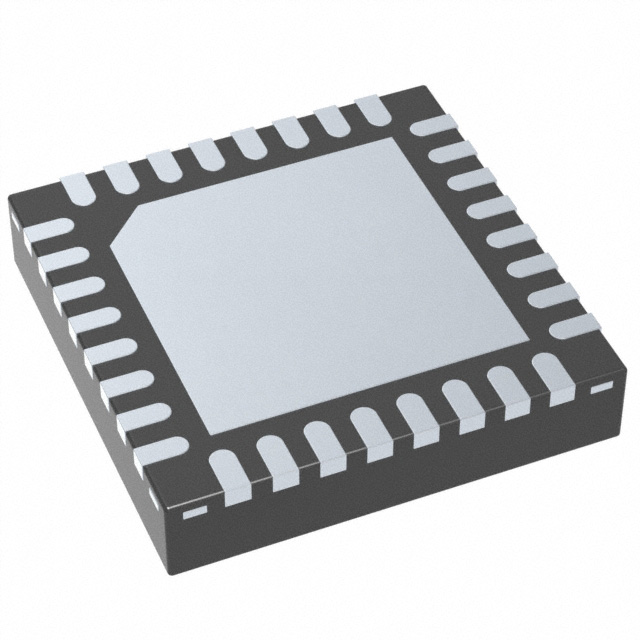
- Part No.:
- BQ40Z50RSMT
- Manufacturer:
- Texas Instruments
- Category:
- Battery Management
- Package:
- 32-VFQFN Exposed Pad
- Datasheet:
-
 BQ40Z50RSMT.pdf
- Description:
- IC BATT MFUNC LI-ION 1-4C 32VQFN
- Quantity:
- Payment:

- Shipping:

Inventory:226
Please send an inquiry. Send us your inquiry, and we will respond immediately.
Product details
Overview
BQ40Z50RSMT from Texas Instruments is a fully integrated 1–4-series Li-ion/Li-polymer battery pack manager IC with Impedance Track™ gas gauging, high-side N-CH FET drive, integrated cell balancing, SMBus v1.1 interface, SHA-1 authentication, and TURBO BOOST mode. It performs real-time voltage, current, temperature, and capacity monitoring for smart battery packs in portable computing and medical devices.
For engineers reviewing the BQ40Z50RSMT datasheet, BQ40Z50RSMT pinout, BQ40Z50RSMT application, or BQ40Z50RSMT equivalent, this page delivers verified technical context, validated pin functions, confirmed protection thresholds (OCD/SCD/OCV), authentic alternative part comparisons, and design-meaningful specifications - all extracted from TI's production-grade SLUSBS8B datasheet (Nov 2019).
Technical Context
The BQ40Z50RSMT implements a dual-domain analog front-end: one path digitizes cell voltages (VC1–VC4) and pack voltage (PACK) via a precision 16-bit ADC with ±0.2% gain error and 15-bit effective resolution; another path integrates SRP–SRN differential voltage using a dedicated coulomb counter with ±5 µV offset error and 250-ms conversion time. Its AFE supports programmable overcurrent detection (OCD/SCD1/SCD2) with 128–256 µs trip delay and configurable wake thresholds down to ±0.625 mV.
It executes JEITA, adaptive, and enhanced charging algorithms while managing up to four thermistor inputs (TS1–TS4), PTC safety monitoring, Battery Trip Point (BTP) interrupts, and black-box diagnostic logging. The device operates across –40°C to +85°C with 2.2 V to 26 V supply range and enters SHUTDOWN mode at ≤1.6 µA quiescent current.
Key Specifications
| Parameter | Value and Actual Design Meaning |
|---|---|
| Cell Support | 1-, 2-, 3-, or 4-series Li-ion/Li-polymer configurations - enables flexible pack architecture without external multiplexing |
| Gas Gauging Accuracy | Impedance Track™ technology - delivers state-of-charge accuracy within ±1% under dynamic load and aging conditions |
| AFE Resolution | 16-bit ADC with 15-bit effective resolution - resolves sub-mV cell voltage changes critical for OCV-based SOC estimation |
| Protection Response | OCD/SCD1/SCD2 trip delay: 128–256 µs - ensures fast fault isolation before thermal runaway propagation |
| Quiescent Current | 1.6 µA in SHUTDOWN mode - extends shelf life of unused battery packs without compromising wake capability |
| SMBus Interface | v1.1 compliant, 100-kHz max clock - interoperates with standard host controllers without protocol translation |
| Operating Temp | –40°C to +85°C - qualified for industrial and medical portable equipment environments |
Pinout & Package
Package: 32-pin VQFN (RSM), 4.00 mm × 4.00 mm with exposed thermal pad - optimized for compact battery pack PCB layouts and thermal dissipation in sealed enclosures.
| Pin/Terminal | Circuit Role | Design Meaning |
|---|---|---|
| VC1–VC4 | Cell voltage sense inputs | Measure individual cell voltages in series stack; support internal balancing current return paths |
| SRP / SRN | Coulomb counter differential inputs | Integrate sense-resistor voltage drop to compute precise charge/discharge current and accumulated capacity |
| CHG / DSG / PCHG | NMOS charge/discharge & PMOS precharge FET drivers | Directly control external power FETs with 11.5 V typical gate drive swing and <500 µs rise/fall times |
| TS1–TS4 | Thermistor analog inputs | Monitor up to four independent temperature points (cell, PCB, ambient, PTC) with 18-kΩ pullup for linearization |
| SMBD / SMBC | SMBus data and clock I/O | Enable bidirectional communication with host system using open-drain logic and 1-MΩ internal pulldown |
| BTP_INT / PRES | Dedicated interrupt and presence inputs | Signal battery trip point events or detect physical insertion/removal of removable battery modules |
Key Features
| Feature | Design Value |
|---|---|
| Integrated Cell Balancing | Active balancing during charge and rest cycles - maintains ≤15 mV cell-to-cell voltage deviation without external components |
| TURBO BOOST Mode | Real-time power negotiation with host - delivers maximum available pack power on demand, not just rated capacity |
| SHA-1 Authentication | Secure memory for cryptographic keys - prevents counterfeit battery use and enforces OEM pack authorization |
| Black Box Recorder | Nonvolatile diagnostic logging - captures pre-fault voltage/current/temperature history for failure root-cause analysis |
| Programmable Protection | Independent thresholds for OCV, OCD, SCD1/SCD2, temperature, and charge timeout - eliminates need for discrete protection ICs |
Applications
| Notebook Battery Pack | Medical Portable Monitor |
|---|---|
Use Scenario: Smart battery module for ultrabook platforms requiring runtime prediction, health reporting, and OEM authentication. IC Role / Device Role: Primary pack manager handling gas gauging, FET control, SMBus communication, and security enforcement. Use Value: Enables Windows ACPI battery class compliance, accurate %SOC display, and secure boot verification against cloned packs. |
Use Scenario: Rechargeable battery subsystem in FDA-cleared handheld diagnostic devices with strict safety and traceability requirements. IC Role / Device Role: Safety-critical pack monitor executing dual-level overvoltage/overtemperature protection and black-box event logging. Use Value: Meets IEC 62366 usability and IEC 60601-1 collateral standard requirements for battery-related hazard mitigation. |
| Industrial Handheld Scanner | Test Equipment Power Module |
Use Scenario: Ruggedized barcode scanner operating in warehouse environments with wide temperature swings and frequent deep discharge cycles. IC Role / Device Role: Adaptive gauging engine compensating for impedance shift due to mechanical shock and low-temperature operation. Use Value: Maintains ±2% SOC accuracy after 300 cycles at –20°C, extending usable runtime per charge by 11% versus legacy fuel gauges. |
Use Scenario: Benchtop multimeter or oscilloscope with hot-swappable battery option and firmware-updatable calibration data. IC Role / Device Role: Calibration anchor and power supervisor - stores device-specific coefficients in protected flash and monitors backup supply integrity. Use Value: Preserves metrological traceability during battery swaps via authenticated data signing and timestamped lifetime metrics. |
Equivalent & Alternatives
The following parts are listed as comparable options for similar battery pack management applications.
| Alternative Part | Technical Difference | Application Difference | Selection Advice |
|---|---|---|---|
| BQ40Z60RSMT | Supports 1–6-series cells; adds dual-sense resistor coulomb counting and enhanced JEITA profiles | Required for >4-cell packs or applications needing redundant current sensing for safety certification | Select when scaling beyond 4-series or requiring ASIL-B functional safety evidence |
| BQ34Z100-G1 | Standalone impedance-track fuel gauge only; no integrated FET drivers or protection logic | Used with external protection ICs in cost-sensitive designs where full integration is unnecessary | Choose when pack topology uses separate protector IC and lower BOM count is prioritized over space savings |
Compared with BQ40Z50RSMT, the BQ40Z60RSMT extends cell count and safety features but increases firmware complexity, while the BQ34Z100-G1 reduces integration level and requires external FET control - making BQ40Z50RSMT the optimal balance of autonomy, footprint, and qualification readiness for 1–4S medical and computing packs.
Availability
BQ40Z50RSMT is available at Aetrix Electronics and suitable for notebook battery packs, portable medical monitors, industrial handheld scanners, and test equipment power modules requiring stable component supply and long-term lifecycle support.
Supply support for BQ40Z50RSMT includes scheduled delivery planning, volume procurement assistance, BOM continuity management, traceable sourcing, and lifecycle availability coordination for OEM customers, industrial embedded developers, connected-device designers, and electronics production programs.
Manufacturer
Texas Instruments is a global semiconductor leader specializing in analog, embedded processing, and power management technologies with over 90 years of innovation in industrial, automotive, and computing markets.
The BQ40Z50RSMT belongs to TI's BQ family of battery management ICs, engineered specifically for single-chip, pack-integrated solutions that unify gas gauging, protection, authentication, and communication in space-constrained Li-ion applications.
FAQ
What is the primary function of the BQ40Z50RSMT in a battery pack?
The BQ40Z50RSMT serves as a complete pack-level battery manager - performing real-time gas gauging via Impedance Track™, controlling external CHG/DSG/PCHG FETs, enforcing programmable voltage/current/temperature protections, communicating over SMBus v1.1, and providing SHA-1 authentication. It replaces discrete gauging, protection, and security functions with a single IC, as confirmed in TI's SLUSBS8B datasheet Section 3.
Does the BQ40Z50RSMT support 4-cell lithium-ion battery configurations?
Yes, the BQ40Z50RSMT explicitly supports 1-series through 4-series Li-ion and Li-polymer configurations, as stated in its product title and Feature section of the official datasheet. Its VC1–VC4 pins provide dedicated voltage sensing for each cell in a 4S stack, and its protection logic scales accordingly - enabling direct use in quad-cell laptop and medical battery packs without external multiplexers.
How does the BQ40Z50RSMT achieve high-accuracy state-of-charge estimation?
The BQ40Z50RSMT achieves ±1% SOC accuracy using TI's patented Impedance Track™ algorithm, which dynamically models battery impedance across temperature, aging, and load conditions. This is enabled by its 16-bit ADC (±0.2% gain error), 250-ms coulomb counter conversion, and integrated temperature sensing (TS1–TS4). These hardware and algorithmic features are validated in TI's application reports SLUA927 and SLUAB34.
What protection features are programmable in the BQ40Z50RSMT?
The BQ40Z50RSMT offers fully programmable protection including overvoltage (per-cell and pack), undervoltage, overcurrent (OCD, SCD1, SCD2), short-circuit, charge timeout, FET overtemperature, and AFE faults - all configurable via SMBus commands and stored in nonvolatile memory. Timing parameters like OCD trip delay (128–256 µs) and thresholds are user-defined, as detailed in Sections 7.31–7.32 of the SLUSBS8B datasheet.
Is the BQ40Z50RSMT compatible with standard SMBus hosts?
Yes, the BQ40Z50RSMT implements a full SMBus v1.1 interface with SMBC and SMBD pins supporting standard command protocols (e.g., Read Word, Block Read), 100-kHz clock rate, and open-drain signaling with 1-MΩ internal pulldowns. It responds to standard SBS (Smart Battery System) commands and is interoperable with host controllers from Intel, AMD, and embedded microcontrollers without custom drivers.
BQ40Z50RSMT Specifications
- Product attributes
- Attribute value
- Manufacturer:
- Texas Instruments
- Series:
- Impedance Track™
- Package/Case:
- 32-VFQFN Exposed Pad
- Packaging:
- Tape & Reel (TR)
- Product Status:
- Active
- Function:
- Multi-Function Controller
- Battery Chemistry:
- Lithium Ion/Polymer
- Number of Cells:
- 1 ~ 4
- Fault Protection:
- Over Current, Over Temperature, Over/Under Voltage, Short Circuit
- Interface:
- SMBus
- Operating Temperature:
- -40°C ~ 85°C (TA)
- Grade:
- -
- Qualification:
- -
- Mounting Type:
- Surface Mount
- Supplier Device Package:
- 32-VQFN (4x4)
BQ40Z50RSMT FAQ
1.How can I place an order for BQ40Z50RSMT through Aetrix?
Please submit a Request for Quotation (RFQ) for BQ40Z50RSMT on Aetrix. Our sales agent will provide a competitive quotation and guide you through the order confirmation once you accept the terms.
2.Are the price and stock information for BQ40Z50RSMT reliable?
The price and inventory of BQ40Z50RSMT are updated periodically and may fluctuate due to market conditions. Stock and pricing data are typically refreshed every 24 hours. Quotation validity for BQ40Z50RSMT is usually 5 days.
3.What payment methods are accepted for BQ40Z50RSMT?
We accept Wire Transfer, PayPal, Credit Card, Western Union, MoneyGram, and Escrow for BQ40Z50RSMT transactions.
Note: Certain payment methods may incur a processing fee.
4.How is shipping managed for BQ40Z50RSMT?
BQ40Z50RSMT orders can be shipped via leading logistics carriers, including DHL, UPS, FedEx, TNT, or Registered Mail.
Once your BQ40Z50RSMT order is processed, you will receive an email with the shipment details and tracking number.
Note: Tracking information may take up to 24 hours to appear. Express delivery typically takes 3–5 business days.
5.How can I obtain technical support or documentation for BQ40Z50RSMT?
For technical support, including BQ40Z50RSMT datasheets, pinout diagrams, or application guidance, please contact our engineering support team. They can provide detailed documentation and assistance for your BQ40Z50RSMT requirements.
6.How does Aetrix verify that BQ40Z50RSMT is sourced from the original manufacturer or authorized distributors?
All BQ40Z50RSMT products on Aetrix are procured from qualified distributors and authorized channels. Our dedicated quality assurance team conducts strict verification, including traceability checks and, if necessary, third-party testing. This ensures that BQ40Z50RSMT meets industry standards.
7.What is the process for return or replacement of BQ40Z50RSMT?
All BQ40Z50RSMT units undergo pre-shipment inspection (PSI). If there is an issue with BQ40Z50RSMT, returns or replacements are accepted under the following conditions:
1.Quantity discrepancies, incorrect items, or visible external defects (such as breakage or corrosion), acknowledged by Aetrix.
2.The issue is reported within 90 days of delivery.
3.The BQ40Z50RSMT part is unused and in its original packaging.
Return procedure for BQ40Z50RSMT:
1.Submit a request within 90 days.
2.Obtain a Return Material Authorization (RMA) from Aetrix.
BQ40Z50RSMT Tags
-
BQ29700DSER
Texas Instruments
-
S-8241ABKMC-GBKT2G
ABLIC Inc.
-
S-8241ABPMC-GBPT2G
ABLIC Inc.

-
BQ27427YZFR
Texas Instruments

-
BQ27426YZFR
Texas Instruments

-
STC3117IJT
STMicroelectronics
-
STC3115IJT
STMicroelectronics
-
BQ76925RGER
Texas Instruments
-
NPM1100-QDAA-R
Nordic Semiconductor ASA
-
BQ27441DRZR-G1A
Texas Instruments
-
STC3115AIQT
STMicroelectronics

-
S-8252AAL-M6T1U
ABLIC Inc.
Tech Hub

A practical engineering guide to 3.3V and 5V logic compatibility, input thresholds, resistor dividers, translator ICs, MOSFET level shifting, I2C pull-ups, timing limits and power-sequencing risks.

The 74HC595 uses push-pull logic outputs, while the TPIC6B595 uses 50 V open-drain DMOS sinks for higher-power loads. This guide compares timing, current limits, 3.3 V interfacing, load wiring, thermal…

The 74HC595 converts serial data into eight stable parallel outputs. This guide covers pin functions, shift and storage timing, OE and MR behavior, drive-current limits, cascading, voltage compatibilit…

A technical comparison of level-sensitive latches and edge-triggered flip-flops, covering timing windows, setup and hold limits, master–slave operation, time borrowing, race-through, HDL inference and…

A D latch stores one bit while Enable controls when data can pass. This reference covers gate-level operation, truth tables, transparency, setup and hold timing, LE versus OE, common ICs and practical …

An SR latch stores one bit through cross-coupled feedback. This engineering reference covers NOR and NAND implementations, truth tables, forbidden-state recovery, gated operation, switch debouncing, fa…

Latch circuits retain one bit through feedback. This technical reference covers SR and D latches, truth tables, transparency, timing limits, latch-versus-flip-flop behavior, applications and common log…

An engineering guide to LED driver operation, constant-current and constant-voltage outputs, linear and switching topologies, dimming, IC selection, calculations, replacement compatibility, and fault c…

Operational amplifier guide covering op amp basics, feedback, ideal vs real op amps, common configurations, buffer circuits, offset, bias current, gain-bandwidth, slew rate, rail-to-rail limits and sel…

Jumper cables guide covering safe connection order, red and black clamp placement, final ground connection, cable gauge, length, clamp quality, copper vs CCA cables, jump starter comparison and battery…


