
 My Inquiry
 My Account


Texas Instruments BQ76PL536APAPT
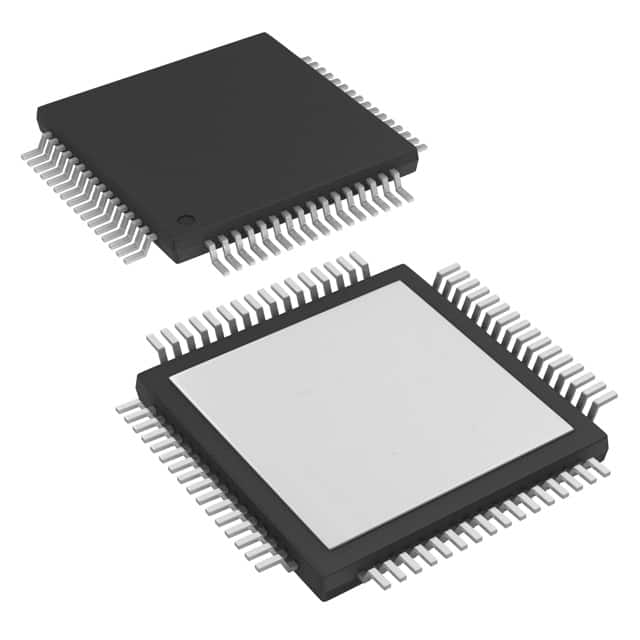
- Part No.:
- BQ76PL536APAPT
- Manufacturer:
- Texas Instruments
- Category:
- Battery Management
- Package:
- 64-PowerTQFP
- Datasheet:
-
 BQ76PL536APAPT.pdf
- Description:
- IC BAT MFUNC LI-ION 3-6C 64HTQFP
- Quantity:
- Payment:

- Shipping:

Inventory:624
Please send an inquiry. Send us your inquiry, and we will respond immediately.
Product details
Overview
BQ76PL536APAPT from Texas Instruments is a 3-to-6 series cell lithium-ion battery monitor and secondary protection IC with integrated 14-bit ADC (±1 mV typical accuracy), six cell-balancing control outputs, dual temperature sensing inputs, and stackable SPI-based vertical interface. It operates from 7.2 V to 27 V supply and supports hot-pluggable large-format battery systems such as e-bike packs and UPS modules.
For engineers reviewing the BQ76PL536APAPT datasheet, BQ76PL536APAPT pinout, BQ76PL536APAPT application, or BQ76PL536APAPT equivalent, key selection considerations include its 6-cell voltage monitoring capability, programmable overvoltage/undervoltage/overtemperature protection thresholds, 12 µA sleep current, integrated 5-V REG50 LDO, and HTQFP-64 package with isolated vertical bus for daisy-chained topologies.
Technical Context
The BQ76PL536APAPT integrates two independent ADC subsystems: one dedicated to six cell voltages and brick voltage (14-bit, 6 µs/channel), and another for dual differential temperature sensors and GPAI input. Its protection logic uses non-volatile OTP registers to store user-programmable thresholds and delay times, with dedicated FAULT, ALERT, and DRDY outputs signaling violation events.
Stacking is implemented via current-mode vertical interfaces (CONV_N/S, SCLK_N/S, etc.) that eliminate inter-device isolation components. The device supports both host-controlled SPI (SCLK_H/SDI_H/SDO_H) and autonomous daisy-chain synchronization, enabling up to 192-cell systems using multiple BQ76PL536APAPT units in series.
Key Specifications
| Parameter | Value and Actual Design Meaning |
|---|---|
| Cell Support | 3–6 series Li-ion cells; enables modular pack design with scalable voltage range (e.g., 12.6 V–25.2 V nominal). |
| ADC Resolution & Accuracy | 14-bit resolution, ±1 mV typical cell voltage accuracy; ensures precise state-of-charge estimation and tight protection margins. |
| Supply Voltage Range | 7.2 V to 27 V continuous (36 V peak); compatible with 3S–6S battery stacks and transient overvoltage conditions. |
| Sleep Current | 12 µA typical; minimizes quiescent drain during storage or standby in portable energy storage systems. |
| Protection Outputs | Dedicated open-drain FAULT_H, ALERT_H, and DRDY_H pins; enable immediate system-level response to overvoltage, undervoltage, or thermal faults. |
| Integrated LDO | REG50 provides regulated 5 V @ 25 mA; powers external circuitry (e.g., microcontrollers, sensors) without external regulators. |
| Operating Temperature | –40°C to +85°C industrial grade; validated for e-bike motor controllers and UPS environments with wide ambient swings. |
Pinout & Package
Package: HTQFP-64 (10.00 mm × 10.00 mm), PowerPAD™ thermal pad soldered to VSS-connected PCB copper area for thermal compliance (RθJB = 8.1°C/W).
| Pin/Terminal | Circuit Role | Design Meaning |
|---|---|---|
| VC1–VC6 | Cell voltage sense inputs | Measure individual cell potentials (VCn – VCn−1) with ±1 mV accuracy; support direct connection to cell taps without external dividers. |
| CB1–CB6 | Cell balancing control outputs | Open-drain outputs driving external FETs; each controls independent passive balancing with safety timeout to prevent runaway. |
| TS1±, TS2± | Differential temperature sensor inputs | Accept thermistor or RTD signals; enable dual-point thermal monitoring across battery pack for overtemperature shutdown at 125–156°C. |
| REG50 | 5-V LDO output | Supplies 25 mA max; requires 2.2 µF ceramic capacitor; powers auxiliary circuitry while maintaining regulation under load transients. |
| CONV_H / CONV_N / CONV_S | Conversion trigger signals | Host-initiated (CONV_H) or daisy-chain synchronized (CONV_N/S) start of simultaneous ADC conversions across all channels. |
Key Features
| Feature | Design Value |
|---|---|
| Stackable vertical interface | Current-mode CONV/SCLK/SDI/SDO/N/S pins enable up to 192-cell monitoring without optocouplers or isolators. |
| Programmable secondary protection | OTP-stored thresholds and delays for overvoltage (2–5 V range), undervoltage (0.7–3.3 V), and overtemperature (1 V–2 V on REG50 scale). |
| Hot-pluggable operation | Supports live insertion into powered battery strings; UVLO/POR circuitry prevents malfunction during partial power-up sequences. |
| High-accuracy multi-channel ADC | Single-cycle 14-bit conversion per channel (6 µs), nine total inputs: 6 cells + 1 brick + 2 temp + 1 GPAI - no multiplexing latency. |
| Integrated precision LDOs | Separate analog (LDOA) and digital (LDOD1/LDOD2) 5-V rails with 2.2 µF bypass caps; reduce external component count and noise coupling. |
Applications
| Electric Bike Battery Management | Uninterruptible Power Supply (UPS) |
|---|---|
Use Scenario: Monitoring and protecting 48 V (13S) or 52 V (14S) lithium-ion battery packs in pedal-assist e-bikes with regenerative braking. IC Role / Device Role / Timing Role: Primary AFE for cell voltage, temperature, and brick voltage acquisition; triggers balancing and fault shutdown within 100 µs of threshold violation. Use Value: Enables safe high-current discharge (≥30 A) by detecting cell imbalance early and preventing thermal runaway via programmable OT delay (0–2550 ms). | Use Scenario: Supervising backup battery strings in telecom or datacenter UPS systems requiring >99.99% runtime availability. IC Role / Device Role / Timing Role: Secondary protector co-located with primary BMS MCU; independently verifies overvoltage/undervoltage before initiating contactor disconnect. Use Value: Adds SIL-2 compliant redundancy: FAULT_H signal asserts within 100 µs of COV event, independent of host firmware execution. |
| Large-Format Energy Storage | Industrial Portable Tools |
Use Scenario: Modular 24–48 V battery packs for warehouse AGVs and robotic pallet jacks with 5–10 year field life. IC Role / Device Role / Timing Role: Stackable monitor in multi-tier architecture; lower devices feed DRDY_S to upper devices, synchronizing full-stack conversion in <100 µs. Use Value: Eliminates inter-device isolation components - reduces BOM cost by $0.35/unit and improves long-term reliability vs. optocoupled alternatives. | Use Scenario: High-power cordless drill/driver packs (20 V MAX, 60 V) requiring fast charge/discharge cycles and thermal derating. IC Role / Device Role / Timing Role: Real-time cell voltage and temperature acquisition during 20-A burst loads; GPAI input monitors pack current via shunt amplifier output. Use Value: 14-bit resolution captures <378 µV changes - detects 5-mV cell drift indicating early capacity loss before runtime degradation becomes visible. |
Equivalent & Alternatives
The following parts are listed as comparable options for similar battery monitor and protector applications.
| Alternative Part | Technical Difference | Application Difference | Selection Advice |
|---|---|---|---|
| BQ76PL536ATPAPT | Same die, TQFP-64 package with exposed thermal pad; identical electrical specs and pinout but different thermal resistance (RθJA = 24.6°C/W vs. 26.1°C/W for PAPT). | Preferred for convection-cooled designs where PCB copper area for thermal pad is constrained. | Select BQ76PL536ATPAPT when thermal pad soldering is impractical; otherwise BQ76PL536APAPT offers marginally better junction-to-board performance. |
| MAX17853GTP+ | 14-bit ADC, 6-cell support, but uses UART instead of SPI; includes built-in Coulomb counter and SOC algorithm; higher sleep current (25 µA). | Better suited for standalone BMS with embedded fuel gauging; lacks vertical daisy-chain interface for >6S stacks. | Choose MAX17853GTP+ only if host MCU lacks SPI or requires integrated SOC estimation; BQ76PL536APAPT remains optimal for scalable, SPI-based multi-device architectures. |
Compared with BQ76PL536ATPAPT, the BQ76PL536APAPT offers slightly improved thermal performance in board-mounted applications, while the MAX17853GTP+ trades daisy-chain scalability for embedded fuel-gauging features - making BQ76PL536APAPT the preferred choice for high-reliability, stackable industrial battery systems.
Availability
BQ76PL536APAPT is available at Aetrix Electronics and suitable for electric bike battery management, uninterruptible power supplies, and large-format energy storage systems requiring stable component supply across multi-year production cycles.
Supply support for BQ76PL536APAPT includes scheduled delivery planning, volume procurement assistance, BOM continuity management, traceable sourcing, and lifecycle availability coordination for OEM customers, industrial embedded developers, connected-device designers, and electronics production programs.
Manufacturer
Texas Instruments is a global semiconductor company specializing in analog and embedded processing technologies, with leadership in battery management, power management, and signal chain solutions.
The BQ76PL536APAPT belongs to TI's bq™ battery monitor and protector product line, designed specifically for high-accuracy, stackable, and fault-tolerant lithium-ion battery systems in transportation and industrial energy storage.
FAQ
What is the maximum number of BQ76PL536APAPT devices that can be stacked in a single daisy chain?
The BQ76PL536APAPT supports up to 32 devices in a vertical daisy chain, enabling monitoring of up to 192 series-connected lithium-ion cells (32 × 6). This is achieved through its current-mode vertical interface (CONV_N/S, SCLK_N/S, etc.), which eliminates the need for isolation components between devices and maintains signal integrity across the full stack. Each BQ76PL536APAPT handles local cell measurements while propagating synchronized conversion and data-ready signals to adjacent units.
Does the BQ76PL536APAPT require external passive components for its integrated REG50 LDO?
Yes, the BQ76PL536APAPT requires a 2.2 µF ceramic capacitor connected from the REG50 pin to VSS for stability, as specified in the datasheet. This capacitor must be low-ESR and placed close to the REG50 pin. The LDO delivers up to 25 mA at 5 V (±1%) and is intended to power external circuitry such as microcontrollers or sensors - eliminating the need for a separate 5-V regulator in many BMS designs.
How does the BQ76PL536APAPT handle cell voltage measurement accuracy across temperature?
The BQ76PL536APAPT achieves ±1 mV typical cell voltage accuracy from –10°C to +50°C and ±8 mV over the full –40°C to +85°C operating range. This is enabled by internal trimming and ratiometric referencing to VREF, with 14-bit resolution (~378 µV LSB) ensuring detection of sub-millivolt cell imbalances critical for state-of-charge estimation and balancing control in the BQ76PL536APAPT.
Can the BQ76PL536APAPT perform simultaneous cell voltage and temperature measurements?
Yes, the BQ76PL536APAPT performs true simultaneous sampling across all nine analog inputs - six cell voltages (VC1–VC6), one six-cell brick voltage (VBAT), two temperature channels (TS1±, TS2±), and one general-purpose analog input (GPAI±). Its dual-ADC architecture allows concurrent acquisition without multiplexing delay, ensuring time-aligned data for accurate thermal-voltage correlation in the BQ76PL536APAPT.
What fault conditions trigger the dedicated FAULT_H output on the BQ76PL536APAPT?
The FAULT_H output on the BQ76PL536APAPT asserts low (open-drain) when any programmed protection threshold is violated: overvoltage (COV), undervoltage (CUV), or overtemperature (COT) on any monitored channel. It latches until cleared by host SPI command or power cycle, and responds within 100 µs of threshold breach - providing deterministic, hardware-level fault signaling independent of host firmware execution in the BQ76PL536APAPT.
BQ76PL536APAPT Specifications
- Product attributes
- Attribute value
- Manufacturer:
- Texas Instruments
- Series:
- -
- Package/Case:
- 64-PowerTQFP
- Packaging:
- Tape & Reel (TR)
- Product Status:
- Active
- Function:
- Multi-Function Controller
- Battery Chemistry:
- Lithium Ion
- Number of Cells:
- 3 ~ 6
- Fault Protection:
- Over Temperature, Over/Under Voltage
- Interface:
- SPI
- Operating Temperature:
- -40°C ~ 85°C (TA)
- Grade:
- -
- Qualification:
- -
- Mounting Type:
- Surface Mount
- Supplier Device Package:
- 64-HTQFP (10x10)
BQ76PL536APAPT FAQ
1.How can I place an order for BQ76PL536APAPT through Aetrix?
Please submit a Request for Quotation (RFQ) for BQ76PL536APAPT on Aetrix. Our sales agent will provide a competitive quotation and guide you through the order confirmation once you accept the terms.
2.Are the price and stock information for BQ76PL536APAPT reliable?
The price and inventory of BQ76PL536APAPT are updated periodically and may fluctuate due to market conditions. Stock and pricing data are typically refreshed every 24 hours. Quotation validity for BQ76PL536APAPT is usually 5 days.
3.What payment methods are accepted for BQ76PL536APAPT?
We accept Wire Transfer, PayPal, Credit Card, Western Union, MoneyGram, and Escrow for BQ76PL536APAPT transactions.
Note: Certain payment methods may incur a processing fee.
4.How is shipping managed for BQ76PL536APAPT?
BQ76PL536APAPT orders can be shipped via leading logistics carriers, including DHL, UPS, FedEx, TNT, or Registered Mail.
Once your BQ76PL536APAPT order is processed, you will receive an email with the shipment details and tracking number.
Note: Tracking information may take up to 24 hours to appear. Express delivery typically takes 3–5 business days.
5.How can I obtain technical support or documentation for BQ76PL536APAPT?
For technical support, including BQ76PL536APAPT datasheets, pinout diagrams, or application guidance, please contact our engineering support team. They can provide detailed documentation and assistance for your BQ76PL536APAPT requirements.
6.How does Aetrix verify that BQ76PL536APAPT is sourced from the original manufacturer or authorized distributors?
All BQ76PL536APAPT products on Aetrix are procured from qualified distributors and authorized channels. Our dedicated quality assurance team conducts strict verification, including traceability checks and, if necessary, third-party testing. This ensures that BQ76PL536APAPT meets industry standards.
7.What is the process for return or replacement of BQ76PL536APAPT?
All BQ76PL536APAPT units undergo pre-shipment inspection (PSI). If there is an issue with BQ76PL536APAPT, returns or replacements are accepted under the following conditions:
1.Quantity discrepancies, incorrect items, or visible external defects (such as breakage or corrosion), acknowledged by Aetrix.
2.The issue is reported within 90 days of delivery.
3.The BQ76PL536APAPT part is unused and in its original packaging.
Return procedure for BQ76PL536APAPT:
1.Submit a request within 90 days.
2.Obtain a Return Material Authorization (RMA) from Aetrix.
BQ76PL536APAPT Tags
-
BQ29700DSER
Texas Instruments
-
S-8241ABKMC-GBKT2G
ABLIC Inc.
-
S-8241ABPMC-GBPT2G
ABLIC Inc.

-
BQ27427YZFR
Texas Instruments

-
BQ27426YZFR
Texas Instruments
-
STC3117IJT
STMicroelectronics
-
STC3115IJT
STMicroelectronics
-
BQ76925RGER
Texas Instruments
-
NPM1100-QDAA-R
Nordic Semiconductor ASA
-
BQ27441DRZR-G1A
Texas Instruments
-
STC3115AIQT
STMicroelectronics

-
S-8252AAL-M6T1U
ABLIC Inc.
Tech Hub

A practical engineering guide to 3.3V and 5V logic compatibility, input thresholds, resistor dividers, translator ICs, MOSFET level shifting, I2C pull-ups, timing limits and power-sequencing risks.

The 74HC595 uses push-pull logic outputs, while the TPIC6B595 uses 50 V open-drain DMOS sinks for higher-power loads. This guide compares timing, current limits, 3.3 V interfacing, load wiring, thermal…

The 74HC595 converts serial data into eight stable parallel outputs. This guide covers pin functions, shift and storage timing, OE and MR behavior, drive-current limits, cascading, voltage compatibilit…

A technical comparison of level-sensitive latches and edge-triggered flip-flops, covering timing windows, setup and hold limits, master–slave operation, time borrowing, race-through, HDL inference and…

A D latch stores one bit while Enable controls when data can pass. This reference covers gate-level operation, truth tables, transparency, setup and hold timing, LE versus OE, common ICs and practical …

An SR latch stores one bit through cross-coupled feedback. This engineering reference covers NOR and NAND implementations, truth tables, forbidden-state recovery, gated operation, switch debouncing, fa…

Latch circuits retain one bit through feedback. This technical reference covers SR and D latches, truth tables, transparency, timing limits, latch-versus-flip-flop behavior, applications and common log…

An engineering guide to LED driver operation, constant-current and constant-voltage outputs, linear and switching topologies, dimming, IC selection, calculations, replacement compatibility, and fault c…

Operational amplifier guide covering op amp basics, feedback, ideal vs real op amps, common configurations, buffer circuits, offset, bias current, gain-bandwidth, slew rate, rail-to-rail limits and sel…

Jumper cables guide covering safe connection order, red and black clamp placement, final ground connection, cable gauge, length, clamp quality, copper vs CCA cables, jump starter comparison and battery…


