
 My Inquiry
 My Account


Texas Instruments BQ7790400PWR
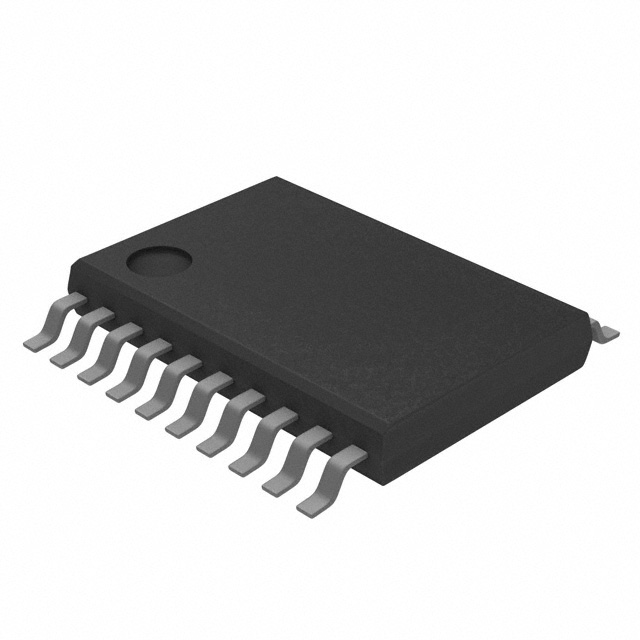
- Part No.:
- BQ7790400PWR
- Manufacturer:
- Texas Instruments
- Category:
- Battery Management
- Package:
- 20-TSSOP (0.173", 4.40mm Width)
- Datasheet:
-
 BQ7790400PWR.pdf
- Description:
- IC BATT PROT LI-ION 3-4C 20TSSOP
- Quantity:
- Payment:

- Shipping:

Inventory:1,408
Please send an inquiry. Send us your inquiry, and we will respond immediately.
Product details
Overview
BQ7790400PWR from Texas Instruments is a factory-programmed, ultra-low-power lithium-ion battery protector for 3- to 4-series cell packs, implementing independent overvoltage (4225 mV), undervoltage (2200 mV), open-wire, overtemperature discharge (70°C), and dual-stage overcurrent protection without MCU intervention. It integrates low-side NMOS CHG/DSG FET drivers and supports stackable cascading for higher-cell-count systems in power tools and light EVs.
For engineers reviewing the BQ7790400PWR datasheet, BQ7790400PWR pinout, BQ7790400PWR application, or BQ7790400PWR equivalent, key selection criteria include its 6 µA normal-mode current, ±10 mV voltage detection accuracy, 2-second OV/UV delay, load-removal recovery capability, and TSSOP-20 package compatibility with PCB-level thermal management requirements.
Technical Context
The BQ7790400PWR operates as a standalone analog protection IC with no firmware or configuration interface - all thresholds and timing are factory-programmed. Its architecture uses dedicated comparators per protection function (OV, UV, OCD1/OCD2/SCD, OTD/OTC/UTD/UTC) with internal delay timers and hysteresis logic, eliminating external timing components.
It implements a cascaded control scheme via CTRC/CTRD pins to enable multi-device stacking: upper-device CHGU drives lower-device CTRC, allowing coordinated CHG/DSG disable across 6+ series cells. The device relies on external NTC thermistors (via TS/VTB) and sense resistors (SRP/SRN) for temperature and current monitoring, with all fault responses executed autonomously by integrated FET drivers.
Key Specifications
| Parameter | Value and Actual Design Meaning |
|---|---|
| Normal Mode Current | 6 µA - enables multi-year operation on small backup batteries without compromising protection responsiveness. |
| Overvoltage Threshold | 4225 mV ±10 mV - precise cell balancing margin for 4.2 V nominal Li-ion cells with 2 s delay to reject transient spikes. |
| Undervoltage Threshold | 2200 mV ±18 mV - prevents deep discharge damage while supporting 2 s delay and 400 mV hysteresis for stable recovery. |
| OCD1 Detection Range | –40 mV - calibrated for 5 mΩ sense resistor at 8 A discharge, with ±30% accuracy above 20 mV for robust fault discrimination. |
| Operating Temp Range | –40°C to +85°C - validated across industrial temperature range with full electrical specs guaranteed. |
| Package | TSSOP-20 (6.5 mm × 4.4 mm) - surface-mount footprint compatible with automated assembly and thermal vias for 98.4°C/W junction-to-ambient dissipation. |
| Shutdown Current | ≤0.5 µA - ensures minimal leakage during storage or system sleep, critical for long-term battery preservation. |
Pinout & Package
TSSOP-20 package with 0.65 mm pitch; body size 6.50 mm × 4.40 mm; exposed thermal pad recommended for PCB heat sinking.
| Pin/Terminal | Circuit Role | Design Meaning |
|---|---|---|
| VDD (Pin 1) | Power supply input | Accepts 3–25 V; powers internal regulators and logic; POR threshold at 4 V ensures reliable startup. |
| VC1–VC5 (Pins 3–7) | Cell voltage sense inputs | VC1–VC4 monitor individual cell voltages; VC5 connects to top of 4-cell stack; VC5 must be tied to VC4 for BQ77904 devices. |
| SRP / SRN (Pins 9–10) | Current sense differential inputs | Measure (VSRP – VSRN) for OCD1/OCD2/SCD; supports bidirectional sensing with ±340 mV SCD range. |
| CHG / DSG (Pins 13, 11) | Low-side NMOS FET drivers | Drive external N-channel FET gates; CHG controls charge path, DSG controls discharge path; 12 V typical output swing. |
| CTRC / CTRD (Pins 18–19) | Cascade control inputs | Accept CHGU signal from upper device to synchronize FET disable across stacked protectors in ≥6-series configurations. |
| TS / VTB (Pins 15, 16) | NTC thermistor interface | TS reads thermistor voltage; VTB supplies 2.5 V bias; thresholds mapped to %VTB (e.g., 70°C = 20.56% VTB). |
| LD (Pin 14) | Load removal detection input | Detects open-circuit condition between PACK– and sense resistor; triggers recovery when load reconnected (Y-enabled). |
Key Features
| Feature | Design Value |
|---|---|
| Stackable architecture | Enables up to 20-series cell protection using ≤4 cascaded BQ77904/BQ77905 devices via CHGU→CTRC signal chaining. |
| Independent CHG/DSG control | Allows selective blocking of charge or discharge paths - critical for safe fast-charging and regenerative braking management. |
| Factory-programmed protection set | Eliminates external configuration components and firmware; BQ7790400PWR fixed config includes 4225 mV OV, 2200 mV UV, 70°C OTD, and load-removal recovery. |
| Open-wire detection | Identifies broken interconnects between cells using 500 mV ±50 mV threshold per node, preventing false undervoltage trips. |
| Functional safety support | Documentation available for ISO 26262 ASIL-B system integration, including FIT rate data and diagnostic coverage analysis. |
Applications
| Power Tools | Garden Tools |
|---|---|
|
Use Scenario: Cordless drill/driver battery pack with 3–4 Li-ion cells operating under high-pulse discharge (≥20 A) and rapid thermal cycling. IC Role / Device Role / Timing Role: Primary hardware-level protector executing autonomous OV/UV/OCD/OTD/UTD decisions within milliseconds, independent of host MCU. Use Value: Prevents cell venting during stall-current events via 100 mV SCD threshold and 360 µs detection, while 6 µA quiescent current extends shelf life. |
Use Scenario: Battery-powered hedge trimmer or leaf blower requiring robust overtemperature shutdown during sustained high-load operation. IC Role / Device Role / Timing Role: Standalone thermal supervisor using TS/VTB interface with factory-set 70°C OTD and 4.5 s delay to avoid nuisance trips from ambient heating. Use Value: Enables safe continuous-duty operation by disabling DSG FET before cell thermal runaway, with automatic recovery upon cooling. |
| Start-Stop Automotive Batteries | Light Electric Vehicles |
|
Use Scenario: 12 V Li-ion replacement for lead-acid start-stop battery, subjected to frequent micro-cycles and engine cranking surges. IC Role / Device Role / Timing Role: Dual-stage overcurrent protector with OCD1 (40 mV) for sustained overload and OCD2 (100 mV) for short-duration surge rejection. Use Value: Maintains system availability during cold-cranking pulses by tolerating >15 A for <350 ms without tripping, while protecting against wiring faults. |
Use Scenario: 36 V e-bike or e-scooter battery pack with 10-series configuration built from two stacked BQ7790400PWR-based modules. IC Role / Device Role / Timing Role: Cascaded stack controller using CHGU→CTRC signaling to coordinate CHG/DSG disable across both modules during overtemperature events. Use Value: Achieves full 10S protection with only two ICs per module - reduces BOM cost and layout complexity versus monolithic solutions. |
Equivalent & Alternatives
The following parts are listed as comparable options for similar battery protection applications.
| Alternative Part | Technical Difference | Application Difference | Selection Advice |
|---|---|---|---|
| BQ7790503PWR | Supports 3–5 series cells; adds fifth VCx input; identical 4200 mV OV, 2700 mV UV, and 70°C OTD thresholds but with 2 s UV delay and 400 mV UV hysteresis. | Required for 5-cell packs; not pin-compatible due to additional VC5 functionality and altered CCFG pin behavior. | Select BQ7790503PWR only when scaling beyond 4 cells; retains same TSSOP-20 footprint but requires updated cell-sense routing. |
| BD4912GUL | Single-cell protector with 4.25 V OV, 2.5 V UV, and 15 µA quiescent current; lacks open-wire, temperature, or cascade capability. | Limited to 1S applications; no current sensing or thermal monitoring; no stacking support. | Use BD4912GUL only for ultra-low-cost 1S consumer packs where multi-cell coordination and comprehensive protection are unnecessary. |
Compared with BQ7790400PWR, BQ7790503PWR extends cell count support and retains identical protection timing and accuracy, while BD4912GUL offers minimal single-cell protection at higher current draw and without thermal or cascade features - making BQ7790400PWR the optimal choice for cost-sensitive, stackable 3–4S industrial battery systems.
Availability
BQ7790400PWR is available at Aetrix Electronics and suitable for power tools, garden equipment, and start-stop battery packs requiring stable component supply, long-term lifecycle assurance, and automotive-grade reliability validation.
Supply support for BQ7790400PWR includes scheduled delivery planning, volume procurement assistance, BOM continuity management, traceable sourcing, and lifecycle availability coordination for OEM customers, industrial embedded developers, connected-device designers, and electronics production programs.
Manufacturer
Texas Instruments is a global semiconductor leader specializing in analog, embedded processing, and power management technologies with over 50 years of innovation in battery management systems.
The BQ77904 product line delivers scalable, ultra-low-power primary protection for lithium-based battery packs - designed specifically for industrial, power tool, and light EV applications demanding autonomous, MCU-free safety compliance.
FAQ
What is the overvoltage protection threshold and delay setting for BQ7790400PWR?
The BQ7790400PWR has a factory-programmed overvoltage threshold of 4225 mV with ±10 mV accuracy at 25°C and a fixed 2-second detection delay. This setting prevents false triggering during charging transients while ensuring cell integrity for standard 4.2 V Li-ion chemistry. The BQ7790400PWR does not support field adjustment of this parameter.
Does BQ7790400PWR support cascading with other BQ77904 or BQ77905 devices?
Yes, the BQ7790400PWR supports hardware-based cascading using CHGU and CTRC pins to form stacks up to 20-series cells. In a two-device stack, the upper device's CHGU output connects to the lower device's CTRC input to propagate charge-disable commands. The BQ7790400PWR functions as either top or bottom device in such configurations.
What is the purpose of the LD pin on BQ7790400PWR, and how does it affect recovery behavior?
The LD (Load Detection) pin on BQ7790400PWR senses open-circuit conditions at PACK– to enable automatic recovery after fault clearance. When enabled (BQ7790400PWR configuration Y), the device exits protection state upon load reconnection instead of waiting for voltage stabilization - reducing downtime in portable tools. The LD pin requires a pull-down resistor to ground for proper operation.
Can BQ7790400PWR be used in a 5-cell lithium-ion battery pack?
No, the BQ7790400PWR is configured exclusively for 3- to 4-series cell operation. Its VC5 pin must be externally tied to VC4, and its internal logic does not decode five independent cell voltages. For 5-cell support, Texas Instruments specifies the BQ77905 family (e.g., BQ7790503PWR), which adds a dedicated fifth sense input and updated CCFG decoding.
What are the absolute maximum ratings for the SRP and SRN pins of BQ7790400PWR?
The SRP and SRN pins of BQ7790400PWR have an absolute maximum rating of –0.2 V to +0.8 V differential input range, referenced to VSS. Exceeding this range risks comparator latch-up or permanent damage. These pins are designed for Kelvin-connected current-sense resistors with tight layout constraints to maintain noise immunity and measurement fidelity in the BQ7790400PWR system.
BQ7790400PWR Specifications
- Product attributes
- Attribute value
- Manufacturer:
- Texas Instruments
- Series:
- -
- Package/Case:
- 20-TSSOP (0.173", 4.40mm Width)
- Packaging:
- Tape & Reel (TR)
- Product Status:
- Active
- Function:
- Battery Protection
- Battery Chemistry:
- Lithium Ion
- Number of Cells:
- 3 ~ 4
- Fault Protection:
- Over Current, Over Temperature, Over/Under Voltage
- Interface:
- -
- Operating Temperature:
- -40°C ~ 85°C (TA)
- Grade:
- -
- Qualification:
- -
- Mounting Type:
- Surface Mount
- Supplier Device Package:
- 20-TSSOP
BQ7790400PWR FAQ
1.How can I place an order for BQ7790400PWR through Aetrix?
Please submit a Request for Quotation (RFQ) for BQ7790400PWR on Aetrix. Our sales agent will provide a competitive quotation and guide you through the order confirmation once you accept the terms.
2.Are the price and stock information for BQ7790400PWR reliable?
The price and inventory of BQ7790400PWR are updated periodically and may fluctuate due to market conditions. Stock and pricing data are typically refreshed every 24 hours. Quotation validity for BQ7790400PWR is usually 5 days.
3.What payment methods are accepted for BQ7790400PWR?
We accept Wire Transfer, PayPal, Credit Card, Western Union, MoneyGram, and Escrow for BQ7790400PWR transactions.
Note: Certain payment methods may incur a processing fee.
4.How is shipping managed for BQ7790400PWR?
BQ7790400PWR orders can be shipped via leading logistics carriers, including DHL, UPS, FedEx, TNT, or Registered Mail.
Once your BQ7790400PWR order is processed, you will receive an email with the shipment details and tracking number.
Note: Tracking information may take up to 24 hours to appear. Express delivery typically takes 3–5 business days.
5.How can I obtain technical support or documentation for BQ7790400PWR?
For technical support, including BQ7790400PWR datasheets, pinout diagrams, or application guidance, please contact our engineering support team. They can provide detailed documentation and assistance for your BQ7790400PWR requirements.
6.How does Aetrix verify that BQ7790400PWR is sourced from the original manufacturer or authorized distributors?
All BQ7790400PWR products on Aetrix are procured from qualified distributors and authorized channels. Our dedicated quality assurance team conducts strict verification, including traceability checks and, if necessary, third-party testing. This ensures that BQ7790400PWR meets industry standards.
7.What is the process for return or replacement of BQ7790400PWR?
All BQ7790400PWR units undergo pre-shipment inspection (PSI). If there is an issue with BQ7790400PWR, returns or replacements are accepted under the following conditions:
1.Quantity discrepancies, incorrect items, or visible external defects (such as breakage or corrosion), acknowledged by Aetrix.
2.The issue is reported within 90 days of delivery.
3.The BQ7790400PWR part is unused and in its original packaging.
Return procedure for BQ7790400PWR:
1.Submit a request within 90 days.
2.Obtain a Return Material Authorization (RMA) from Aetrix.
BQ7790400PWR Tags
-
BQ29700DSER
Texas Instruments
-
S-8241ABKMC-GBKT2G
ABLIC Inc.
-
S-8241ABPMC-GBPT2G
ABLIC Inc.

-
BQ27427YZFR
Texas Instruments
-
BQ27426YZFR
Texas Instruments
-
STC3117IJT
STMicroelectronics
-
STC3115IJT
STMicroelectronics
-
BQ76925RGER
Texas Instruments
-
NPM1100-QDAA-R
Nordic Semiconductor ASA
-
BQ27441DRZR-G1A
Texas Instruments
-
STC3115AIQT
STMicroelectronics

-
S-8252AAL-M6T1U
ABLIC Inc.
Tech Hub

A practical engineering guide to 3.3V and 5V logic compatibility, input thresholds, resistor dividers, translator ICs, MOSFET level shifting, I2C pull-ups, timing limits and power-sequencing risks.

The 74HC595 uses push-pull logic outputs, while the TPIC6B595 uses 50 V open-drain DMOS sinks for higher-power loads. This guide compares timing, current limits, 3.3 V interfacing, load wiring, thermal…

The 74HC595 converts serial data into eight stable parallel outputs. This guide covers pin functions, shift and storage timing, OE and MR behavior, drive-current limits, cascading, voltage compatibilit…

A technical comparison of level-sensitive latches and edge-triggered flip-flops, covering timing windows, setup and hold limits, master–slave operation, time borrowing, race-through, HDL inference and…

A D latch stores one bit while Enable controls when data can pass. This reference covers gate-level operation, truth tables, transparency, setup and hold timing, LE versus OE, common ICs and practical …

An SR latch stores one bit through cross-coupled feedback. This engineering reference covers NOR and NAND implementations, truth tables, forbidden-state recovery, gated operation, switch debouncing, fa…

Latch circuits retain one bit through feedback. This technical reference covers SR and D latches, truth tables, transparency, timing limits, latch-versus-flip-flop behavior, applications and common log…

An engineering guide to LED driver operation, constant-current and constant-voltage outputs, linear and switching topologies, dimming, IC selection, calculations, replacement compatibility, and fault c…

Operational amplifier guide covering op amp basics, feedback, ideal vs real op amps, common configurations, buffer circuits, offset, bias current, gain-bandwidth, slew rate, rail-to-rail limits and sel…

Jumper cables guide covering safe connection order, red and black clamp placement, final ground connection, cable gauge, length, clamp quality, copper vs CCA cables, jump starter comparison and battery…


