
 My Inquiry
 My Account


Texas Instruments BQ7790512PW
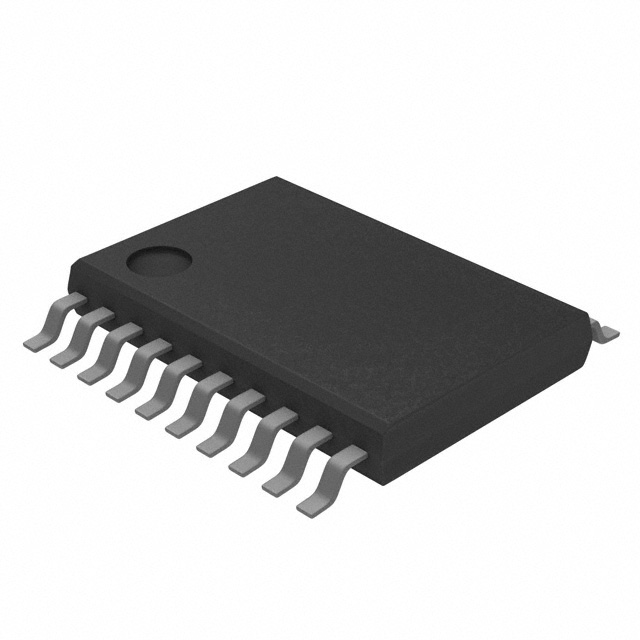
- Part No.:
- BQ7790512PW
- Manufacturer:
- Texas Instruments
- Category:
- Battery Management
- Package:
- 20-TSSOP (0.173", 4.40mm Width)
- Datasheet:
-
 BQ7790512PW.pdf
- Description:
- IC BATT PROT LI-ION 3-5C 20TSSOP
- Quantity:
- Payment:

- Shipping:

Inventory:1,901
Please send an inquiry. Send us your inquiry, and we will respond immediately.
Product details
Overview
BQ7790512PW from Texas Instruments is a 5-cell stackable lithium-ion battery protector IC implementing voltage, current, temperature, and open-wire protection without MCU control. It delivers ±10 mV overvoltage/undervoltage accuracy, 6 µA normal-mode quiescent current, and factory-programmed thresholds including OV = 4175 mV, UV = 2800 mV, OTD = 65°C, and UTD = –20°C. It is used in 10.8-V to 72-V battery packs for power tools and light electric vehicles.
For engineers reviewing the BQ7790512PW datasheet, BQ7790512PW pinout, BQ7790512PW application, or BQ7790512PW equivalent, key selection criteria include its 5-series cell support, independent CHG/DSG low-side NMOS drivers, 36-V absolute max per cell input, load-removal detection (LD), and functional safety documentation support.
Technical Context
The BQ7790512PW operates as a standalone primary protector with integrated analog comparators and internal delay timers-no firmware or host processor required. Its cascading interface enables up to four devices to scale protection to 20-series configurations, where upper-device CHGU/CTRC signals drive lower-device CTRC/CTRD pins.
It uses dual independent low-side NMOS FET drivers (CHG and DSG) with programmable fault recovery methods-including load-removal + delay for OCD2 (150 mV, 350 ms) and SCD (300 mV, 1 s)-and supports thermistor-based temperature sensing via TS/VTB with 10-kΩ biasing.
Key Specifications
| Parameter | Value and Actual Design Meaning |
|---|---|
| Cell Count Support | Factory-configured for 3–5 series Li-ion cells; scalable to ≥20 series via stacking |
| Normal Mode Current | 6 µA typical-enables multi-year battery pack shelf life without significant self-discharge impact |
| Overvoltage Threshold | 4175 mV ±10 mV at 25°C-prevents cell degradation during charging in 5S packs |
| Undervoltage Threshold | 2800 mV ±18 mV at 25°C-avoids deep discharge damage to Li-ion cells |
| OCD2 Detection | 150 mV threshold, 350 ms delay-supports high-current discharge with controlled fault response |
| SCD Detection | 300 mV threshold, 1 s delay-provides fast short-circuit isolation while avoiding false triggers |
| Temperature Protection | OTD = 65°C, UTD = –20°C, OTC = 45°C, UTC = 0°C-enables safe charge/discharge envelope control |
Pinout & Package
The BQ7790512PW is housed in a 20-pin TSSOP package (6.50 mm × 4.40 mm) with exposed thermal pad, rated for –40°C to +85°C operation and 98.4°C/W junction-to-ambient thermal resistance.
| Pin/Terminal | Circuit Role | Design Meaning |
|---|---|---|
| VDD (Pin 1) | Power supply input | Accepts 3 V to 25 V; powers internal circuitry and drives CHG/DSG outputs |
| VC1–VC5 (Pins 3–7) | Cell voltage sense inputs | Monitor individual cell voltages across 5-series stack; VC5 must connect to VC4 on BQ77904 but not required on BQ77905 |
| SRP/SRN (Pins 9–10) | Current sense differential inputs | Measure (VSRP – VSRN) for OCD1/OCD2/SCD detection; supports bidirectional current monitoring |
| CHG/DSG (Pins 13/11) | Low-side NMOS FET drivers | Directly drive external N-channel FET gates; CHG controls charge path, DSG controls discharge path |
| CHGU/CTRC/CTRD (Pins 12/18/19) | Stacking control interface | Enable cascaded configuration: CHGU feeds upper device output to CTRC of lower device; CTRD disables DSG |
| TS/VTB (Pins 15/16) | Thermistor interface | TS accepts NTC thermistor; VTB provides 2.5 V bias reference for temperature ratio-based threshold calculation |
| LD (Pin 14) | Load removal detection input | Detects open PACK– connection using internal 250 kΩ pull-down; triggers fault recovery when load is disconnected |
Key Features
| Feature | Design Value |
|---|---|
| Stackable architecture | Enables modular 3–20S battery protection using identical BQ7790512PW devices without redesign |
| Independent CHG/DSG drivers | Allows separate control of charge and discharge paths-critical for balancing and safety-critical cutoff sequencing |
| Open-wire detection | Identifies broken interconnects between cells using 500 mV ±100 mV threshold-prevents undetected cell isolation |
| Functional safety documentation | Includes FIT rate data, failure mode analysis, and diagnostic coverage guidance for ISO 26262 ASIL-B systems |
| Shutdown mode current | 0.5 µA maximum-preserves battery energy during long-term storage or transport |
Applications
| Power Tools | Garden Tools |
|---|---|
Use Scenario: Cordless drill/driver battery packs operating at 18–36 V with high pulse discharge currents up to 30 A. IC Role / Device Role / Timing Role: Primary hardware-level protector enforcing OV/UV limits, detecting SCD during motor stall, and disabling DSG FET within 1 s. Use Value: Prevents cell venting or fire during accidental short circuits and extends usable cycle life by avoiding overcharge/overdischarge. | Use Scenario: Battery-powered hedge trimmers and leaf blowers requiring robust thermal management in outdoor ambient conditions. IC Role / Device Role / Timing Role: Monitors pack temperature via NTC thermistor and enforces OTD = 65°C and UTC = 0°C thresholds with 4.5 s detection delay. Use Value: Enables safe operation across –20°C to +60°C environments while preventing lithium plating during cold-weather charging. |
| Light Electric Vehicles | Energy Storage Systems |
Use Scenario: 48-V e-bike or e-scooter battery packs subject to vibration-induced open-wire faults and regenerative braking currents. IC Role / Device Role / Timing Role: Performs open-wire detection (OW) on all five cells with 4.5 s delay and supports bidirectional current sensing for charge/discharge asymmetry. Use Value: Eliminates need for redundant wiring checks and ensures fail-safe shutdown before cell imbalance escalates. | Use Scenario: Residential 48-V Li-ion backup systems requiring >10-year field reliability and compliance with UL 1973. IC Role / Device Role / Timing Role: Implements full suite of protections (OV/UV/OTD/UTC/OCD2/SCD) with built-in self-test functions and fault logging capability. Use Value: Reduces BOM count by replacing discrete comparators and timers while meeting functional safety requirements for stationary storage. |
Equivalent & Alternatives
The following parts are listed as comparable options for similar battery protection applications.
| Alternative Part | Technical Difference | Application Difference | Selection Advice |
|---|---|---|---|
| BQ7790511PW | OCD2 = 120 mV (vs. 150 mV), OTD/UTC thresholds set to 65°C/45°C (same as BQ7790512PW), UV = 2700 mV | Suitable for higher-sensitivity discharge current limiting in lower-power tools | Select BQ7790511PW if tighter OCD2 trip margin is needed; otherwise BQ7790512PW offers better noise immunity. |
| BQ7790503PW | UV = 2700 mV, OCD2 = 160 mV, SCD = 320 mV, OTD/UTC = 70°C/50°C, recovery method = Load Removal only | Targeted at higher-temperature industrial packs where wider thermal margins are acceptable | Choose BQ7790503PW for elevated ambient operation; BQ7790512PW provides stricter low-temp charge control (UTC = 0°C). |
Compared with BQ7790511PW and BQ7790503PW, the BQ7790512PW provides balanced sensitivity (150 mV OCD2), conservative thermal thresholds (65°C OTD / 0°C UTC), and load-removal+delay recovery-making it optimal for consumer-grade power tools requiring robust fault handling without over-engineering.
Availability
BQ7790512PW is available at Aetrix Electronics and suitable for power tools, light electric vehicles, and energy storage systems requiring stable component supply, long-term lifecycle support, and functional safety documentation.
Supply support for BQ7790512PW includes scheduled delivery planning, volume procurement assistance, BOM continuity management, traceable sourcing, and lifecycle availability coordination for OEM customers, industrial embedded developers, connected-device designers, and electronics production programs.
Manufacturer
Texas Instruments is a global semiconductor leader delivering analog, embedded processing, and connectivity solutions for industrial, automotive, and personal electronics markets.
The BQ7790512PW belongs to TI's BQ77905 family of ultra-low-power stackable battery protectors-designed specifically for cost-sensitive, high-reliability Li-ion packs where MCU-free protection and field-upgradeable configurations are essential.
FAQ
What is the factory-programmed overvoltage threshold for BQ7790512PW?
The BQ7790512PW has a factory-programmed overvoltage threshold of 4175 mV ±10 mV at 25°C, with 100 mV hysteresis and a 1-second detection delay. This value is laser-trimmed during manufacturing and cannot be modified in the field. The BQ7790512PW uses this fixed OV setting to safeguard 5S lithium-ion cells against overcharging, ensuring compliance with cell manufacturer voltage limits and extending cycle life.
Does BQ7790512PW support 6-series or higher battery configurations?
Yes, the BQ7790512PW supports 6-series and higher configurations through daisy-chained stacking-up to 20-series using four devices. In stacked mode, the CHGU output of an upper BQ7790512PW connects to the CTRC input of the device below, enabling coordinated CHG/DSG control. The BQ7790512PW itself is configured for 3–5 cells, but its stackable interface eliminates the need for different part numbers across voltage classes.
How does the load removal detection (LD) function work on BQ7790512PW?
The LD pin on the BQ7790512PW detects disconnection of the PACK– terminal by monitoring voltage at Pin 14 relative to DVSS. With an internal 250 kΩ pull-down, LD asserts when voltage drops below 1.3 V, triggering fault recovery after the configured delay. This feature prevents false overcurrent trips during hot-plug events and allows safe re-engagement of FETs once load is restored-enhancing system robustness in portable tools using removable battery packs.
What is the purpose of the CCFG pin on BQ7790512PW?
The CCFG pin on the BQ7790512PW configures the number of series cells (3S, 4S, or 5S) by reading a voltage divider ratio against AVDD. For BQ7790512PW, CCFG is internally biased to detect 5-cell configuration (CCFG floating, 25–45% AVDD). This sets internal routing for VC1–VC5 inputs and enables correct open-wire and voltage-monitoring logic-ensuring the BQ7790512PW operates only in its designated 5S mode without external programming.
Is BQ7790512PW qualified for functional safety applications?
Yes, the BQ7790512PW is functional safety-capable with documentation available to support ISO 26262 ASIL-B and IEC 61508 SIL-2 system development. TI provides FIT rate data, FMEDA reports, and diagnostic coverage analysis for the BQ7790512PW. While the device itself is not certified, its architecture-including built-in self-test, redundant comparators, and fault-tolerant timing-enables integration into safety-critical battery management systems compliant with automotive and industrial standards.
BQ7790512PW Specifications
- Product attributes
- Attribute value
- Manufacturer:
- Texas Instruments
- Series:
- -
- Package/Case:
- 20-TSSOP (0.173", 4.40mm Width)
- Packaging:
- Tube
- Product Status:
- Active
- Function:
- Battery Protection
- Battery Chemistry:
- Lithium Ion
- Number of Cells:
- 3 ~ 5
- Fault Protection:
- Over Current, Over Temperature, Over/Under Voltage, Short Circuit
- Interface:
- -
- Operating Temperature:
- -40°C ~ 85°C (TA)
- Grade:
- -
- Qualification:
- -
- Mounting Type:
- Surface Mount
- Supplier Device Package:
- 20-TSSOP
BQ7790512PW FAQ
1.How can I place an order for BQ7790512PW through Aetrix?
Please submit a Request for Quotation (RFQ) for BQ7790512PW on Aetrix. Our sales agent will provide a competitive quotation and guide you through the order confirmation once you accept the terms.
2.Are the price and stock information for BQ7790512PW reliable?
The price and inventory of BQ7790512PW are updated periodically and may fluctuate due to market conditions. Stock and pricing data are typically refreshed every 24 hours. Quotation validity for BQ7790512PW is usually 5 days.
3.What payment methods are accepted for BQ7790512PW?
We accept Wire Transfer, PayPal, Credit Card, Western Union, MoneyGram, and Escrow for BQ7790512PW transactions.
Note: Certain payment methods may incur a processing fee.
4.How is shipping managed for BQ7790512PW?
BQ7790512PW orders can be shipped via leading logistics carriers, including DHL, UPS, FedEx, TNT, or Registered Mail.
Once your BQ7790512PW order is processed, you will receive an email with the shipment details and tracking number.
Note: Tracking information may take up to 24 hours to appear. Express delivery typically takes 3–5 business days.
5.How can I obtain technical support or documentation for BQ7790512PW?
For technical support, including BQ7790512PW datasheets, pinout diagrams, or application guidance, please contact our engineering support team. They can provide detailed documentation and assistance for your BQ7790512PW requirements.
6.How does Aetrix verify that BQ7790512PW is sourced from the original manufacturer or authorized distributors?
All BQ7790512PW products on Aetrix are procured from qualified distributors and authorized channels. Our dedicated quality assurance team conducts strict verification, including traceability checks and, if necessary, third-party testing. This ensures that BQ7790512PW meets industry standards.
7.What is the process for return or replacement of BQ7790512PW?
All BQ7790512PW units undergo pre-shipment inspection (PSI). If there is an issue with BQ7790512PW, returns or replacements are accepted under the following conditions:
1.Quantity discrepancies, incorrect items, or visible external defects (such as breakage or corrosion), acknowledged by Aetrix.
2.The issue is reported within 90 days of delivery.
3.The BQ7790512PW part is unused and in its original packaging.
Return procedure for BQ7790512PW:
1.Submit a request within 90 days.
2.Obtain a Return Material Authorization (RMA) from Aetrix.
BQ7790512PW Tags
-
BQ29700DSER
Texas Instruments
-
S-8241ABKMC-GBKT2G
ABLIC Inc.
-
S-8241ABPMC-GBPT2G
ABLIC Inc.

-
BQ27427YZFR
Texas Instruments
-
BQ27426YZFR
Texas Instruments
-
STC3117IJT
STMicroelectronics
-
STC3115IJT
STMicroelectronics
-
BQ76925RGER
Texas Instruments
-
NPM1100-QDAA-R
Nordic Semiconductor ASA
-
BQ27441DRZR-G1A
Texas Instruments
-
STC3115AIQT
STMicroelectronics

-
S-8252AAL-M6T1U
ABLIC Inc.
Tech Hub

A practical engineering guide to 3.3V and 5V logic compatibility, input thresholds, resistor dividers, translator ICs, MOSFET level shifting, I2C pull-ups, timing limits and power-sequencing risks.

The 74HC595 uses push-pull logic outputs, while the TPIC6B595 uses 50 V open-drain DMOS sinks for higher-power loads. This guide compares timing, current limits, 3.3 V interfacing, load wiring, thermal…

The 74HC595 converts serial data into eight stable parallel outputs. This guide covers pin functions, shift and storage timing, OE and MR behavior, drive-current limits, cascading, voltage compatibilit…

A technical comparison of level-sensitive latches and edge-triggered flip-flops, covering timing windows, setup and hold limits, master–slave operation, time borrowing, race-through, HDL inference and…

A D latch stores one bit while Enable controls when data can pass. This reference covers gate-level operation, truth tables, transparency, setup and hold timing, LE versus OE, common ICs and practical …

An SR latch stores one bit through cross-coupled feedback. This engineering reference covers NOR and NAND implementations, truth tables, forbidden-state recovery, gated operation, switch debouncing, fa…

Latch circuits retain one bit through feedback. This technical reference covers SR and D latches, truth tables, transparency, timing limits, latch-versus-flip-flop behavior, applications and common log…

An engineering guide to LED driver operation, constant-current and constant-voltage outputs, linear and switching topologies, dimming, IC selection, calculations, replacement compatibility, and fault c…

Operational amplifier guide covering op amp basics, feedback, ideal vs real op amps, common configurations, buffer circuits, offset, bias current, gain-bandwidth, slew rate, rail-to-rail limits and sel…

Jumper cables guide covering safe connection order, red and black clamp placement, final ground connection, cable gauge, length, clamp quality, copper vs CCA cables, jump starter comparison and battery…


