
 My Inquiry
 My Account


Texas Instruments BQ7790518PW
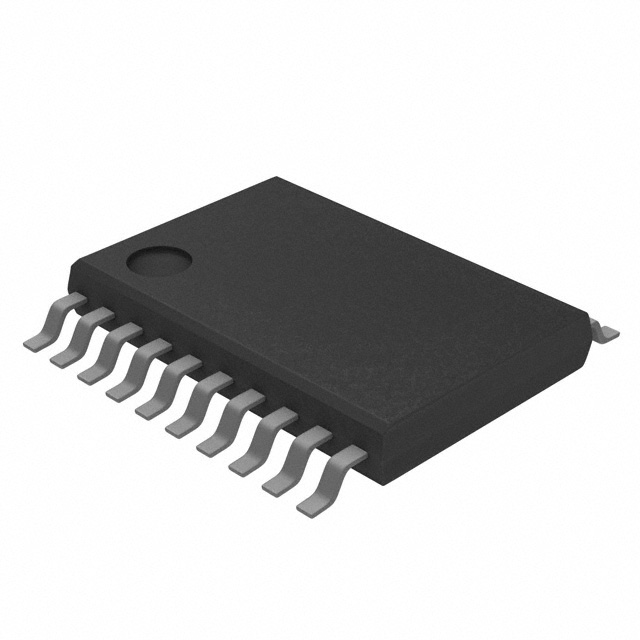
- Part No.:
- BQ7790518PW
- Manufacturer:
- Texas Instruments
- Category:
- Battery Management
- Package:
- 20-TSSOP (0.173", 4.40mm Width)
- Datasheet:
-
 BQ7790518PW.pdf
- Description:
- IC BATT PROT LI-ION 3-5C 20TSSOP
- Quantity:
- Payment:

- Shipping:

Inventory:219
Please send an inquiry. Send us your inquiry, and we will respond immediately.
Product details
Overview
BQ7790518PW from Texas Instruments is a factory-programmed, ultra-low-power lithium-ion battery protector IC for 5-series cell packs, implementing overvoltage (4250 mV), undervoltage (2750 mV), open-wire, overtemperature discharge (70°C), and dual overcurrent discharge (OCD1: 70 mV, OCD2: 140 mV) protections without MCU intervention. It integrates independent low-side NMOS CHG and DSG FET drivers and supports stackable configurations up to 20-series cells.
For engineers reviewing the BQ7790518PW datasheet, BQ7790518PW pinout, BQ7790518PW application, or BQ7790518PW equivalent, this device is selected for high-reliability, low-quiescent-current (6 µA normal mode) protection in power tools, light EVs, and energy storage systems where precise, factory-set thresholds and cascaded scalability are required.
Technical Context
The BQ7790518PW operates as a standalone analog protection ASIC with no firmware or configuration interface - all thresholds and delays are fixed at manufacture. Its architecture uses dedicated comparators per protection function (OV, UV, OCD1/OCD2/SCD, OTD/OTC/UTD/UTC, OW), each with internal delay timers and hysteresis control.
It implements a cascaded stackable topology via CTRC/CTRD control pins and CHGU/DSG outputs, enabling hierarchical fault propagation across multiple devices. The IC interfaces directly to cell voltage sense inputs (VC1–VC5), current-sense differential inputs (SRP/SRN), NTC thermistor (TS/VTB), and load-removal detection (LD), with built-in self-test functions for functional safety compliance.
Key Specifications
| Parameter | Value and Actual Design Meaning |
|---|---|
| Cell Count Support | Factory-configured for 5-series Li-ion stacks; scalable to ≥20-series via stacking |
| Normal Mode Current | 6 µA - enables multi-year battery shelf life in always-on protection applications |
| Overvoltage Threshold | 4250 mV ±10 mV - precise cell balancing margin preservation at full charge |
| Undervoltage Threshold | 2750 mV ±18 mV - prevents deep discharge-induced capacity loss in 5S packs |
| OCD1 Detection | 70 mV ±30% - triggers after 180 ms delay for sustained moderate overcurrent |
| OCD2 Detection | 140 mV ±20% - triggers after 20 ms delay for aggressive overcurrent before thermal runaway |
| Overtemperature Discharge | 70°C threshold with 5.3 s detection delay - protects against sustained high-load heating |
Pinout & Package
Package: 20-pin TSSOP (PW), 6.50 mm × 4.40 mm body size, JEDEC MO-153 compliant, surface-mount.
| Pin/Terminal | Circuit Role | Design Meaning |
|---|---|---|
| VDD (Pin 1) | Power supply input | Accepts 3 V to 25 V - powers internal logic and bias circuits; POR at 4 V |
| VC1–VC5 (Pins 3–7) | Cell voltage sense inputs | Differential sensing of 5 series-connected cells; VC5 must be tied to VC4 on BQ77904 only |
| SRP / SRN (Pins 9–10) | Current sense differential inputs | Measures (VSRP – VSRN) for OCD1/OCD2/SCD; supports bidirectional current monitoring |
| CHG / DSG (Pins 13, 11) | Low-side NMOS FET drivers | Active-high outputs driving external CHG/DSG FET gates; 1 mA drive capability |
| CTRC / CTRD (Pins 18–19) | Stack control inputs | Accept CHGU/DSG signals from upper device to enable/disable local FETs in cascade |
| TS / VTB (Pins 15, 16) | NTC thermistor interface | TS connects to NTC; VTB provides 3.0 V bias - enables temperature ratio-based thresholds |
| LD (Pin 14) | Load removal detection input | Detects PACK– disconnection via 1.3 V threshold; deglitched for noise immunity |
Key Features
| Feature | Design Value |
|---|---|
| Stackable architecture | Enables single-point protection for 6–20S packs using daisy-chained CTRC/CTRD and CHGU/DSG signals |
| Factory-programmed thresholds | Eliminates external resistor networks and calibration - OV=4250 mV, UV=2750 mV, OCD2=140 mV, OTD=70°C |
| Independent CHG/DSG control | Allows asymmetric protection - e.g., disable charging while permitting discharge during UTC fault |
| Open-wire detection | Identifies broken interconnects between adjacent cells using 500 mV ±50 mV threshold per VCx node |
| Functional safety support | Includes built-in self-test modes and documentation for ISO 26262 ASIL-B system-level integration |
Applications
| Power Tools | Light Electric Vehicles |
|---|---|
|
Use Scenario: Cordless drill/driver battery packs operating at 18–21 V (5S Li-ion) under high-pulse loads up to 30 A. IC Role / Device Role / Timing Role: Primary hardware-level protector enforcing cell voltage limits, overcurrent cutoff, and temperature shutdown without software latency. Use Value: Prevents cell venting during stall conditions by triggering OCD2 at 140 mV within 20 ms, while maintaining 6 µA quiescent draw during idle. |
Use Scenario: 36-V e-bike or e-scooter battery modules requiring robust overtemperature discharge protection during hill climbs. IC Role / Device Role / Timing Role: Monitors pack temperature via NTC and disables DSG FET at 70°C with 5.3 s delay to avoid nuisance trips during transient heating. Use Value: Enables safe continuous discharge up to 70°C - matching common motor controller thermal limits - while rejecting short spikes via internal deglitching. |
| Energy Storage Systems | Start-Stop Automotive Batteries |
|
Use Scenario: Residential 48-V LiFePO₄ or NMC backup systems with 13–16S configurations achieved via stacked BQ7790518PW units. IC Role / Device Role / Timing Role: Bottom-device in stack providing unified OV/UV/OW protection and propagating CHG/DSG commands upward via CTRC/CTRD. Use Value: Reduces BOM count vs. microcontroller-based solutions - one IC per 5 cells, no firmware development or certification overhead. |
Use Scenario: 12-V replacement Li-ion battery for automotive start-stop systems, replacing lead-acid with 3S–4S architecture. IC Role / Device Role / Timing Role: Enforces strict UTC (0°C) and UTD (–20°C) limits to prevent lithium plating and mechanical stress during cold cranking. Use Value: Guarantees charge inhibition below 0°C and discharge cutoff at –20°C - meeting OEM thermal safety requirements without external logic. |
Equivalent & Alternatives
The following parts are listed as comparable options for similar battery protection applications.
| Alternative Part | Technical Difference | Application Difference | Selection Advice |
|---|---|---|---|
| BQ7790521PW | Lower OV (3700 mV), same UV (2500 mV), identical OCD2 (140 mV), OTD=70°C, UTC=0°C | Better suited for LFP cells requiring lower overvoltage cutoff; same 5S support and TSSOP package | Select when protecting LiFePO₄ with tighter OV margin and same thermal thresholds |
| BQ7790512PW | Higher UV (2800 mV), same OV (4175 mV), OCD2=150 mV, OTD=65°C, UTC=0°C | Offers higher undervoltage threshold for improved low-voltage headroom in aging NMC packs | Choose for legacy NMC cells needing extended discharge depth before UV trip |
Compared with BQ7790518PW, BQ7790521PW provides lower overvoltage sensitivity for LFP chemistry, while BQ7790512PW raises undervoltage cutoff to preserve cycle life in degraded NMC cells - both retain identical pinout, stackability, and 6 µA quiescent current.
Availability
BQ7790518PW is available at Aetrix Electronics and suitable for power tools, light electric vehicles, and energy storage systems requiring stable component supply, long-term lifecycle support, and guaranteed factory-programmed protection thresholds.
Supply support for BQ7790518PW includes scheduled delivery planning, volume procurement assistance, BOM continuity management, traceable sourcing, and lifecycle availability coordination for OEM customers, industrial embedded developers, connected-device designers, and electronics production programs.
Manufacturer
Texas Instruments is a global semiconductor leader specializing in analog, embedded processing, and power management technologies, with decades of battery management system expertise.
The BQ7790518PW belongs to TI's BQ77905 family of stackable, ultra-low-power battery protectors designed specifically for cost-sensitive, high-reliability 3S–5S lithium-ion packs in portable industrial and mobility applications.
FAQ
What is the factory-programmed overvoltage threshold for BQ7790518PW?
The BQ7790518PW has a fixed overvoltage threshold of 4250 mV ±10 mV at 25°C, with ±40 mV accuracy across –40°C to +85°C. This value is laser-trimmed during manufacturing and cannot be modified in-circuit. The BQ7790518PW uses this threshold to disconnect the charge FET if any monitored cell exceeds 4.25 V, preventing overcharge degradation.
Does BQ7790518PW support 6-series or higher battery configurations?
Yes - the BQ7790518PW supports ≥6-series configurations via stacking. As a 5S-optimized device, it serves as a building block: up to four BQ7790518PW units can be cascaded using CTRC/CTRD inputs and CHGU/DSG outputs to protect up to 20-series packs. Each BQ7790518PW monitors five cells and propagates fault signals downward.
What is the purpose of the LD pin on BQ7790518PW?
The LD (Load Detection) pin on BQ7790518PW detects physical disconnection of the PACK– terminal. When voltage at LD falls below 1.3 V, the BQ7790518PW interprets this as load removal and initiates recovery timing for certain faults (e.g., OCD1/OCD2). This enables automatic re-enablement of FETs after cable reconnection - a key feature for hot-swap battery systems using the BQ7790518PW.
How does BQ7790518PW handle overtemperature discharge protection?
The BQ7790518PW implements overtemperature discharge (OTD) protection at 70°C, derived from the TS/VTB thermistor interface using a 20.56% VTB ratio threshold. Detection occurs after a fixed 5.3 s delay, and recovery begins only after temperature drops below the hysteresis point (55°C for 70°C trip). This behavior is hard-coded in the BQ7790518PW and requires no external configuration.
Is BQ7790518PW pin-compatible with other BQ77905 variants?
Yes - all BQ77905 variants, including BQ7790518PW, share identical 20-pin TSSOP (PW) packaging and pin mapping. Electrical characteristics such as drive strength, leakage, and timing are consistent across the family. Differences exist only in factory-programmed thresholds (OV, UV, OCD2, OTD, etc.), making BQ7790518PW a drop-in replacement where its specific protection profile matches the application.
BQ7790518PW Specifications
- Product attributes
- Attribute value
- Manufacturer:
- Texas Instruments
- Series:
- -
- Package/Case:
- 20-TSSOP (0.173", 4.40mm Width)
- Packaging:
- Tube
- Product Status:
- Active
- Function:
- Battery Protection
- Battery Chemistry:
- Lithium Ion
- Number of Cells:
- 3 ~ 5
- Fault Protection:
- Over Current, Over Temperature, Over/Under Voltage, Short Circuit
- Interface:
- -
- Operating Temperature:
- -40°C ~ 85°C (TA)
- Grade:
- -
- Qualification:
- -
- Mounting Type:
- Surface Mount
- Supplier Device Package:
- 20-TSSOP
BQ7790518PW FAQ
1.How can I place an order for BQ7790518PW through Aetrix?
Please submit a Request for Quotation (RFQ) for BQ7790518PW on Aetrix. Our sales agent will provide a competitive quotation and guide you through the order confirmation once you accept the terms.
2.Are the price and stock information for BQ7790518PW reliable?
The price and inventory of BQ7790518PW are updated periodically and may fluctuate due to market conditions. Stock and pricing data are typically refreshed every 24 hours. Quotation validity for BQ7790518PW is usually 5 days.
3.What payment methods are accepted for BQ7790518PW?
We accept Wire Transfer, PayPal, Credit Card, Western Union, MoneyGram, and Escrow for BQ7790518PW transactions.
Note: Certain payment methods may incur a processing fee.
4.How is shipping managed for BQ7790518PW?
BQ7790518PW orders can be shipped via leading logistics carriers, including DHL, UPS, FedEx, TNT, or Registered Mail.
Once your BQ7790518PW order is processed, you will receive an email with the shipment details and tracking number.
Note: Tracking information may take up to 24 hours to appear. Express delivery typically takes 3–5 business days.
5.How can I obtain technical support or documentation for BQ7790518PW?
For technical support, including BQ7790518PW datasheets, pinout diagrams, or application guidance, please contact our engineering support team. They can provide detailed documentation and assistance for your BQ7790518PW requirements.
6.How does Aetrix verify that BQ7790518PW is sourced from the original manufacturer or authorized distributors?
All BQ7790518PW products on Aetrix are procured from qualified distributors and authorized channels. Our dedicated quality assurance team conducts strict verification, including traceability checks and, if necessary, third-party testing. This ensures that BQ7790518PW meets industry standards.
7.What is the process for return or replacement of BQ7790518PW?
All BQ7790518PW units undergo pre-shipment inspection (PSI). If there is an issue with BQ7790518PW, returns or replacements are accepted under the following conditions:
1.Quantity discrepancies, incorrect items, or visible external defects (such as breakage or corrosion), acknowledged by Aetrix.
2.The issue is reported within 90 days of delivery.
3.The BQ7790518PW part is unused and in its original packaging.
Return procedure for BQ7790518PW:
1.Submit a request within 90 days.
2.Obtain a Return Material Authorization (RMA) from Aetrix.
BQ7790518PW Tags
-
BQ29700DSER
Texas Instruments
-
S-8241ABKMC-GBKT2G
ABLIC Inc.
-
S-8241ABPMC-GBPT2G
ABLIC Inc.

-
BQ27427YZFR
Texas Instruments
-
BQ27426YZFR
Texas Instruments
-
STC3117IJT
STMicroelectronics
-
STC3115IJT
STMicroelectronics
-
BQ76925RGER
Texas Instruments
-
NPM1100-QDAA-R
Nordic Semiconductor ASA
-
BQ27441DRZR-G1A
Texas Instruments
-
STC3115AIQT
STMicroelectronics

-
S-8252AAL-M6T1U
ABLIC Inc.
Tech Hub

A practical engineering guide to 3.3V and 5V logic compatibility, input thresholds, resistor dividers, translator ICs, MOSFET level shifting, I2C pull-ups, timing limits and power-sequencing risks.

The 74HC595 uses push-pull logic outputs, while the TPIC6B595 uses 50 V open-drain DMOS sinks for higher-power loads. This guide compares timing, current limits, 3.3 V interfacing, load wiring, thermal…

The 74HC595 converts serial data into eight stable parallel outputs. This guide covers pin functions, shift and storage timing, OE and MR behavior, drive-current limits, cascading, voltage compatibilit…

A technical comparison of level-sensitive latches and edge-triggered flip-flops, covering timing windows, setup and hold limits, master–slave operation, time borrowing, race-through, HDL inference and…

A D latch stores one bit while Enable controls when data can pass. This reference covers gate-level operation, truth tables, transparency, setup and hold timing, LE versus OE, common ICs and practical …

An SR latch stores one bit through cross-coupled feedback. This engineering reference covers NOR and NAND implementations, truth tables, forbidden-state recovery, gated operation, switch debouncing, fa…

Latch circuits retain one bit through feedback. This technical reference covers SR and D latches, truth tables, transparency, timing limits, latch-versus-flip-flop behavior, applications and common log…

An engineering guide to LED driver operation, constant-current and constant-voltage outputs, linear and switching topologies, dimming, IC selection, calculations, replacement compatibility, and fault c…

Operational amplifier guide covering op amp basics, feedback, ideal vs real op amps, common configurations, buffer circuits, offset, bias current, gain-bandwidth, slew rate, rail-to-rail limits and sel…

Jumper cables guide covering safe connection order, red and black clamp placement, final ground connection, cable gauge, length, clamp quality, copper vs CCA cables, jump starter comparison and battery…


