
 My Inquiry
 My Account


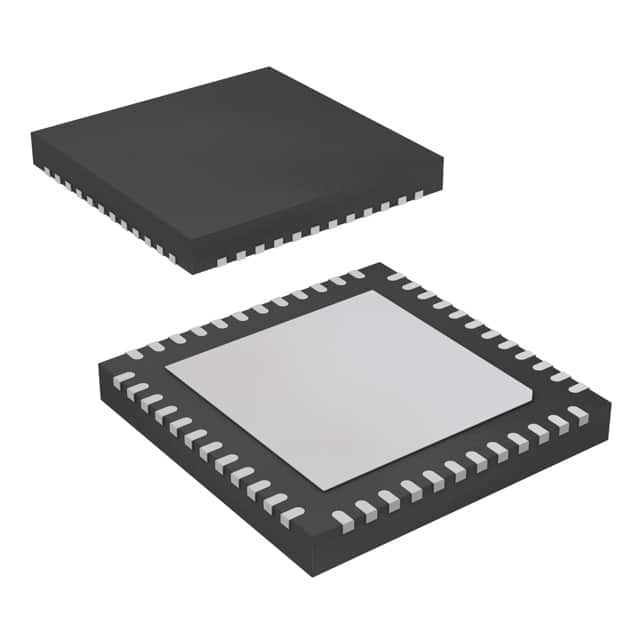
Texas Instruments BQ78PL116RGZR
- Part No.:
- BQ78PL116RGZR
- Manufacturer:
- Texas Instruments
- Category:
- Battery Management
- Package:
- 48-VFQFN Exposed Pad
- Datasheet:
-
 BQ78PL116RGZR.pdf
- Description:
- IC BAT MFUNC LI-ION 3-16C 48VQFN
- Quantity:
- Payment:

- Shipping:

Inventory:2,200
Please send an inquiry. Send us your inquiry, and we will respond immediately.
Product details
Overview
BQ78PL116RGZR from Texas Instruments is a PowerLAN™ master gateway battery management controller for 3–16-series Li-ion battery packs, featuring 18-bit delta-sigma coulomb counting, PowerPump™ active cell balancing, and dual-level safety (first-level MOSFET control + second-level SPROT fuse activation). It supports SMBus 1.1/Smart Battery System 1.1 and operates across –40°C to 85°C in portable medical instruments, e-bikes, and UPS systems.
For engineers reviewing the BQ78PL116RGZR datasheet, BQ78PL116RGZR pinout, BQ78PL116RGZR application, or BQ78PL116RGZR equivalent, this page delivers verified technical context on simultaneous cell voltage/current measurement, programmable protection thresholds, PowerPump gate-drive timing, thermal sensor integration (up to 4 external + 1 internal), and PowerLAN™ master-to-bq76PL102 communication architecture.
Technical Context
The BQ78PL116RGZR implements synchronized, per-cell voltage acquisition using dedicated Δ-Σ ADCs - one per monitored cell (V1–V4) - with <1 mV resolution and ±3 mV accuracy at 25°C. It pairs with bq76PL102 dual-cell monitors via isolated PowerLAN™ to scale beyond four cells, enabling full-stack monitoring of up to 16 series cells.
Its safety architecture separates first-level protection (CHG/DSG/PRE outputs controlling up to three MOSFETs) from second-level fault response (SPROT active-high fuse trigger), with SmartSafety algorithms detecting impedance rise, temperature rate-of-change, and cell imbalance precursors. PowerPump™ operates at 204.8 kHz with configurable 33%/67% duty cycles on P1N–P4S pins for efficient inter-cell charge transfer during charge, discharge, and rest.
Key Specifications
| Parameter | Value and Actual Design Meaning |
|---|---|
| Cell Support | 3–16 series Li-ion cells; first 4 monitored directly, additional cells via bq76PL102 over PowerLAN™ |
| Voltage Measurement | ±3 mV accuracy at 25°C, <1 mV resolution, 2.75–4.5 V range per cell |
| Coulomb Counting | 18-bit integrating delta-sigma ADC, 5 nVh resolution, shared CCBAT/CCPACK inputs |
| Power Modes | Active: <400 μA; Standby: <185 μA; Ship: <85 μA; ECUV shutdown: <1 μA |
| Temperature Sensing | 1 internal sensor (±2°C accuracy, –30°C to 85°C) + 4 external NTC inputs (±2°C, –40°C to 90°C) |
| PowerPump Frequency | 204.8 kHz PWM with 33% duty cycle on P1N/P2N/P3N/P4N, 67% on P2S/P3S/P4S |
| SMBus Compliance | Full Smart Battery System 1.1 support; 10–100 kHz clock; 350-μA sink capability on SMBDAT/SMBCLK |
Pinout & Package
Package: QFN-48 (7 mm × 7 mm, RGZ), thermally enhanced with exposed pad connected to VSS.
| Pin/Terminal | Circuit Role | Design Meaning |
|---|---|---|
| CHG, DSG, PRE | First-level MOSFET gate drivers | Active-high outputs controlling charge/discharge/precharge FETs; logic levels referenced to VLDO1 |
| P1N–P4S | PowerPump gate drives | Eight dedicated outputs (P1N/P1S…P4N/P4S) driving external balancing MOSFETs; voltage ranges referenced to adjacent cell potentials |
| V1–V4, VSS | Cell voltage inputs | Differential analog inputs for cell string monitoring; VSS = Cell 1 negative reference |
| XT1–XT4 | External temperature sensor inputs | Analog inputs for NTC thermistors; XT1–XT2 referenced to VSS, XT3–XT4 referenced to V2 |
| CCBAT, CCPACK, CSBAT, CSPACK | Coulomb/safety current sense | Four independent analog inputs for high-accuracy current measurement (±100 A max with 1-mΩ shunt) and redundant safety monitoring |
| SMBCLK, SMBDAT | SMBus interface | Open-drain bidirectional bus lines compliant with SMBus 2.0; require external pullups |
| P-LAN, SDO0/SDI1/SDO2/SDI3 | PowerLAN master link | Capacitor-coupled serial interface to bq76PL102 nodes; ac-coupled for galvanic isolation between cell domains |
| SPROT | Secondary protection output | Active-high signal triggering chemical fuse; fully independent of first-level MOSFET controls |
Key Features
| Feature | Design Value |
|---|---|
| Simultaneous per-cell voltage acquisition | Eliminates system-induced noise by synchronizing all cell measurements - enables real-time impedance calculation under dynamic load |
| PowerPump™ active balancing | Transfers charge between cells during all operating modes (charge/discharge/rest) with >95% efficiency, extending runtime and cycle life |
| Dual-level safety architecture | First-level MOSFET control + second-level SPROT-triggered fuse provides layered fault containment for critical applications like medical devices |
| Configurable display interface | Drives LED/LCD/EPD displays via LED1–LED5/SEG1–SEG5 and FIELD/PSH/BP/TP pins - no external driver IC required |
| User-programmable firmware | Flash-based configuration tables support chemistry-specific parameters, protection thresholds, and gas-gauging algorithms - no firmware development needed |
Applications
| Portable Medical Instruments | E-Bike Battery Packs |
|---|---|
Use Scenario: Rechargeable Li-ion battery pack powering handheld ultrasound or infusion pumps requiring precise SoC reporting and fail-safe shutdown. IC Role / Device Role / Timing Role: Master BMS controller performing real-time coulomb counting, cell balancing, and dual-level safety enforcement. Use Value: 18-bit coulomb counter enables <±1% SoC accuracy without full calibration cycles; SmartSafety detects early cell degradation before field failure. |
Use Scenario: 13S–16S high-current battery pack for electric bicycles with integrated LCD state-of-charge display and thermal runaway prevention. IC Role / Device Role / Timing Role: PowerLAN™ master coordinating up to four bq76PL102 monitors while driving EPD/LCD segments directly. Use Value: PowerPump™ balancing maintains voltage uniformity across 16 cells during regenerative braking, preventing premature cutoff and extending usable capacity. |
| Uninterruptible Power Supplies | Industrial Hand-Held Tools |
Use Scenario: Rack-mounted UPS with hot-swappable Li-ion modules needing SMBus 1.1 compliance and lifetime logging of delivered Ah. IC Role / Device Role / Timing Role: Smart Battery System 1.1-compliant controller reporting pack voltage, temperature, and remaining capacity to host system. Use Value: Lifetime logging (via SMBus) captures max/min cell voltage, temperature, and power - critical for predictive maintenance and warranty analytics. |
Use Scenario: Cordless power tool battery pack with pushbutton-activated LED fuel gauge and overcurrent protection during stall conditions. IC Role / Device Role / Timing Role: Integrated LED driver (LED1–LED5) and fast-response overcurrent detection (<1 ms short-circuit response). Use Value: Preconfigured LED segment mapping eliminates external display controller; hardware-based overcurrent detection ensures MOSFET shutdown before thermal damage occurs. |
Equivalent & Alternatives
The following parts are listed as comparable options for similar battery management controller applications.
| Alternative Part | Technical Difference | Application Difference | Selection Advice |
|---|---|---|---|
| BQ76PL102RGZR | Dual-cell monitor (not master); lacks SMBus, coulomb counter, PowerPump, and display drivers; requires BQ78PL116 as host | Used only as slave node in multi-chip stacks; cannot operate standalone as primary BMS controller | Select only when expanding beyond 4 cells - must pair with BQ78PL116RGZR as master |
| BQ78350-R1-R2 | Standalone fuel gauge + protector; no PowerLAN™, no direct PowerPump gate drives, no external temperature sensor inputs beyond 2 | Targeted at smaller packs (≤10S); lacks secondary safety fuse output (SPROT) and programmable SmartSafety diagnostics | Choose for cost-sensitive, lower-cell-count designs where PowerPump balancing and dual-level safety are not required |
Compared with BQ78PL116RGZR, BQ76PL102RGZR serves only as a scalable slave monitor and cannot replace its master functions, while BQ78350-R1-R2 offers simplified integration but omits PowerPump balancing, SPROT fuse control, and full SmartSafety diagnostics - making BQ78PL116RGZR uniquely suited for high-reliability, large-series-cell systems demanding layered safety and precision gauging.
Availability
BQ78PL116RGZR is available at Aetrix Electronics and suitable for portable medical instruments, e-bike battery packs, uninterruptible power supplies, and industrial hand-held tools requiring stable component supply, long-term lifecycle support, and traceable sourcing for safety-critical designs.
Supply support for BQ78PL116RGZR includes scheduled delivery planning, volume procurement assistance, BOM continuity management, traceable sourcing, and lifecycle availability coordination for OEM customers, industrial embedded developers, connected-device designers, and electronics production programs.
Manufacturer
Texas Instruments is a global semiconductor leader specializing in analog, embedded processing, and power management technologies, with decades of expertise in battery management and industrial-grade reliability.
The BQ78PL116RGZR belongs to TI's PowerLAN™ BMS product line, designed specifically for high-voltage, multi-cell Li-ion systems requiring synchronized measurement, active balancing, and dual-level safety - targeting medical, mobility, and backup power applications.
FAQ
What is the maximum number of series cells supported by the BQ78PL116RGZR?
The BQ78PL116RGZR directly monitors up to four series cells (V1–V4) and serves as the master controller for PowerLAN™ networks that integrate multiple bq76PL102 dual-cell monitors. This architecture scales to support battery packs with up to 16 series-connected Li-ion cells, with each bq76PL102 handling two additional cells. The BQ78PL116RGZR manages communication, synchronization, and system-level decisions across the entire stack.
How does PowerPump™ technology in the BQ78PL116RGZR differ from passive balancing?
PowerPump™ in the BQ78PL116RGZR enables active, bidirectional charge transfer between cells using dedicated gate-drive outputs (P1N–P4S), operating at 204.8 kHz with configurable duty cycles. Unlike passive balancing - which dissipates excess energy as heat - PowerPump™ recovers and redistributes energy, achieving >95% efficiency during charge, discharge, and rest states. This preserves pack capacity, extends runtime, and improves cycle life, especially in high-cell-count configurations where voltage divergence is pronounced.
Does the BQ78PL116RGZR support Smart Battery System (SBS) compliance?
Yes, the BQ78PL116RGZR is fully compliant with Smart Battery System Specification 1.1 and SMBus 2.0. It implements all required SBS data registers (voltage, current, temperature, remaining capacity, full charge capacity, cycle count, etc.) and supports standard SMBus commands including block read/write, alert response, and manufacturer access. The device reports target charging voltage/current to compatible smart chargers and enables host systems to monitor and manage battery health via standardized protocols.
What safety protections are implemented in the BQ78PL116RGZR?
The BQ78PL116RGZR implements dual-layer safety: first-level protection uses CHG, DSG, and PRE outputs to control up to three external MOSFETs for over/undervoltage, overcurrent, short-circuit, and thermal faults; second-level protection activates the SPROT pin to trigger an external chemical fuse upon detection of critical anomalies - including impedance rise, rapid temperature change, cell imbalance exceeding limits, or measurement failures. Both layers operate independently with dedicated hardware paths and firmware supervision.
Can the BQ78PL116RGZR drive displays directly without external components?
Yes, the BQ78PL116RGZR integrates native display drivers for LED, LCD, and electronic paper displays (EPDs). Pins LED1–LED5/SEG1–SEG5 provide open-drain, active-low outputs capable of sinking up to 10 mA each; FIELD, PSH/BP/TP support EPD field segmentation and LCD backplane control. Configuration is handled entirely in firmware - no external display controller IC or level-shifting circuitry is required, reducing bill-of-materials and PCB complexity.
BQ78PL116RGZR Specifications
- Product attributes
- Attribute value
- Manufacturer:
- Texas Instruments
- Series:
- PowerLAN™, PowerPump™
- Package/Case:
- 48-VFQFN Exposed Pad
- Packaging:
- Tape & Reel (TR)
- Product Status:
- Active
- Function:
- Multi-Function Controller
- Battery Chemistry:
- Lithium Ion
- Number of Cells:
- 3 ~ 16
- Fault Protection:
- Over Current, Over Temperature, Over/Under Voltage, Short Circuit
- Interface:
- SMBus
- Operating Temperature:
- -40°C ~ 85°C (TA)
- Grade:
- -
- Qualification:
- -
- Mounting Type:
- Surface Mount
- Supplier Device Package:
- 48-VQFN (7x7)
BQ78PL116RGZR FAQ
1.How can I place an order for BQ78PL116RGZR through Aetrix?
Please submit a Request for Quotation (RFQ) for BQ78PL116RGZR on Aetrix. Our sales agent will provide a competitive quotation and guide you through the order confirmation once you accept the terms.
2.Are the price and stock information for BQ78PL116RGZR reliable?
The price and inventory of BQ78PL116RGZR are updated periodically and may fluctuate due to market conditions. Stock and pricing data are typically refreshed every 24 hours. Quotation validity for BQ78PL116RGZR is usually 5 days.
3.What payment methods are accepted for BQ78PL116RGZR?
We accept Wire Transfer, PayPal, Credit Card, Western Union, MoneyGram, and Escrow for BQ78PL116RGZR transactions.
Note: Certain payment methods may incur a processing fee.
4.How is shipping managed for BQ78PL116RGZR?
BQ78PL116RGZR orders can be shipped via leading logistics carriers, including DHL, UPS, FedEx, TNT, or Registered Mail.
Once your BQ78PL116RGZR order is processed, you will receive an email with the shipment details and tracking number.
Note: Tracking information may take up to 24 hours to appear. Express delivery typically takes 3–5 business days.
5.How can I obtain technical support or documentation for BQ78PL116RGZR?
For technical support, including BQ78PL116RGZR datasheets, pinout diagrams, or application guidance, please contact our engineering support team. They can provide detailed documentation and assistance for your BQ78PL116RGZR requirements.
6.How does Aetrix verify that BQ78PL116RGZR is sourced from the original manufacturer or authorized distributors?
All BQ78PL116RGZR products on Aetrix are procured from qualified distributors and authorized channels. Our dedicated quality assurance team conducts strict verification, including traceability checks and, if necessary, third-party testing. This ensures that BQ78PL116RGZR meets industry standards.
7.What is the process for return or replacement of BQ78PL116RGZR?
All BQ78PL116RGZR units undergo pre-shipment inspection (PSI). If there is an issue with BQ78PL116RGZR, returns or replacements are accepted under the following conditions:
1.Quantity discrepancies, incorrect items, or visible external defects (such as breakage or corrosion), acknowledged by Aetrix.
2.The issue is reported within 90 days of delivery.
3.The BQ78PL116RGZR part is unused and in its original packaging.
Return procedure for BQ78PL116RGZR:
1.Submit a request within 90 days.
2.Obtain a Return Material Authorization (RMA) from Aetrix.
BQ78PL116RGZR Tags
-
BQ29700DSER
Texas Instruments
-
S-8241ABKMC-GBKT2G
ABLIC Inc.
-
S-8241ABPMC-GBPT2G
ABLIC Inc.

-
BQ27427YZFR
Texas Instruments
-
BQ27426YZFR
Texas Instruments
-
STC3117IJT
STMicroelectronics
-
STC3115IJT
STMicroelectronics
-
BQ76925RGER
Texas Instruments
-
NPM1100-QDAA-R
Nordic Semiconductor ASA
-
BQ27441DRZR-G1A
Texas Instruments
-
STC3115AIQT
STMicroelectronics

-
S-8252AAL-M6T1U
ABLIC Inc.
Tech Hub

A practical engineering guide to 3.3V and 5V logic compatibility, input thresholds, resistor dividers, translator ICs, MOSFET level shifting, I2C pull-ups, timing limits and power-sequencing risks.

The 74HC595 uses push-pull logic outputs, while the TPIC6B595 uses 50 V open-drain DMOS sinks for higher-power loads. This guide compares timing, current limits, 3.3 V interfacing, load wiring, thermal…

The 74HC595 converts serial data into eight stable parallel outputs. This guide covers pin functions, shift and storage timing, OE and MR behavior, drive-current limits, cascading, voltage compatibilit…

A technical comparison of level-sensitive latches and edge-triggered flip-flops, covering timing windows, setup and hold limits, master–slave operation, time borrowing, race-through, HDL inference and…

A D latch stores one bit while Enable controls when data can pass. This reference covers gate-level operation, truth tables, transparency, setup and hold timing, LE versus OE, common ICs and practical …

An SR latch stores one bit through cross-coupled feedback. This engineering reference covers NOR and NAND implementations, truth tables, forbidden-state recovery, gated operation, switch debouncing, fa…

Latch circuits retain one bit through feedback. This technical reference covers SR and D latches, truth tables, transparency, timing limits, latch-versus-flip-flop behavior, applications and common log…

An engineering guide to LED driver operation, constant-current and constant-voltage outputs, linear and switching topologies, dimming, IC selection, calculations, replacement compatibility, and fault c…

Operational amplifier guide covering op amp basics, feedback, ideal vs real op amps, common configurations, buffer circuits, offset, bias current, gain-bandwidth, slew rate, rail-to-rail limits and sel…

Jumper cables guide covering safe connection order, red and black clamp placement, final ground connection, cable gauge, length, clamp quality, copper vs CCA cables, jump starter comparison and battery…


