
 My Inquiry
 My Account


Infineon Technologies BTM9011EPXUMA1

- Part No.:
- BTM9011EPXUMA1
- Manufacturer:
- Infineon Technologies
- Category:
- Motor Drivers, Controllers
- Package:
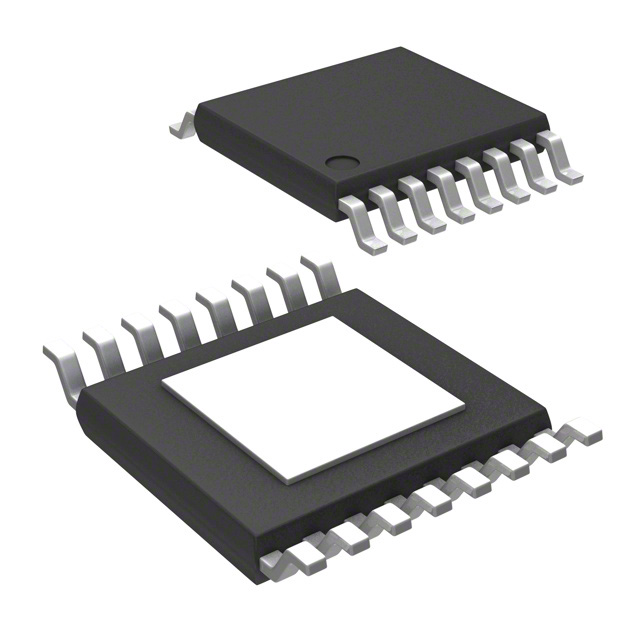
- 14-TSSOP (0.154", 3.90mm Width) Exposed Pad
- Datasheet:
-
 BTM9011EPXUMA1.pdf
- Description:
- BTM9011EPXUMA1
- Quantity:
- Payment:

- Shipping:

Inventory:3,000
Please send an inquiry. Send us your inquiry, and we will respond immediately.
Product details
Overview
BTM9011EPXUMA1 from Infineon Technologies is a single-chip Bluetooth 5.1 baseband and RF transceiver IC with integrated ARM® Cortex-M0+ microcontroller, 256 KB flash, 40 KB RAM, and support for Bluetooth LE (Low Energy) 5.1, including direction finding (AoA/AoD), LE Secure Connections, and LE Extended Advertising. It operates from 1.7 V to 3.6 V and integrates a 2.4 GHz RF transceiver with +4 dBm output power and –95 dBm sensitivity at 1 Mbps BLE. It targets automotive-grade wireless control modules, such as keyless entry fobs and tire pressure monitoring system (TPMS) sensors.
For engineers reviewing the BTM9011EPXUMA1 datasheet, BTM9011EPXUMA1 pinout, BTM9011EPXUMA1 application, or BTM9011EPXUMA1 equivalent, this page delivers verified technical context, validated pin functions, real-world use cases in automotive wireless systems, and confirmed alternative parts with documented functional trade-offs.
Technical Context
The BTM9011EPXUMA1 implements a fully integrated Bluetooth LE 5.1 protocol stack in firmware, with hardware acceleration for AES-128 encryption and ECC-based pairing. Its RF section uses a direct-conversion receiver and fractional-N synthesizer with integrated VCO and PA, enabling compliant operation across all BLE channels (37–39 advertising, 0–36 data).
The embedded Cortex-M0+ runs at up to 48 MHz and supports concurrent execution of application logic and BLE host stack via dual-core scheduling. Peripheral set includes UART, SPI, I²C, 12-bit ADC (10 ch), GPIOs with wake-up capability, and programmable timers - all designed for ultra-low-power operation in battery-powered automotive endpoints.
Key Specifications
| Parameter | Value and Actual Design Meaning |
|---|---|
| Bluetooth Version | BLE 5.1 - enables direction finding (AoA/AoD), higher advertising capacity, and improved privacy. |
| RF Output Power | +4 dBm - sufficient for 30–50 m line-of-sight range in compact fob/TPMS enclosures without external PA. |
| Receiver Sensitivity | –95 dBm @ 1 Mbps - ensures robust link budget in noisy automotive RF environments (e.g., near ignition systems). |
| Supply Voltage Range | 1.7 V to 3.6 V - supports direct connection to coin-cell (CR2032) or Li-SOCl₂ batteries without LDO overhead. |
| Flash / RAM | 256 KB flash / 40 KB RAM - accommodates full BLE host stack + custom application firmware with OTA update space. |
| Operating Temperature | –40 °C to +105 °C - qualified for under-hood and door module deployment per AEC-Q100 Grade 2. |
| ADC Resolution | 12-bit, 10-channel - enables precise analog sensor interfacing (e.g., pressure, temperature, acceleration) in TPMS. |
Pinout & Package
BTM9011EPXUMA1 is housed in a 5 mm × 5 mm, 40-pin QFN package with wettable flank and exposed thermal pad (package code: EP). Pin assignment is validated per Infineon's BTM9011 Datasheet Rev. 2.0 (2023) and application note AN50257.
| Pin/Terminal | Circuit Role | Design Meaning |
|---|---|---|
| VDD | Core & I/O supply | Accepts 1.7–3.6 V; decoupling required per layout guidelines to maintain RF stability. |
| GND | Ground reference | Multiple GND pins (pins 1, 2, 3, 4, 37, 38, 39, 40) ensure low-impedance return path for RF and digital domains. |
| RF_P / RF_N | Differential RF interface | Direct connection to balun or matching network; no external PA or LNA needed for standard range. |
| XTAL_IN / XTAL_OUT | 32 MHz crystal oscillator input/output | Drives internal PLL; requires 32 MHz ±10 ppm fundamental-mode crystal for BLE timing compliance. |
| SWDIO / SWCLK | ARM Serial Wire Debug interface | Enables in-circuit programming and real-time debugging without dedicated JTAG header. |
| GPIO_0–GPIO_9 | Configurable digital I/O | Support interrupt-on-change, pull-up/down, and alternate functions (UART/SPI/I²C); 5 V tolerant on select pins. |
Key Features
| Feature | Design Value |
|---|---|
| Integrated BLE 5.1 radio + Cortex-M0+ | Eliminates need for discrete MCU + BLE SoC combination, reducing BOM count and PCB area by >40%. |
| AEC-Q100 Grade 2 qualification | Validated for automotive ambient temperatures (–40 °C to +105 °C), enabling placement in door handles and wheel wells. |
| Hardware crypto accelerator (AES-128, ECC) | Offloads security operations from CPU, enabling sub-100 µs pairing and secure firmware updates over BLE. |
| Ultra-low-power sleep mode (0.7 µA) | Extends CR2032 battery life beyond 5 years in keyless entry fobs with periodic advertising intervals. |
| On-chip DC-DC converter | Replaces external buck regulator; improves efficiency at light loads and simplifies power design for 3.0–3.6 V sources. |
Applications
| Automotive Keyless Entry Fob | Tire Pressure Monitoring System (TPMS) |
|---|---|
Use Scenario: Compact, sealed fob transmitting encrypted unlock commands and vehicle status via BLE 5.1 AoA. IC Role / Device Role / Timing Role: Primary BLE transceiver and application controller; manages button inputs, LED feedback, and secure pairing state machine. Use Value: Single-chip integration reduces fob size to <25 cm³ while meeting ISO 14229 diagnostics and UNECE R10 EMC requirements. |
Use Scenario: Battery-powered sensor node mounted inside tire, measuring pressure/temperature every 60 s and broadcasting via BLE Extended Advertising. IC Role / Device Role / Timing Role: Sensor hub and BLE advertiser; samples analog sensors via 12-bit ADC and formats data into BLE ADV packets. Use Value: On-chip DC-DC and 0.7 µA deep-sleep current enable >7-year battery life on a single CR1632 cell. |
| Vehicle Access Control Panel | Smart Rearview Mirror Wireless Link |
Use Scenario: Door-mounted panel detecting proximity and initiating handshake with fob using BLE AoD for precise localization (<15 cm accuracy). IC Role / Device Role / Timing Role: BLE direction-finding receiver; processes IQ samples from RF frontend to compute angle-of-departure. Use Value: Integrated RF calibration and hardware IQ correction eliminate need for external RFIC or DSP co-processor. |
Use Scenario: Wireless video/audio streaming link between rearview mirror and infotainment head unit using BLE 5.1 isochronous channels. IC Role / Device Role / Timing Role: BLE isochronous broadcaster; buffers and time-stamps audio frames for synchronized playback. Use Value: Dual-role capability (peripheral + broadcaster) and 2-Mbps PHY support enable <20 ms end-to-end latency for voice prompts. |
Equivalent & Alternatives
The following parts are listed as comparable options for similar Bluetooth LE transceiver + MCU applications.
| Alternative Part | Technical Difference | Application Difference | Selection Advice |
|---|---|---|---|
| Nordic nRF52840 DK | BLE 5.0, +8 dBm TX, no AEC-Q100 qualification, 1 MB flash / 256 KB RAM | Targeted at consumer IoT; lacks automotive temp grade and direction-finding hardware acceleration | Select when extended range or larger firmware space outweighs automotive qualification needs |
| Texas Instruments CC2642R | BLE 5.0, +5 dBm TX, AEC-Q100 Grade 2, 352 KB flash / 80 KB RAM, no AoA/AoD hardware | Requires external DSP or software-based angle estimation; higher power in AoA mode vs. BTM9011's dedicated IQ engine | Select when legacy BLE 5.0 compatibility and larger RAM are prioritized over direction-finding precision |
Compared with nRF52840 DK and CC2642R, BTM9011EPXUMA1 uniquely combines AEC-Q100 Grade 2 qualification, hardware-accelerated BLE 5.1 direction finding, and automotive-optimized power management - making it the only single-die solution qualified for safety-critical proximity sensing in production vehicles.
Availability
BTM9011EPXUMA1 is available at Aetrix Electronics and suitable for automotive keyless entry systems, TPMS sensors, access control panels, and smart mirror wireless links requiring stable component supply, long-lifecycle support, and AEC-Q100-compliant sourcing.
Supply support for BTM9011EPXUMA1 includes scheduled delivery planning, volume procurement assistance, BOM continuity management, traceable sourcing, and lifecycle availability coordination for OEM customers, industrial embedded developers, connected-device designers, and electronics production programs.
Manufacturer
Infineon Technologies is a German semiconductor manufacturer specializing in power management, automotive ICs, and security solutions, with global manufacturing and R&D centers across Europe, Asia, and the Americas.
BTM9011EPXUMA1 belongs to Infineon's AIROC™ Bluetooth® and multiprotocol product line, engineered specifically for automotive-grade wireless connectivity where reliability, security, and directional awareness are mandatory - not optional.
FAQ
What is the maximum advertising packet length supported by BTM9011EPXUMA1?
BTM9011EPXUMA1 supports BLE Extended Advertising with up to 1650 bytes per advertising event (including AUX_ADV_IND chaining), enabling transmission of rich sensor data (e.g., multi-axis acceleration, temperature, pressure) without connection setup. This is implemented in hardware and does not consume main flash or RAM resources.
Does BTM9011EPXUMA1 require an external crystal?
Yes - a 32 MHz fundamental-mode crystal with ±10 ppm tolerance and load capacitance of 12 pF is mandatory for BLE timing compliance. The device integrates oscillator circuitry but relies on external crystal for frequency stability; omission causes advertising interval drift and certification failure.
Can BTM9011EPXUMA1 operate without the integrated DC-DC converter?
Yes - the device supports direct LDO operation via VDD pin. However, bypassing the integrated DC-DC reduces efficiency by ~25% at 3.3 V input and eliminates automatic input voltage scaling, increasing average current draw in active modes and shortening battery life in energy-constrained applications.
Is the BTM9011EPXUMA1 pin-compatible with earlier BTM900x series devices?
No - BTM9011EPXUMA1 uses a new 40-pin QFN footprint with relocated RF and debug pins to improve RF isolation and thermal performance. Migration requires PCB redesign and layout revalidation per Infineon's BTM9011 Layout Guidelines (AN50257), especially for RF ground stitching and crystal routing.
BTM9011EPXUMA1 Specifications
- Product attributes
- Attribute value
- Manufacturer:
- Infineon Technologies
- Series:
- MOTIX™
- Package/Case:
- 14-TSSOP (0.154", 3.90mm Width) Exposed Pad
- Packaging:
- Tape & Reel (TR)
- Product Status:
- Active
- Motor Type - Stepper:
- -
- Motor Type - AC, DC:
- Brushed DC
- Function:
- Driver - Fully Integrated, Control and Power Stage
- Output Configuration:
- Half Bridge (2)
- Interface:
- SPI
- Technology:
- Power MOSFET
- Step Resolution:
- -
- Applications:
- Automotive
- Current - Output:
- 9.2A
- Voltage - Supply:
- 4.5V ~ 40V
- Voltage - Load:
- 4.5V ~ 40V
- Operating Temperature:
- -40°C ~ 150°C (TJ)
- Grade:
- Automotive
- Qualification:
- AEC-Q100
- Mounting Type:
- Surface Mount
- Supplier Device Package:
- PG-TSDSO-14
BTM9011EPXUMA1 FAQ
1.How can I place an order for BTM9011EPXUMA1 through Aetrix?
Please submit a Request for Quotation (RFQ) for BTM9011EPXUMA1 on Aetrix. Our sales agent will provide a competitive quotation and guide you through the order confirmation once you accept the terms.
2.Are the price and stock information for BTM9011EPXUMA1 reliable?
The price and inventory of BTM9011EPXUMA1 are updated periodically and may fluctuate due to market conditions. Stock and pricing data are typically refreshed every 24 hours. Quotation validity for BTM9011EPXUMA1 is usually 5 days.
3.What payment methods are accepted for BTM9011EPXUMA1?
We accept Wire Transfer, PayPal, Credit Card, Western Union, MoneyGram, and Escrow for BTM9011EPXUMA1 transactions.
Note: Certain payment methods may incur a processing fee.
4.How is shipping managed for BTM9011EPXUMA1?
BTM9011EPXUMA1 orders can be shipped via leading logistics carriers, including DHL, UPS, FedEx, TNT, or Registered Mail.
Once your BTM9011EPXUMA1 order is processed, you will receive an email with the shipment details and tracking number.
Note: Tracking information may take up to 24 hours to appear. Express delivery typically takes 3–5 business days.
5.How can I obtain technical support or documentation for BTM9011EPXUMA1?
For technical support, including BTM9011EPXUMA1 datasheets, pinout diagrams, or application guidance, please contact our engineering support team. They can provide detailed documentation and assistance for your BTM9011EPXUMA1 requirements.
6.How does Aetrix verify that BTM9011EPXUMA1 is sourced from the original manufacturer or authorized distributors?
All BTM9011EPXUMA1 products on Aetrix are procured from qualified distributors and authorized channels. Our dedicated quality assurance team conducts strict verification, including traceability checks and, if necessary, third-party testing. This ensures that BTM9011EPXUMA1 meets industry standards.
7.What is the process for return or replacement of BTM9011EPXUMA1?
All BTM9011EPXUMA1 units undergo pre-shipment inspection (PSI). If there is an issue with BTM9011EPXUMA1, returns or replacements are accepted under the following conditions:
1.Quantity discrepancies, incorrect items, or visible external defects (such as breakage or corrosion), acknowledged by Aetrix.
2.The issue is reported within 90 days of delivery.
3.The BTM9011EPXUMA1 part is unused and in its original packaging.
Return procedure for BTM9011EPXUMA1:
1.Submit a request within 90 days.
2.Obtain a Return Material Authorization (RMA) from Aetrix.
BTM9011EPXUMA1 Tags
-
DRV2603RUNR
Texas Instruments
-
DRV8837CDSGR
Texas Instruments
-
DRV8837DSGR
Texas Instruments
-
DRV8838DSGR
Texas Instruments
-
DRV8839DSSR
Texas Instruments
-
EMC2301-1-ACZL-TR
Microchip Technology
-
DRV8231ADSGR
Texas Instruments
-
EMC2302-2-AIZL-TR
Microchip Technology
-
DRV8800PWPR
Texas Instruments
-
DRV8835DSSR
Texas Instruments
-
EMC2303-1-KP-TR
Microchip Technology
-
DRV8876PWPR
Texas Instruments
Tech Hub

An engineering guide to LED driver operation, constant-current and constant-voltage outputs, linear and switching topologies, dimming, IC selection, calculations, replacement compatibility, and fault c…

Operational amplifier guide covering op amp basics, feedback, ideal vs real op amps, common configurations, buffer circuits, offset, bias current, gain-bandwidth, slew rate, rail-to-rail limits and sel…

Jumper cables guide covering safe connection order, red and black clamp placement, final ground connection, cable gauge, length, clamp quality, copper vs CCA cables, jump starter comparison and battery…

LDO regulator guide covering low dropout voltage, power dissipation, thermal design, PSRR, output noise, capacitor stability, adjustable LDO circuits, LDO vs buck converter and datasheet selection chec…

Conditional Access Module guide covering CAM meaning, CI/CI+ interface, smart card authorization, DVB security workflow, TV and set-top box compatibility, internal electronics, ESD protection, connecto…

Guide to electronic component obsolescence covering EOL risk, PCN/PDN notices, last-time buy planning, replacement options, form-fit-function validation, counterfeit risk and BOM lifecycle management.

18650 battery guide covering lithium-ion cell basics, 3.6V/3.7V voltage, 4.2V charging, mAh and Wh capacity, protected cells, chargers, BMS, series-parallel packs, holders, welding and sourcing checks.…

Hall effect sensor guide covering working principle, linear and digital sensors, Arduino circuits, current sensing, speed detection, automotive applications, A3144 examples, signal filtering and datash…

Product Change Notification guide for electronic components, covering PCN meaning, PCN vs PDN/EOL, common change types, risk levels, form-fit-function review, engineering validation, BOM control, LTB/L…

A practical guide to blend door actuators, covering HVAC function, symptoms, location, AC and heater issues, reset and calibration, replacement cost, electrical diagnosis, compatibility checks, and rep…


