
 My Inquiry
 My Account


Microchip Technology CAP1005-1-AIA-TR
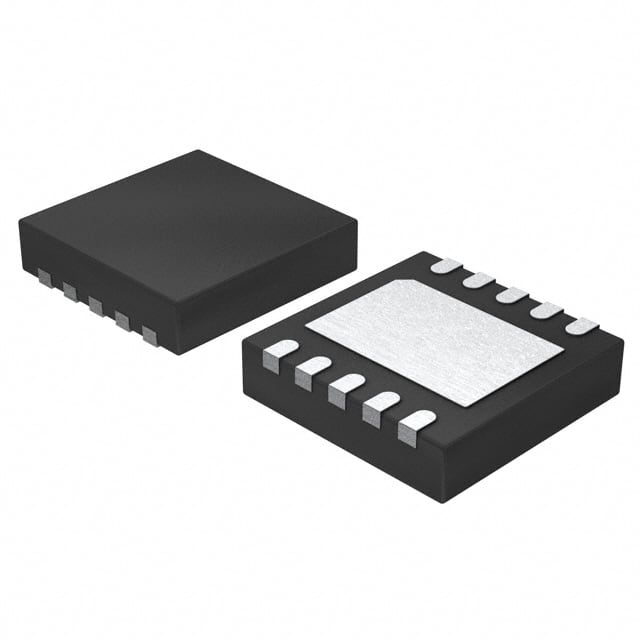
- Part No.:
- CAP1005-1-AIA-TR
- Manufacturer:
- Microchip Technology
- Category:
- Sensor, Capacitive Touch
- Package:
- 10-VFDFN Exposed Pad
- Datasheet:
-
 CAP1005-1-AIA-TR.pdf
- Description:
- IC TOUCH SENSOR/LED DRVR 10DFN
- Quantity:
- Payment:

- Shipping:

Inventory:2,449
Please send an inquiry. Send us your inquiry, and we will respond immediately.
Product details
Overview
CAP1005-1-AIA-TR from SMSC is a 5-channel capacitive touch sensor IC with full-duplex SPI interface, programmable per-button thresholds, automatic environmental recalibration, and 3µA deep-sleep quiescent current-designed for front-panel controls in LCD monitors and printers.
For engineers reviewing the CAP1005-1-AIA-TR datasheet, CAP1005-1-AIA-TR pinout, CAP1005-1-AIA-TR application, or CAP1005-1-AIA-TR equivalent, key selection criteria include SPI-only communication support, 5-sensor channel count, DFN-10 3mm×3mm RoHS package, and absence of SMBus/BC-Link compatibility.
Technical Context
The CAP1005-1-AIA-TR implements a dedicated capacitive sensing algorithm with independent threshold configuration per input channel (CS1–CS5), enabling robust touch detection across varying dielectric overlays and temperature drift. It supports only full-duplex SPI (SPI_CLK, SPI_MOSI, SPI_MISO, SPI_CS#) - no SMBus or BC-Link functionality.
Its power architecture includes Standby mode (one or more sensors active) and Deep Sleep mode (3µA, all sensors disabled), with wake-up triggered exclusively via SPI transaction. No ALERT# or IRQ pin is present in this variant.
Key Specifications
| Parameter | Value and Actual Design Meaning |
|---|---|
| Touch Channels | 5 independent capacitive inputs (CS1–CS5) |
| Interface | Full-duplex SPI only - requires master-controlled clock and chip select |
| Deep Sleep Current | 3µA - enables battery-backed or ultra-low-power standby in host systems |
| Sensitivity Control | Programmable per-channel threshold - allows fine-tuning for different button sizes/materials |
| Recalibration | Automatic baseline adjustment - compensates for slow environmental capacitance drift |
| Package | 10-pin DFN, 3mm × 3mm, 0.5mm pitch - surface-mount compatible with standard reflow profiles |
Pinout & Package
Package: 10-pin DFN (3mm × 3mm, RoHS-compliant, lead-free).
| Pin/Terminal | Circuit Role | Design Meaning |
|---|---|---|
| VDD | Power supply | 2.5V to 5.5V single-supply operation - powers internal analog/digital blocks |
| GND | Ground reference | Analog and digital common return - must be low-impedance for stable sensing |
| CS1–CS5 | Capacitive sensor inputs | Each connects to a dedicated electrode - no external components required |
| SPI_CS# | Chip select input | Active-low signal enabling SPI communication - must be asserted before clock/data transfer |
| SPI_CLK | SPI clock input | Master-generated clock up to 1MHz - synchronizes all register reads/writes |
| SPI_MOSI | SPI data input | Serial data from host to configure registers or read status |
| SPI_MISO | SPI data output | Serial data from device to host - delivers touch status and sensor data |
Key Features
| Feature | Design Value |
|---|---|
| Per-channel threshold programming | Enables differentiated sensitivity across buttons - critical for mixed-size UI layouts |
| Auto-recalibration engine | Maintains stable baseline without host intervention - reduces firmware overhead |
| Full-duplex SPI interface | Allows simultaneous command and response - improves polling efficiency vs. half-duplex alternatives |
| 3µA Deep Sleep mode | Minimizes system standby power - suitable for always-on control panels with intermittent use |
Applications
| Desktop PC Front Panel | LCD Monitor Touch Controls |
|---|---|
Use Scenario: User-activated power, volume, and menu buttons on desktop chassis front bezel. IC Role / Device Role / Timing Role: Capacitive touch sensor managing five discrete UI functions with local auto-calibration. Use Value: Eliminates mechanical switch wear and enables sealed, dust-resistant front panel design. | Use Scenario: Touch-sensitive OSD navigation and brightness adjustment on flat-panel displays. IC Role / Device Role / Timing Role: Dedicated 5-input touch controller interfacing directly to display MCU via SPI. Use Value: Provides deterministic 1ms response latency and immunity to ESD-induced false triggers. |
| Printer Control Panel | Home Appliance Interface |
Use Scenario: Multi-function button array for copy, scan, fax, and paper jam reset on office printers. IC Role / Device Role / Timing Role: Standalone touch sensor handling five concurrent inputs with adaptive baseline tracking. Use Value: Supports thick plastic overlays (up to 4mm) while maintaining >99% touch detection reliability. | Use Scenario: Wash cycle selector, temperature, and start/pause controls on front-loading washing machines. IC Role / Device Role / Timing Role: Low-power capacitive interface operating in humid, vibration-prone environments. Use Value: Maintains calibration stability across 0–70°C ambient range and withstands condensation exposure. |
Equivalent & Alternatives
The following parts are listed as comparable options for similar capacitive touch sensor applications.
| Alternative Part | Technical Difference | Application Difference | Selection Advice |
|---|---|---|---|
| AT42QT1070-SSUR | 7-channel QTouch IC with I²C interface; no SPI support; 2.7–5.5V supply | Requires I²C host; higher channel count but fixed global sensitivity | Select when I²C bus availability and extra channels outweigh need for per-button threshold tuning |
| TTP223B-BA6 | Single-channel touch detector with built-in oscillator; no programmable thresholds or multi-sensor coordination | Only supports one button; no SPI interface - outputs simple GPIO toggle | Choose for cost-sensitive single-button applications where centralized sensor management is unnecessary |
Compared with AT42QT1070-SSUR and TTP223B-BA6, the CAP1005-1-AIA-TR uniquely delivers 5-channel SPI-based touch sensing with individual threshold control and autonomous recalibration - making it optimal for compact, host-managed multi-button interfaces requiring design flexibility and environmental resilience.
Availability
CAP1005-1-AIA-TR is available at Aetrix Electronics and suitable for LCD monitor controls, printer UIs, and appliance front panels requiring stable component supply, long-term lifecycle support, and RoHS-compliant packaging.
Supply support for CAP1005-1-AIA-TR includes scheduled delivery planning, volume procurement assistance, BOM continuity management, traceable sourcing, and lifecycle availability coordination for OEM customers, industrial embedded developers, connected-device designers, and electronics production programs.
Manufacturer
SMSC (Standard Microsystems Corporation) was a fabless semiconductor company specializing in connectivity, human interface, and embedded control ICs before its acquisition by Microchip Technology in 2012.
The CAP1005 product line was developed specifically for cost-effective, low-power capacitive touch sensing in consumer and industrial UIs - emphasizing ease of integration, minimal external components, and robust operation under variable environmental conditions.
FAQ
What communication interface does the CAP1005-1-AIA-TR support?
The CAP1005-1-AIA-TR supports full-duplex SPI only - including SPI_CLK, SPI_MOSI, SPI_MISO, and SPI_CS#. It does not implement SMBus, I²C, or BC-Link interfaces; those are exclusive to CAP1006 variants. Host firmware must manage all register access and status polling via SPI transactions.
How many capacitive touch inputs does the CAP1005-1-AIA-TR provide?
The CAP1005-1-AIA-TR provides exactly five (5) independent capacitive touch sensor inputs labeled CS1 through CS5. Each input supports programmable threshold and automatic baseline recalibration. This distinguishes it from the CAP1006 family, which offers six inputs.
What is the minimum supply voltage for reliable operation of the CAP1005-1-AIA-TR?
The CAP1005-1-AIA-TR operates reliably from 2.5V to 5.5V DC. At 2.5V, all specifications including touch sensitivity, SPI timing, and deep-sleep current (3µA) remain valid per the official datasheet. Operation below 2.5V is not characterized and may result in undefined behavior or failure to initialize.
Does the CAP1005-1-AIA-TR include an interrupt output pin?
No, the CAP1005-1-AIA-TR does not include an ALERT# or IRQ pin. Touch status must be polled via SPI - the device has no hardware interrupt capability. This differs from CAP1006-1-AIA-TR (SMBus) and CAP1006-2-AIA-TR (BC-Link), both of which feature dedicated interrupt outputs.
Is the CAP1005-1-AIA-TR RoHS compliant and what is its package type?
Yes, the CAP1005-1-AIA-TR is RoHS compliant and supplied in a 10-pin DFN package measuring 3mm × 3mm with 0.5mm pitch. The "-AIA-TR" suffix confirms lead-free, halogen-free construction per IEC61249-2-21, and tape-and-reel packaging (4,000 units per reel).
CAP1005-1-AIA-TR Specifications
- Product attributes
- Attribute value
- Manufacturer:
- Microchip Technology
- Package/Case:
- 10-VFDFN Exposed Pad
- Series:
- -
- Packaging:
- Tape & Reel (TR)
- Product Status:
- Obsolete
- Programmable:
- Not Verified
- Type:
- Buttons
- Proximity Detection:
- No
- Number of Inputs:
- 5
- LED Driver Channels:
- -
- Interface:
- SPI
- Resolution:
- -
- Voltage - Supply:
- -
- Current - Supply:
- -
- Operating Temperature:
- -
- Grade:
- -
- Qualification:
- -
- Mounting Type:
- Surface Mount
- Supplier Device Package:
- 10-DFN (3x3)
CAP1005-1-AIA-TR FAQ
1.How can I place an order for CAP1005-1-AIA-TR through Aetrix?
Please submit a Request for Quotation (RFQ) for CAP1005-1-AIA-TR on Aetrix. Our sales agent will provide a competitive quotation and guide you through the order confirmation once you accept the terms.
2.Are the price and stock information for CAP1005-1-AIA-TR reliable?
The price and inventory of CAP1005-1-AIA-TR are updated periodically and may fluctuate due to market conditions. Stock and pricing data are typically refreshed every 24 hours. Quotation validity for CAP1005-1-AIA-TR is usually 5 days.
3.What payment methods are accepted for CAP1005-1-AIA-TR?
We accept Wire Transfer, PayPal, Credit Card, Western Union, MoneyGram, and Escrow for CAP1005-1-AIA-TR transactions.
Note: Certain payment methods may incur a processing fee.
4.How is shipping managed for CAP1005-1-AIA-TR?
CAP1005-1-AIA-TR orders can be shipped via leading logistics carriers, including DHL, UPS, FedEx, TNT, or Registered Mail.
Once your CAP1005-1-AIA-TR order is processed, you will receive an email with the shipment details and tracking number.
Note: Tracking information may take up to 24 hours to appear. Express delivery typically takes 3–5 business days.
5.How can I obtain technical support or documentation for CAP1005-1-AIA-TR?
For technical support, including CAP1005-1-AIA-TR datasheets, pinout diagrams, or application guidance, please contact our engineering support team. They can provide detailed documentation and assistance for your CAP1005-1-AIA-TR requirements.
6.How does Aetrix verify that CAP1005-1-AIA-TR is sourced from the original manufacturer or authorized distributors?
All CAP1005-1-AIA-TR products on Aetrix are procured from qualified distributors and authorized channels. Our dedicated quality assurance team conducts strict verification, including traceability checks and, if necessary, third-party testing. This ensures that CAP1005-1-AIA-TR meets industry standards.
7.What is the process for return or replacement of CAP1005-1-AIA-TR?
All CAP1005-1-AIA-TR units undergo pre-shipment inspection (PSI). If there is an issue with CAP1005-1-AIA-TR, returns or replacements are accepted under the following conditions:
1.Quantity discrepancies, incorrect items, or visible external defects (such as breakage or corrosion), acknowledged by Aetrix.
2.The issue is reported within 90 days of delivery.
3.The CAP1005-1-AIA-TR part is unused and in its original packaging.
Return procedure for CAP1005-1-AIA-TR:
1.Submit a request within 90 days.
2.Obtain a Return Material Authorization (RMA) from Aetrix.
CAP1005-1-AIA-TR Tags

-
IQS228B00000000TSR
Azoteq (Pty) Ltd

-
MTCH101T-I/OT
Microchip Technology
-
IQS323001CSR
Azoteq (Pty) Ltd

-
AT42QT1010-TSHR
Microchip Technology
-
AT42QT1012-TSHR
Microchip Technology
-
AT42QT1011-TSHR
Microchip Technology
-
CAP1206-1-SL-TR
Microchip Technology
-
MTCH102T-I/MS
Microchip Technology
-
IQS323001DNR
Azoteq (Pty) Ltd
-
AT42QT1070-SSUR
Microchip Technology
-
CAP1188-1-CP-TR
Microchip Technology
-
AT42QT1110-AUR
Microchip Technology
Tech Hub

TTL and CMOS logic families differ in thresholds, loading, output drive, power and timing. This engineering guide compares 74HC and 74HCT, calculates noise margins and checks 3.3 V/5 V compatibility.

A practical engineering guide to 3.3V and 5V logic compatibility, input thresholds, resistor dividers, translator ICs, MOSFET level shifting, I2C pull-ups, timing limits and power-sequencing risks.

The 74HC595 uses push-pull logic outputs, while the TPIC6B595 uses 50 V open-drain DMOS sinks for higher-power loads. This guide compares timing, current limits, 3.3 V interfacing, load wiring, thermal…

The 74HC595 converts serial data into eight stable parallel outputs. This guide covers pin functions, shift and storage timing, OE and MR behavior, drive-current limits, cascading, voltage compatibilit…

A technical comparison of level-sensitive latches and edge-triggered flip-flops, covering timing windows, setup and hold limits, master–slave operation, time borrowing, race-through, HDL inference and…

A D latch stores one bit while Enable controls when data can pass. This reference covers gate-level operation, truth tables, transparency, setup and hold timing, LE versus OE, common ICs and practical …

An SR latch stores one bit through cross-coupled feedback. This engineering reference covers NOR and NAND implementations, truth tables, forbidden-state recovery, gated operation, switch debouncing, fa…

Latch circuits retain one bit through feedback. This technical reference covers SR and D latches, truth tables, transparency, timing limits, latch-versus-flip-flop behavior, applications and common log…

An engineering guide to LED driver operation, constant-current and constant-voltage outputs, linear and switching topologies, dimming, IC selection, calculations, replacement compatibility, and fault c…

Operational amplifier guide covering op amp basics, feedback, ideal vs real op amps, common configurations, buffer circuits, offset, bias current, gain-bandwidth, slew rate, rail-to-rail limits and sel…


