
 My Inquiry
 My Account


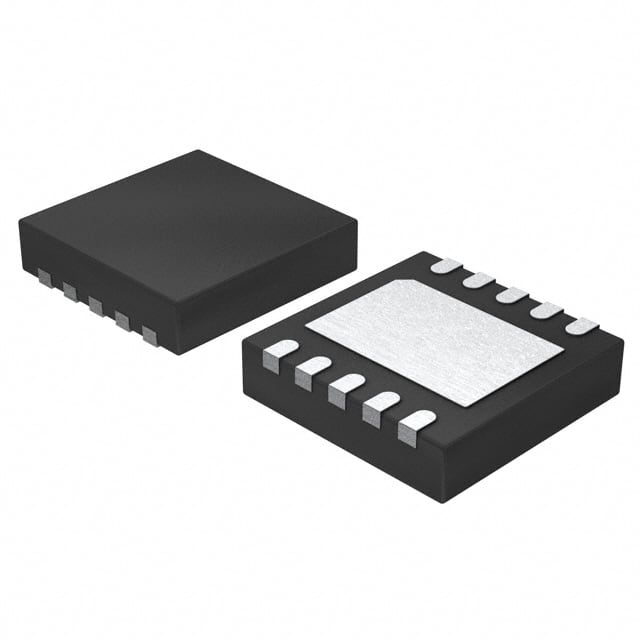
Microchip Technology CAP1106-1-AIA-TR
- Part No.:
- CAP1106-1-AIA-TR
- Manufacturer:
- Microchip Technology
- Category:
- Sensor, Capacitive Touch
- Package:
- 10-VFDFN Exposed Pad
- Datasheet:
-
 CAP1106-1-AIA-TR.pdf
- Description:
- IC TOUCH SENSOR 6CH 10VDFN
- Quantity:
- Payment:

- Shipping:

Inventory:6,291
Please send an inquiry. Send us your inquiry, and we will respond immediately.
Product details
Overview
CAP1106-1-AIA-TR from Microchip Technology is a 6-channel capacitive touch sensor IC with programmable sensitivity, automatic recalibration per channel, and SMBus/I²C interface. It operates at 3.0–3.6 V, draws only 5 µA in Deep Sleep, and supports proximity detection and multi-button pattern recognition for human-interface applications.
For engineers reviewing the CAP1106-1-AIA-TR datasheet, CAP1106-1-AIA-TR pinout, CAP1106-1-AIA-TR application, or CAP1106-1-AIA-TR equivalent, this page delivers verified technical context, real-world design meaning of key specs, validated pin functions, and confirmed alternative options for touch-sensing subsystems in space-constrained consumer and industrial designs.
Technical Context
The CAP1106-1-AIA-TR implements a self-calibrating delta-capacitance sensing architecture with independent base count registers per channel (CS1–CS6), enabling robust touch detection across environmental drift. Its sensing cycle supports configurable averaging (1–128 samples) and programmable sampling time (70 ms default).
It integrates dual-mode interrupt signaling via ALERT# (open-drain or push-pull configurable), SMBus 2.0 compliance (10–400 kHz), and hardware-assisted proximity detection with up to 128× oversampling per channel. The device transitions between Fully Active, Standby (50 µA, 1+ channels monitored), and Deep Sleep (5 µA, no sensing) states under register control.
Key Specifications
| Parameter | Value and Actual Design Meaning |
|---|---|
| Touch Inputs | 6 independent capacitive sensor inputs (CS1–CS6); each supports individual threshold and recalibration control. |
| Supply Voltage | 3.0–3.6 V; operation outside this range risks permanent damage per absolute max ratings. |
| Deep Sleep Current | 5 µA typical; enables ultra-low-power standby in battery-powered devices with host-initiated wake-up via SMBus. |
| SMBus Address | 0x50 (0101_000b); fixed slave address supporting standard Write/Read Byte and Block protocols. |
| Capacitance Range | Base capacitance up to 50 pF; detects minimum ΔC of 20 fF - sufficient for thin overlay and small pad designs. |
| Proximity Mode | Configurable per channel; up to 128× sampling per cycle increases detection range without firmware polling. |
| Operating Temp | −40°C to +125°C ambient; qualified for industrial and extended-temperature consumer applications. |
Pinout & Package
Package: 10-pin 3 mm × 3 mm RoHS-compliant DFN with exposed thermal pad (GND-connected).
| Pin/Terminal | Circuit Role | Design Meaning |
|---|---|---|
| 1 (CS1) | Capacitive touch sensor input 1 | Analog input for dedicated touch pad; requires external 1–10 nF decoupling capacitor to GND. |
| 2 (ALERT#) | Interrupt output (active-low default) | Open-drain output; must be pulled up externally; asserts on touch, release, or MTP event per configuration. |
| 3 (SMDATA) | SMBus/I²C bidirectional data line | 5V-tolerant open-drain I/O; requires external pull-up resistor ≤10 kΩ to ≤3.6 V when unpowered. |
| 4 (SMCLK) | SMBus/I²C clock input | 5V-tolerant digital input; requires external pull-up; supports 10–400 kHz clock frequency. |
| 5 (VDD) | Positive power supply | 3.0–3.6 V nominal; powers internal analog front-end, digital core, and I/O buffers. |
| 6–10 (CS6–CS2) | Capacitive touch sensor inputs 2–6 | Identical function to CS1; all six inputs support independent sensitivity, threshold, and recalibration settings. |
| Bottom Pad | Thermal/Ground connection | Must be soldered to PCB ground plane using 2×2 array of 0.3 mm vias for θJA = 77.7°C/W thermal performance. |
Key Features
| Feature | Design Value |
|---|---|
| Per-channel programmable sensitivity | Enables consistent touch response across varied overlay thicknesses and materials without firmware tuning. |
| Automatic recalibration with negative-delta recovery | Maintains baseline accuracy over temperature/humidity drift and prevents false "stuck button" behavior. |
| Multi-pattern touch detection (MTP) | Triggers interrupt on defined combinations (e.g., lid closure), blocking concurrent single-touch events during MTP. |
| Integrated RF and low-frequency noise rejection | Hardware filters discard corrupted samples before threshold comparison - no software overhead required. |
| Press-and-hold for volume-like control | Generates repeat interrupts at user-defined intervals while finger remains on pad - ideal for incremental UI actions. |
Applications
| Desktop & Notebook PCs | LCD Monitors |
|---|---|
Use Scenario: Touch-enabled power, volume, and brightness controls integrated into bezel or keyboard area. IC Role / Device Role / Timing Role: Primary capacitive touch controller interfacing directly to EC/SIO via SMBus; handles all touch-to-interrupt timing autonomously. Use Value: Eliminates mechanical switches and reduces BOM cost while supporting thin, seamless industrial design with 6 independent zones. |
Use Scenario: On-screen menu navigation and OSD control using touch-sensitive monitor frame. IC Role / Device Role / Timing Role: Dedicated touch sensor managing up to six discrete buttons; alerts host only on valid touch/release events. Use Value: Enables zero-latency UI response with built-in noise immunity - critical for EMI-rich display environments. |
| Consumer Electronics | Home Appliances |
Use Scenario: Touch sliders and buttons on smart speakers, soundbars, and streaming devices. IC Role / Device Role / Timing Role: Standalone touch interface IC operating in low-power Standby (50 µA) between user interactions. Use Value: Extends battery life in portable audio products while maintaining fast wake-on-touch (<200 ms full readiness). |
Use Scenario: Waterproof touch controls on oven, microwave, and washing machine panels with glass overlays. IC Role / Device Role / Timing Role: Proximity-aware touch sensor compensating for condensation and surface contaminants via dynamic recalibration. Use Value: Delivers reliable operation through thick insulating layers and variable environmental conditions without calibration service. |
Equivalent & Alternatives
The following parts are listed as comparable options for similar capacitive touch sensing applications.
| Alternative Part | Technical Difference | Application Difference | Selection Advice |
|---|---|---|---|
| AT42QT1060-MAHR | 6-channel QTouch IC with 1.8–5.5 V supply; higher max base capacitance (100 pF); no native proximity mode. | Requires external RC network for noise filtering; lacks hardware MTP detection and press-and-hold timer. | Preferred where wider VDD range and higher parasitic tolerance are needed, but proximity and pattern logic are handled in host firmware. |
| STMPE610QTR | 6-channel resistive/capacitive hybrid; 1.7–3.6 V; includes integrated ADC and GPIO expander; I²C only. | Higher pin count (24-QFN); adds system-level integration but consumes more PCB area and power in active state. | Chosen when combining touch sensing with general-purpose I/O expansion and analog measurement in one chip. |
Compared with CAP1106-1-AIA-TR, AT42QT1060-MAHR offers broader voltage flexibility but less autonomous proximity handling, while STMPE610QTR trades compactness and ultra-low Deep Sleep current for multifunction integration - making CAP1106-1-AIA-TR optimal for minimal-footprint, low-power, self-contained touch interfaces.
Availability
CAP1106-1-AIA-TR is available at Aetrix Electronics and suitable for desktop PCs, LCD monitors, and home appliance control panels requiring stable component supply, long-term lifecycle support, and RoHS-compliant packaging.
Supply support for CAP1106-1-AIA-TR includes scheduled delivery planning, volume procurement assistance, BOM continuity management, traceable sourcing, and lifecycle availability coordination for OEM customers, industrial embedded developers, connected-device designers, and electronics production programs.
Manufacturer
Microchip Technology Inc. is a leading provider of microcontrollers, analog components, and touch-sensing solutions, headquartered in Chandler, Arizona.
The CAP1106-1-AIA-TR belongs to Microchip's RightTouch® family of capacitive touch controllers, designed specifically for robust, low-power, and layout-insensitive human interface applications in consumer and industrial equipment.
FAQ
What is the primary function of the CAP1106-1-AIA-TR in a system?
The CAP1106-1-AIA-TR serves as a dedicated 6-channel capacitive touch sensor IC that autonomously detects touch, proximity, and multi-button patterns, then communicates status via SMBus/I²C or generates an interrupt on ALERT#. It offloads touch processing from the main MCU, reducing firmware complexity and power consumption in the CAP1106-1-AIA-TR-based design.
Does the CAP1106-1-AIA-TR support both SMBus and I²C protocols?
Yes, the CAP1106-1-AIA-TR is fully SMBus 2.0 compliant and supports standard I²C protocols including Write/Read Byte and Block Read/Write. It uses a fixed 7-bit slave address of 0x50 and operates across 10–400 kHz clock frequencies - enabling drop-in compatibility with existing SMBus and I²C host controllers without protocol translation in the CAP1106-1-AIA-TR implementation.
How does automatic recalibration work in the CAP1106-1-AIA-TR?
The CAP1106-1-AIA-TR performs automatic recalibration by updating each channel's Base Count Register based on rolling averages of prior measurements - typically 64 samples - to track slow environmental changes. Recalibration pauses during active touch detection and resumes after release, ensuring stable baseline values without false triggers. This behavior is fully hardware-managed and requires no host intervention in normal CAP1106-1-AIA-TR operation.
Can the CAP1106-1-AIA-TR detect proximity without physical contact?
Yes, the CAP1106-1-AIA-TR supports hardware-accelerated proximity detection on each of its six channels. When enabled, it oversamples the sensor input up to 128× per cycle to resolve sub-femtofarad capacitance shifts caused by near-field objects. This allows reliable non-contact gesture sensing - such as hand-waving or approach detection - without modifying the CAP1106-1-AIA-TR's firmware or external circuitry.
What is the role of the ALERT# pin on the CAP1106-1-AIA-TR?
The ALERT# pin on the CAP1106-1-AIA-TR is a configurable interrupt output that asserts (active-low by default) whenever a programmed event occurs - including touch, release, multi-pattern detection, or noise flagging. It is open-drain and requires an external pull-up; its state is synchronized to the INT bit in the Main Control Register, which must be cleared by the host to deassert ALERT# - a key timing and synchronization feature of the CAP1106-1-AIA-TR.
CAP1106-1-AIA-TR Specifications
- Product attributes
- Attribute value
- Manufacturer:
- Microchip Technology
- Package/Case:
- 10-VFDFN Exposed Pad
- Series:
- -
- Packaging:
- Tape & Reel (TR)
- Product Status:
- Active
- Programmable:
- Not Verified
- Type:
- Buttons
- Proximity Detection:
- Yes
- Number of Inputs:
- 6
- LED Driver Channels:
- -
- Interface:
- I2C, SMBus
- Resolution:
- -
- Voltage - Supply:
- 3V ~ 3.6V
- Current - Supply:
- 500µA
- Operating Temperature:
- -40°C ~ 125°C
- Grade:
- -
- Qualification:
- -
- Mounting Type:
- Surface Mount
- Supplier Device Package:
- 10-DFN (3x3)
CAP1106-1-AIA-TR FAQ
1.How can I place an order for CAP1106-1-AIA-TR through Aetrix?
Please submit a Request for Quotation (RFQ) for CAP1106-1-AIA-TR on Aetrix. Our sales agent will provide a competitive quotation and guide you through the order confirmation once you accept the terms.
2.Are the price and stock information for CAP1106-1-AIA-TR reliable?
The price and inventory of CAP1106-1-AIA-TR are updated periodically and may fluctuate due to market conditions. Stock and pricing data are typically refreshed every 24 hours. Quotation validity for CAP1106-1-AIA-TR is usually 5 days.
3.What payment methods are accepted for CAP1106-1-AIA-TR?
We accept Wire Transfer, PayPal, Credit Card, Western Union, MoneyGram, and Escrow for CAP1106-1-AIA-TR transactions.
Note: Certain payment methods may incur a processing fee.
4.How is shipping managed for CAP1106-1-AIA-TR?
CAP1106-1-AIA-TR orders can be shipped via leading logistics carriers, including DHL, UPS, FedEx, TNT, or Registered Mail.
Once your CAP1106-1-AIA-TR order is processed, you will receive an email with the shipment details and tracking number.
Note: Tracking information may take up to 24 hours to appear. Express delivery typically takes 3–5 business days.
5.How can I obtain technical support or documentation for CAP1106-1-AIA-TR?
For technical support, including CAP1106-1-AIA-TR datasheets, pinout diagrams, or application guidance, please contact our engineering support team. They can provide detailed documentation and assistance for your CAP1106-1-AIA-TR requirements.
6.How does Aetrix verify that CAP1106-1-AIA-TR is sourced from the original manufacturer or authorized distributors?
All CAP1106-1-AIA-TR products on Aetrix are procured from qualified distributors and authorized channels. Our dedicated quality assurance team conducts strict verification, including traceability checks and, if necessary, third-party testing. This ensures that CAP1106-1-AIA-TR meets industry standards.
7.What is the process for return or replacement of CAP1106-1-AIA-TR?
All CAP1106-1-AIA-TR units undergo pre-shipment inspection (PSI). If there is an issue with CAP1106-1-AIA-TR, returns or replacements are accepted under the following conditions:
1.Quantity discrepancies, incorrect items, or visible external defects (such as breakage or corrosion), acknowledged by Aetrix.
2.The issue is reported within 90 days of delivery.
3.The CAP1106-1-AIA-TR part is unused and in its original packaging.
Return procedure for CAP1106-1-AIA-TR:
1.Submit a request within 90 days.
2.Obtain a Return Material Authorization (RMA) from Aetrix.
CAP1106-1-AIA-TR Tags

-
IQS228B00000000TSR
Azoteq (Pty) Ltd

-
MTCH101T-I/OT
Microchip Technology
-
IQS323001CSR
Azoteq (Pty) Ltd

-
AT42QT1010-TSHR
Microchip Technology
-
AT42QT1012-TSHR
Microchip Technology
-
AT42QT1011-TSHR
Microchip Technology
-
CAP1206-1-SL-TR
Microchip Technology
-
MTCH102T-I/MS
Microchip Technology
-
IQS323001DNR
Azoteq (Pty) Ltd
-
AT42QT1070-SSUR
Microchip Technology
-
CAP1188-1-CP-TR
Microchip Technology
-
AT42QT1110-AUR
Microchip Technology
Tech Hub

TTL and CMOS logic families differ in thresholds, loading, output drive, power and timing. This engineering guide compares 74HC and 74HCT, calculates noise margins and checks 3.3 V/5 V compatibility.

A practical engineering guide to 3.3V and 5V logic compatibility, input thresholds, resistor dividers, translator ICs, MOSFET level shifting, I2C pull-ups, timing limits and power-sequencing risks.

The 74HC595 uses push-pull logic outputs, while the TPIC6B595 uses 50 V open-drain DMOS sinks for higher-power loads. This guide compares timing, current limits, 3.3 V interfacing, load wiring, thermal…

The 74HC595 converts serial data into eight stable parallel outputs. This guide covers pin functions, shift and storage timing, OE and MR behavior, drive-current limits, cascading, voltage compatibilit…

A technical comparison of level-sensitive latches and edge-triggered flip-flops, covering timing windows, setup and hold limits, master–slave operation, time borrowing, race-through, HDL inference and…

A D latch stores one bit while Enable controls when data can pass. This reference covers gate-level operation, truth tables, transparency, setup and hold timing, LE versus OE, common ICs and practical …

An SR latch stores one bit through cross-coupled feedback. This engineering reference covers NOR and NAND implementations, truth tables, forbidden-state recovery, gated operation, switch debouncing, fa…

Latch circuits retain one bit through feedback. This technical reference covers SR and D latches, truth tables, transparency, timing limits, latch-versus-flip-flop behavior, applications and common log…

An engineering guide to LED driver operation, constant-current and constant-voltage outputs, linear and switching topologies, dimming, IC selection, calculations, replacement compatibility, and fault c…

Operational amplifier guide covering op amp basics, feedback, ideal vs real op amps, common configurations, buffer circuits, offset, bias current, gain-bandwidth, slew rate, rail-to-rail limits and sel…


