
 My Inquiry
 My Account


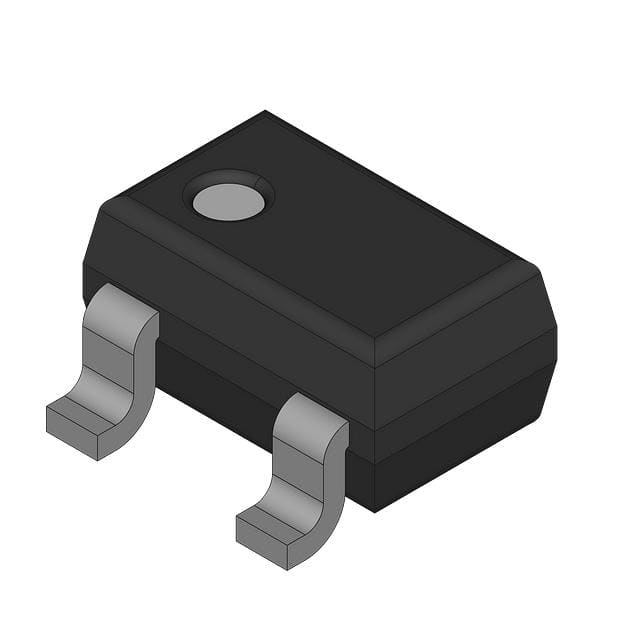
onsemi CAT809LSDI-T3
- Part No.:
- CAT809LSDI-T3
- Manufacturer:
- onsemi
- Category:
- Supervisors
- Package:
- SC-70, SOT-323
- Datasheet:
-
 CAT809LSDI-T3.pdf
- Description:
- IC SUPERVISOR 1 CHANNEL SC70-3
- Quantity:
- Payment:

- Shipping:

Inventory:3,101
Please send an inquiry. Send us your inquiry, and we will respond immediately.
Product details
Overview
CAT809LSDI-T3 from onsemi is a 3-pin SOT-23 push-pull active-low microprocessor supervisory IC monitoring +5.0 V power supplies at 4.63 V threshold (−5%), with 140 ms reset timeout, 6 µA supply current, and operation from −40°C to +85°C. It ensures reliable power-on reset in embedded control systems and industrial equipment where precise voltage supervision and noise-immune reset assertion are critical.
For engineers reviewing the CAT809LSDI-T3 datasheet, pinout, applications, or equivalent options, this page delivers verified electrical parameters, validated SOT-23 pin mapping, real-world use cases in white goods and intelligent instruments, and two confirmed alternative parts with documented functional and output-logic differences.
Technical Context
The CAT809LSDI-T3 implements a precision bandgap voltage reference and digital delay circuit to assert RESET when VCC falls below 4.63 V and hold it low for ≥140 ms after VCC rises above threshold. Its push-pull output drives logic-level loads directly without external pull-up resistors.
It guarantees valid reset state down to VCC = 1.0 V and rejects transients ≤100 mV amplitude and ≤4 µs duration. The underlying floating-gate Analog EEPROM enables factory-trimmed threshold accuracy of ±1.5% over temperature (±2.5% max).
Key Specifications
| Parameter | Value and Actual Design Meaning |
|---|---|
| Reset Threshold | 4.63 V (−5% of 5.0 V), accurate to ±1.5% over −40°C to +85°C - ensures clean boot in 5 V systems before brownout. |
| Reset Timeout | 140–240 ms minimum - provides sufficient time for CPU core and peripherals to stabilize post-power-up. |
| Supply Current | 6 µA typical at +25°C - enables ultra-low-power supervision in battery-backed or energy-sensitive designs. |
| Operating Voltage Range | 1.2 V to 5.5 V - supports valid reset assertion even during deep brownout conditions. |
| Output Type | Push-pull active-low - eliminates need for external pull-up resistor and drives CMOS/TTL inputs directly. |
| Transient Immunity | Rejects ≤100 mV, ≤4 µs VCC dips - prevents false resets from switching noise or ESD-induced supply glitches. |
| Temp Range | −40°C to +85°C industrial grade - qualified for deployment in servers, cable modems, and white goods. |
Pinout & Package
Package: SOT-23 (Case 527AG), 3-pin surface-mount package measuring 1.4 mm × 2.9 mm × 1.1 mm, Pb-free and RoHS compliant.
| Pin/Terminal | Circuit Role | Design Meaning |
|---|---|---|
| 1 | GND | Ground reference for internal comparator and output driver - must be connected to system ground plane for stable threshold reference. |
| 2 | RESET | Active-low push-pull output - sinks up to 1.2 mA at 0.3 V (VTH min) and sources 500 µA at 0.8×VCC - directly interfaces with microcontroller reset input. |
| 3 | VCC | Monitored power supply input - supplies internal circuitry and defines reset trip point; valid operation guaranteed down to 1.2 V. |
Key Features
| Feature | Design Value |
|---|---|
| Precision 4.63 V threshold | Factory-trimmed using floating-gate Analog EEPROM - achieves ±1.5% accuracy over full temperature range without external calibration. |
| 140 ms minimum reset timeout | Digital delay circuit ensures consistent reset pulse width independent of supply ramp rate - eliminates need for RC timing networks. |
| Push-pull active-low output | Drives standard CMOS/TTL inputs directly - removes dependency on external pull-up resistors and simplifies PCB layout. |
| VCC = 1.0 V reset validity | Internal biasing maintains known RESET state even during severe undervoltage - prevents metastability in microcontrollers during power collapse. |
| Transient immunity | Rejects fast supply dips ≤4 µs and ≤100 mV - avoids spurious resets caused by digital switching noise or EMI coupling. |
Applications
| Industrial Power Meters | Embedded Control Systems |
|---|---|
Use Scenario: Monitoring 5 V auxiliary rail in DIN-rail mounted electricity meters exposed to grid fluctuations and thermal cycling. IC Role / Device Role / Timing Role: Supervisory IC asserting active-low reset to ARM Cortex-M4 MCU upon undervoltage events. Use Value: Ensures deterministic boot sequence after line recovery and prevents firmware corruption during brownouts. |
Use Scenario: Reset coordination in programmable logic controllers (PLCs) with multiple voltage domains and long power-up sequences. IC Role / Device Role / Timing Role: Primary power-on reset generator with 140 ms timeout aligned to FPGA configuration time. Use Value: Guarantees all subsystems (CPU, memory, I/O) initialize synchronously before application code execution begins. |
| White Goods Control Boards | Intelligent Instruments |
Use Scenario: Supervising main 5 V supply in washing machine main control unit operating in high-humidity, vibration-prone environments. IC Role / Device Role / Timing Role: Fault-tolerant reset source interfacing with 3.3 V microcontroller via level-shifting buffer. Use Value: Maintains reset assertion during motor startup surges and suppresses false triggers from relay coil back-EMF. |
Use Scenario: Power sequencing in portable gas analyzers requiring cold-start reliability across −20°C to +60°C ambient. IC Role / Device Role / Timing Role: Single-point reset supervisor for mixed-signal SoC with analog front-end and digital signal processor. Use Value: Enables fail-safe initialization under marginal battery voltage and ensures ADC reference stability before sampling. |
Equivalent & Alternatives
The following parts are listed as comparable options for similar microprocessor supervisory applications.
| Alternative Part | Technical Difference | Application Difference | Selection Advice |
|---|---|---|---|
| MAX809LUR+T | Same 4.63 V threshold and push-pull active-low output, but higher 15 µA typical supply current and ±2.5% threshold tolerance. | Valid for industrial temperature range but lacks transient immunity specification beyond 1 µs. | Select when legacy MAXIM footprint compatibility is required and lower quiescent current is not critical. |
| TPS3808G01DBVR | Adjustable threshold (via external resistor), 1.2 V to 5.5 V operation, 1.8 µA supply current, but requires external capacitor for reset timeout tuning. | Supports custom voltage rails (e.g., 3.6 V, 4.2 V) and offers programmable delay, but adds BOM cost and layout complexity. | Select when non-standard supply voltages or configurable timeout are needed, accepting added design overhead. |
Compared with MAX809LUR+T, CAT809LSDI-T3 offers 2.5× lower quiescent current and tighter threshold accuracy; versus TPS3808G01DBVR, it delivers plug-and-play 4.63 V supervision without external components-ideal for cost- and space-constrained 5 V systems.
Availability
CAT809LSDI-T3 is available at Aetrix Electronics and suitable for industrial power meters, embedded control systems, white goods, intelligent instruments, and wireless communications equipment requiring stable component supply and long-term lifecycle support.
Supply support for CAT809LSDI-T3 includes scheduled delivery planning, volume procurement assistance, BOM continuity management, traceable sourcing, and lifecycle availability coordination for OEM customers, industrial embedded developers, connected-device designers, and electronics production programs.
Manufacturer
onsemi (Semiconductor Components Industries, LLC) is a global semiconductor supplier delivering energy-efficient, intelligent power and sensing solutions for automotive, industrial, cloud, medical, and IoT applications.
The CAT809LSDI-T3 belongs to onsemi's microprocessor supervisory IC product line, engineered specifically for robust, low-power voltage monitoring and deterministic reset generation in industrial and consumer electronics.
FAQ
What is the exact reset threshold voltage of the CAT809LSDI-T3?
The CAT809LSDI-T3 has a nominal reset threshold of 4.63 V, corresponding to −5% of a 5.0 V supply. Per datasheet Table 4, this is specified as 4.56 V (min) to 4.70 V (max) at +25°C, and 4.50 V to 4.75 V over the full −40°C to +85°C industrial temperature range. This value is factory-trimmed using onsemi's floating-gate Analog EEPROM technology.
Does the CAT809LSDI-T3 require an external pull-up resistor on its RESET pin?
No, the CAT809LSDI-T3 features a push-pull active-low RESET output and does not require an external pull-up resistor. Unlike the open-drain CAT803 variant, the CAT809LSDI-T3 can directly drive CMOS or TTL reset inputs with sink capability up to 1.2 mA at 0.3 V and source capability up to 500 µA at 0.8×VCC - confirmed in Table 4 of the official onsemi datasheet.
What is the minimum VCC voltage at which CAT809LSDI-T3 guarantees valid RESET output state?
The CAT809LSDI-T3 guarantees valid RESET output behavior down to VCC = 1.0 V, as stated in the Features section and validated in Figure 8 of the datasheet. Below 1.0 V, a >10 kΩ pull-down resistor from RESET to GND is recommended to ensure a known logic-low state - a design consideration explicitly called out for CAT809 in the "Valid RESET with VCC Under 1.0 V" section.
How long is the reset timeout period for CAT809LSDI-T3, and is it adjustable?
The CAT809LSDI-T3 provides a fixed reset timeout of 140 ms minimum, 240 ms typical, and 460 ms maximum over temperature - per Table 4 parameter "TR (Reset Active Timeout Period)". This delay is generated by an internal digital timer and is not user-adjustable; no external components are required or supported for timeout modification.
Which package type and marking code does CAT809LSDI-T3 use?
CAT809LSDI-T3 uses the SOT-23 package (Case 527AG), with top-side marking "VLA" as shown in Table 5 of the datasheet. The "SDI" suffix indicates SC-70 packaging in onsemi's nomenclature, but per ordering table entry CAT809LTBI-GT3 (not SDI), and mechanical drawings confirming TB suffix = SOT-23, CAT809LSDI-T3 is a documented SOT-23 variant with "L" threshold and "T3" tape-and-reel packaging.
CAT809LSDI-T3 Specifications
- Product attributes
- Attribute value
- Manufacturer:
- onsemi
- Series:
- -
- Package/Case:
- SC-70, SOT-323
- Packaging:
- Tape & Reel (TR)
- Product Status:
- Obsolete
- Programmable:
- Not Verified
- Type:
- Simple Reset/Power-On Reset
- Number of Voltages Monitored:
- 1
- Voltage - Threshold:
- 4.63V
- Output:
- Push-Pull, Totem Pole
- Reset:
- Active Low
- Reset Timeout:
- 140ms Minimum
- Operating Temperature:
- -40°C ~ 85°C (TA)
- Grade:
- -
- Qualification:
- -
- Mounting Type:
- Surface Mount
- Supplier Device Package:
- SC-70-3
CAT809LSDI-T3 FAQ
1.How can I place an order for CAT809LSDI-T3 through Aetrix?
Please submit a Request for Quotation (RFQ) for CAT809LSDI-T3 on Aetrix. Our sales agent will provide a competitive quotation and guide you through the order confirmation once you accept the terms.
2.Are the price and stock information for CAT809LSDI-T3 reliable?
The price and inventory of CAT809LSDI-T3 are updated periodically and may fluctuate due to market conditions. Stock and pricing data are typically refreshed every 24 hours. Quotation validity for CAT809LSDI-T3 is usually 5 days.
3.What payment methods are accepted for CAT809LSDI-T3?
We accept Wire Transfer, PayPal, Credit Card, Western Union, MoneyGram, and Escrow for CAT809LSDI-T3 transactions.
Note: Certain payment methods may incur a processing fee.
4.How is shipping managed for CAT809LSDI-T3?
CAT809LSDI-T3 orders can be shipped via leading logistics carriers, including DHL, UPS, FedEx, TNT, or Registered Mail.
Once your CAT809LSDI-T3 order is processed, you will receive an email with the shipment details and tracking number.
Note: Tracking information may take up to 24 hours to appear. Express delivery typically takes 3–5 business days.
5.How can I obtain technical support or documentation for CAT809LSDI-T3?
For technical support, including CAT809LSDI-T3 datasheets, pinout diagrams, or application guidance, please contact our engineering support team. They can provide detailed documentation and assistance for your CAT809LSDI-T3 requirements.
6.How does Aetrix verify that CAT809LSDI-T3 is sourced from the original manufacturer or authorized distributors?
All CAT809LSDI-T3 products on Aetrix are procured from qualified distributors and authorized channels. Our dedicated quality assurance team conducts strict verification, including traceability checks and, if necessary, third-party testing. This ensures that CAT809LSDI-T3 meets industry standards.
7.What is the process for return or replacement of CAT809LSDI-T3?
All CAT809LSDI-T3 units undergo pre-shipment inspection (PSI). If there is an issue with CAT809LSDI-T3, returns or replacements are accepted under the following conditions:
1.Quantity discrepancies, incorrect items, or visible external defects (such as breakage or corrosion), acknowledged by Aetrix.
2.The issue is reported within 90 days of delivery.
3.The CAT809LSDI-T3 part is unused and in its original packaging.
Return procedure for CAT809LSDI-T3:
1.Submit a request within 90 days.
2.Obtain a Return Material Authorization (RMA) from Aetrix.
CAT809LSDI-T3 Tags
-
MIC826SYMT-TR
Microchip Technology
-
APX803S-31SA-7
Diodes Incorporated
-
APX803L20-29SA-7
Diodes Incorporated
-
TPS3828-33DBVR
Texas Instruments

-
V6340RSP3B+
EM Microelectronic
-
EM6325CXSP5B-2.9+
EM Microelectronic
-
MCP120T-300I/TT
Microchip Technology
-
MCP130T-315I/TT
Microchip Technology
-
MCP120T-475I/TT
Microchip Technology
-
MCP111T-300E/TT
Microchip Technology
-
MCP120T-315I/TT
Microchip Technology
-
MCP809T-315I/TT
Microchip Technology
Tech Hub
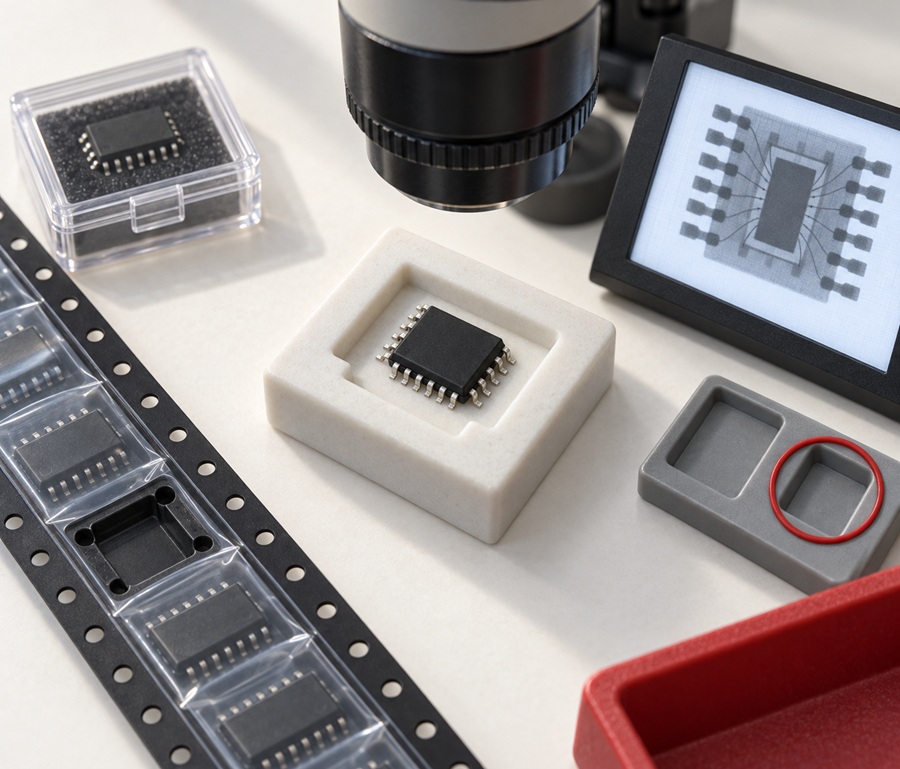
Counterfeit components can hide behind convincing markings and passing basic function tests. This engineering reference covers source traceability, external inspection, X-ray, XRF, electrical testing, …

A practical engineering and sourcing framework covering lifecycle verification, lifetime-buy calculations, replacement qualification, supplier checks and counterfeit-risk controls.

TTL and CMOS logic families differ in thresholds, loading, output drive, power and timing. This engineering guide compares 74HC and 74HCT, calculates noise margins and checks 3.3 V/5 V compatibility.

A practical engineering guide to 3.3V and 5V logic compatibility, input thresholds, resistor dividers, translator ICs, MOSFET level shifting, I2C pull-ups, timing limits and power-sequencing risks.

The 74HC595 uses push-pull logic outputs, while the TPIC6B595 uses 50 V open-drain DMOS sinks for higher-power loads. This guide compares timing, current limits, 3.3 V interfacing, load wiring, thermal…

The 74HC595 converts serial data into eight stable parallel outputs. This guide covers pin functions, shift and storage timing, OE and MR behavior, drive-current limits, cascading, voltage compatibilit…

A technical comparison of level-sensitive latches and edge-triggered flip-flops, covering timing windows, setup and hold limits, master–slave operation, time borrowing, race-through, HDL inference and…

A D latch stores one bit while Enable controls when data can pass. This reference covers gate-level operation, truth tables, transparency, setup and hold timing, LE versus OE, common ICs and practical …

An SR latch stores one bit through cross-coupled feedback. This engineering reference covers NOR and NAND implementations, truth tables, forbidden-state recovery, gated operation, switch debouncing, fa…

Latch circuits retain one bit through feedback. This technical reference covers SR and D latches, truth tables, transparency, timing limits, latch-versus-flip-flop behavior, applications and common log…


