
 My Inquiry
 My Account


Texas Instruments CC1020-RTR1
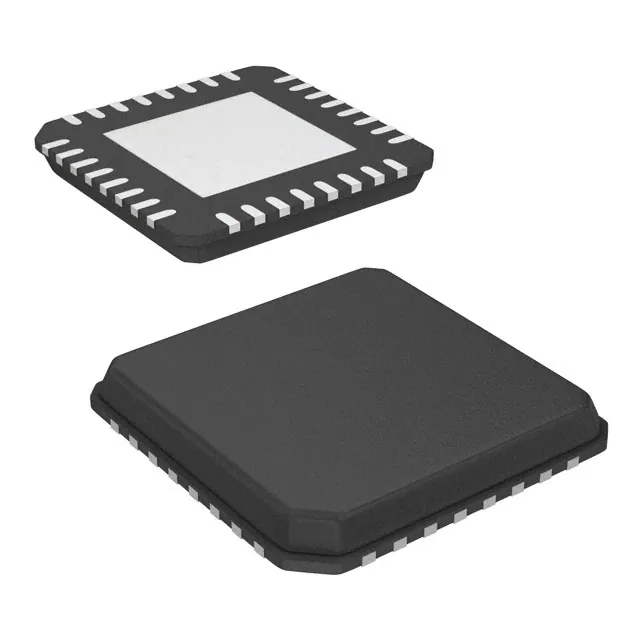
- Part No.:
- CC1020-RTR1
- Manufacturer:
- Texas Instruments
- Category:
- RF Transceiver ICs
- Package:
- 32-VQFN Exposed Pad
- Datasheet:
-
 CC1020-RTR1.pdf
- Description:
- IC RF TXRX ISM<1GHZ 32QFN
- Quantity:
- Payment:

- Shipping:

Inventory:3,566
Please send an inquiry. Send us your inquiry, and we will respond immediately.
Product details
Overview
CC1020-RTR1 from Texas Instruments is a true single-chip UHF RF transceiver for narrowband systems, operating in 402–470 MHz and 804–930 MHz bands with programmable output power up to +10 dBm (433 MHz), –118 dBm sensitivity at 12.5 kHz channel spacing, and support for OOK/FSK/GFSK modulation at data rates up to 153.6 kBaud. It integrates low-IF receiver, digital RSSI, carrier sense, and AFC for crystal temperature drift compensation - deployed in EN 300 220–compliant AMR and wireless security systems.
For engineers reviewing the CC1020-RTR1 datasheet, CC1020-RTR1 pinout, CC1020-RTR1 application, or CC1020-RTR1 equivalent, this page delivers verified functional block architecture, QFN-32 package terminal mapping, real-world RF performance metrics (adjacent channel rejection ≥32 dB, image rejection up to 62 dB with calibration), and validated alternatives for narrowband SRD designs targeting ARIB STD-T67 or FCC Part 15 compliance.
Technical Context
The CC1020-RTR1 implements a low-IF receiver architecture with 307.2 kHz intermediate frequency, digitally programmable channel filter bandwidth (9.6–307.2 kHz), and integrated bit synchronizer supporting NRZ and Manchester coding. Its PLL-based frequency synthesizer enables <300 Hz step resolution in 402–470 MHz band and <600 Hz in 804–930 MHz band, with AFC capability compensating crystal aging and thermal drift without requiring TCXO.
Transmit path features on-chip PA with programmable output power, while receive path includes dual-LNA stages, I/Q demodulator with gain/phase calibration support, and ADC-based RSSI with ±3 dB accuracy over 55 dB dynamic range. All configuration occurs via 4-wire SPI interface (PSEL/PCLK/PDI/PDO), with DIO/DCLK handling synchronous/asynchronous data I/O and LOCK indicating PLL lock status.
Key Specifications
| Parameter | Value and Actual Design Meaning |
|---|---|
| Frequency Range | 402–470 MHz and 804–930 MHz; supports multichannel narrowband operation compliant with EN 300 220 Class 2 and ARIB STD-T67. |
| Receiver Sensitivity | –118 dBm at 433 MHz, 12.5 kHz spacing, FSK, optimized sensitivity mode; enables robust reception in low-SNR AMR environments. |
| Output Power | Programmable from –20 to +10 dBm (433 MHz) and –20 to +5 dBm (868 MHz); allows trade-off between range and regulatory compliance. |
| Data Rate | 0.45–153.6 kBaud; supports NRZ (153.6 kbps) and Manchester (76.8 kbps) encoding; matches legacy telemetry and alarm system timing budgets. |
| Modulation Schemes | OOK, FSK, GFSK; provides flexibility for regulatory alignment (e.g., OOK for Japanese ARIB STD-T67, FSK for EU EN 300 220). |
| Supply Voltage | 2.3 V to 3.6 V; single-supply operation simplifies power design in battery-powered meters and sensors. |
| Current Consumption (RX) | 19.9 mA typical at 3.0 V; enables multi-year operation on coin-cell batteries in intermittent-receive applications. |
Pinout & Package
VQFNP (32-pin QFN), 7.00 mm × 7.00 mm body size, Pb-free, exposed die-attach pad soldered to solid ground plane per TI mechanical guidelines.
| Pin/Terminal | Circuit Role | Design Meaning |
|---|---|---|
| PSEL, PCLK, PDI, PDO | SPI Configuration Interface | 4-wire serial bus for register programming; PSEL active-low chip select with internal pullup enables daisy-chain or isolated device control. |
| DIO, DCLK, LOCK | RF Data & Status Interface | DIO carries TX data / RX data; DCLK clocks synchronous data; LOCK signals PLL lock status (active-low) or serves as general-purpose output. |
| XOSC_Q1, XOSC_Q2 | Crystal Oscillator Terminals | Supports parallel-resonant crystals (4.9152–19.6608 MHz); external clock input possible with XOSC_BYPASS configuration. |
| RF_IN, RF_OUT | RF Signal Ports | Single-ended 50 Ω RF_IN (433 MHz: 58 – j10 Ω) and RF_OUT (433 MHz: 54 + j44 Ω); require matching networks per Section 5.11. |
| LNA_EN, PA_EN | External Device Control Outputs | Digital outputs for enabling external LNA or PA; decouples sensitivity/output power scaling from internal transceiver limits. |
| AVDD, DVDD, AGND, DGND | Power & Ground Distribution | Separate analog/digital supplies (3.0 V typical) and grounds minimize noise coupling; exposed pad is primary analog ground reference. |
Key Features
| Feature | Design Value |
|---|---|
| No external IF filter required | Integrated digital channel filter (9.6–307.2 kHz BW) eliminates discrete IF filtering components, reducing BOM count and PCB area. |
| Programmable AFC for crystal drift compensation | Enables use of low-cost, non-TCXO crystals (±5.7 ppm tolerance) while maintaining EN 300 220 frequency accuracy requirements. |
| Digital RSSI and carrier sense | On-chip 55 dB dynamic range RSSI with ±3 dB accuracy supports adaptive link budget management and clear-channel assessment. |
| Image rejection mixer with I/Q calibration | Calibrated image rejection up to 62 dB at 868 MHz improves selectivity in dense RF environments without external image-reject filters. |
| Low-IF receiver architecture | 307.2 kHz IF enables high-performance digital filtering and demodulation with minimal analog front-end complexity. |
Applications
| AMR – Automatic Meter Reading | Wireless Alarm & Security Systems |
|---|---|
Use Scenario: Battery-powered gas/water meters transmitting consumption data hourly over 433 MHz ISM band with 12.5 kHz channel spacing. IC Role / Device Role / Timing Role: CC1020-RTR1 acts as the sole RF transceiver, handling modulation, demodulation, and AFC-compensated frequency synthesis for regulatory-compliant transmission. Use Value: –118 dBm sensitivity ensures reliable reception at >1 km range in urban multipath; 19.9 mA RX current enables >10-year battery life. |
Use Scenario: Door/window sensors and motion detectors reporting intrusion events in residential security panels using 868 MHz SRD band. IC Role / Device Role / Timing Role: CC1020-RTR1 provides low-latency OOK/FSK transmit/receive with carrier sense for listen-before-talk channel access. Use Value: Adjacent channel rejection ≥32 dB prevents false alarms from nearby 868 MHz devices; programmable output power avoids overdriving antenna circuits. |
| Home Automation | Low-Power Telemetry |
Use Scenario: Wireless light switches and thermostat controllers communicating via star topology in 433 MHz band with 25 kHz channel spacing. IC Role / Device Role / Timing Role: CC1020-RTR1 serves as bidirectional transceiver with integrated bit synchronizer for Manchester-coded command/response protocol. Use Value: Bit synchronization offset tolerance of 8000 ppm accommodates low-cost microcontroller clocks; DIO/DCLK interface simplifies MCU firmware integration. |
Use Scenario: Environmental sensor nodes (temperature/humidity) transmitting periodic readings in industrial facilities using 868 MHz band. IC Role / Device Role / Timing Role: CC1020-RTR1 performs narrowband FSK demodulation with programmable channel filter bandwidth to reject factory RF noise. Use Value: Selectivity ≥39 dB at 25 kHz spacing rejects adjacent machinery emissions; spurious emission <–60 dBm meets EN 300 220 radiated limits. |
Equivalent & Alternatives
The following parts are listed as comparable options for similar narrowband RF transceiver applications.
| Alternative Part | Technical Difference | Application Difference | Selection Advice |
|---|---|---|---|
| CC1120RHBR | Successor device with higher sensitivity (–120 dBm), wider frequency range (27–1050 MHz), and integrated MCU interface enhancements; requires different layout and firmware adaptation. | Targets next-gen designs needing extended range or multi-band flexibility; not drop-in compatible due to pinout and register map changes. | Select CC1120RHBR for new designs requiring improved SNR or broader regulatory coverage; retain CC1020-RTR1 for legacy AMR/telemetry where qualification stability is critical. |
| SI4432-B1B-FMR | Sub-GHz transceiver with comparable 433/868 MHz support, –121 dBm sensitivity, but uses different SPI framing and lacks integrated AFC calibration logic. | Better suited for high-volume consumer remotes; requires external loop filter tuning and separate RSSI processing in host MCU. | Choose SI4432-B1B-FMR when cost-per-unit is prioritized and design team has RF calibration expertise; CC1020-RTR1 offers faster time-to-market for EN 300 220–certified systems. |
Compared with CC1120RHBR and SI4432-B1B-FMR, the CC1020-RTR1 delivers proven regulatory compliance for narrowband SRD applications with minimal external components, while its mature ecosystem and documented reference designs reduce certification risk - especially where long-term supply continuity and field-proven reliability outweigh raw performance gains.
Availability
CC1020-RTR1 is available at Aetrix Electronics and suitable for automatic meter reading (AMR), wireless security systems, home automation, and low-power telemetry requiring stable component supply across industrial and utility-grade deployments.
Supply support for CC1020-RTR1 includes scheduled delivery planning, volume procurement assistance, BOM continuity management, traceable sourcing, and lifecycle availability coordination for OEM customers, industrial embedded developers, connected-device designers, and electronics production programs.
Manufacturer
Texas Instruments is a global semiconductor leader specializing in analog, embedded processing, and connectivity solutions, with decades of RF IC development experience and broad industrial qualification support.
The CC1020-RTR1 belongs to TI's legacy Sub-1 GHz RF transceiver product line, engineered specifically for narrowband, low-power wireless communication in regulated ISM/SRD bands - emphasizing regulatory compliance, low BOM count, and ease of system integration.
FAQ
What is the maximum data rate supported by the CC1020-RTR1?
The CC1020-RTR1 supports a maximum data rate of 153.6 kBaud in NRZ mode, equivalent to 153.6 kbps. In Manchester encoding, the effective throughput is halved to 76.8 kbps due to bit doubling. This rate is achievable with 500 kHz channel spacing and ±72 kHz frequency deviation, as specified in the RF Receive section of the datasheet. The CC1020-RTR1 maintains full functionality-including sensitivity and adjacent channel rejection-at this rate.
Does the CC1020-RTR1 require an external TCXO for EN 300 220 compliance?
No, the CC1020-RTR1 does not require an external TCXO for EN 300 220 compliance. Its integrated AFC (Automatic Frequency Control) and fine-step PLL programmability enable crystal temperature drift compensation using standard ±5.7 ppm crystals at 433 MHz. The CC1020-RTR1 achieves required frequency stability through software-controlled calibration, eliminating TCXO cost and board space.
How many power supply domains does the CC1020-RTR1 use, and what are their voltage requirements?
The CC1020-RTR1 uses separate analog (AVDD) and digital (DVDD) supply domains, both rated for 2.3 V to 3.6 V operation. TI recommends a common 3.0 ±0.1 V supply for both domains to meet ARIB STD-T67 output power tolerance and selectivity requirements. The device includes multiple AVDD pins (12, 13, 16, 18, 20, 22, 23, 27, 29) and two DVDD pins (5, 31), each requiring local decoupling per Section 5.11.
What is the role of the LNA_EN and PA_EN pins on the CC1020-RTR1?
The LNA_EN and PA_EN pins on the CC1020-RTR1 are general-purpose digital outputs that can be configured to enable external low-noise amplifiers or power amplifiers. They are not internally connected to the CC1020-RTR1's own LNA or PA stages. This allows system designers to extend sensitivity beyond –118 dBm or boost output power above +10 dBm while retaining full control over sequencing and biasing via the host MCU.
Can the CC1020-RTR1 operate in frequency-hopping spread spectrum (FHSS) mode?
Yes, the CC1020-RTR1 is explicitly suited for frequency-hopping systems, as stated in its official features list. Its fast PLL settling time and programmable frequency synthesis (with <300 Hz resolution in 402–470 MHz band) enable rapid channel switching. However, hop sequence control, timing, and synchronization must be implemented externally by the host microcontroller - the CC1020-RTR1 provides the RF layer agility but no built-in FHSS protocol engine.
CC1020-RTR1 Specifications
- Product attributes
- Attribute value
- Manufacturer:
- Texas Instruments
- Series:
- -
- Package/Case:
- 32-VQFN Exposed Pad
- Packaging:
- Tape & Reel (TR)
- Product Status:
- Obsolete
- Programmable:
- Not Verified
- Type:
- TxRx Only
- RF Family/Standard:
- General ISM < 1GHz
- Protocol:
- -
- Modulation:
- FSK, GFSK, OOK
- Frequency:
- 402MHz ~ 470MHz, 804MHz ~ 960MHz
- Data Rate (Max):
- 153.6kBaud
- Power - Output:
- 10dBm
- Sensitivity:
- -118dBm
- Memory Size:
- -
- Serial Interfaces:
- SPI, UART
- GPIO:
- -
- Voltage - Supply:
- 2.3V ~ 3.6V
- Current - Receiving:
- 19.9mA
- Current - Transmitting:
- 12.3mA ~ 27.1mA
- Operating Temperature:
- -40°C ~ 85°C
- Grade:
- -
- Qualification:
- -
- Supplier Device Package:
- 32-QFN (7x7)
CC1020-RTR1 FAQ
1.How can I place an order for CC1020-RTR1 through Aetrix?
Please submit a Request for Quotation (RFQ) for CC1020-RTR1 on Aetrix. Our sales agent will provide a competitive quotation and guide you through the order confirmation once you accept the terms.
2.Are the price and stock information for CC1020-RTR1 reliable?
The price and inventory of CC1020-RTR1 are updated periodically and may fluctuate due to market conditions. Stock and pricing data are typically refreshed every 24 hours. Quotation validity for CC1020-RTR1 is usually 5 days.
3.What payment methods are accepted for CC1020-RTR1?
We accept Wire Transfer, PayPal, Credit Card, Western Union, MoneyGram, and Escrow for CC1020-RTR1 transactions.
Note: Certain payment methods may incur a processing fee.
4.How is shipping managed for CC1020-RTR1?
CC1020-RTR1 orders can be shipped via leading logistics carriers, including DHL, UPS, FedEx, TNT, or Registered Mail.
Once your CC1020-RTR1 order is processed, you will receive an email with the shipment details and tracking number.
Note: Tracking information may take up to 24 hours to appear. Express delivery typically takes 3–5 business days.
5.How can I obtain technical support or documentation for CC1020-RTR1?
For technical support, including CC1020-RTR1 datasheets, pinout diagrams, or application guidance, please contact our engineering support team. They can provide detailed documentation and assistance for your CC1020-RTR1 requirements.
6.How does Aetrix verify that CC1020-RTR1 is sourced from the original manufacturer or authorized distributors?
All CC1020-RTR1 products on Aetrix are procured from qualified distributors and authorized channels. Our dedicated quality assurance team conducts strict verification, including traceability checks and, if necessary, third-party testing. This ensures that CC1020-RTR1 meets industry standards.
7.What is the process for return or replacement of CC1020-RTR1?
All CC1020-RTR1 units undergo pre-shipment inspection (PSI). If there is an issue with CC1020-RTR1, returns or replacements are accepted under the following conditions:
1.Quantity discrepancies, incorrect items, or visible external defects (such as breakage or corrosion), acknowledged by Aetrix.
2.The issue is reported within 90 days of delivery.
3.The CC1020-RTR1 part is unused and in its original packaging.
Return procedure for CC1020-RTR1:
1.Submit a request within 90 days.
2.Obtain a Return Material Authorization (RMA) from Aetrix.
CC1020-RTR1 Tags
-
ESP32-D0WD-V3
Espressif Systems
-
ESP8266EX
Espressif Systems

-
ESP32-S3
Espressif Systems
-
NRF24L01P-R7
Nordic Semiconductor ASA
-
NRF24L01P-R
Nordic Semiconductor ASA
-
ESP32-U4WDH
Espressif Systems
-
DA14531-00000OG2
Renesas
-
ESP32-C6FH4
Espressif Systems
-
DA14531-00000FX2
Renesas
-
NRF24L01P-T
Nordic Semiconductor ASA
-
NRF52810-QCAA-R
Nordic Semiconductor ASA
-
ESP32-S3FN8
Espressif Systems
Tech Hub

A practical engineering guide to 3.3V and 5V logic compatibility, input thresholds, resistor dividers, translator ICs, MOSFET level shifting, I2C pull-ups, timing limits and power-sequencing risks.

The 74HC595 uses push-pull logic outputs, while the TPIC6B595 uses 50 V open-drain DMOS sinks for higher-power loads. This guide compares timing, current limits, 3.3 V interfacing, load wiring, thermal…

The 74HC595 converts serial data into eight stable parallel outputs. This guide covers pin functions, shift and storage timing, OE and MR behavior, drive-current limits, cascading, voltage compatibilit…

A technical comparison of level-sensitive latches and edge-triggered flip-flops, covering timing windows, setup and hold limits, master–slave operation, time borrowing, race-through, HDL inference and…

A D latch stores one bit while Enable controls when data can pass. This reference covers gate-level operation, truth tables, transparency, setup and hold timing, LE versus OE, common ICs and practical …

An SR latch stores one bit through cross-coupled feedback. This engineering reference covers NOR and NAND implementations, truth tables, forbidden-state recovery, gated operation, switch debouncing, fa…

Latch circuits retain one bit through feedback. This technical reference covers SR and D latches, truth tables, transparency, timing limits, latch-versus-flip-flop behavior, applications and common log…

An engineering guide to LED driver operation, constant-current and constant-voltage outputs, linear and switching topologies, dimming, IC selection, calculations, replacement compatibility, and fault c…

Operational amplifier guide covering op amp basics, feedback, ideal vs real op amps, common configurations, buffer circuits, offset, bias current, gain-bandwidth, slew rate, rail-to-rail limits and sel…

Jumper cables guide covering safe connection order, red and black clamp placement, final ground connection, cable gauge, length, clamp quality, copper vs CCA cables, jump starter comparison and battery…


