
 My Inquiry
 My Account


Texas Instruments CC2400RSU
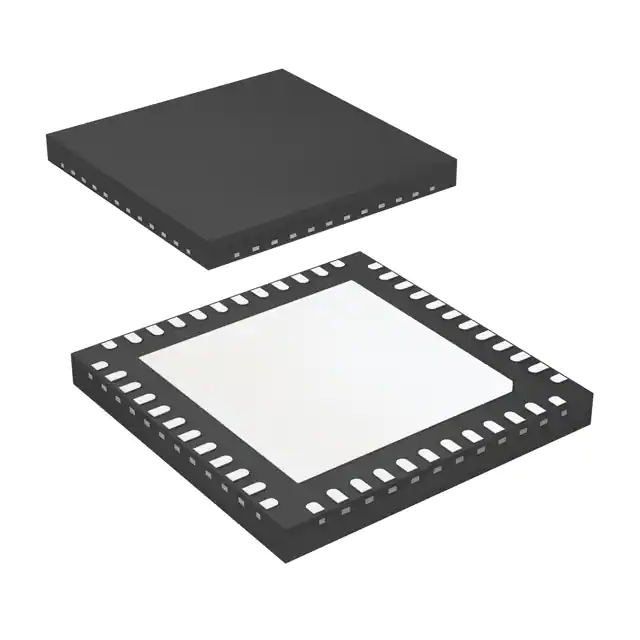
- Part No.:
- CC2400RSU
- Manufacturer:
- Texas Instruments
- Category:
- RF Transceiver ICs
- Package:
- 48-VFQFN Exposed Pad
- Datasheet:
-
 CC2400RSU.pdf
- Description:
- IC RF TXRX ISM>1GHZ 48QFN
- Quantity:
- Payment:

- Shipping:

Inventory:1,244
Please send an inquiry. Send us your inquiry, and we will respond immediately.
Product details
Overview
CC2400RSU from Texas Instruments (formerly Chipcon) is a true single-chip 2.4 GHz RF transceiver with integrated baseband modem, supporting 10 kbps, 250 kbps, and 1 Mbps over-the-air data rates, −87 dBm sensitivity at 1 Mbps (BER=10⁻³), and 24 mA RX current consumption. It operates in the 2.4–2.4835 GHz ISM band and targets low-power wireless audio, PC peripherals, and game controllers.
For engineers reviewing the CC2400RSU datasheet, CC2400RSU pinout, CC2400RSU application, or CC2400RSU equivalent, key selection considerations include its QFN-48 package, SPI-configurable I/Q low-IF receiver and direct up-conversion transmitter, programmable output power across 8 steps, digital RSSI output, and hardware-accelerated packet handling with 32-byte FIFO.
Technical Context
The CC2400RSU implements an agile frequency synthesizer with 40 µs PLL lock time and ±500 kHz AFC range, enabling rapid channel switching and robust frequency stability in noisy environments. Its I/Q low-IF receiver uses a 1 MHz intermediate frequency and digitally programmable channel filters (125–1000 kHz), while the I/Q direct up-conversion transmitter supports GFSK/FSK modulation with ±250 kHz deviation at 1 Mbps.
Baseband processing is offloaded via dedicated hardware: preamble generation, sync word detection, CRC computation over data fields, 8B/10B line coding option, and burst transmission support. Configuration occurs via a 4-wire SPI interface with up to 20 MHz clock, operating across dual supply domains-1.6–2.0 V core (AVDD/DVDD1.8) and 1.6–3.6 V I/O (DVDD3.3).
Key Specifications
| Parameter | Value and Actual Design Meaning |
|---|---|
| RF Frequency Range | 2400–2483 MHz; programmable in 1 MHz steps for ISM/SRD compliance |
| Data Rates | 10 kbps / 250 kbps / 1 Mbps; selectable without hardware change |
| Receiver Sensitivity | −87 dBm @ 1 Mbps (BER=10⁻³); enables reliable short-range links at low power |
| TX Output Power | Programmable across 8 steps; default 0 dBm into 50 Ω via balun |
| RX Current Consumption | 24 mA typical; optimized for battery-powered operation |
| Core Supply Voltage | 1.6–2.0 V; supports ultra-low-voltage MCU integration |
| Digital I/O Voltage | 1.6–3.6 V; flexible interfacing with 1.8 V or 3.3 V microcontrollers |
| FIFO Depth | 32 bytes; enables burst transmission to reduce average power |
Pinout & Package
CC2400RSU is housed in a 7×7 mm QFN-48 package with exposed die attach pad (AGND) requiring solid ground plane connection. Pin functions are validated per SWRS042A Rev. A, Page 13–14.
| Pin/Terminal | Circuit Role | Design Meaning |
|---|---|---|
| RF_P / RF_N | Differential RF I/O | Connects directly to antenna via balun; differential 110 + j130 Ω impedance |
| TXRX_SWITCH | RF Front-End Common Supply | Must be DC-coupled externally to RF_P/RF_N for transmit/receive path control |
| SCLK / SI / SO / CSn | SPI Interface | 4-wire serial configuration bus; SCLK up to 20 MHz; supports unbuffered/buffered modes |
| DIO / DCLK / FIFO | Parallel Data Interface | Supports high-speed packet streaming; DIO holds data on DCLK rising edge |
| AVDD_VCO / AVDD_RF1 / AVDD_IF2 | Analog Power Domains | Separate supplies isolate VCO noise, RF front-end, and IF chain for optimal SNR |
| DVDD1.8 / DVDD3.3 | Digital Core & I/O Supplies | Independent voltage rails allow mixed-signal coexistence with 1.8 V or 3.3 V MCUs |
Key Features
| Feature | Design Value |
|---|---|
| Hardware Packet Handling | On-chip preamble generator, sync word detection, and CRC engine reduce MCU firmware overhead |
| Digital RSSI Output | 80 dB dynamic range (−100 to −20 dBm) with ±4 dB accuracy enables real-time link quality monitoring |
| No External Filters Required | Integrated RF front-end and image rejection >56 dB eliminate need for external SAW/BAW filters |
| Low-Power Burst Transmission | 32-byte FIFO allows rapid data bursts followed by deep sleep, lowering average system current |
| Regulatory Compliance Support | Reference design meets EN 300 440 (EU), FCC Part 15 (US), and ARIB STD-T66 (JP) without modifications |
Applications
| Wireless PC Peripherals | Game Controllers |
|---|---|
Use Scenario: Cordless keyboard/mouse with sub-100 ms latency and multi-device pairing. IC Role / Device Role / Timing Role: Primary 2.4 GHz transceiver handling bidirectional HID traffic with hardware packet framing. Use Value: 250 kbps data rate and 24 mA RX current enable multi-month battery life in compact form factors. | Use Scenario: Low-latency, interference-resilient controller for consoles and VR systems. IC Role / Device Role / Timing Role: RF interface managing encrypted command streams and motion sensor telemetry. Use Value: 40 µs PLL settling and AFC ±500 kHz maintain stable link during rapid channel hopping and movement. |
| Wireless Audio Accessories | Sports & Leisure Equipment |
Use Scenario: Bluetooth-adjacent stereo earbuds with proprietary 2.4 GHz audio streaming. IC Role / Device Role / Timing Role: Full-duplex transceiver delivering synchronized left/right channel data with minimal jitter. Use Value: I/Q low-IF architecture and 125–1000 kHz programmable channel bandwidth suppress adjacent-band interference in crowded RF environments. | Use Scenario: Heart rate monitor or smart fitness tracker transmitting biometric data to smartphone. IC Role / Device Role / Timing Role: Ultra-low-power transceiver operating in duty-cycled receive mode with wake-on-RSSI. Use Value: 1.6–2.0 V core supply and <5 µA power-down current extend coin-cell battery life beyond 12 months. |
Equivalent & Alternatives
The following parts are listed as comparable options for similar 2.4 GHz RF transceiver applications.
| Alternative Part | Technical Difference | Application Difference | Selection Advice |
|---|---|---|---|
| CC2500 | Higher sensitivity (−104 dBm @ 250 kbps), enhanced packet handling, same QFN-48 package | Better suited for longer-range or lower-power mesh networks | Select CC2500 when extended range or improved BER performance is required; pin-compatible but requires updated register configuration |
| nRF24L01+ | Integrated PA/LNA, +4 dBm max output, embedded protocol stack, 20-pin QFN | Targeted at simpler point-to-point links with minimal host MCU involvement | Choose nRF24L01+ for rapid prototyping with Nordic's Gazell or custom protocols; different pinout and voltage requirements |
Compared with CC2400RSU, CC2500 offers superior sensitivity and extended packet features in identical packaging, while nRF24L01+ trades configurability for integration and ease-of-use-making CC2400RSU optimal for designs requiring full hardware control, regulatory flexibility, and balanced power/performance trade-offs.
Availability
CC2400RSU is available at Aetrix Electronics and suitable for wireless audio accessories, game controllers, and sports equipment requiring stable component supply and long-term industrial availability.
Supply support for CC2400RSU includes scheduled delivery planning, volume procurement assistance, BOM continuity management, traceable sourcing, and lifecycle availability coordination for OEM customers, industrial embedded developers, connected-device designers, and electronics production programs.
Manufacturer
Texas Instruments acquired Chipcon in 2006 and maintains legacy support for SmartRF® transceivers. TI is a global semiconductor leader focused on analog and embedded processing technologies.
The CC2400RSU belongs to the SmartRF®-03 family, designed specifically for cost-sensitive, low-power 2.4 GHz ISM band applications where high integration, regulatory compliance, and SPI-based configurability are essential.
FAQ
What is the maximum over-the-air data rate supported by the CC2400RSU?
The CC2400RSU supports three fixed over-the-air data rates: 10 kbps, 250 kbps, and 1 Mbps. These rates are selected via configuration registers and require no hardware modification. At 1 Mbps, the device achieves −87 dBm sensitivity (BER=10⁻³) with ±250 kHz FSK deviation and 1 MHz channel bandwidth. The CC2400RSU does not support variable or interpolated data rates outside this set.
Does the CC2400RSU require external RF filters or matching components?
No, the CC2400RSU does not require external RF filters. Its integrated RF front-end-including on-chip LNA, PA, and I/Q architecture-provides >56 dB image rejection and meets EN 300 440, FCC Part 15, and ARIB STD-T66 spurious emission limits. Only a balun and matching network (per SWRS042A Page 50) are needed between RF_P/RF_N and the antenna; no SAW or ceramic filters are necessary for compliance.
What power supply configurations are required for proper operation of the CC2400RSU?
The CC2400RSU requires two independent supply rails: a 1.6–2.0 V core supply (AVDD/DVDD1.8) for analog/digital core logic, and a 1.6–3.6 V I/O supply (DVDD3.3) for digital interfaces. The core supply must remain active when DVDD3.3 is applied to prevent internal latch-up. Recommended values are 1.8 V core and either 1.8 V or 3.3 V I/O, depending on host MCU voltage levels. Decoupling capacitors per SWRS042A Page 17 are mandatory.
How is the CC2400RSU configured during system startup?
The CC2400RSU is configured exclusively via its 4-wire SPI interface (SCLK, SI, SO, CSn), with register writes performed after power-up and crystal stabilization (~1.13 ms). Configuration includes frequency channel, data rate, output power, packet format, and AFC settings. TI's SmartRF Studio software generates complete initialization sequences. No boot ROM or internal nonvolatile memory exists-the CC2400RSU relies entirely on host MCU-driven SPI writes before RF operation.
What is the function of the TXRX_SWITCH pin on the CC2400RSU?
The TXRX_SWITCH pin on the CC2400RSU serves as the common analog supply node for the RF front-end switch matrix. It must be DC-coupled externally to both RF_P and RF_N pins through low-impedance paths to enable proper transmit/receive path isolation. This pin is not a control signal-it is a power rail that ensures consistent biasing of internal transmit/receive switches and prevents cross-talk. Incorrect routing violates RF performance specs and may cause desense or spectral regrowth.
CC2400RSU Specifications
- Product attributes
- Attribute value
- Manufacturer:
- Texas Instruments
- Series:
- -
- Package/Case:
- 48-VFQFN Exposed Pad
- Packaging:
- Tube
- Product Status:
- Not For New Designs
- Programmable:
- Not Verified
- Type:
- TxRx Only
- RF Family/Standard:
- General ISM > 1GHz
- Protocol:
- -
- Modulation:
- FSK, GFSK
- Frequency:
- 2.4GHz
- Data Rate (Max):
- 1Mbps
- Power - Output:
- 0dBm
- Sensitivity:
- -101dBm
- Memory Size:
- -
- Serial Interfaces:
- SPI
- GPIO:
- -
- Voltage - Supply:
- 1.6V ~ 2V
- Current - Receiving:
- 24mA
- Current - Transmitting:
- 11mA ~ 19mA
- Operating Temperature:
- -40°C ~ 85°C
- Grade:
- -
- Qualification:
- -
- Supplier Device Package:
- 48-QFN (7x7)
CC2400RSU FAQ
1.How can I place an order for CC2400RSU through Aetrix?
Please submit a Request for Quotation (RFQ) for CC2400RSU on Aetrix. Our sales agent will provide a competitive quotation and guide you through the order confirmation once you accept the terms.
2.Are the price and stock information for CC2400RSU reliable?
The price and inventory of CC2400RSU are updated periodically and may fluctuate due to market conditions. Stock and pricing data are typically refreshed every 24 hours. Quotation validity for CC2400RSU is usually 5 days.
3.What payment methods are accepted for CC2400RSU?
We accept Wire Transfer, PayPal, Credit Card, Western Union, MoneyGram, and Escrow for CC2400RSU transactions.
Note: Certain payment methods may incur a processing fee.
4.How is shipping managed for CC2400RSU?
CC2400RSU orders can be shipped via leading logistics carriers, including DHL, UPS, FedEx, TNT, or Registered Mail.
Once your CC2400RSU order is processed, you will receive an email with the shipment details and tracking number.
Note: Tracking information may take up to 24 hours to appear. Express delivery typically takes 3–5 business days.
5.How can I obtain technical support or documentation for CC2400RSU?
For technical support, including CC2400RSU datasheets, pinout diagrams, or application guidance, please contact our engineering support team. They can provide detailed documentation and assistance for your CC2400RSU requirements.
6.How does Aetrix verify that CC2400RSU is sourced from the original manufacturer or authorized distributors?
All CC2400RSU products on Aetrix are procured from qualified distributors and authorized channels. Our dedicated quality assurance team conducts strict verification, including traceability checks and, if necessary, third-party testing. This ensures that CC2400RSU meets industry standards.
7.What is the process for return or replacement of CC2400RSU?
All CC2400RSU units undergo pre-shipment inspection (PSI). If there is an issue with CC2400RSU, returns or replacements are accepted under the following conditions:
1.Quantity discrepancies, incorrect items, or visible external defects (such as breakage or corrosion), acknowledged by Aetrix.
2.The issue is reported within 90 days of delivery.
3.The CC2400RSU part is unused and in its original packaging.
Return procedure for CC2400RSU:
1.Submit a request within 90 days.
2.Obtain a Return Material Authorization (RMA) from Aetrix.
CC2400RSU Tags
-
ESP32-D0WD-V3
Espressif Systems
-
ESP8266EX
Espressif Systems

-
ESP32-S3
Espressif Systems
-
NRF24L01P-R7
Nordic Semiconductor ASA
-
NRF24L01P-R
Nordic Semiconductor ASA
-
ESP32-U4WDH
Espressif Systems
-
DA14531-00000OG2
Renesas
-
ESP32-C6FH4
Espressif Systems
-
DA14531-00000FX2
Renesas
-
NRF24L01P-T
Nordic Semiconductor ASA
-
NRF52810-QCAA-R
Nordic Semiconductor ASA
-
ESP32-S3FN8
Espressif Systems
Tech Hub

A practical engineering guide to 3.3V and 5V logic compatibility, input thresholds, resistor dividers, translator ICs, MOSFET level shifting, I2C pull-ups, timing limits and power-sequencing risks.

The 74HC595 uses push-pull logic outputs, while the TPIC6B595 uses 50 V open-drain DMOS sinks for higher-power loads. This guide compares timing, current limits, 3.3 V interfacing, load wiring, thermal…

The 74HC595 converts serial data into eight stable parallel outputs. This guide covers pin functions, shift and storage timing, OE and MR behavior, drive-current limits, cascading, voltage compatibilit…

A technical comparison of level-sensitive latches and edge-triggered flip-flops, covering timing windows, setup and hold limits, master–slave operation, time borrowing, race-through, HDL inference and…

A D latch stores one bit while Enable controls when data can pass. This reference covers gate-level operation, truth tables, transparency, setup and hold timing, LE versus OE, common ICs and practical …

An SR latch stores one bit through cross-coupled feedback. This engineering reference covers NOR and NAND implementations, truth tables, forbidden-state recovery, gated operation, switch debouncing, fa…

Latch circuits retain one bit through feedback. This technical reference covers SR and D latches, truth tables, transparency, timing limits, latch-versus-flip-flop behavior, applications and common log…

An engineering guide to LED driver operation, constant-current and constant-voltage outputs, linear and switching topologies, dimming, IC selection, calculations, replacement compatibility, and fault c…

Operational amplifier guide covering op amp basics, feedback, ideal vs real op amps, common configurations, buffer circuits, offset, bias current, gain-bandwidth, slew rate, rail-to-rail limits and sel…

Jumper cables guide covering safe connection order, red and black clamp placement, final ground connection, cable gauge, length, clamp quality, copper vs CCA cables, jump starter comparison and battery…


