
 My Inquiry
 My Account


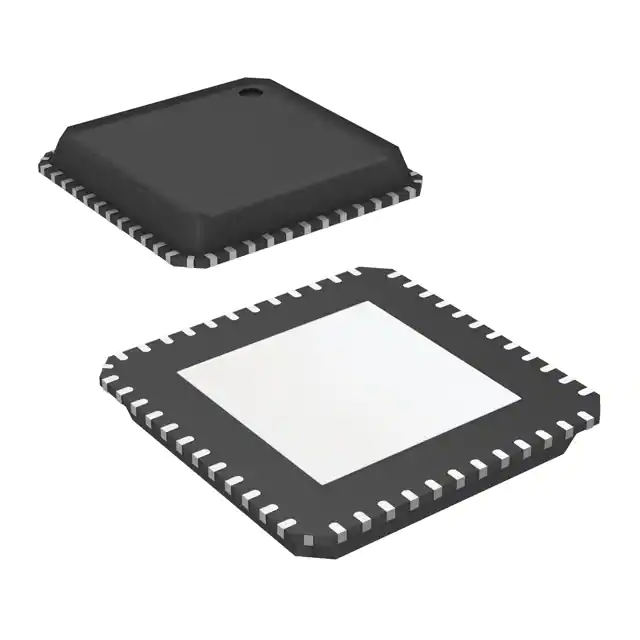
Texas Instruments CC2431RTC
- Part No.:
- CC2431RTC
- Manufacturer:
- Texas Instruments
- Category:
- RF Transceiver ICs
- Package:
- 48-VFQFN Exposed Pad
- Datasheet:
-
 CC2431RTC.pdf
- Description:
- IC RF TXRX+MCU 802.15.4 48VQFN
- Quantity:
- Payment:

- Shipping:

Inventory:3,494
Please send an inquiry. Send us your inquiry, and we will respond immediately.
Product details
Overview
CC2431RTC from Texas Instruments is a 2.4 GHz IEEE 802.15.4/ZigBee® System-on-Chip integrating an enhanced 8051 MCU, 128 KB flash, 8 KB RAM, CC2420 RF transceiver core, and hardware-based Location Engine for indoor node positioning. It operates from 2.0–3.6 V, draws 27 mA in RX/TX, and supports RSSI-based triangulation in wireless sensor networks for asset tracking and building automation.
For engineers reviewing the CC2431RTC datasheet, CC2431RTC pinout, CC2431RTC application, or CC2431RTC equivalent, this page delivers verified technical context, location engine register mapping, QLP48 package details, power-mode current values (0.5 µA power-down), and real-world ZigBee® system integration constraints - all grounded in SWRS034B Rev. 2.01 and TI's official ordering documentation.
Technical Context
The CC2431RTC implements a distributed location estimation algorithm using RSSI inputs from 3–16 reference nodes, with fixed-point coordinate resolution of 0.25 m and estimation latency from 50 µs to 13 ms. Its Location Engine operates via dedicated RF registers (REFCOORD at 0xDF55, MEASPARM at 0xDF56, LOCENG at 0xDF57) and requires explicit parameter loading before execution.
It shares identical MCU and RF architecture with the CC2430-F128 but adds exclusive hardware-accelerated location computation. The chip supports CSMA/CA in hardware, includes a 128-bit AES coprocessor, and uses a single 32 MHz crystal for full mesh timing - eliminating external clock sources while maintaining IEEE 802.15.4 compliance.
Key Specifications
| Parameter | Value and Actual Design Meaning |
|---|---|
| RF Standard | IEEE 802.15.4-2003 compliant 2.4 GHz transceiver (CC2420 core); enables ZigBee® network layer interoperability. |
| MCU Core | Enhanced 8051 running at 32 MHz; executes Z-Stack™ protocol stack and location engine firmware without external processor. |
| Memory | 128 KB in-system programmable flash + 8 KB RAM (4 KB retained in all power modes); supports field-upgradable firmware and runtime data storage. |
| Location Engine | Hardware-accelerated position estimator using RSSI from 3–16 reference nodes; outputs X/Y coordinates in 0.25 m resolution over 64 × 64 m range. |
| Power Consumption | 27 mA active (RX/TX), 0.5 µA power-down (RTC-wakeup capable), 0.3 µA deep power-down (external-interrupt only); enables multi-year battery life in sensor nodes. |
| Supply Voltage | 2.0 V to 3.6 V operation; compatible with common coin-cell (e.g., CR2032) and Li-ion battery systems without external regulators. |
| ADC & Sensors | 8-channel configurable ADC, integrated temperature sensor, and battery monitor; enables autonomous environmental and power health monitoring. |
Pinout & Package
CC2431RTC is housed in a RoHS-compliant, lead-free 7 mm × 7 mm QLP48 (VQFN-RTC) package with exposed thermal pad, rated MSL Level-3 (260°C peak reflow), and designed for high-density PCB layouts requiring thermal management. Pin 1 is marked by a dot; the thermal pad must be soldered to PCB ground for electrical stability and heat dissipation.
| Pin/Terminal | Circuit Role | Design Meaning |
|---|---|---|
| VDD | Core power supply | Connects to 2.0–3.6 V regulated source; decoupling required per TI layout guidelines (100 nF + 1 µF near pin). |
| GND | Ground reference | All analog/digital grounds tied to common plane; thermal pad must be connected to GND for thermal and EMI performance. |
| XOSC_Q1 / XOSC_Q2 | Crystal oscillator terminals | Supports single 32 MHz fundamental-mode crystal; no external load capacitors needed due to internal tuning. |
| RFDIG1 / RFDIG2 | Differential RF I/O | Direct connection to balun or matching network; differential 100 Ω impedance interface to antenna path. |
| P0_0–P0_7, P1_0–P1_7, P2_0–P2_4 | General-purpose I/O | 21 GPIOs total; two pins support 20 mA sink/source for LED/drivers; all configurable as interrupts or peripheral functions. |
| RESET_N | Active-low reset input | Pulled high externally; asserts internal reset on falling edge; debounced via internal RC circuit (no external capacitor required). |
| DCOUPL | RF coupling control | Must be tied to VDD for normal operation; enables internal DC biasing of RF front-end stages. |
Key Features
| Feature | Design Value |
|---|---|
| Integrated Location Engine | Hardware-based position estimation using RSSI from up to 16 reference nodes; reduces host CPU load and network traffic versus centralized approaches. |
| Z-Stack™ Ready Architecture | Full compatibility with TI's licensed ZigBee® protocol stack; CC2431ZRTC variant includes royalty pre-paid for end-product deployment. |
| Ultra-Low-Power Operation | 0.5 µA RTC-wakeup power-down mode enables years of operation on coin cells; fast wake-up (< 200 µs) preserves low duty-cycle efficiency. |
| Single-Crystal Mesh Timing | One 32 MHz crystal synchronizes RF, MCU, and MAC timer; eliminates secondary clock sources and reduces BOM count and board area. |
| Robust RF Performance | −95 dBm receiver sensitivity and strong interferer rejection enable reliable 2.4 GHz operation in dense ISM-band environments (Wi-Fi, Bluetooth coexistence). |
| Security Acceleration | Dedicated 128-bit AES coprocessor offloads encryption/decryption from MCU; supports secure key exchange and frame-level payload protection. |
Applications
| Asset Tracking | Smart Building Automation |
|---|---|
|
Use Scenario: Real-time container or vehicle location within warehouse yard using anchor nodes mounted on pillars and ceiling. IC Role / Device Role / Timing Role: Blind node performing on-device RSSI triangulation; uses Location Engine registers REFCOORD and MEASPARM to compute XY coordinates without cloud dependency. Use Value: Eliminates GPS dependency indoors; achieves sub-meter accuracy (0.25 m resolution) with <13 ms latency per estimate, enabling responsive logistics alerts. |
Use Scenario: Wireless occupancy and temperature sensing across office floors with self-organizing ZigBee® mesh. IC Role / Device Role / Timing Role: End-device node executing Z-Stack™ coordinator/router firmware; leverages CC2431RTC's 128 KB flash for full stack + application code. Use Value: Single-chip integration reduces bill-of-materials cost vs. discrete MCU+RF+location solutions; 2.0–3.6 V range supports energy-harvesting power supplies. |
| Industrial Sensor Networks | Access Control Systems |
|
Use Scenario: Battery-powered vibration and temperature monitors on rotating machinery in factory settings. IC Role / Device Role / Timing Role: Low-duty-cycle sensor node using hardware CSMA/CA and RTC-triggered wake-up; ADC samples analog sensors pre-transmission. Use Value: 0.5 µA power-down current extends battery life beyond 5 years; integrated battery monitor prevents unexpected node failure. |
Use Scenario: Wireless door lock controller receiving authenticated commands from ZigBee®-enabled key fobs or smartphones. IC Role / Device Role / Timing Role: Secure endpoint with AES coprocessor handling frame encryption; uses 20 mA GPIOs to drive solenoid latch drivers directly. Use Value: On-chip security acceleration ensures sub-100 µs decryption latency; eliminates need for external crypto ICs and associated routing complexity. |
Equivalent & Alternatives
The following parts are listed as comparable options for similar 2.4 GHz wireless SoC applications.
| Alternative Part | Technical Difference | Application Difference | Selection Advice |
|---|---|---|---|
| CC2430F128 | Identical MCU, RF core, flash, RAM, and QLP48 package; lacks Location Engine hardware and associated RF registers (0xDF55–0xDF59). | No on-chip location estimation; requires external MCU or cloud-based triangulation for positioning use cases. | Select CC2430F128 only if location functionality is implemented externally or unnecessary; otherwise CC2431RTC provides direct hardware acceleration. |
| CC2530F256 | Newer TI SoC with enhanced 8051, 256 KB flash, improved RF sensitivity (−97 dBm), and integrated USB interface; no Location Engine. | Higher memory capacity and better link budget support larger mesh networks; lacks hardware location computation capability. | Choose CC2530F256 for new designs needing extended flash or USB debug; CC2431RTC remains optimal where location engine is required and legacy compatibility matters. |
Compared with CC2430F128, CC2431RTC adds dedicated location hardware with zero CPU overhead and deterministic latency; compared with CC2530F256, it trades flash size and sensitivity for unique on-die positioning - making CC2431RTC irreplaceable in blind-node localization architectures.
Availability
CC2431RTC is available at Aetrix Electronics and suitable for industrial sensor networks, smart building automation, and wireless access control systems requiring stable component supply and long-term design continuity.
Supply support for CC2431RTC includes scheduled delivery planning, volume procurement assistance, BOM continuity management, traceable sourcing, and lifecycle availability coordination for OEM customers, industrial embedded developers, connected-device designers, and electronics production programs.
Manufacturer
Texas Instruments is a global semiconductor leader specializing in analog, embedded processing, and wireless connectivity solutions, with decades of expertise in low-power RF and microcontroller innovation.
The CC2431RTC belongs to TI's ZigBee®-optimized SoC product line, engineered specifically for ultra-low-power, self-organizing wireless sensor networks where integrated location awareness and minimal BOM cost are critical design requirements.
FAQ
What is the primary function of the Location Engine in the CC2431RTC?
The Location Engine in the CC2431RTC performs hardware-accelerated indoor node positioning using RSSI measurements from 3–16 known reference nodes. It computes X/Y coordinates with 0.25 m resolution over a 64 × 64 m area, writing results to LOCX and LOCY registers (0xDF58–0xDF59) in 50 µs–13 ms. This offloads computation from the 8051 MCU and eliminates network round-trips required by cloud-based triangulation - a capability unique to the CC2431RTC among its pin-compatible variants.
Is the CC2431RTC pin-compatible with other TI SoCs, and what does that mean for PCB design?
Yes, the CC2431RTC is pin-compatible with the CC2430F128 in the same QLP48 package, sharing identical power, I/O, crystal, and RF pin assignments. This allows drop-in replacement on existing CC2430-based PCBs - however, the CC2431RTC's Location Engine requires additional software initialization of RF registers (e.g., REFCOORD at 0xDF55) not present in CC2430 firmware. No layout changes are needed, but firmware must be updated to leverage location functionality.
What power modes does the CC2431RTC support, and how do they impact battery life?
The CC2431RTC supports multiple low-power states: active (27 mA), idle (1.5 mA), PM1 (0.9 µA), PM2 (0.5 µA with RTC wake-up), and PM3 (0.3 µA with external-interrupt wake-up). In PM2 mode, the RTC maintains timekeeping while drawing just 0.5 µA - enabling multi-year operation on a single CR2032 coin cell in sensor nodes with 1-minute wake intervals. Transition time from PM2 to active is under 200 µs, minimizing overhead in duty-cycled applications.
Does the CC2431RTC include built-in security features, and how are they implemented?
Yes, the CC2431RTC integrates a dedicated 128-bit AES coprocessor that handles encryption/decryption independently of the 8051 MCU. It supports CCM* mode for ZigBee® frame security and operates via DMA transfers to avoid CPU bottlenecks. Keys are stored in protected memory regions, and the engine processes full frames in hardware - reducing latency to under 100 µs per encrypted packet and eliminating the need for external crypto ICs in secure wireless endpoints like access controllers.
What development tools and software stacks are officially supported for the CC2431RTC?
Texas Instruments officially supports the CC2431RTC with Z-Stack™ 1.4.x (ZigBee® 2006 compliant), IAR Embedded Workbench for 8051, and SmartRF Studio for RF configuration. The CC2431DK and CC2431ZDK development kits provide hardware reference designs, while the CC2431EMK offers evaluation modules with pre-flashed firmware. TI's CC2430 data sheet (supplemental to SWRS034B) is required for complete register-level documentation, as the CC2431RTC inherits all MCU and RF functionality from the CC2430 base.
CC2431RTC Specifications
- Product attributes
- Attribute value
- Manufacturer:
- Texas Instruments
- Series:
- -
- Package/Case:
- 48-VFQFN Exposed Pad
- Packaging:
- Bulk
- Product Status:
- Not For New Designs
- Programmable:
- Not Verified
- Type:
- TxRx + MCU
- RF Family/Standard:
- 802.15.4
- Protocol:
- Zigbee®
- Modulation:
- -
- Frequency:
- 2.4GHz
- Data Rate (Max):
- -
- Power - Output:
- -
- Sensitivity:
- -
- Memory Size:
- 128kB Flash, 8kB SRAM
- Serial Interfaces:
- SPI, USART
- GPIO:
- -
- Voltage - Supply:
- 2V ~ 3.6V
- Current - Receiving:
- 27mA
- Current - Transmitting:
- 27mA
- Operating Temperature:
- -
- Grade:
- -
- Qualification:
- -
- Supplier Device Package:
- 48-VQFN (7x7)
CC2431RTC FAQ
1.How can I place an order for CC2431RTC through Aetrix?
Please submit a Request for Quotation (RFQ) for CC2431RTC on Aetrix. Our sales agent will provide a competitive quotation and guide you through the order confirmation once you accept the terms.
2.Are the price and stock information for CC2431RTC reliable?
The price and inventory of CC2431RTC are updated periodically and may fluctuate due to market conditions. Stock and pricing data are typically refreshed every 24 hours. Quotation validity for CC2431RTC is usually 5 days.
3.What payment methods are accepted for CC2431RTC?
We accept Wire Transfer, PayPal, Credit Card, Western Union, MoneyGram, and Escrow for CC2431RTC transactions.
Note: Certain payment methods may incur a processing fee.
4.How is shipping managed for CC2431RTC?
CC2431RTC orders can be shipped via leading logistics carriers, including DHL, UPS, FedEx, TNT, or Registered Mail.
Once your CC2431RTC order is processed, you will receive an email with the shipment details and tracking number.
Note: Tracking information may take up to 24 hours to appear. Express delivery typically takes 3–5 business days.
5.How can I obtain technical support or documentation for CC2431RTC?
For technical support, including CC2431RTC datasheets, pinout diagrams, or application guidance, please contact our engineering support team. They can provide detailed documentation and assistance for your CC2431RTC requirements.
6.How does Aetrix verify that CC2431RTC is sourced from the original manufacturer or authorized distributors?
All CC2431RTC products on Aetrix are procured from qualified distributors and authorized channels. Our dedicated quality assurance team conducts strict verification, including traceability checks and, if necessary, third-party testing. This ensures that CC2431RTC meets industry standards.
7.What is the process for return or replacement of CC2431RTC?
All CC2431RTC units undergo pre-shipment inspection (PSI). If there is an issue with CC2431RTC, returns or replacements are accepted under the following conditions:
1.Quantity discrepancies, incorrect items, or visible external defects (such as breakage or corrosion), acknowledged by Aetrix.
2.The issue is reported within 90 days of delivery.
3.The CC2431RTC part is unused and in its original packaging.
Return procedure for CC2431RTC:
1.Submit a request within 90 days.
2.Obtain a Return Material Authorization (RMA) from Aetrix.
CC2431RTC Tags
-
ESP32-D0WD-V3
Espressif Systems
-
ESP8266EX
Espressif Systems

-
ESP32-S3
Espressif Systems
-
NRF24L01P-R7
Nordic Semiconductor ASA
-
NRF24L01P-R
Nordic Semiconductor ASA
-
ESP32-U4WDH
Espressif Systems
-
DA14531-00000OG2
Renesas
-
ESP32-C6FH4
Espressif Systems
-
DA14531-00000FX2
Renesas
-
NRF24L01P-T
Nordic Semiconductor ASA
-
NRF52810-QCAA-R
Nordic Semiconductor ASA
-
ESP32-S3FN8
Espressif Systems
Tech Hub

A practical engineering guide to 3.3V and 5V logic compatibility, input thresholds, resistor dividers, translator ICs, MOSFET level shifting, I2C pull-ups, timing limits and power-sequencing risks.

The 74HC595 uses push-pull logic outputs, while the TPIC6B595 uses 50 V open-drain DMOS sinks for higher-power loads. This guide compares timing, current limits, 3.3 V interfacing, load wiring, thermal…

The 74HC595 converts serial data into eight stable parallel outputs. This guide covers pin functions, shift and storage timing, OE and MR behavior, drive-current limits, cascading, voltage compatibilit…

A technical comparison of level-sensitive latches and edge-triggered flip-flops, covering timing windows, setup and hold limits, master–slave operation, time borrowing, race-through, HDL inference and…

A D latch stores one bit while Enable controls when data can pass. This reference covers gate-level operation, truth tables, transparency, setup and hold timing, LE versus OE, common ICs and practical …

An SR latch stores one bit through cross-coupled feedback. This engineering reference covers NOR and NAND implementations, truth tables, forbidden-state recovery, gated operation, switch debouncing, fa…

Latch circuits retain one bit through feedback. This technical reference covers SR and D latches, truth tables, transparency, timing limits, latch-versus-flip-flop behavior, applications and common log…

An engineering guide to LED driver operation, constant-current and constant-voltage outputs, linear and switching topologies, dimming, IC selection, calculations, replacement compatibility, and fault c…

Operational amplifier guide covering op amp basics, feedback, ideal vs real op amps, common configurations, buffer circuits, offset, bias current, gain-bandwidth, slew rate, rail-to-rail limits and sel…

Jumper cables guide covering safe connection order, red and black clamp placement, final ground connection, cable gauge, length, clamp quality, copper vs CCA cables, jump starter comparison and battery…


