
 My Inquiry
 My Account


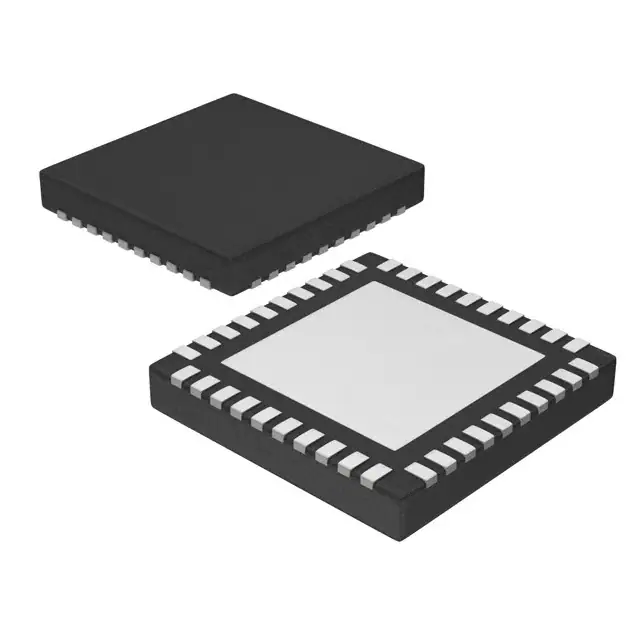
Texas Instruments CC2531F128RHAR
- Part No.:
- CC2531F128RHAR
- Manufacturer:
- Texas Instruments
- Category:
- RF Transceiver ICs
- Package:
- 40-VFQFN Exposed Pad
- Datasheet:
-
 CC2531F128RHAR.pdf
- Description:
- IC RF TXRX+MCU 802.15.4 40VQFN
- Quantity:
- Payment:

- Shipping:

Inventory:1,993
Please send an inquiry. Send us your inquiry, and we will respond immediately.
Product details
Overview
CC2531F128RHAR from Texas Instruments is a USB-enabled 2.4-GHz IEEE 802.15.4 and ZigBee system-on-chip (SoC) integrating an enhanced 8051 MCU, 128-KB flash, 8-KB RAM, 2.4-GHz RF transceiver, USB 2.0 full-speed interface, AES coprocessor, and 21 GPIOs. It delivers –92 dBm receiver sensitivity, 4.5 dBm programmable output power, and operates from 2 V–3.6 V for USB-upgradable wireless sensor nodes and RF4CE remote control targets.
For engineers reviewing the CC2531F128RHAR datasheet, CC2531F128RHAR pinout, CC2531F128RHAR application, or CC2531F128RHAR equivalent, key selection criteria include USB HID/CDC firmware upgradability, integrated RF4CE/ZigBee protocol stack support, low-power sleep modes (0.2 mA in Power Mode 1), and QFN40 package compatibility with certified reference designs.
Technical Context
The CC2531F128RHAR implements a 32-MHz crystal-based RF synthesizer with IEEE 802.15.4-compliant modulation, CSMA/CA hardware acceleration, and digital RSSI/LQI generation. Its dual-oscillator architecture supports fast wake-up (4 ms from Power Mode 1) and precise timing via 32.768-kHz XOSC and calibrated 32-kHz RC-OSC.
USB functionality is implemented as a certified full-speed (12 Mbps) device with 1-KB dedicated FIFO, DMA access, and no external 48-MHz crystal required. The on-chip AES engine enables secure over-the-air updates, while the five-channel DMA offloads peripheral data movement from the 8051 core.
Key Specifications
| Parameter | Value and Actual Design Meaning |
|---|---|
| RF Frequency Range | 2394–2507 MHz; covers entire 2.4-GHz ISM band for global IEEE 802.15.4/ZigBee operation |
| Receiver Sensitivity | –92 dBm at 1% PER; enables robust link budget in interference-prone environments |
| Output Power | Programmable up to +4.5 dBm; meets FCC/ETSI/ARIB regulatory limits without external PA |
| USB Interface | USB 2.0 full-speed (12 Mbps) with 1-KB FIFO and DMA; supports HID/CDC class firmware upgrades |
| Memory | 128-KB in-system programmable flash + 8-KB RAM with retention in all power modes |
| Power Modes | Power Mode 1: 0.2 mA (4-ms wake-up); Power Mode 2: 1 mA (sleep timer active); wide 2–3.6 V supply range |
| Analog Peripherals | 12-bit ADC (8 channels), battery monitor, temperature sensor, and IR generation circuitry |
Pinout & Package
CC2531F128RHAR is housed in a 6-mm × 6-mm QFN40 package (RHA) with exposed thermal pad requiring solid ground plane connection. Pin count is 40, including 21 general-purpose I/Os, dual crystal interfaces (32-MHz and 32.768-kHz), RF differential ports (RF_P/RF_N), USB differential pair (USB_P/USB_N), and six analog power rails (AVDD1–AVDD6).
| Pin/Terminal | Circuit Role | Design Meaning |
|---|---|---|
| RF_P / RF_N | Differential RF transceiver interface | Connects to balun/matching network; requires 69 + j29 Ω load impedance for optimal EVM & spurious performance |
| USB_P / USB_N | USB 2.0 full-speed differential pair | Compliant with USB electrical specs; supports plug-and-play HID/CDC enumeration without external PHY |
| XOSC_Q1 / XOSC_Q2 | 32-MHz crystal oscillator terminals | Drives RF synthesizer and CPU clock; requires 10–16 pF load capacitance and ≤60 Ω ESR crystal |
| XOSC32K_Q1 / XOSC32K_Q2 | 32.768-kHz crystal oscillator terminals | Feeds sleep timer and low-power mode timing; supports ±40 ppm accuracy over –40°C to +125°C |
| P0_0–P0_7, P1_0–P1_7, P2_0–P2_4 | General-purpose I/O bank | 21 configurable pins (19 × 4 mA, 2 × 20 mA); support UART, SPI, I²C, PWM, and interrupt-capable inputs |
| RESET_N | Active-low reset input | Minimum 1-ms low pulse required for full system reset; synchronizes all internal modules |
Key Features
| Feature | Design Value |
|---|---|
| Integrated USB 2.0 Full-Speed Device | Eliminates need for external USB controller or PHY; enables field-upgradable firmware via standard PC interface |
| IEEE 802.15.4 MAC Timer & CSMA/CA Hardware | Offloads medium access control logic from CPU; ensures compliant channel arbitration and collision avoidance |
| AES Security Coprocessor | Accelerates encryption/decryption for ZigBee/RF4CE security layers; prevents CPU bottleneck during OTA updates |
| Multi-Oscillator Architecture | Combines 32-MHz XOSC (RF/CPU), 32.768-kHz XOSC (sleep timer), and calibrated RC-OSCs for rapid mode transitions |
| Low-Power Operating Modes | Power Mode 1 (0.2 mA) enables battery-powered operation with 4-ms wake-up; retains RAM and registers |
Applications
| Home Automation Hub | ZigBee USB Dongle |
|---|---|
|
Use Scenario: Central coordinator node in smart lighting and HVAC control systems using ZigBee PRO mesh networking. IC Role / Device Role / Timing Role: SoC acts as USB-connected gateway translating ZigBee sensor data to cloud APIs; uses 32.768-kHz XOSC for synchronized network beacon timing. Use Value: Enables zero-touch firmware updates via USB HID class; eliminates need for JTAG debuggers in production deployment. |
Use Scenario: Plug-and-play USB adapter for PC-based ZigBee network commissioning and packet analysis. IC Role / Device Role / Timing Role: Full-speed USB device with embedded Z-Stack™ protocol stack; handles IEEE 802.15.4 frame assembly/disassembly and RF timing. Use Value: Delivers –92 dBm sensitivity and 4.5 dBm output for reliable 20+ meter indoor range; certified per USB-IF standards. |
| RF4CE Remote Control Target | Industrial Wireless Sensor Node |
|
Use Scenario: TV or set-top box (STB) receiving RF4CE commands from universal remotes in consumer electronics. IC Role / Device Role / Timing Role: SoC implements RemoTI™ RF4CE target stack; uses CSMA/CA hardware and accurate RSSI for interference-aware command reception. Use Value: Supports sub-100-ms latency response; integrates IR generator for hybrid RF/IR control fallback. |
Use Scenario: Battery-powered environmental monitoring node measuring temperature, humidity, and occupancy in factory settings. IC Role / Device Role / Timing Role: Low-power sensor hub with 12-bit ADC, temperature sensor, and AES-secured OTA updates; wakes every 30 s using 32-kHz sleep timer. Use Value: Achieves >2-year battery life via Power Mode 2 (1 mA) and 4-ms wake-up; meets EN 300 328 radiated emission limits. |
Equivalent & Alternatives
The following parts are listed as comparable options for similar 2.4-GHz SoC applications.
| Alternative Part | Technical Difference | Application Difference | Selection Advice |
|---|---|---|---|
| CC2531F256RHAR | 256-KB flash vs. 128-KB; identical RF, USB, and peripheral specs | Required for larger Z-Stack™ or RemoTI™ firmware images with extended feature sets | Select when firmware size exceeds 128 KB or future-proofing for stack updates is needed |
| CC2652RB1FRGZR | Multi-protocol (Zigbee, BLE, Thread) Arm Cortex-M4F core; 352-KB flash; integrated crystal-less BAW resonator | Supports concurrent protocols and Bluetooth LE coexistence; higher compute throughput but larger footprint | Choose for next-gen multi-standard gateways where BLE interoperability or real-time processing is critical |
Compared with CC2531F256RHAR, the CC2531F128RHAR offers identical RF performance and USB functionality at lower memory cost-ideal for cost-sensitive RF4CE remotes. Versus CC2652RB1FRGZR, it provides proven ZigBee/RF4CE certification with simpler toolchain but lacks BLE or Thread support.
Availability
CC2531F128RHAR is available at Aetrix Electronics and suitable for USB-upgradable wireless sensor networks, RF4CE remote control targets, and ZigBee USB dongles requiring stable component supply across industrial, consumer, and building automation programs.
Supply support for CC2531F128RHAR includes scheduled delivery planning, volume procurement assistance, BOM continuity management, traceable sourcing, and lifecycle availability coordination for OEM customers, industrial embedded developers, connected-device designers, and electronics production programs.
Manufacturer
Texas Instruments is a global semiconductor leader delivering analog, embedded processing, and connectivity solutions with emphasis on reliability, longevity, and industrial-grade qualification.
The CC2531 product line was designed specifically for low-cost, USB-integrated 2.4-GHz IEEE 802.15.4 and ZigBee endpoint devices-targeting RF4CE remote controls, PC peripherals, and firmware-upgradable sensor nodes.
FAQ
What is the primary function of the CC2531F128RHAR in a ZigBee network?
The CC2531F128RHAR serves as a USB-enabled ZigBee coordinator or router node, integrating the IEEE 802.15.4 PHY/MAC, Z-Stack™ protocol stack, and full-speed USB interface. It enables direct PC connectivity for network commissioning, OTA firmware updates, and packet sniffing-eliminating external bridge hardware. Its 128-KB flash stores certified ZigBee firmware, and its RF front-end achieves –92 dBm sensitivity for reliable mesh formation.
Does the CC2531F128RHAR require an external 48-MHz crystal for USB operation?
No, the CC2531F128RHAR does not require an external 48-MHz crystal for USB operation. Its USB 2.0 full-speed PHY derives timing from the internal 32-MHz crystal oscillator via a PLL, eliminating the need for a separate high-frequency crystal. This reduces BOM cost and PCB layout complexity while maintaining USB-IF certification compliance.
How does the CC2531F128RHAR support low-power operation in battery-powered devices?
The CC2531F128RHAR supports ultralow-power operation through multiple hardware-optimized sleep modes: Power Mode 1 draws just 0.2 mA with 4-ms wake-up time, Power Mode 2 consumes 1 mA with sleep timer active, and Power Mode 3 uses 0.4 mA with external interrupt wake-up. All modes retain 8-KB RAM and register state, enabling rapid resumption of ZigBee or RF4CE tasks without full reinitialization.
What RF regulatory certifications does the CC2531F128RHAR support out-of-the-box?
The CC2531F128RHAR is designed to meet key global RF regulations when used with TI's reference layouts: ETSI EN 300 328 and EN 300 440 (Europe), FCC CFR47 Part 15 (US), and ARIB STD-T-66 (Japan). Its conducted spurious emissions are ≤–60 dBm in restricted bands, and its frequency error tolerance is ±150 ppm-ensuring compliance without custom RF tuning in certified designs.
Can the CC2531F128RHAR be used for RF4CE remote control applications?
Yes, the CC2531F128RHAR is explicitly qualified for RF4CE remote control targets when paired with TI's golden-unit-status RemoTI™ protocol stack. It provides hardware-accelerated CSMA/CA, accurate digital RSSI/LQI, and integrated IR generation circuitry-enabling sub-100-ms command response times and hybrid RF/IR fallback in TV and STB implementations.
CC2531F128RHAR Specifications
- Product attributes
- Attribute value
- Manufacturer:
- Texas Instruments
- Series:
- -
- Package/Case:
- 40-VFQFN Exposed Pad
- Packaging:
- Tape & Reel (TR)
- Product Status:
- Active
- Programmable:
- Not Verified
- Type:
- TxRx + MCU
- RF Family/Standard:
- 802.15.4
- Protocol:
- Zigbee®
- Modulation:
- -
- Frequency:
- 2.4GHz
- Data Rate (Max):
- 250kbps
- Power - Output:
- 4.5dBm
- Sensitivity:
- -97dBm
- Memory Size:
- 128kB Flash, 8kB RAM
- Serial Interfaces:
- SPI, USART, USB
- GPIO:
- 21
- Voltage - Supply:
- 2V ~ 3.6V
- Current - Receiving:
- 20.5mA ~ 24.3mA
- Current - Transmitting:
- 28.7mA ~ 33.5mA
- Operating Temperature:
- -40°C ~ 125°C
- Grade:
- -
- Qualification:
- -
- Supplier Device Package:
- 40-VQFN (6x6)
CC2531F128RHAR FAQ
1.How can I place an order for CC2531F128RHAR through Aetrix?
Please submit a Request for Quotation (RFQ) for CC2531F128RHAR on Aetrix. Our sales agent will provide a competitive quotation and guide you through the order confirmation once you accept the terms.
2.Are the price and stock information for CC2531F128RHAR reliable?
The price and inventory of CC2531F128RHAR are updated periodically and may fluctuate due to market conditions. Stock and pricing data are typically refreshed every 24 hours. Quotation validity for CC2531F128RHAR is usually 5 days.
3.What payment methods are accepted for CC2531F128RHAR?
We accept Wire Transfer, PayPal, Credit Card, Western Union, MoneyGram, and Escrow for CC2531F128RHAR transactions.
Note: Certain payment methods may incur a processing fee.
4.How is shipping managed for CC2531F128RHAR?
CC2531F128RHAR orders can be shipped via leading logistics carriers, including DHL, UPS, FedEx, TNT, or Registered Mail.
Once your CC2531F128RHAR order is processed, you will receive an email with the shipment details and tracking number.
Note: Tracking information may take up to 24 hours to appear. Express delivery typically takes 3–5 business days.
5.How can I obtain technical support or documentation for CC2531F128RHAR?
For technical support, including CC2531F128RHAR datasheets, pinout diagrams, or application guidance, please contact our engineering support team. They can provide detailed documentation and assistance for your CC2531F128RHAR requirements.
6.How does Aetrix verify that CC2531F128RHAR is sourced from the original manufacturer or authorized distributors?
All CC2531F128RHAR products on Aetrix are procured from qualified distributors and authorized channels. Our dedicated quality assurance team conducts strict verification, including traceability checks and, if necessary, third-party testing. This ensures that CC2531F128RHAR meets industry standards.
7.What is the process for return or replacement of CC2531F128RHAR?
All CC2531F128RHAR units undergo pre-shipment inspection (PSI). If there is an issue with CC2531F128RHAR, returns or replacements are accepted under the following conditions:
1.Quantity discrepancies, incorrect items, or visible external defects (such as breakage or corrosion), acknowledged by Aetrix.
2.The issue is reported within 90 days of delivery.
3.The CC2531F128RHAR part is unused and in its original packaging.
Return procedure for CC2531F128RHAR:
1.Submit a request within 90 days.
2.Obtain a Return Material Authorization (RMA) from Aetrix.
CC2531F128RHAR Tags
-
ESP32-D0WD-V3
Espressif Systems
-
ESP8266EX
Espressif Systems

-
ESP32-S3
Espressif Systems
-
NRF24L01P-R7
Nordic Semiconductor ASA
-
NRF24L01P-R
Nordic Semiconductor ASA
-
ESP32-U4WDH
Espressif Systems
-
DA14531-00000OG2
Renesas
-
ESP32-C6FH4
Espressif Systems
-
DA14531-00000FX2
Renesas
-
NRF24L01P-T
Nordic Semiconductor ASA
-
NRF52810-QCAA-R
Nordic Semiconductor ASA
-
ESP32-S3FN8
Espressif Systems
Tech Hub

A practical engineering guide to 3.3V and 5V logic compatibility, input thresholds, resistor dividers, translator ICs, MOSFET level shifting, I2C pull-ups, timing limits and power-sequencing risks.

The 74HC595 uses push-pull logic outputs, while the TPIC6B595 uses 50 V open-drain DMOS sinks for higher-power loads. This guide compares timing, current limits, 3.3 V interfacing, load wiring, thermal…

The 74HC595 converts serial data into eight stable parallel outputs. This guide covers pin functions, shift and storage timing, OE and MR behavior, drive-current limits, cascading, voltage compatibilit…

A technical comparison of level-sensitive latches and edge-triggered flip-flops, covering timing windows, setup and hold limits, master–slave operation, time borrowing, race-through, HDL inference and…

A D latch stores one bit while Enable controls when data can pass. This reference covers gate-level operation, truth tables, transparency, setup and hold timing, LE versus OE, common ICs and practical …

An SR latch stores one bit through cross-coupled feedback. This engineering reference covers NOR and NAND implementations, truth tables, forbidden-state recovery, gated operation, switch debouncing, fa…

Latch circuits retain one bit through feedback. This technical reference covers SR and D latches, truth tables, transparency, timing limits, latch-versus-flip-flop behavior, applications and common log…

An engineering guide to LED driver operation, constant-current and constant-voltage outputs, linear and switching topologies, dimming, IC selection, calculations, replacement compatibility, and fault c…

Operational amplifier guide covering op amp basics, feedback, ideal vs real op amps, common configurations, buffer circuits, offset, bias current, gain-bandwidth, slew rate, rail-to-rail limits and sel…

Jumper cables guide covering safe connection order, red and black clamp placement, final ground connection, cable gauge, length, clamp quality, copper vs CCA cables, jump starter comparison and battery…


