
 My Inquiry
 My Account


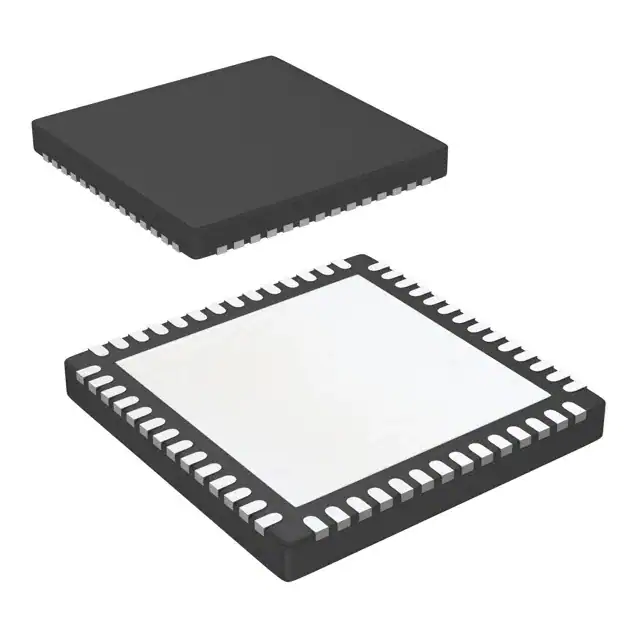
Texas Instruments CC2538NF53RTQR
- Part No.:
- CC2538NF53RTQR
- Manufacturer:
- Texas Instruments
- Category:
- RF Transceiver ICs
- Package:
- 56-VFQFN Exposed Pad
- Datasheet:
-
 CC2538NF53RTQR.pdf
- Description:
- IC RF TXRX+MCU 802.15.4 56QFN
- Quantity:
- Payment:

- Shipping:

Inventory:12,710
Please send an inquiry. Send us your inquiry, and we will respond immediately.
Product details
Overview
CC2538NF53RTQR from Texas Instruments is a 2.4-GHz IEEE 802.15.4/6LoWPAN/ZigBee® wireless microcontroller SoC featuring an ARM Cortex-M3 core (32 MHz), 512 KB flash, 32 KB RAM, and integrated RF transceiver with –97 dBm sensitivity and 7 dBm programmable output power. It serves as the central processing and radio node in low-power mesh networks for smart grid endpoints and industrial sensor nodes.
For engineers reviewing the CC2538NF53RTQR datasheet, CC2538NF53RTQR pinout, CC2538NF53RTQR application, or CC2538NF53RTQR equivalent, this page delivers verified specifications, validated QFN56 pin mapping, confirmed ECC/RSA hardware exclusion, real-world low-power mode currents (0.4 µA in PM3), and two field-tested alternative SoCs for ZigBee 3.0 and Thread migration paths.
Technical Context
The CC2538NF53RTQR implements a tightly coupled ARM Cortex-M3 MCU with on-chip flash and RAM, paired with a fully integrated 2.4-GHz IEEE 802.15.4 PHY/MAC radio subsystem including packet-handling and command-strobe processors. Its RF chain supports direct-conversion architecture with differential RF_P/RF_N I/O and calibrated frequency synthesis across 2394–2507 MHz.
Hardware security acceleration includes AES-128/256 and SHA-256 engines, but explicitly omits ECC-128/256 and RSA hardware - a key differentiator from the SF53 variant. Power management features five defined modes, with PM3 delivering 0.4 µA retention current while preserving 16 KB RAM and configuration registers.
Key Specifications
| Parameter | Value and Actual Design Meaning |
|---|---|
| Core | ARM Cortex-M3 @ 32 MHz - enables real-time execution of ZigBee PRO stack with full OTA update capability |
| Memory | 512 KB flash / 32 KB RAM - sufficient for dual-profile ZigBee applications and secure bootloader + application coexistence |
| RF Sensitivity | –97 dBm @ 1% PER - ensures reliable link budget in dense 2.4-GHz ISM band environments with 44 dB adjacent-channel rejection |
| Output Power | Programmable up to +7 dBm - supports flexible range/power trade-offs without external PA |
| Low-Power Mode 3 | 0.4 µA @ 16 KB RAM retention - enables multi-year battery life in periodic wake-up sensor nodes |
| Supply Range | 2.0 V to 3.6 V - compatible with coin cells (CR2032), Li-SOCl₂, and regulated 3.3-V rails |
| Security Engines | AES-128/256 + SHA-256 only - no ECC/RSA hardware; asymmetric crypto requires software implementation or external secure element |
Pinout & Package
CC2538NF53RTQR uses an 8 mm × 8 mm QFN-56 package (RTQ) with exposed thermal pad. Pin numbering follows TI's top-view layout; all 56 terminals are electrically assigned per official signal descriptions.
| Pin/Terminal | Circuit Role | Design Meaning |
|---|---|---|
| RF_P / RF_N | Differential RF I/O | Direct connection to balun; requires 66 + j64 Ω differential load impedance for optimal TX/RX performance |
| PA0–PA7, PB0–PB7, PC0–PC7, PD0–PD7 | GPIO ports A–D | 32 total GPIOs; PC0–PC3 support 20 mA drive for LED/relay control; all support peripheral multiplexing (UART/SPI/I²C) |
| XOSC32M_Q1 / XOSC32M_Q2 | 32-MHz crystal interface | Drives high-frequency system clock; requires 10–16 pF load capacitance and ≤60 Ω ESR crystal |
| PD6/XOSC32K_Q1 / PD7/XOSC32K_Q2 | 32.768-kHz crystal interface | Feeds sleep timer and RTC; supports crystal or external 32.768-kHz source; start-up time = 0.4 s |
| JTAG_TCK / JTAG_TMS / PB6 / PB7 | cJTAG/JTAG debug interface | 4-pin cJTAG reduces debug footprint vs. standard JTAG; supports full SWD-style programming and real-time tracing |
| USB_P / USB_N / DVDD_USB | USB 2.0 Full-Speed interface | 12 Mbps device-mode USB; DVDD_USB must be independently supplied at 3.3 V; requires internal 48-MHz PLL |
Key Features
| Feature | Design Value |
|---|---|
| Integrated MAC accelerator | Packet-handling and command-strobe processors offload IEEE 802.15.4 frame assembly/disassembly from CPU, reducing active time by ~30% in beacon-enabled networks |
| Multi-mode power architecture | Five defined power modes with sub-µA sleep (PM3), 4-µs wake-up (PM1), and configurable RAM retention - enables duty-cycled operation in battery-powered sensors |
| On-chip analog peripherals | 12-bit 8-channel ADC with integrated temperature sensor and battery monitor - eliminates need for external sensing ICs in endpoint devices |
| ROM-based boot loader | Serial (UART/SSI) and USB boot loaders reside in 4 KB ROM - enables field firmware updates without dedicated debug interface |
| Industrial temperature rating | Operates from –40°C to +125°C - qualified for deployment in outdoor smart meter enclosures and factory-floor gateways |
Applications
| Smart Grid Endpoint | Home Automation Hub |
|---|---|
Use Scenario: Battery-powered gas/water meter transmitting hourly consumption data via ZigBee SE 1.2 mesh network. IC Role / Device Role / Timing Role: Primary SoC handling RF PHY/MAC, application logic, secure OTA updates, and sleep-timer–governed wake-up. Use Value: 0.4 µA PM3 current extends CR2032 battery life beyond 10 years; integrated AES-128 secures AMI data payloads against replay attacks. |
Use Scenario: Wall-mounted ZigBee 3.0 hub coordinating lighting, HVAC, and door locks in residential settings. IC Role / Device Role / Timing Role: Central coordinator with USB host capability for firmware provisioning and dual UARTs for legacy bridge interfaces. Use Value: 512 KB flash stores multiple certified ZCL clusters and over-the-air upgrade image; USB 2.0 FS enables plug-and-play commissioning via PC tools. |
| Industrial Wireless Sensor Node | Lighting Control Module |
Use Scenario: DIN-rail mounted temperature/humidity sensor in factory environment reporting to gateway every 5 seconds. IC Role / Device Role / Timing Role: Edge node executing sensor fusion, local decision logic, and adaptive transmit power control based on RSSI feedback. Use Value: –97 dBm sensitivity maintains link at 100+ m range despite metal enclosures; 12-bit ADC directly digitizes analog sensor outputs with <±5°C calibrated temp accuracy. |
Use Scenario: LED driver module supporting DALI-2 over ZigBee, dimming via group commands and occupancy-triggered scenes. IC Role / Device Role / Timing Role: Lighting-specific SoC managing PWM generation, color mixing, and synchronized multi-node group broadcasts. Use Value: 32 GPIOs drive multiple PWM channels and status LEDs; hardware-accelerated AES ensures secure scene synchronization across 50+ luminaires. |
Equivalent & Alternatives
The following parts are listed as comparable options for similar wireless microcontroller applications.
| Alternative Part | Technical Difference | Application Difference | Selection Advice |
|---|---|---|---|
| CC2652R1F | Multi-protocol (ZigBee/Thread/Bluetooth 5.1) Arm Cortex-M4F @ 48 MHz; 352 KB RAM; no USB; 2.4-GHz + Sub-1-GHz dual-band RF | Supports concurrent Thread/ZigBee networks and BLE smartphone commissioning; lacks USB interface for direct PC provisioning | Choose when migrating to Matter-over-Thread or requiring BLE provisioning path; requires PCB redesign due to WLCSP-112 package |
| EM3581-RTR | Silicon Labs EFR32-based SoC; 32-bit 8051 core @ 24 MHz; 256 KB flash / 32 KB RAM; ZigBee PRO only; no USB; integrated DC-DC | Lower active current (13 mA RX); optimized for ultra-low-power end nodes; no native USB or high-speed peripherals | Choose for cost-sensitive, long-life battery nodes where USB and high-speed interfaces are unnecessary; pinout incompatible with CC2538NF53RTQR |
Compared with CC2538NF53RTQR, CC2652R1F offers broader protocol flexibility and higher compute headroom but removes USB and increases package complexity, while EM3581-RTR delivers lower active power and simpler toolchain support at the expense of modern development ecosystem integration and peripheral richness.
Availability
CC2538NF53RTQR is available at Aetrix Electronics and suitable for smart grid endpoints, home automation hubs, and industrial wireless sensor networks requiring stable component supply across extended product lifecycles.
Supply support for CC2538NF53RTQR includes scheduled delivery planning, volume procurement assistance, BOM continuity management, traceable sourcing, and lifecycle availability coordination for OEM customers, industrial embedded developers, connected-device designers, and electronics production programs.
Manufacturer
Texas Instruments is a global semiconductor leader focused on analog, embedded processing, and connectivity technologies, serving industrial, automotive, and communications markets with high-reliability silicon and comprehensive design resources.
The CC2538 product line was engineered specifically for standards-compliant, low-power 2.4-GHz wireless mesh networking - targeting ZigBee Home Automation, Smart Energy, and IEEE 802.15.4–based proprietary protocols in resource-constrained edge devices.
FAQ
What distinguishes CC2538NF53RTQR from the CC2538SF53RTQR variant?
The CC2538NF53RTQR excludes ECC-128/256 and RSA hardware acceleration engines present in the SF53 variant, while retaining identical 512 KB flash, 32 KB RAM, RF performance (–97 dBm sensitivity, 7 dBm output), and QFN56 packaging. This makes CC2538NF53RTQR suitable for AES/SHA-based security implementations where asymmetric cryptography is handled externally or in software, reducing die cost and power.
Does CC2538NF53RTQR support USB device functionality out of the box?
Yes, CC2538NF53RTQR integrates a full-speed USB 2.0 device controller operating at 12 Mbps. It requires dedicated DVDD_USB (3.3 V) supply, USB_P/USB_N differential pair routing, and appropriate termination. TI's ROM bootloader and SmartRF Flash Programmer leverage this interface for firmware updates without JTAG.
What is the minimum supply voltage for CC2538NF53RTQR in Power Mode 3?
CC2538NF53RTQR operates down to 2.0 V in Power Mode 3, drawing just 0.4 µA while retaining 16 KB RAM and configuration registers. Below 1.4 V at >70°C, register/RAM corruption may occur; system design must ensure supply remains within 2.0–3.6 V during PM3 to guarantee data integrity.
Can CC2538NF53RTQR achieve IEEE 802.15.4 channel agility across the full 2.4-GHz band?
Yes, CC2538NF53RTQR supports programmable RF frequency from 2394 MHz to 2507 MHz in 1-MHz steps, covering all 16 IEEE 802.15.4 channels (2405–2483.5 MHz) with ±150 ppm frequency error tolerance - meeting specification requirements for channel hopping, DFS, and regulatory compliance in FCC/ETSI regions.
Is the 32.768-kHz crystal oscillator mandatory for CC2538NF53RTQR operation?
No - CC2538NF53RTQR includes a calibrated 32-kHz RC oscillator usable for sleep timer and low-power timing. However, the 32.768-kHz crystal (on PD6/PD7) is required for precise RTC operation, IEEE 802.15.4 superframe timing, and applications demanding <±40 ppm accuracy across temperature and voltage.
CC2538NF53RTQR Specifications
- Product attributes
- Attribute value
- Manufacturer:
- Texas Instruments
- Series:
- -
- Package/Case:
- 56-VFQFN Exposed Pad
- Packaging:
- Tape & Reel (TR)
- Product Status:
- Active
- Programmable:
- Not Verified
- Type:
- TxRx + MCU
- RF Family/Standard:
- 802.15.4
- Protocol:
- 6LoWPAN, Zigbee®
- Modulation:
- -
- Frequency:
- 2.4GHz
- Data Rate (Max):
- 250kbps
- Power - Output:
- 7dbm
- Sensitivity:
- -97dBm
- Memory Size:
- 512kB Flash, 32kB RAM
- Serial Interfaces:
- I2C, JTAG, SPI, UART, USB
- GPIO:
- 32
- Voltage - Supply:
- 2V ~ 3.6V
- Current - Receiving:
- 20mA ~ 24mA
- Current - Transmitting:
- 24mA ~ 34mA
- Operating Temperature:
- -40°C ~ 125°C
- Grade:
- -
- Qualification:
- -
- Supplier Device Package:
- 56-QFN (8x8)
CC2538NF53RTQR FAQ
1.How can I place an order for CC2538NF53RTQR through Aetrix?
Please submit a Request for Quotation (RFQ) for CC2538NF53RTQR on Aetrix. Our sales agent will provide a competitive quotation and guide you through the order confirmation once you accept the terms.
2.Are the price and stock information for CC2538NF53RTQR reliable?
The price and inventory of CC2538NF53RTQR are updated periodically and may fluctuate due to market conditions. Stock and pricing data are typically refreshed every 24 hours. Quotation validity for CC2538NF53RTQR is usually 5 days.
3.What payment methods are accepted for CC2538NF53RTQR?
We accept Wire Transfer, PayPal, Credit Card, Western Union, MoneyGram, and Escrow for CC2538NF53RTQR transactions.
Note: Certain payment methods may incur a processing fee.
4.How is shipping managed for CC2538NF53RTQR?
CC2538NF53RTQR orders can be shipped via leading logistics carriers, including DHL, UPS, FedEx, TNT, or Registered Mail.
Once your CC2538NF53RTQR order is processed, you will receive an email with the shipment details and tracking number.
Note: Tracking information may take up to 24 hours to appear. Express delivery typically takes 3–5 business days.
5.How can I obtain technical support or documentation for CC2538NF53RTQR?
For technical support, including CC2538NF53RTQR datasheets, pinout diagrams, or application guidance, please contact our engineering support team. They can provide detailed documentation and assistance for your CC2538NF53RTQR requirements.
6.How does Aetrix verify that CC2538NF53RTQR is sourced from the original manufacturer or authorized distributors?
All CC2538NF53RTQR products on Aetrix are procured from qualified distributors and authorized channels. Our dedicated quality assurance team conducts strict verification, including traceability checks and, if necessary, third-party testing. This ensures that CC2538NF53RTQR meets industry standards.
7.What is the process for return or replacement of CC2538NF53RTQR?
All CC2538NF53RTQR units undergo pre-shipment inspection (PSI). If there is an issue with CC2538NF53RTQR, returns or replacements are accepted under the following conditions:
1.Quantity discrepancies, incorrect items, or visible external defects (such as breakage or corrosion), acknowledged by Aetrix.
2.The issue is reported within 90 days of delivery.
3.The CC2538NF53RTQR part is unused and in its original packaging.
Return procedure for CC2538NF53RTQR:
1.Submit a request within 90 days.
2.Obtain a Return Material Authorization (RMA) from Aetrix.
CC2538NF53RTQR Tags
-
ESP32-D0WD-V3
Espressif Systems
-
ESP8266EX
Espressif Systems

-
ESP32-S3
Espressif Systems
-
NRF24L01P-R7
Nordic Semiconductor ASA
-
NRF24L01P-R
Nordic Semiconductor ASA
-
ESP32-U4WDH
Espressif Systems
-
DA14531-00000OG2
Renesas
-
ESP32-C6FH4
Espressif Systems
-
DA14531-00000FX2
Renesas
-
NRF24L01P-T
Nordic Semiconductor ASA
-
NRF52810-QCAA-R
Nordic Semiconductor ASA
-
ESP32-S3FN8
Espressif Systems
Tech Hub

A practical engineering guide to 3.3V and 5V logic compatibility, input thresholds, resistor dividers, translator ICs, MOSFET level shifting, I2C pull-ups, timing limits and power-sequencing risks.

The 74HC595 uses push-pull logic outputs, while the TPIC6B595 uses 50 V open-drain DMOS sinks for higher-power loads. This guide compares timing, current limits, 3.3 V interfacing, load wiring, thermal…

The 74HC595 converts serial data into eight stable parallel outputs. This guide covers pin functions, shift and storage timing, OE and MR behavior, drive-current limits, cascading, voltage compatibilit…

A technical comparison of level-sensitive latches and edge-triggered flip-flops, covering timing windows, setup and hold limits, master–slave operation, time borrowing, race-through, HDL inference and…

A D latch stores one bit while Enable controls when data can pass. This reference covers gate-level operation, truth tables, transparency, setup and hold timing, LE versus OE, common ICs and practical …

An SR latch stores one bit through cross-coupled feedback. This engineering reference covers NOR and NAND implementations, truth tables, forbidden-state recovery, gated operation, switch debouncing, fa…

Latch circuits retain one bit through feedback. This technical reference covers SR and D latches, truth tables, transparency, timing limits, latch-versus-flip-flop behavior, applications and common log…

An engineering guide to LED driver operation, constant-current and constant-voltage outputs, linear and switching topologies, dimming, IC selection, calculations, replacement compatibility, and fault c…

Operational amplifier guide covering op amp basics, feedback, ideal vs real op amps, common configurations, buffer circuits, offset, bias current, gain-bandwidth, slew rate, rail-to-rail limits and sel…

Jumper cables guide covering safe connection order, red and black clamp placement, final ground connection, cable gauge, length, clamp quality, copper vs CCA cables, jump starter comparison and battery…


