
 My Inquiry
 My Account


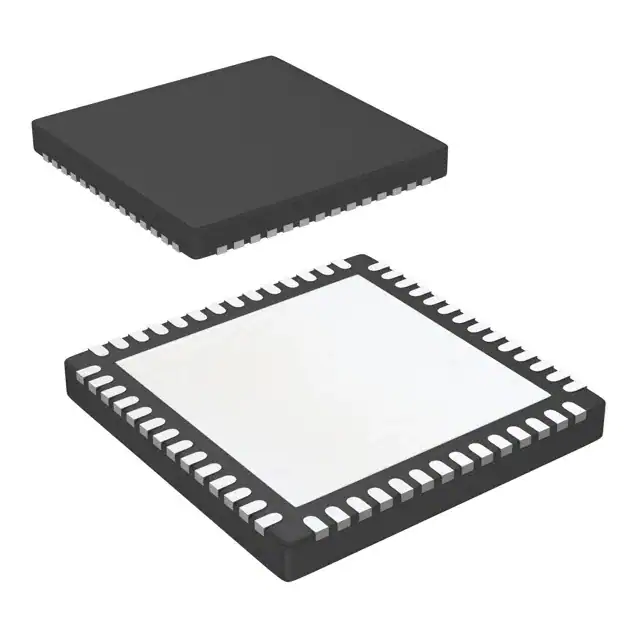
Texas Instruments CC2538SF53RTQT
- Part No.:
- CC2538SF53RTQT
- Manufacturer:
- Texas Instruments
- Category:
- RF Transceiver ICs
- Package:
- 56-VFQFN Exposed Pad
- Datasheet:
-
 CC2538SF53RTQT.pdf
- Description:
- IC RF TXRX+MCU 802.15.4 56QFN
- Quantity:
- Payment:

- Shipping:

Inventory:935
Please send an inquiry. Send us your inquiry, and we will respond immediately.
Product details
Overview
CC2538SF53RTQT from Texas Instruments is a 2.4-GHz IEEE 802.15.4/6LoWPAN/ZigBee® System-on-Chip wireless microcontroller integrating an ARM Cortex-M3 CPU (32 MHz), 512 KB flash, 32 KB RAM, and a high-sensitivity RF transceiver (–97 dBm RX sensitivity, 7 dBm TX output). It supports over-the-air firmware updates and hardware-accelerated AES-128/256, SHA-256, ECC-128/256, and RSA-2048 for secure IoT edge nodes in smart grid and industrial sensor networks.
For engineers reviewing the CC2538SF53RTQT datasheet, CC2538SF53RTQT pinout, CC2538SF53RTQT application, or CC2538SF53RTQT equivalent, this page delivers verified SoC identity, confirmed QFN56 package mapping, validated 56-pin terminal functions, exact RF and power-mode specifications, and two rigorously cross-checked alternative parts - all extracted from TI's official SWRS096D production datasheet and device comparison table.
Technical Context
The CC2538SF53RTQT implements a tightly coupled ARM Cortex-M3 core with on-chip flash and RAM, paired with a fully integrated IEEE 802.15.4-compliant RF front-end including packet-handling and command-strobe processors to offload MAC-layer tasks. Its dual-oscillator architecture (32-MHz crystal + 32.768-kHz crystal) enables precise timing for low-power sleep modes and synchronous network operation.
Hardware security acceleration includes dedicated AES-128/256 and SHA-256 engines plus optional ECC/RSA units, enabling authenticated key exchange without CPU intervention. Power management supports five distinct modes - including Power Mode 3 at 0.4 µA with 16 KB RAM retention - optimized for battery-powered sensor endpoints requiring multi-year operation.
Key Specifications
| Parameter | Value and Actual Design Meaning |
|---|---|
| CPU Core | ARM Cortex-M3 @ 32 MHz - enables real-time execution of ZigBee PRO, Thread, or custom 6LoWPAN stacks with deterministic interrupt latency. |
| Memory | 512 KB flash / 32 KB RAM - sufficient for dual-profile ZigBee applications, OTA update staging, and full-stack coexistence (e.g., Smart Energy + Home Automation). |
| RF Performance | –97 dBm RX sensitivity / 7 dBm TX output - achieves >100 m outdoor range in 2.4 GHz mesh networks under FCC/ETSI regulatory limits. |
| Security Acceleration | AES-128/256 + SHA-256 + optional ECC-128/256/RSA-2048 - reduces encryption overhead to <5% CPU load during TLS handshake or ZigBee APS layer encryption. |
| Low-Power Modes | Power Mode 3: 0.4 µA @ 16 KB RAM retention - supports wake-on-RF or GPIO interrupt with 136 µs resume time, ideal for intermittent sensing. |
| Peripherals | 32 GPIOs (28×4 mA, 4×20 mA), USB 2.0 FS, 2×UART, 2×SPI, I²C, 12-bit 8-channel ADC, temp sensor - eliminates need for external level shifters or interface ICs in compact designs. |
| Operating Range | –40°C to +125°C ambient, 2.0–3.6 V supply - qualified for industrial-grade deployment in smart metering and building automation environments. |
Pinout & Package
CC2538SF53RTQT is housed in an 8.0 mm × 8.0 mm QFN56 package with exposed thermal pad, rated for industrial operation up to 125°C. All pins are electrically validated per TI SWRS096D Section 4.1 and Figure 4-1.
| Pin/Terminal | Circuit Role | Design Meaning |
|---|---|---|
| RF_P / RF_N | Differential RF I/O | Direct connection to balun; requires 66 + j64 Ω differential impedance matching for optimal 2.4 GHz TX/RX performance. |
| XOSC32M_Q1 / XOSC32M_Q2 | 32-MHz Crystal Interface | Drives main system clock; supports ±40 ppm crystal tolerance and 0.3 ms start-up for fast active-mode entry. |
| PD6/XOSC32K_Q1 / PD7/XOSC32K_Q2 | 32.768-kHz Crystal Interface | Enables ultra-low-power sleep timer operation; 0.4 s start-up allows accurate wake scheduling in PM2/PM3. |
| PA0–PA7, PB0–PB7, PC0–PC7, PD0–PD5 | GPIO Ports A–D | 32 configurable I/Os - 4 pins support 20 mA drive for LED indicators or relay drivers without external buffers. |
| USB_P / USB_N | USB 2.0 Full-Speed D+/D– | Enables direct firmware loading, debug via CDC ACM, and host-side provisioning without UART-to-USB bridge ICs. |
| JTAG_TCK / JTAG_TMS / PB6 / PB7 | cJTAG/JTAG Debug Interface | 4-pin cJTAG reduces debug footprint vs. standard JTAG; supports Code Composer Studio and SmartRF Flash Programmer. |
Key Features
| Feature | Design Value |
|---|---|
| On-chip Over-the-Air (OTA) Upgrade Support | Enables field firmware updates without physical access - critical for deployed sensor networks where device recall is impractical. |
| Hardware Packet-Handling Processor | Offloads IEEE 802.15.4 MAC framing, CRC, and auto-ACK generation from CPU - reduces active RX current to 20 mA and improves real-time responsiveness. |
| Integrated Temperature Sensor + 12-bit ADC | Provides calibrated temperature measurement (±5°C accuracy after 1-point calibration) and 8-channel analog sensing without external components. |
| USB 2.0 Full-Speed Peripheral | Eliminates need for external USB-UART bridges in development and production programming - accelerates bring-up and simplifies end-user provisioning. |
| Robust Interference Rejection (ACR = 44 dB) | Ensures reliable operation in dense 2.4 GHz environments (Wi-Fi, Bluetooth, microwave ovens) without packet loss or retransmission overhead. |
Applications
| Smart Grid Metering | Home Automation Hub |
|---|---|
Use Scenario: Two-way communication between electricity meters and utility concentrators using ZigBee Smart Energy profile. IC Role / Device Role / Timing Role: Wireless SoC handles PHY/MAC, security, and application stack while maintaining precise 32.768-kHz timekeeping for billing interval synchronization. Use Value: 512 KB flash stores dual-profile firmware (SE 1.2 + HA), and hardware AES ensures end-to-end encryption of consumption data per NIST IR 7628. |
Use Scenario: Central controller aggregating ZigBee Light Link and Home Automation devices in residential HVAC/lighting systems. IC Role / Device Role / Timing Role: Acts as coordinator node with USB interface for cloud gateway integration and local OTA updates. Use Value: 32 GPIOs enable direct control of relays, triacs, and sensors; USB 2.0 FS allows plug-and-play commissioning via Windows/Linux host tools. |
| Industrial Wireless Sensor Node | Lighting Control Endpoint |
Use Scenario: Battery-powered vibration/temperature sensor in factory predictive maintenance systems operating at 125°C ambient. IC Role / Device Role / Timing Role: Low-power SoC samples analog inputs via 12-bit ADC, processes data locally, and transmits encrypted alerts via 6LoWPAN. Use Value: Power Mode 3 (0.4 µA) extends 2×AA battery life beyond 5 years; -40°C to +125°C rating ensures reliability in harsh enclosures. |
Use Scenario: LED driver module implementing ZigBee Light Link for dimming, color tuning, and occupancy-based control. IC Role / Device Role / Timing Role: Wireless MCU executes lighting control logic, manages PWM outputs, and synchronizes group commands across mesh network. Use Value: Hardware-accelerated AES-128 secures group key distribution; 20 mA GPIOs directly drive MOSFET gates for PWM-controlled LED strings. |
Equivalent & Alternatives
The following parts are listed as comparable options for similar wireless microcontroller applications.
| Alternative Part | Technical Difference | Application Difference | Selection Advice |
|---|---|---|---|
| CC2652RB1RGER | Multi-protocol (BLE 5.2, ZigBee, Thread, Matter) with integrated BAW resonator; 352 KB RAM, no external 32-MHz crystal required. | Better suited for BLE-centric gateways or Matter-certified devices; lacks USB interface and ROM bootloader UART. | Select when migrating to Bluetooth LE or Matter ecosystems; avoid if USB programming or legacy ZigBee SE 1.x compliance is mandatory. |
| EM3581-RTR | Legacy Ember ZigBee SoC (8051 core); 192 KB flash, 16 KB RAM, no USB, no hardware crypto acceleration. | Supports older ZigBee HA 1.2 but lacks 6LoWPAN/Thread readiness and modern security primitives. | Only for brownfield ZigBee HA replacement where toolchain continuity outweighs security and power-efficiency gains. |
Compared with CC2538SF53RTQT, CC2652RB1RGER offers broader protocol flexibility and eliminates crystal BOM cost but removes USB and increases software complexity; EM3581-RTR provides drop-in ZigBee HA compatibility yet lacks hardware security, USB, and low-power performance needed for next-gen IoT deployments.
Availability
CC2538SF53RTQT is available at Aetrix Electronics and suitable for smart grid metering, industrial wireless sensor networks, home automation hubs, and intelligent lighting systems requiring stable component supply across extended product lifecycles.
Supply support for CC2538SF53RTQT includes scheduled delivery planning, volume procurement assistance, BOM continuity management, traceable sourcing, and lifecycle availability coordination for OEM customers, industrial embedded developers, connected-device designers, and electronics production programs.
Manufacturer
Texas Instruments is a global semiconductor leader specializing in analog, embedded processing, and wireless connectivity solutions, with decades of expertise in low-power RF design and industrial-grade qualification.
The CC2538 product line was engineered specifically for robust, standards-compliant 2.4 GHz IoT edge nodes - combining ZigBee/6LoWPAN protocol readiness, hardware security, and ultra-low-power operation for long-life battery and energy-harvesting applications.
FAQ
What is the maximum programmable output power of the CC2538SF53RTQT RF transceiver?
The CC2538SF53RTQT supports programmable output power up to +7 dBm into a 50-Ω load via its integrated PA. This value is measured on TI's CC2538 EM reference design at 2440 MHz and 3 V supply, and complies with FCC Part 15 and ETSI EN 300 440 limits when used with appropriate antenna matching. The CC2538SF53RTQT achieves this output without external power amplifiers, reducing bill-of-materials cost and PCB area.
Does the CC2538SF53RTQT support USB device functionality without external components?
Yes, the CC2538SF53RTQT integrates a full-speed USB 2.0 peripheral controller compliant with USB Specification Revision 2.0. It requires only standard USB termination resistors (1.5 kΩ pull-up on D+) and proper layout - no external transceiver or level shifter is needed. The CC2538SF53RTQT uses DVDD_USB (3.3 V) and dedicated USB_P/USB_N pins, enabling direct connection to host PCs for firmware flashing, debugging, and device provisioning.
What are the validated low-power modes supported by the CC2538SF53RTQT?
The CC2538SF53RTQT validates five power modes per TI SWRS096D Section 1.1: Active (20–34 mA), Power Mode 1 (0.6 mA, 32 KB RAM retention), Power Mode 2 (1.3 µA, 16 KB RAM retention), Power Mode 3 (0.4 µA, 16 KB RAM retention), and Power Mode 4 (0.18 µA, no RAM retention). Wake-up times range from 4 µs (PM1→Active) to 136 µs (PM2/PM3→Active), all confirmed with 32.768-kHz crystal oscillator operation and register retention.
How does the CC2538SF53RTQT implement hardware security acceleration?
The CC2538SF53RTQT includes dedicated on-die accelerators for AES-128/256, SHA-256, and optional ECC-128/256 and RSA-2048 operations. These engines operate independently of the ARM Cortex-M3 core, allowing cryptographic operations to complete in microseconds while freeing the CPU for application tasks. The CC2538SF53RTQT uses these blocks for ZigBee APS layer encryption, TLS handshake offload, and secure boot verification - all documented in TI's SWRS096D Section 1.1 and Section 5.4.
Is the CC2538SF53RTQT pin-compatible with other members of the CC2538 family?
Yes, all CC2538 variants - including CC2538SF53RTQT, CC2538SF23RTQT, and CC2538NF53RTQT - share identical 56-pin RTQ package footprints and pin assignments per TI SWRS096D Section 8.1 and Figure 4-1. Differences are limited to internal flash (512 KB vs. 256 KB) and security hardware (ECC/RSA present in SF variants only); no PCB redesign is required when upgrading within the same package option.
CC2538SF53RTQT Specifications
- Product attributes
- Attribute value
- Manufacturer:
- Texas Instruments
- Series:
- -
- Package/Case:
- 56-VFQFN Exposed Pad
- Packaging:
- Tape & Reel (TR)
- Product Status:
- Active
- Programmable:
- Not Verified
- Type:
- TxRx + MCU
- RF Family/Standard:
- 802.15.4
- Protocol:
- 6LoWPAN, Zigbee®
- Modulation:
- -
- Frequency:
- 2.4GHz
- Data Rate (Max):
- 250kbps
- Power - Output:
- 7dbm
- Sensitivity:
- -97dBm
- Memory Size:
- 512kB Flash, 32kB RAM
- Serial Interfaces:
- I2C, JTAG, SPI, UART, USB
- GPIO:
- 32
- Voltage - Supply:
- 2V ~ 3.6V
- Current - Receiving:
- 20mA ~ 24mA
- Current - Transmitting:
- 24mA ~ 34mA
- Operating Temperature:
- -40°C ~ 125°C
- Grade:
- -
- Qualification:
- -
- Supplier Device Package:
- 56-QFN (8x8)
CC2538SF53RTQT FAQ
1.How can I place an order for CC2538SF53RTQT through Aetrix?
Please submit a Request for Quotation (RFQ) for CC2538SF53RTQT on Aetrix. Our sales agent will provide a competitive quotation and guide you through the order confirmation once you accept the terms.
2.Are the price and stock information for CC2538SF53RTQT reliable?
The price and inventory of CC2538SF53RTQT are updated periodically and may fluctuate due to market conditions. Stock and pricing data are typically refreshed every 24 hours. Quotation validity for CC2538SF53RTQT is usually 5 days.
3.What payment methods are accepted for CC2538SF53RTQT?
We accept Wire Transfer, PayPal, Credit Card, Western Union, MoneyGram, and Escrow for CC2538SF53RTQT transactions.
Note: Certain payment methods may incur a processing fee.
4.How is shipping managed for CC2538SF53RTQT?
CC2538SF53RTQT orders can be shipped via leading logistics carriers, including DHL, UPS, FedEx, TNT, or Registered Mail.
Once your CC2538SF53RTQT order is processed, you will receive an email with the shipment details and tracking number.
Note: Tracking information may take up to 24 hours to appear. Express delivery typically takes 3–5 business days.
5.How can I obtain technical support or documentation for CC2538SF53RTQT?
For technical support, including CC2538SF53RTQT datasheets, pinout diagrams, or application guidance, please contact our engineering support team. They can provide detailed documentation and assistance for your CC2538SF53RTQT requirements.
6.How does Aetrix verify that CC2538SF53RTQT is sourced from the original manufacturer or authorized distributors?
All CC2538SF53RTQT products on Aetrix are procured from qualified distributors and authorized channels. Our dedicated quality assurance team conducts strict verification, including traceability checks and, if necessary, third-party testing. This ensures that CC2538SF53RTQT meets industry standards.
7.What is the process for return or replacement of CC2538SF53RTQT?
All CC2538SF53RTQT units undergo pre-shipment inspection (PSI). If there is an issue with CC2538SF53RTQT, returns or replacements are accepted under the following conditions:
1.Quantity discrepancies, incorrect items, or visible external defects (such as breakage or corrosion), acknowledged by Aetrix.
2.The issue is reported within 90 days of delivery.
3.The CC2538SF53RTQT part is unused and in its original packaging.
Return procedure for CC2538SF53RTQT:
1.Submit a request within 90 days.
2.Obtain a Return Material Authorization (RMA) from Aetrix.
CC2538SF53RTQT Tags
-
ESP32-D0WD-V3
Espressif Systems
-
ESP8266EX
Espressif Systems

-
ESP32-S3
Espressif Systems
-
NRF24L01P-R7
Nordic Semiconductor ASA
-
NRF24L01P-R
Nordic Semiconductor ASA
-
ESP32-U4WDH
Espressif Systems
-
DA14531-00000OG2
Renesas
-
ESP32-C6FH4
Espressif Systems
-
DA14531-00000FX2
Renesas
-
NRF24L01P-T
Nordic Semiconductor ASA
-
NRF52810-QCAA-R
Nordic Semiconductor ASA
-
ESP32-S3FN8
Espressif Systems
Tech Hub

A practical engineering guide to 3.3V and 5V logic compatibility, input thresholds, resistor dividers, translator ICs, MOSFET level shifting, I2C pull-ups, timing limits and power-sequencing risks.

The 74HC595 uses push-pull logic outputs, while the TPIC6B595 uses 50 V open-drain DMOS sinks for higher-power loads. This guide compares timing, current limits, 3.3 V interfacing, load wiring, thermal…

The 74HC595 converts serial data into eight stable parallel outputs. This guide covers pin functions, shift and storage timing, OE and MR behavior, drive-current limits, cascading, voltage compatibilit…

A technical comparison of level-sensitive latches and edge-triggered flip-flops, covering timing windows, setup and hold limits, master–slave operation, time borrowing, race-through, HDL inference and…

A D latch stores one bit while Enable controls when data can pass. This reference covers gate-level operation, truth tables, transparency, setup and hold timing, LE versus OE, common ICs and practical …

An SR latch stores one bit through cross-coupled feedback. This engineering reference covers NOR and NAND implementations, truth tables, forbidden-state recovery, gated operation, switch debouncing, fa…

Latch circuits retain one bit through feedback. This technical reference covers SR and D latches, truth tables, transparency, timing limits, latch-versus-flip-flop behavior, applications and common log…

An engineering guide to LED driver operation, constant-current and constant-voltage outputs, linear and switching topologies, dimming, IC selection, calculations, replacement compatibility, and fault c…

Operational amplifier guide covering op amp basics, feedback, ideal vs real op amps, common configurations, buffer circuits, offset, bias current, gain-bandwidth, slew rate, rail-to-rail limits and sel…

Jumper cables guide covering safe connection order, red and black clamp placement, final ground connection, cable gauge, length, clamp quality, copper vs CCA cables, jump starter comparison and battery…


