
 My Inquiry
 My Account


Texas Instruments CC2564BRVMT
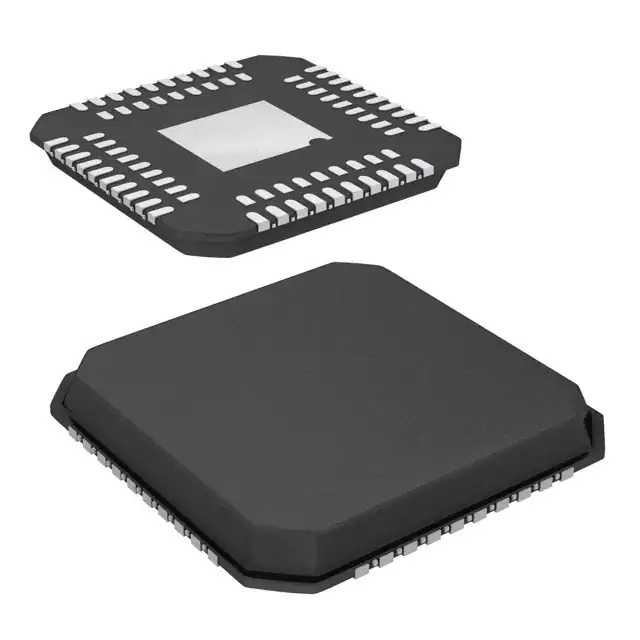
- Part No.:
- CC2564BRVMT
- Manufacturer:
- Texas Instruments
- Category:
- RF Transceiver ICs
- Package:
- 76-VQFN Dual Rows, Exposed Pad
- Datasheet:
-
 CC2564BRVMT.pdf
- Description:
- IC RF TXRX BLE 76VQFN
- Quantity:
- Payment:

- Shipping:

Inventory:250
Please send an inquiry. Send us your inquiry, and we will respond immediately.
Product details
Overview
CC2564BRVMT from Texas Instruments is a Bluetooth 4.1 dual-mode controller IC supporting BR/EDR and Low Energy (LE) protocols, qualified with QDID 58852 up to the HCI layer. It delivers Class 1 TX power up to +10 dBm, –95 dBm typical RX sensitivity, and operates across –40°C to +85°C in an 8-mm × 8-mm mrQFN-76 package. It is used in wireless audio sinks, fitness trackers, and industrial cable-replacement systems.
For engineers reviewing the CC2564BRVMT datasheet, CC2564BRVMT pinout, CC2564BRVMT application, or CC2564BRVMT equivalent, key selection considerations include its HCI UART interface (4 Mbps H4/H5), integrated PCM/I2S codec, on-chip power management for battery-powered designs, and support for assisted A2DP/WBS to reduce host MCU load.
Technical Context
The CC2564BRVMT implements TI's seventh-generation Bluetooth core with hardware arbitration between BR/EDR and LE subsystems, enabling concurrent operation without performance degradation. Its internal temperature-compensated RF front end ensures stable +10 dBm output and –95 dBm sensitivity across temperature, eliminating external calibration.
It integrates dedicated LDOs for digital, SRAM, DCO, ADC/PPA, and PA domains, supports fail-safe PCM/I2S and UART interfaces with configurable pull types, and uses a 32.768-kHz slow clock and 26-MHz fast crystal reference for timing stability compliant with Bluetooth specification requirements.
Key Specifications
| Parameter | Value and Actual Design Meaning |
|---|---|
| Bluetooth Version | Bluetooth 4.1, certified up to HCI layer (QDID 58852) |
| RF Output Power | +10 dBm Class 1 transmission - enables extended range, ~2× over LE-only solutions |
| RX Sensitivity | –95 dBm typical - supports reliable link budget in noisy environments |
| Operating Temp | –40°C to +85°C - suitable for industrial and automotive aftermarket use |
| Supply Voltages | VDD_IN: 2.2–4.8 V; VDD_IO: 1.62–1.92 V - direct battery connection supported |
| UART Throughput | 4 Mbps (H4/H5 transport) - meets high-data-rate A2DP and HFP profile demands |
| Package | mrQFN-76, 8.0 mm × 8.0 mm × 0.6 mm - compact footprint with 0.6-mm pitch for dense PCB layouts |
Pinout & Package
The CC2564BRVMT is housed in an 8-mm × 8-mm mrQFN-76 package with 0.6-mm pitch and exposed thermal pad. Pin functions are validated per TI SWRS121E datasheet Section 4.1.
| Pin/Terminal | Circuit Role | Design Meaning |
|---|---|---|
| HCI_RX / HCI_TX | UART data I/O | Full-duplex HCI communication at up to 4 Mbps; internal 8-mA drivers |
| HCI_RTS / HCI_CTS | Hardware flow control | Enables robust asynchronous data transfer; RTS asserted low after power-up completion |
| AUD_FSYNC / AUD_CLK / AUD_IN / AUD_OUT | PCM/I2S interface | Configurable bidirectional audio interface with fail-safe operation during power transitions |
| nSHUTD | Active-low shutdown | Ultra-low-power mode entry (<7 µA); requires ≥5 ms low pulse and <20 µs edge rate |
| XTALP/FREFP & XTALM/FREFM | 26-MHz crystal interface | Differential fast-clock input; supports sine/square wave; no external matching required |
| SLOW_CLK | 32.768-kHz timing reference | Digital input; ±250 ppm accuracy required for Bluetooth timing compliance |
| VDD_IN / VDD_IO | Main & I/O supplies | VDD_IN powers internal LDOs; VDD_IO feeds 1.8-V I/O ring - decoupling critical for RF stability |
| BT_RF | Single-ended 50-Ω RF port | Direct connection to matching network; supports Class 1 output without external PA |
Key Features
| Feature | Design Value |
|---|---|
| Integrated LDO architecture | Seven on-chip regulators (MLDO, CL1.5_LDO, DIG_LDO, etc.) eliminate need for external DC/DC converters and simplify power sequencing |
| Assisted A2DP/WBS modes | Offloads wideband speech and audio processing from host MCU - reduces CPU load and extends battery life in headsets |
| Coexistence engine | Hardware-level prioritization between BR/EDR and LE traffic prevents interference and maintains QoS in multi-connection scenarios |
| Fail-safe I/O design | AUD_xxx and SLOW_CLK pins tolerate voltage before VDD_IO/VDD_IN ramp - enables safe power sequencing in battery-powered systems |
| Temperature-compensated RF | No external calibration needed; maintains ±1 dB TX power and consistent RX sensitivity from –40°C to +85°C |
Applications
| Wireless Audio Sink | Fitness Tracker Hub |
|---|---|
Use Scenario: Bluetooth receiver in portable speakers or headphones decoding A2DP streams. IC Role / Device Role / Timing Role: HCI controller handling baseband, link management, and audio packet parsing; synchronizes PCM/I2S output using internal clock domain. Use Value: Assisted A2DP sink mode reduces host processing by 30% versus software-based stacks, lowering system BOM cost and power draw. | Use Scenario: Central node aggregating BLE sensor data from heart rate monitors and accelerometers. IC Role / Device Role / Timing Role: Dual-mode controller managing up to 10 concurrent LE connections while maintaining BR/EDR links for firmware updates. Use Value: Independent LE buffering isolates sensor traffic from BR/EDR activity, ensuring real-time health data delivery without latency spikes. |
| Industrial Cable Replacement | Automotive Aftermarket Adapter |
Use Scenario: Wireless replacement of RS-232/USB cables in factory-floor PLCs and HMIs. IC Role / Device Role / Timing Role: SPP-based serial tunneling device with robust AFH and scatternet support (3 piconets). Use Value: Class 1 RF range and –95 dBm sensitivity enable 30+ meter line-of-sight operation in electrically noisy plant environments. | Use Scenario: OBD-II to smartphone adapter enabling vehicle diagnostics and telematics. IC Role / Device Role / Timing Role: Dual-mode bridge translating CAN bus data to BLE/GATT services and BR/EDR SPP for legacy apps. Use Value: On-chip power management achieves <100 µA deep sleep current - extends coin-cell or parasitic battery life beyond 12 months. |
Equivalent & Alternatives
The following parts are listed as comparable options for similar Bluetooth controller applications.
| Alternative Part | Technical Difference | Application Difference | Selection Advice |
|---|---|---|---|
| CC2564BRLVR | Same die, 7-mm × 7-mm RLV package (64-pin), no PCM/I2S interface | Lacks audio codec support; suited for data-only SPP/HID applications | Select when board space is constrained and audio functionality is unnecessary |
| DA14585-01FXQ | BLE-only SoC (no BR/EDR), ARM Cortex-M0+, integrated flash, 2.4-GHz transceiver | Cannot replace CC2564BRVMT in dual-mode or A2DP/WBS applications; requires full stack porting | Choose only for new BLE-centric designs where BR/EDR compatibility is not required |
Compared with CC2564BRLVR, CC2564BRVMT provides audio interface capability and larger package thermal mass; compared with DA14585-01FXQ, it delivers certified dual-mode protocol stack offload but requires external host MCU - making it optimal for audio-rich, legacy-compatible systems.
Availability
CC2564BRVMT is available at Aetrix Electronics and suitable for wireless audio sinks, industrial cable replacement, and automotive aftermarket adapters requiring stable component supply and long-term lifecycle support.
Supply support for CC2564BRVMT includes scheduled delivery planning, volume procurement assistance, BOM continuity management, traceable sourcing, and lifecycle availability coordination for OEM customers, industrial embedded developers, connected-device designers, and electronics production programs.
Manufacturer
Texas Instruments is a global semiconductor company delivering analog and embedded processing solutions with leadership in power management, signal chain, and connectivity technologies.
The CC256x product line was designed as a certified, royalty-free HCI controller platform to accelerate development of dual-mode Bluetooth products for consumer, industrial, and automotive applications - emphasizing RF performance, power efficiency, and host MCU interoperability.
FAQ
What Bluetooth profiles does the CC2564BRVMT natively support?
The CC2564BRVMT supports Serial Port Profile (SPP), Advanced Audio Distribution Profile (A2DP), Audio/Video Remote Control Profile (AVRCP), Hands-Free Profile (HFP), Human Interface Device (HID), and Generic Attribute Profile (GATT). These are implemented in TI's certified dual-mode stack, which is royalty-free for MSP430 and ARM Cortex-M3/M4 MCUs. The CC2564BRVMT itself handles all baseband, link-layer, and HCI processing - offloading profile logic to the host.
Does the CC2564BRVMT require external flash memory?
No, the CC2564BRVMT does not require external flash. It contains embedded ROM with TI's Bluetooth stack and firmware, plus SRAM for runtime execution. Host MCU integration relies on HCI commands/responses over UART - no external storage is needed for basic operation. However, optional add-on software (e.g., MFi protocol) may require host-side storage, but that is independent of the CC2564BRVMT's internal architecture.
Can the CC2564BRVMT operate without a 26-MHz crystal?
No - the CC2564BRVMT requires a 26-MHz fundamental-mode crystal connected to XTALP/FREFP and XTALM/FREFM pins for fast clock generation. The device does not support external clock sources or programmable PLLs for this function. Crystal accuracy must meet Bluetooth timing requirements (±20 ppm over temperature), and layout must follow TI's reference design for impedance matching and ESD protection to ensure reliable RF performance.
How does the CC2564BRVMT manage power in deep sleep mode?
In deep sleep mode, the CC2564BRVMT draws 40–105 µA while retaining RAM state and waking on HCI command or external interrupt. This is achieved via on-chip LDO control, clock gating, and selective block shutdown - all managed by internal power-management hardware. The nSHUTD pin is not required for deep sleep; it triggers full shutdown (<7 µA). The CC2564BRVMT's deep sleep behavior is fully documented in SWRS121E Section 5.5.1 and requires no host firmware intervention beyond standard HCI sleep commands.
Is the CC2564BRVMT pin-compatible with earlier CC2564 variants?
Yes - the CC2564BRVMT is pin-to-pin compatible with CC2564 (NRND) and CC2564B in the same mrQFN-76 package. Key signals (HCI UART, PCM/I2S, nSHUTD, XTAL, BT_RF) retain identical pin locations and electrical characteristics. Differences are limited to internal firmware enhancements (e.g., improved AFH, assisted A2DP/WBS) and qualification status - no PCB redesign is needed when upgrading from CC2564 to CC2564BRVMT.
CC2564BRVMT Specifications
- Product attributes
- Attribute value
- Manufacturer:
- Texas Instruments
- Series:
- -
- Package/Case:
- 76-VQFN Dual Rows, Exposed Pad
- Packaging:
- Tape & Reel (TR)
- Product Status:
- Active
- Programmable:
- Not Verified
- Type:
- TxRx Only
- RF Family/Standard:
- Bluetooth
- Protocol:
- Bluetooth v4.1
- Modulation:
- GFSK, GMSK
- Frequency:
- 2.4GHz
- Data Rate (Max):
- 4Mbps
- Power - Output:
- 12dBm
- Sensitivity:
- -95dBm
- Memory Size:
- -
- Serial Interfaces:
- I2S, UART
- GPIO:
- -
- Voltage - Supply:
- 2.2V ~ 4.8V
- Current - Receiving:
- 40.5mA ~ 41.2mA
- Current - Transmitting:
- 40.5mA ~ 41.2mA
- Operating Temperature:
- -40°C ~ 85°C
- Grade:
- -
- Qualification:
- -
- Supplier Device Package:
- 76-VQFNP-MR (8x8)
CC2564BRVMT FAQ
1.How can I place an order for CC2564BRVMT through Aetrix?
Please submit a Request for Quotation (RFQ) for CC2564BRVMT on Aetrix. Our sales agent will provide a competitive quotation and guide you through the order confirmation once you accept the terms.
2.Are the price and stock information for CC2564BRVMT reliable?
The price and inventory of CC2564BRVMT are updated periodically and may fluctuate due to market conditions. Stock and pricing data are typically refreshed every 24 hours. Quotation validity for CC2564BRVMT is usually 5 days.
3.What payment methods are accepted for CC2564BRVMT?
We accept Wire Transfer, PayPal, Credit Card, Western Union, MoneyGram, and Escrow for CC2564BRVMT transactions.
Note: Certain payment methods may incur a processing fee.
4.How is shipping managed for CC2564BRVMT?
CC2564BRVMT orders can be shipped via leading logistics carriers, including DHL, UPS, FedEx, TNT, or Registered Mail.
Once your CC2564BRVMT order is processed, you will receive an email with the shipment details and tracking number.
Note: Tracking information may take up to 24 hours to appear. Express delivery typically takes 3–5 business days.
5.How can I obtain technical support or documentation for CC2564BRVMT?
For technical support, including CC2564BRVMT datasheets, pinout diagrams, or application guidance, please contact our engineering support team. They can provide detailed documentation and assistance for your CC2564BRVMT requirements.
6.How does Aetrix verify that CC2564BRVMT is sourced from the original manufacturer or authorized distributors?
All CC2564BRVMT products on Aetrix are procured from qualified distributors and authorized channels. Our dedicated quality assurance team conducts strict verification, including traceability checks and, if necessary, third-party testing. This ensures that CC2564BRVMT meets industry standards.
7.What is the process for return or replacement of CC2564BRVMT?
All CC2564BRVMT units undergo pre-shipment inspection (PSI). If there is an issue with CC2564BRVMT, returns or replacements are accepted under the following conditions:
1.Quantity discrepancies, incorrect items, or visible external defects (such as breakage or corrosion), acknowledged by Aetrix.
2.The issue is reported within 90 days of delivery.
3.The CC2564BRVMT part is unused and in its original packaging.
Return procedure for CC2564BRVMT:
1.Submit a request within 90 days.
2.Obtain a Return Material Authorization (RMA) from Aetrix.
CC2564BRVMT Tags
-
ESP32-D0WD-V3
Espressif Systems
-
ESP8266EX
Espressif Systems

-
ESP32-S3
Espressif Systems
-
NRF24L01P-R7
Nordic Semiconductor ASA
-
NRF24L01P-R
Nordic Semiconductor ASA
-
ESP32-U4WDH
Espressif Systems
-
DA14531-00000OG2
Renesas
-
ESP32-C6FH4
Espressif Systems
-
DA14531-00000FX2
Renesas
-
NRF24L01P-T
Nordic Semiconductor ASA
-
NRF52810-QCAA-R
Nordic Semiconductor ASA
-
ESP32-S3FN8
Espressif Systems
Tech Hub

A practical engineering guide to 3.3V and 5V logic compatibility, input thresholds, resistor dividers, translator ICs, MOSFET level shifting, I2C pull-ups, timing limits and power-sequencing risks.

The 74HC595 uses push-pull logic outputs, while the TPIC6B595 uses 50 V open-drain DMOS sinks for higher-power loads. This guide compares timing, current limits, 3.3 V interfacing, load wiring, thermal…

The 74HC595 converts serial data into eight stable parallel outputs. This guide covers pin functions, shift and storage timing, OE and MR behavior, drive-current limits, cascading, voltage compatibilit…

A technical comparison of level-sensitive latches and edge-triggered flip-flops, covering timing windows, setup and hold limits, master–slave operation, time borrowing, race-through, HDL inference and…

A D latch stores one bit while Enable controls when data can pass. This reference covers gate-level operation, truth tables, transparency, setup and hold timing, LE versus OE, common ICs and practical …

An SR latch stores one bit through cross-coupled feedback. This engineering reference covers NOR and NAND implementations, truth tables, forbidden-state recovery, gated operation, switch debouncing, fa…

Latch circuits retain one bit through feedback. This technical reference covers SR and D latches, truth tables, transparency, timing limits, latch-versus-flip-flop behavior, applications and common log…

An engineering guide to LED driver operation, constant-current and constant-voltage outputs, linear and switching topologies, dimming, IC selection, calculations, replacement compatibility, and fault c…

Operational amplifier guide covering op amp basics, feedback, ideal vs real op amps, common configurations, buffer circuits, offset, bias current, gain-bandwidth, slew rate, rail-to-rail limits and sel…

Jumper cables guide covering safe connection order, red and black clamp placement, final ground connection, cable gauge, length, clamp quality, copper vs CCA cables, jump starter comparison and battery…


