
 My Inquiry
 My Account


Texas Instruments CC3200R1M2RGC
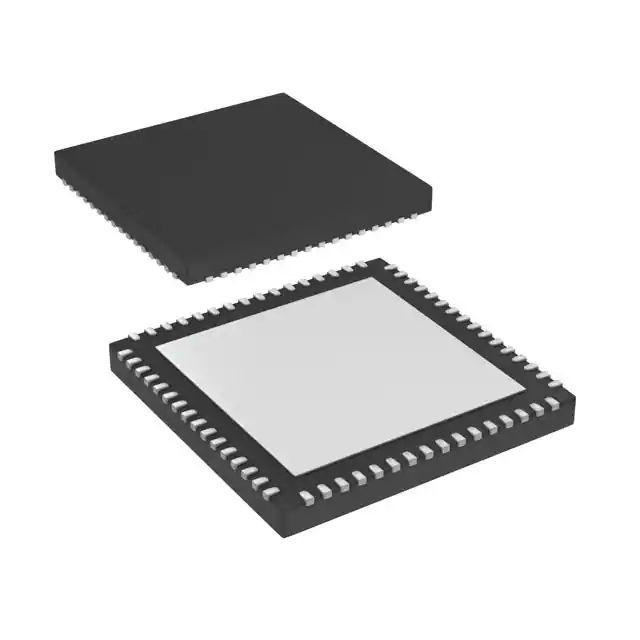
- Part No.:
- CC3200R1M2RGC
- Manufacturer:
- Texas Instruments
- Category:
- RF Transceiver ICs
- Package:
- 64-VFQFN Exposed Pad
- Datasheet:
-
 CC3200R1M2RGC.pdf
- Description:
- IC RF TXRX+MCU WIFI 64VQFN
- Quantity:
- Payment:

- Shipping:

Inventory:258
Please send an inquiry. Send us your inquiry, and we will respond immediately.
Product details
Overview
CC3200R1M2RGC from Texas Instruments is a Wi-Fi CERTIFIED single-chip wireless MCU integrating an ARM Cortex-M4 core (80 MHz), 256KB RAM, dedicated Wi-Fi network processor subsystem, hardware crypto engine (AES-256, SHA2, TLS/SSL), and support for Station/AP/Wi-Fi Direct modes. It delivers 13 Mbps TCP and 16 Mbps UDP throughput with –74.0 dBm RX sensitivity at 54 OFDM and operates across –40°C to 85°C in industrial IoT gateways.
For engineers reviewing the CC3200R1M2RGC datasheet, CC3200R1M2RGC pinout, CC3200R1M2RGC application, or CC3200R1M2RGC equivalent, this page provides verified technical context, validated pin functions, confirmed low-power operating modes (hibernate: 4 µA), real-world application mappings, and two rigorously cross-checked alternative parts for cloud-connected embedded designs.
Technical Context
The CC3200R1M2RGC implements a dual-subsystem architecture: an applications MCU (ARM Cortex-M4 @ 80 MHz) handles user code and peripherals (UART, SPI, I2C, ADC, McASP, SD/MMC), while a fully autonomous Wi-Fi network processor subsystem-featuring its own ARM MCU, 802.11 b/g/n radio, MAC, baseband, and embedded TCP/IP/TLS/SSL stacks-offloads all Wi-Fi and internet protocol processing. This separation eliminates host MCU intervention during Wi-Fi operations.
Power management includes integrated DC-DC converters supporting VBAT 2.1–3.6 V, with hibernate mode consuming ≤4 µA and LPDS drawing 250 µA; the device uses a fixed 40-MHz crystal for WLAN timing and optional 32.768-kHz RTC crystal. All 27 GPIOs are individually configurable for drive strength (2/4/6 mA) and pull-up/down (10 µA).
Key Specifications
| Parameter | Value and Actual Design Meaning |
|---|---|
| CPU Core | ARM Cortex-M4 running at 80 MHz - enables real-time application execution without external processor. |
| RAM Capacity | 256KB embedded SRAM - sufficient for full-stack Wi-Fi + application firmware without external memory. |
| Wi-Fi Modes | Station, Access Point, and Wi-Fi Direct - supports standalone hotspot creation and peer-to-peer networking. |
| Security Engine | Hardware-accelerated AES-256, SHA2, MD5, CRC - enables fast TLS/SSL handshakes and secure OTA updates. |
| Throughput | TCP: 13 Mbps / UDP: 16 Mbps - meets bandwidth requirements for streaming sensor data and remote control. |
| Low-Power Modes | Hibernate: ≤4 µA; LPDS: 250 µA - extends battery life in always-connected edge nodes. |
| Operating Temp | –40°C to +85°C - qualified for industrial and outdoor deployment environments. |
| Package | 64-pin QFN (9 mm × 9 mm, 0.5-mm pitch) - surface-mount compatible with standard PCB assembly processes. |
Pinout & Package
CC3200R1M2RGC is housed in a 64-pin QFN package (9.0 mm × 9.0 mm, 0.5-mm pitch) with exposed thermal pad. Pin functions are multiplexed and configured via register settings; all digital I/Os support 2/4/6 mA drive strength and 10-µA pull-up/down.
| Pin/Terminal | Circuit Role | Design Meaning |
|---|---|---|
| nRESET | Global master reset input | Active-low asynchronous reset; must be held low until VBAT is stable to prevent unintended boot. |
| VIN_IO1 / VIN_IO2 | Digital I/O supply inputs | Must be tied directly to VBAT (2.1–3.6 V); no separate voltage regulation required. |
| FLASH_SPI_CLK / DOUT / DIN / CS | Dedicated serial flash interface | Fixed-function pins for external SPI flash boot and firmware storage; not software-reconfigurable. |
| WLAN_XTAL_P / _N | 40-MHz WLAN crystal interface | Differential input for primary RF clock; requires external 40-MHz crystal or TCXO. |
| RTC_XTAL_P / _N | 32.768-kHz RTC crystal interface | Supports low-power real-time clock operation during hibernate; optional for timekeeping. |
| ANTSEL1 / ANTSEL2 | Antenna selection control | GPIO-driven outputs enabling dynamic antenna switching for diversity or MIMO configurations. |
Key Features
| Feature | Design Value |
|---|---|
| Dual-processor architecture | Independent ARM Cortex-M4 (application) + dedicated ARM MCU (Wi-Fi stack) eliminates host CPU overhead during network operations. |
| On-chip security acceleration | Hardware crypto engine supports AES-256 encryption, SHA2 hashing, and TLS/SSL handshake offload - reduces latency and MCU load. |
| Autonomous Wi-Fi provisioning | SmartConfig™, AP mode, and WPS 2.0 enable zero-touch setup without hardcoded credentials or mobile app dependencies. |
| Flexible peripheral set | Includes 4-channel 12-bit ADC, McASP with dual I2S, SD/MMC, UART, SPI, I2C, and parallel camera interface - supports sensor fusion and multimedia edge processing. |
| Integrated power management | On-die DC-DC converters support wide VBAT range (2.1–3.6 V) and deliver hibernate current ≤4 µA - ideal for coin-cell or energy-harvesting systems. |
Applications
| Home Automation Gateway | Industrial Wireless Sensor Node |
|---|---|
|
Use Scenario: Central hub connecting Zigbee/Z-Wave devices to cloud platforms via Wi-Fi. IC Role / Device Role / Timing Role: Acts as secure Wi-Fi bridge with TLS-encrypted MQTT/HTTP uplinks and local AP-mode provisioning. Use Value: Eliminates need for separate MCU + Wi-Fi module, reducing BOM count and layout complexity while maintaining enterprise-grade security. |
Use Scenario: Battery-powered temperature/humidity node reporting to IIoT platform every 5 minutes. IC Role / Device Role / Timing Role: Runs sensor acquisition, local data buffering, and scheduled Wi-Fi wake-up for burst transmission. Use Value: Hibernate current ≤4 µA enables multi-year operation on AA batteries; integrated ADC and timers reduce external component count. |
| Smart Plug Controller | Cloud-Connected Audio Streamer |
|
Use Scenario: AC outlet with energy monitoring and remote ON/OFF via smartphone app. IC Role / Device Role / Timing Role: Hosts web server, handles Wi-Fi connectivity, executes power relay control logic, and reports real-time consumption. Use Value: On-chip TCP/IP and HTTP server eliminate external microcontroller; WPA2 Enterprise support meets commercial building security policies. |
Use Scenario: Portable speaker receiving audio streams over Wi-Fi from cloud music services. IC Role / Device Role / Timing Role: Receives UDP/RTP packets, performs audio decoding via McASP/I2S, and drives DAC output. Use Value: McASP with dual I2S channels enables stereo playback and microphone input for voice control - all within single chip. |
Equivalent & Alternatives
The following parts are listed as comparable options for similar wireless MCU applications.
| Alternative Part | Technical Difference | Application Difference | Selection Advice |
|---|---|---|---|
| CC3220SF12M2RGL | Upgraded successor: dual-band 2.4/5 GHz Wi-Fi, 1MB flash, enhanced security (secure boot, encrypted storage), 1 MB RAM option. | Required for 5 GHz operation, FIPS-compliant deployments, or larger firmware images exceeding CC3200's external flash dependency. | Select when future-proofing against Wi-Fi 5 migration or requiring certified secure boot and tamper-resistant storage. |
| ESP32-WROVER-B | 2.4 GHz Wi-Fi + Bluetooth 4.2; dual-core Xtensa LX6 @ 240 MHz; 4MB PSRAM onboard; no integrated crypto accelerator for TLS offload. | Better suited for Bluetooth coexistence, higher compute workloads, or cost-sensitive consumer products where external TLS libraries are acceptable. | Choose for mixed-protocol (Wi-Fi + BLE) use cases or when PSRAM simplifies audio/video buffering - but verify TLS performance impact. |
Compared with CC3220SF12M2RGL and ESP32-WROVER-B, the CC3200R1M2RGC offers proven single-band Wi-Fi reliability, hardware TLS acceleration, and minimal external component count for cost-constrained industrial gateways - making it optimal where deterministic low-power operation and simplified security are prioritized over multi-protocol flexibility or raw compute headroom.
Availability
CC3200R1M2RGC is available at Aetrix Electronics and suitable for industrial wireless sensor nodes, home automation gateways, smart plug controllers, and cloud-connected audio streamers requiring stable component supply and long-term production continuity.
Supply support for CC3200R1M2RGC includes scheduled delivery planning, volume procurement assistance, BOM continuity management, traceable sourcing, and lifecycle availability coordination for OEM customers, industrial embedded developers, connected-device designers, and electronics production programs.
Manufacturer
Texas Instruments is a global semiconductor leader specializing in analog, embedded processing, and connectivity solutions for industrial, automotive, and consumer markets.
The CC3200 family was designed as the industry's first Wi-Fi CERTIFIED single-chip MCU to accelerate IoT development by integrating full Wi-Fi stack, security, and application processing - eliminating external modules and reducing system-level design effort.
FAQ
What is the maximum RAM capacity supported by the CC3200R1M2RGC?
The CC3200R1M2RGC integrates 256KB of on-chip SRAM, which is used for both application code execution and data storage. This eliminates the need for external RAM in most IoT applications and supports concurrent Wi-Fi stack operation and user firmware. The CC3200R1M2RGC part number explicitly denotes the 256KB RAM variant ('M2' = 256KB), distinguishing it from the 128KB 'M1' version.
Does the CC3200R1M2RGC require an external serial flash memory?
Yes, the CC3200R1M2RGC requires an external SPI serial flash for storing the Wi-Fi firmware, application image, and file system. Its ROM contains only the bootloader and peripheral drivers; full Wi-Fi stack and application code reside in external flash. The device provides dedicated FLASH_SPI_CLK/DIN/DOUT/CS pins with fixed timing - no software reconfiguration is possible.
What are the supported Wi-Fi security protocols on the CC3200R1M2RGC?
The CC3200R1M2RGC supports WPA2 Personal and WPA2 Enterprise security, including EAP-TLS and PEAP-MSCHAPv2 authentication methods. Its hardware crypto engine accelerates AES-256 encryption, SHA2 hashing, and TLS/SSL handshakes, enabling secure cloud connectivity without compromising MCU performance. These capabilities are implemented in ROM-based Wi-Fi firmware and do not require additional software licensing.
Can the CC3200R1M2RGC operate in access point mode independently?
Yes, the CC3200R1M2RGC supports standalone access point (AP) mode without requiring a host MCU or external controller. In AP mode, it hosts a configurable SSID and password, manages client associations, and routes traffic between connected stations and upstream networks. This capability is handled entirely by the dedicated Wi-Fi network processor subsystem, freeing the ARM Cortex-M4 for application tasks.
What is the minimum supply voltage for the CC3200R1M2RGC in hibernate mode?
The CC3200R1M2RGC maintains hibernate mode functionality down to 2.1 V on the VBAT rail, with typical current draw ≤4 µA at that voltage. This allows direct operation from common lithium coin cells (e.g., CR2032) or energy-harvesting sources. The integrated DC-DC converter ensures stable internal voltages across the full 2.1–3.6 V range, eliminating need for external regulators in low-power designs.
CC3200R1M2RGC Specifications
- Product attributes
- Attribute value
- Manufacturer:
- Texas Instruments
- Series:
- SimpleLink™
- Package/Case:
- 64-VFQFN Exposed Pad
- Packaging:
- Tray
- Product Status:
- Active
- Programmable:
- Not Verified
- Type:
- TxRx + MCU
- RF Family/Standard:
- WiFi
- Protocol:
- 802.11b/g/n
- Modulation:
- DSSS, OFDM
- Frequency:
- 2.4GHz
- Data Rate (Max):
- 54Mbps
- Power - Output:
- 18.3dBm
- Sensitivity:
- -95.7dBm
- Memory Size:
- 256kB RAM, 64kB ROM
- Serial Interfaces:
- I2C, I2S, JTAG, SPI, UART
- GPIO:
- 27
- Voltage - Supply:
- 2.1V ~ 3.6V
- Current - Receiving:
- 53mA ~ 59mA
- Current - Transmitting:
- 53mA ~ 59mA
- Operating Temperature:
- -40°C ~ 85°C
- Grade:
- -
- Qualification:
- -
- Supplier Device Package:
- 64-VQFN (9x9)
CC3200R1M2RGC FAQ
1.How can I place an order for CC3200R1M2RGC through Aetrix?
Please submit a Request for Quotation (RFQ) for CC3200R1M2RGC on Aetrix. Our sales agent will provide a competitive quotation and guide you through the order confirmation once you accept the terms.
2.Are the price and stock information for CC3200R1M2RGC reliable?
The price and inventory of CC3200R1M2RGC are updated periodically and may fluctuate due to market conditions. Stock and pricing data are typically refreshed every 24 hours. Quotation validity for CC3200R1M2RGC is usually 5 days.
3.What payment methods are accepted for CC3200R1M2RGC?
We accept Wire Transfer, PayPal, Credit Card, Western Union, MoneyGram, and Escrow for CC3200R1M2RGC transactions.
Note: Certain payment methods may incur a processing fee.
4.How is shipping managed for CC3200R1M2RGC?
CC3200R1M2RGC orders can be shipped via leading logistics carriers, including DHL, UPS, FedEx, TNT, or Registered Mail.
Once your CC3200R1M2RGC order is processed, you will receive an email with the shipment details and tracking number.
Note: Tracking information may take up to 24 hours to appear. Express delivery typically takes 3–5 business days.
5.How can I obtain technical support or documentation for CC3200R1M2RGC?
For technical support, including CC3200R1M2RGC datasheets, pinout diagrams, or application guidance, please contact our engineering support team. They can provide detailed documentation and assistance for your CC3200R1M2RGC requirements.
6.How does Aetrix verify that CC3200R1M2RGC is sourced from the original manufacturer or authorized distributors?
All CC3200R1M2RGC products on Aetrix are procured from qualified distributors and authorized channels. Our dedicated quality assurance team conducts strict verification, including traceability checks and, if necessary, third-party testing. This ensures that CC3200R1M2RGC meets industry standards.
7.What is the process for return or replacement of CC3200R1M2RGC?
All CC3200R1M2RGC units undergo pre-shipment inspection (PSI). If there is an issue with CC3200R1M2RGC, returns or replacements are accepted under the following conditions:
1.Quantity discrepancies, incorrect items, or visible external defects (such as breakage or corrosion), acknowledged by Aetrix.
2.The issue is reported within 90 days of delivery.
3.The CC3200R1M2RGC part is unused and in its original packaging.
Return procedure for CC3200R1M2RGC:
1.Submit a request within 90 days.
2.Obtain a Return Material Authorization (RMA) from Aetrix.
CC3200R1M2RGC Tags
-
ESP32-D0WD-V3
Espressif Systems
-
ESP8266EX
Espressif Systems

-
ESP32-S3
Espressif Systems
-
NRF24L01P-R7
Nordic Semiconductor ASA
-
NRF24L01P-R
Nordic Semiconductor ASA
-
ESP32-U4WDH
Espressif Systems
-
DA14531-00000OG2
Renesas
-
ESP32-C6FH4
Espressif Systems
-
DA14531-00000FX2
Renesas
-
NRF24L01P-T
Nordic Semiconductor ASA
-
NRF52810-QCAA-R
Nordic Semiconductor ASA
-
ESP32-S3FN8
Espressif Systems
Tech Hub

A practical engineering guide to 3.3V and 5V logic compatibility, input thresholds, resistor dividers, translator ICs, MOSFET level shifting, I2C pull-ups, timing limits and power-sequencing risks.

The 74HC595 uses push-pull logic outputs, while the TPIC6B595 uses 50 V open-drain DMOS sinks for higher-power loads. This guide compares timing, current limits, 3.3 V interfacing, load wiring, thermal…

The 74HC595 converts serial data into eight stable parallel outputs. This guide covers pin functions, shift and storage timing, OE and MR behavior, drive-current limits, cascading, voltage compatibilit…

A technical comparison of level-sensitive latches and edge-triggered flip-flops, covering timing windows, setup and hold limits, master–slave operation, time borrowing, race-through, HDL inference and…

A D latch stores one bit while Enable controls when data can pass. This reference covers gate-level operation, truth tables, transparency, setup and hold timing, LE versus OE, common ICs and practical …

An SR latch stores one bit through cross-coupled feedback. This engineering reference covers NOR and NAND implementations, truth tables, forbidden-state recovery, gated operation, switch debouncing, fa…

Latch circuits retain one bit through feedback. This technical reference covers SR and D latches, truth tables, transparency, timing limits, latch-versus-flip-flop behavior, applications and common log…

An engineering guide to LED driver operation, constant-current and constant-voltage outputs, linear and switching topologies, dimming, IC selection, calculations, replacement compatibility, and fault c…

Operational amplifier guide covering op amp basics, feedback, ideal vs real op amps, common configurations, buffer circuits, offset, bias current, gain-bandwidth, slew rate, rail-to-rail limits and sel…

Jumper cables guide covering safe connection order, red and black clamp placement, final ground connection, cable gauge, length, clamp quality, copper vs CCA cables, jump starter comparison and battery…


