
 My Inquiry
 My Account


Texas Instruments CD74HC423M
- Part No.:
- CD74HC423M
- Manufacturer:
- Texas Instruments
- Category:
- Multivibrators
- Package:
- 16-SOIC (0.154", 3.90mm Width)
- Datasheet:
-
 CD74HC423M.pdf
- Description:
- IC MULTIVIBRATOR 25NS 16SOIC
- Quantity:
- Payment:

- Shipping:

Inventory:5,264
Please send an inquiry. Send us your inquiry, and we will respond immediately.
Product details
Overview
CD74HC423M from Texas Instruments is a dual retriggerable monostable multivibrator with independent resets, designed for precise pulse generation and timing control in digital systems. It operates from 2V to 6V, features Schmitt-trigger inputs on both A and B trigger pins, supports trailing-edge (A) and leading-edge (B) triggering, and delivers buffered Q and Q̅ outputs. Its external RC timing network enables adjustable output pulse widths down to sub-microsecond resolution - used in debounce circuits, event timing, and programmable delay generators.
For engineers reviewing the CD74HC423M datasheet, CD74HC423M pinout, CD74HC423M application, or CD74HC423M equivalent, this page provides verified timing parameters, SOIC-16 package details, reset behavior distinctions versus '123 variants, thermal derating guidance, and validated alternatives for industrial control, test equipment, and legacy logic upgrades requiring wide temperature operation (-55°C to +125°C).
Technical Context
The CD74HC423M implements two independent monostable multivibrators, each with separate A/B edge-selectable triggers and dedicated reset (R) inputs. Unlike the '123 family, the '423 variant does not support negative-to-positive reset pulse triggering - its reset is active-low and terminates the output pulse immediately when asserted.
Timing is set externally via resistor RX and capacitor CX, with pulse width calculated as tW = 0.45·RXCX at VCC = 5V. Minimum RX is 5kΩ; CX can be 0pF. Propagation delays (e.g., 64ns max A→Q at 4.5V, 50pF load) and retrigger time (76ns min at -55°C to +125°C) are fully characterized across the full temperature range.
Key Specifications
| Parameter | Value and Actual Design Meaning |
|---|---|
| Supply Voltage | 2V to 6V - enables direct interface with 3.3V and 5V logic without level shifters. |
| Operating Temperature | -55°C to +125°C - qualified for aerospace, automotive under-hood, and industrial environments. |
| Output Pulse Width | Adjustable from ~0.1µs to >100ms via external RX/CX - supports both short-event capture and long-duration timing. |
| Propagation Delay | 64ns max (A/B/R → Q, VCC=4.5V, CL=50pF) - ensures deterministic timing in high-speed digital state machines. |
| Input Hysteresis | Schmitt-trigger inputs on A and B - rejects noise on slow-rising/falling signals in noisy industrial settings. |
| Reset Function | Active-Low asynchronous reset terminates output pulse immediately - critical for emergency stop or fault-clearing logic. |
| Output Drive | ±25mA per output - directly drives LEDs, small relays, or subsequent CMOS/TTL stages without buffers. |
Pinout & Package
CD74HC423M is housed in a 16-pin SOIC (D) package, 7.5mm width, 1.75mm height, with standard 1.27mm pitch. Pin 1 is marked by a notch or dot; device orientation follows JEDEC MS-012.
| Pin/Terminal | Circuit Role | Design Meaning |
|---|---|---|
| 1A, 2A | Trigger input (trailing-edge) | Active-high transition initiates or extends output pulse; Schmitt-triggered for noise immunity. |
| 1B, 2B | Trigger input (leading-edge) | Active-low transition initiates or extends output pulse; complements A for bidirectional edge detection. |
| 1R, 2R | Asynchronous reset | Low-level assertion forces Q low and Q̅ high immediately - overrides ongoing timing cycle. |
| 1Q, 2Q | Inverted output | Active-low pulse synchronized to trigger; buffered for fanout and noise rejection. |
| 1Q̅, 2Q̅ | Non-inverted output | Complementary active-high pulse; matches standard monostable output convention. |
| 1CX, 2CX | Timing capacitor connection | Connects external capacitor to ground; sets pulse width with associated RX pin. |
| 1RXCX, 2RXCX | Timing resistor connection | Connects external resistor between VCC and corresponding CX pin - defines RC time constant. |
| VCC | Positive supply | 2V–6V operation; decoupling capacitor required near pin for stable timing. |
| GND | Ground reference | Common return for all inputs, outputs, and timing components; must be low-impedance. |
Key Features
| Feature | Design Value |
|---|---|
| Dual independent monostables | Enables two separate timing functions (e.g., pulse stretch + delay) in one IC - reduces board space and BOM count. |
| Retriggerable operation | Each monostable extends its output pulse upon new trigger before timeout - ideal for signal gating during variable-duration events. |
| Separate A/B edge-selectable triggers | Eliminates need for external inverters or edge-detection logic - simplifies design of zero-crossing detectors or encoder interfaces. |
| Overriding active-low reset | Guarantees deterministic termination of output pulses - essential for safety-critical timing supervision and watchdog applications. |
| Wide VCC range (2V–6V) | Supports mixed-voltage system integration (e.g., 3.3V microcontroller controlling 5V analog subsystems) without external regulators. |
Applications
| Encoder Debounce | Programmable Delay Generator |
|---|---|
Use Scenario: Mechanical rotary encoder outputs produce contact bounce during position changes, causing false counts in microcontroller interrupt routines. IC Role / Device Role / Timing Role: CD74HC423M acts as a hardware debouncer - each monostable filters A/B quadrature signals using RC-set pulse widths longer than bounce duration. Use Value: Eliminates software debounce overhead and ensures reliable edge detection at up to 10kHz encoder speeds with <1µs jitter. | Use Scenario: A test fixture requires precise, user-adjustable delays between stimulus and measurement sampling to characterize propagation delay in ASICs. IC Role / Device Role / Timing Role: CD74HC423M generates calibrated delays via potentiometer-controlled RX; second monostable gates the measurement window. Use Value: Achieves 0.5µs to 50ms delay resolution with ±2% matching between channels - no FPGA or microcontroller firmware required. |
| Fault Clear Logic | Power-Up Sequencing |
Use Scenario: Industrial PLC detects overcurrent and asserts a fault latch; system must hold shutdown until operator acknowledges and clears fault. IC Role / Device Role / Timing Role: CD74HC423M's reset input receives the fault signal; Q̅ output enables power gate while Q drives LED indicator; manual reset button terminates pulse. Use Value: Provides fail-safe, hardware-enforced minimum fault hold time (e.g., 2s) independent of firmware execution or watchdog resets. | Use Scenario: Multi-rail power supply (12V, 5V, 3.3V) must sequence turn-on to prevent backfeeding or inrush damage to downstream FPGAs. IC Role / Device Role / Timing Role: CD74HC423M monostables generate staggered enable pulses using cascaded triggers - first output enables 12V regulator, its rising edge triggers second for 5V, etc. Use Value: Delivers repeatable, temperature-stable sequencing intervals (e.g., 100ms gaps) without precision op-amps or RC networks prone to drift. |
Equivalent & Alternatives
The following parts are listed as comparable options for similar monostable multivibrator applications.
| Alternative Part | Technical Difference | Application Difference | Selection Advice |
|---|---|---|---|
| CD74HC123M | Supports negative-to-positive reset pulse triggering; otherwise identical timing, pinout, and electrical specs. | Required where reset signal originates from open-collector/drain sources needing rising-edge reset activation. | Select CD74HC123M only if system reset logic is edge-sensitive; CD74HC423M is preferred for simple active-low reset control. |
| SN74LV123ADR | Lower VCC range (2V–5.5V); higher drive strength (±28mA); faster propagation (4.5ns typ vs 25ns typ at 5V). | Better suited for high-speed 3.3V systems with tight timing budgets; not rated for -55°C operation. | Choose SN74LV123ADR for modern low-voltage designs prioritizing speed and drive; retain CD74HC423M for extended temperature or legacy 5V compatibility. |
Compared with CD74HC123M, CD74HC423M removes reset-edge sensitivity for simplified control logic, while SN74LV123ADR trades industrial temperature range for improved speed and drive in commercial-grade 3.3V applications - making CD74HC423M the optimal choice for ruggedized, reset-simplified timing in harsh environments.
Availability
CD74HC423M is available at Aetrix Electronics and suitable for industrial control panels, aerospace avionics test fixtures, and automotive engine management modules requiring stable component supply across extreme temperature cycles and long product lifecycles.
Supply support for CD74HC423M includes scheduled delivery planning, volume procurement assistance, BOM continuity management, traceable sourcing, and lifecycle availability coordination for OEM customers, industrial embedded developers, connected-device designers, and electronics production programs.
Manufacturer
Texas Instruments is a global semiconductor leader delivering analog and embedded processing solutions for industrial, automotive, and communications markets.
The CD74HC423M belongs to TI's legacy HC logic family, engineered for robust, wide-temperature digital timing in mission-critical systems where reliability outweighs ultra-high speed.
FAQ
What distinguishes CD74HC423M from CD74HC123M?
The CD74HC423M differs from CD74HC123M solely in reset behavior: CD74HC423M accepts only active-low reset pulses, while CD74HC123M also responds to negative-to-positive transitions on the reset pin. All other electrical, timing, and pinout specifications are identical. This makes CD74HC423M simpler to interface with standard push-button or logic-gated reset sources.
Can CD74HC423M operate at 3.3V supply voltage?
Yes, CD74HC423M is fully specified for 2V to 6V operation, including 3.3V. At VCC = 3.3V, input thresholds scale proportionally (VIH ≈ 2.3V, VIL ≈ 1.0V), and propagation delays increase modestly versus 5V - typical tPLH is 90ns max at 3.3V/50pF. No level-shifting is required for interfacing with 3.3V microcontrollers.
How is output pulse width calculated for CD74HC423M?
Output pulse width tW for CD74HC423M is calculated as tW = 0.45 × RX × CX, where RX is the external timing resistor (min 5kΩ) connected between VCC and the RXCX pin, and CX is the external timing capacitor (0pF minimum) connected between the CX pin and GND. This formula applies at VCC = 5V; a "K factor" correction is provided in the datasheet for other voltages.
Does CD74HC423M support retriggering during an active output pulse?
Yes, CD74HC423M is explicitly retriggerable: applying a valid trigger (A or B edge) before the current output pulse expires extends the pulse width by another tW interval. Retriggering is subject to a minimum inter-pulse interval (trT = 76ns max at -55°C to +125°C) to ensure reliable internal state capture - verified in the switching specifications table.
What is the maximum recommended external capacitor value for stable timing with CD74HC423M?
The CD74HC423M datasheet does not specify an absolute maximum CX, but practical stability limits arise from leakage and parasitic effects. For reliable operation across -55°C to +125°C, ceramic or film capacitors ≤100nF are recommended. Larger values (e.g., 1µF) may cause timing drift or failure to trigger due to increased dielectric absorption and leakage - TI's application notes advise limiting CX to 100nF unless validated per application.
CD74HC423M Specifications
- Product attributes
- Attribute value
- Manufacturer:
- Texas Instruments
- Series:
- 74HC
- Package/Case:
- 16-SOIC (0.154", 3.90mm Width)
- Packaging:
- Tube
- Product Status:
- Obsolete
- Logic Type:
- Monostable
- Independent Circuits:
- 2
- Schmitt Trigger Input:
- No
- Propagation Delay:
- 25 ns
- Current - Output High, Low:
- 5.2mA, 5.2mA
- Voltage - Supply:
- 2 V ~ 6 V
- Operating Temperature:
- -55°C ~ 125°C
- Grade:
- -
- Qualification:
- -
- Mounting Type:
- Surface Mount
- Supplier Device Package:
- 16-SOIC
CD74HC423M FAQ
1.How can I place an order for CD74HC423M through Aetrix?
Please submit a Request for Quotation (RFQ) for CD74HC423M on Aetrix. Our sales agent will provide a competitive quotation and guide you through the order confirmation once you accept the terms.
2.Are the price and stock information for CD74HC423M reliable?
The price and inventory of CD74HC423M are updated periodically and may fluctuate due to market conditions. Stock and pricing data are typically refreshed every 24 hours. Quotation validity for CD74HC423M is usually 5 days.
3.What payment methods are accepted for CD74HC423M?
We accept Wire Transfer, PayPal, Credit Card, Western Union, MoneyGram, and Escrow for CD74HC423M transactions.
Note: Certain payment methods may incur a processing fee.
4.How is shipping managed for CD74HC423M?
CD74HC423M orders can be shipped via leading logistics carriers, including DHL, UPS, FedEx, TNT, or Registered Mail.
Once your CD74HC423M order is processed, you will receive an email with the shipment details and tracking number.
Note: Tracking information may take up to 24 hours to appear. Express delivery typically takes 3–5 business days.
5.How can I obtain technical support or documentation for CD74HC423M?
For technical support, including CD74HC423M datasheets, pinout diagrams, or application guidance, please contact our engineering support team. They can provide detailed documentation and assistance for your CD74HC423M requirements.
6.How does Aetrix verify that CD74HC423M is sourced from the original manufacturer or authorized distributors?
All CD74HC423M products on Aetrix are procured from qualified distributors and authorized channels. Our dedicated quality assurance team conducts strict verification, including traceability checks and, if necessary, third-party testing. This ensures that CD74HC423M meets industry standards.
7.What is the process for return or replacement of CD74HC423M?
All CD74HC423M units undergo pre-shipment inspection (PSI). If there is an issue with CD74HC423M, returns or replacements are accepted under the following conditions:
1.Quantity discrepancies, incorrect items, or visible external defects (such as breakage or corrosion), acknowledged by Aetrix.
2.The issue is reported within 90 days of delivery.
3.The CD74HC423M part is unused and in its original packaging.
Return procedure for CD74HC423M:
1.Submit a request within 90 days.
2.Obtain a Return Material Authorization (RMA) from Aetrix.
CD74HC423M Tags
-
SN74LVC1G123DCUR
Texas Instruments
-
CD4047BM96
Texas Instruments
-
SN74LVC1G123DCTR
Texas Instruments
-
CD74HC221M96
Texas Instruments
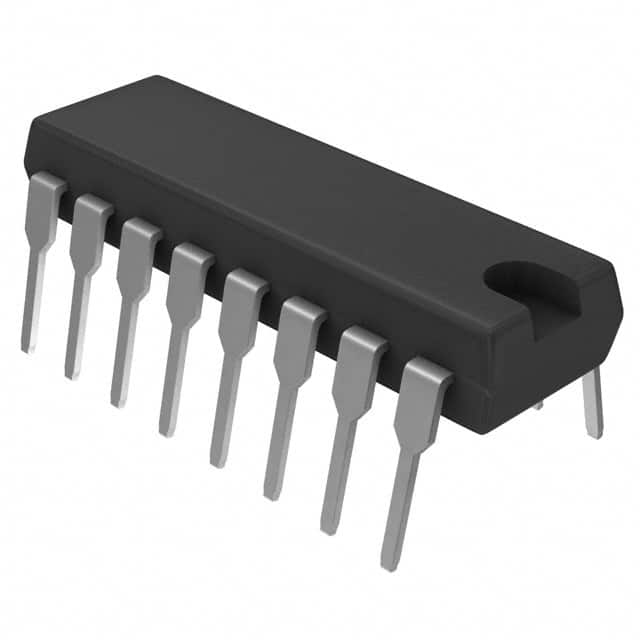
-
CD14538BE
Texas Instruments
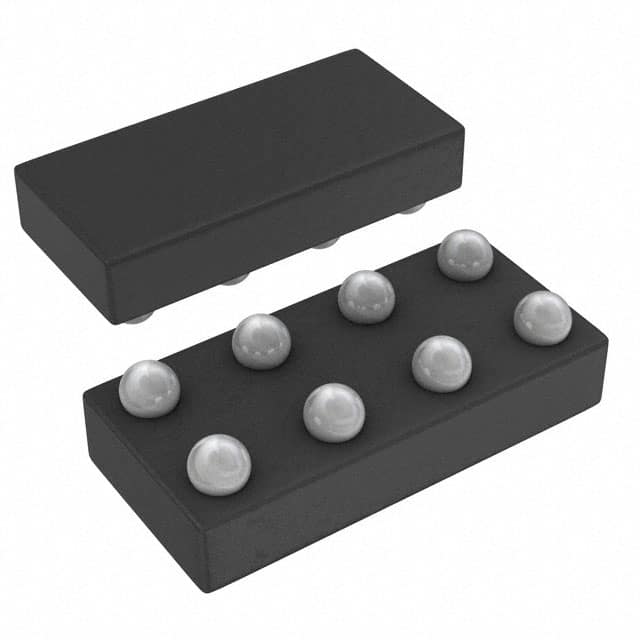
-
SN74LVC1G123YZPR
Texas Instruments
-
SN74LVC1G123DCUT
Texas Instruments
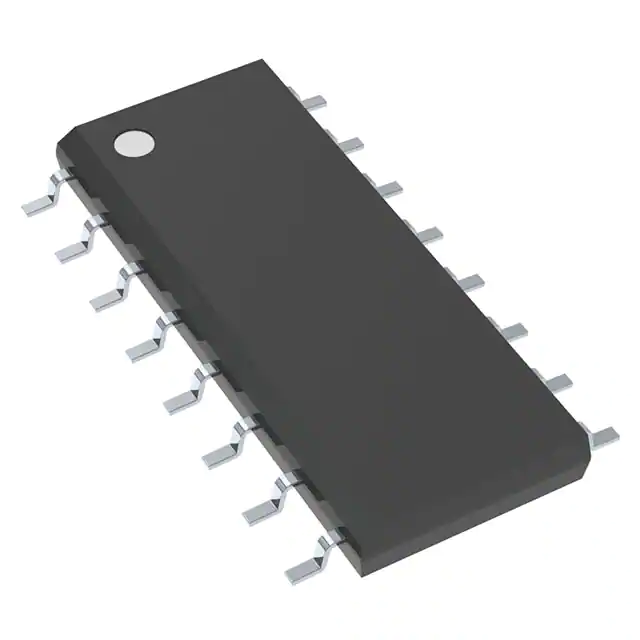
-
MC14538BDR2G
onsemi
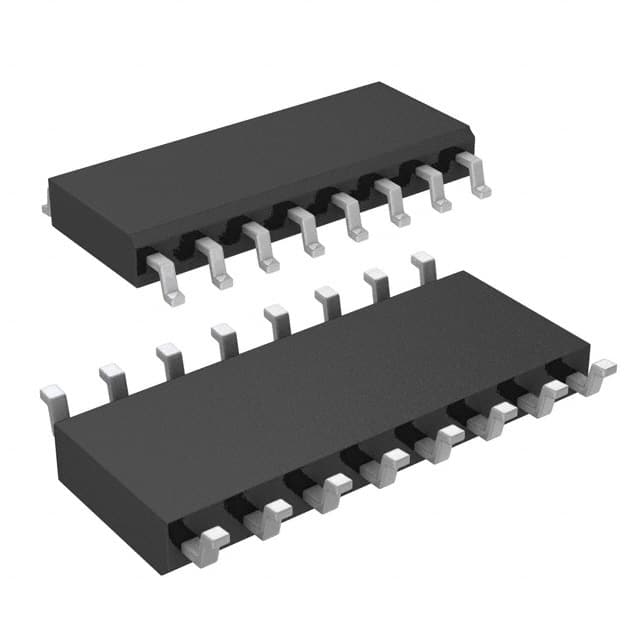
-
74VHC123AMX
onsemi
-
LTC6993CS6-2#TRMPBF
Analog Devices Inc.
-
LTC6993CS6-3#TRMPBF
Analog Devices Inc.
-
LTC6993CS6-1#TRMPBF
Analog Devices Inc.
Tech Hub

A practical engineering guide to 3.3V and 5V logic compatibility, input thresholds, resistor dividers, translator ICs, MOSFET level shifting, I2C pull-ups, timing limits and power-sequencing risks.

The 74HC595 uses push-pull logic outputs, while the TPIC6B595 uses 50 V open-drain DMOS sinks for higher-power loads. This guide compares timing, current limits, 3.3 V interfacing, load wiring, thermal…

The 74HC595 converts serial data into eight stable parallel outputs. This guide covers pin functions, shift and storage timing, OE and MR behavior, drive-current limits, cascading, voltage compatibilit…

A technical comparison of level-sensitive latches and edge-triggered flip-flops, covering timing windows, setup and hold limits, master–slave operation, time borrowing, race-through, HDL inference and…

A D latch stores one bit while Enable controls when data can pass. This reference covers gate-level operation, truth tables, transparency, setup and hold timing, LE versus OE, common ICs and practical …

An SR latch stores one bit through cross-coupled feedback. This engineering reference covers NOR and NAND implementations, truth tables, forbidden-state recovery, gated operation, switch debouncing, fa…

Latch circuits retain one bit through feedback. This technical reference covers SR and D latches, truth tables, transparency, timing limits, latch-versus-flip-flop behavior, applications and common log…

An engineering guide to LED driver operation, constant-current and constant-voltage outputs, linear and switching topologies, dimming, IC selection, calculations, replacement compatibility, and fault c…

Operational amplifier guide covering op amp basics, feedback, ideal vs real op amps, common configurations, buffer circuits, offset, bias current, gain-bandwidth, slew rate, rail-to-rail limits and sel…

Jumper cables guide covering safe connection order, red and black clamp placement, final ground connection, cable gauge, length, clamp quality, copper vs CCA cables, jump starter comparison and battery…


