
 My Inquiry
 My Account


Microchip Technology CDLL4105
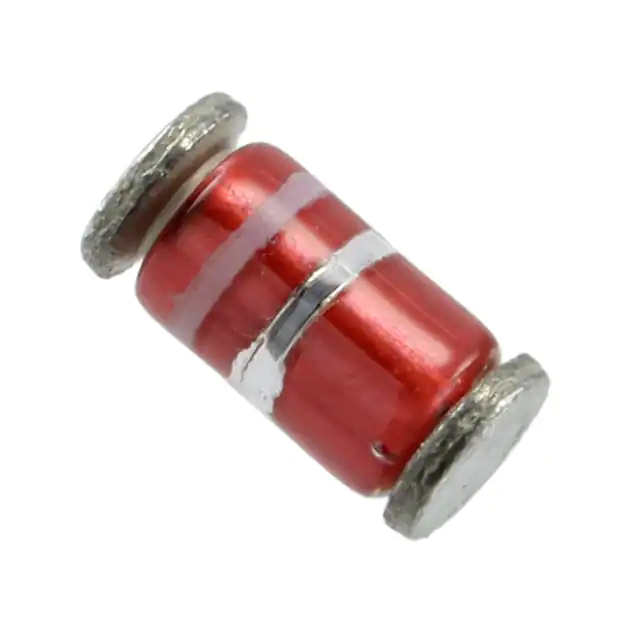
- Part No.:
- CDLL4105
- Manufacturer:
- Microchip Technology
- Category:
- Single Zener Diodes
- Package:
- DO-213AB, MELF
- Datasheet:
-
 CDLL4105.pdf
- Description:
- DIODE ZENER 11V 500MW DO213AB
- Quantity:
- Payment:

- Shipping:

Inventory:6,705
Please send an inquiry. Send us your inquiry, and we will respond immediately.
Product details
Overview
CDLL4105 from Microsemi is a hermetically sealed, surface-mount silicon Zener diode with nominal 11 V zener voltage, 250 µA test current, 200 Ω zener impedance, 0.05 µA max reverse leakage at 8.44 V, and 35 mA maximum zener current - used for precision voltage reference and overvoltage protection in aerospace-grade analog circuits.
For engineers reviewing the CDLL4105 datasheet, CDLL4105 pinout, CDLL4105 application, or CDLL4105 equivalent, key selection criteria include zener tolerance (±5%), thermal resistance (100 °C/W), DO-213AA (MELF/LL34) package compatibility, low-current regulation capability, and operation across -65°C to +175°C junction temperature range.
Technical Context
The CDLL4105 operates as a two-terminal voltage reference device with cathode-banded polarity, requiring reverse-bias connection to maintain stable breakdown regulation. Its metallurgically bonded construction ensures long-term stability under thermal cycling and radiation exposure typical in military and space applications.
Zener voltage is specified at 25°C ambient with thermal equilibrium, and impedance is measured using 25 µA AC superimposed on 250 µA DC test current. Power derating begins at +125°C case temperature at 10 mW/°C, supporting high-reliability embedded systems with constrained thermal management.
Key Specifications
| Parameter | Value and Actual Design Meaning |
|---|---|
| Zener Voltage (VZ) | 11 V ±5% at 250 µA - defines regulated output voltage with tight tolerance for reference stability |
| Zener Impedance (ZZT) | 200 Ω max at 250 µA - indicates low dynamic resistance for minimal output voltage variation under load changes |
| Reverse Leakage (IR) | 0.05 µA max at 8.44 V - ensures negligible standby current in high-impedance bias networks |
| Max Zener Current (IZM) | 35 mA - sets absolute upper limit for continuous power dissipation without degradation |
| Junction Temp Range | -65°C to +175°C - enables deployment in extreme environments including avionics and downhole instrumentation |
| Package Type | DO-213AA (MELF/LL34) - cylindrical glass-body SMD package with axial symmetry and hermetic seal |
| Thermal Resistance (RθJC) | 100 °C/W max at L = 0 inch - determines temperature rise per watt, critical for thermal design margining |
Pinout & Package
CDLL4105 is a two-terminal device in DO-213AA (MELF/LL34) hermetically sealed glass package. Polarity is marked by a single cathode band; the banded end must be connected to the more positive potential in reverse-bias configuration.
| Pin/Terminal | Circuit Role | Design Meaning |
|---|---|---|
| Anode | Lower-potential terminal in reverse-bias operation | Connected to circuit ground or lower-voltage rail to enable zener conduction |
| Cathode | Higher-potential terminal (banded end) | Connected to input or supply rail; establishes regulated voltage drop across device |
Key Features
| Feature | Design Value |
|---|---|
| Hermetic Glass Sealing | Prevents moisture ingress and parameter drift over decades in harsh environments |
| Metallurgical Bonding | Ensures mechanical robustness and thermal cycle reliability up to 1000 cycles |
| Low 250 µA Test Current | Enables stable regulation in ultra-low-power sensor biasing and battery-backed circuits |
| Wide Temperature Range | Supports operation without derating from -65°C to +125°C ambient, with full spec compliance to +175°C |
| MIL-PRF-19500/435 Qualified | Meets screening, testing, and traceability requirements for Class B (JANTX) and Class S (JANS) military applications |
Applications
| Aerospace Power Monitoring | Industrial Sensor Signal Conditioning |
|---|---|
Use Scenario: Monitoring 28 V aircraft bus voltage with fault detection thresholds. IC Role / Device Role / Timing Role: Zener reference for comparator input threshold setting. Use Value: Stable 11 V reference enables accurate overvoltage trip at 28 V ±5% with no calibration drift over 20-year service life. | Use Scenario: Providing excitation voltage for strain-gauge bridges in oilfield pressure transducers. IC Role / Device Role / Timing Role: Low-current voltage reference source in 4–20 mA loop-powered signal chains. Use Value: 250 µA regulation current minimizes self-heating error while maintaining ±5% accuracy across -40°C to +85°C operating range. |
| Military Radio RF Stage Biasing | Satellite Payload Voltage Clamping |
Use Scenario: Setting gate bias for GaAs FET amplifiers in HF/VHF transceivers. IC Role / Device Role / Timing Role: Precision DC bias generator with low noise and zero drift. Use Value: 200 Ω zener impedance suppresses ripple-induced modulation sidebands below -80 dBc in sensitive receive paths. | Use Scenario: Protecting ADC inputs against ESD-induced transients in LEO satellite telemetry modules. IC Role / Device Role / Timing Role: Fast-response clamping element in front-end protection network. Use Value: Hermetic DO-213AA package withstands 10 krad(Si) TID without parameter shift, ensuring clamping integrity after orbital radiation exposure. |
Equivalent & Alternatives
The following parts are listed as comparable options for similar Zener reference applications.
| Alternative Part | Technical Difference | Application Difference | Selection Advice |
|---|---|---|---|
| 1N4105UR-1 | Same electrical specs; metal-can TO-206AA (DO-35) package instead of glass DO-213AA | Higher thermal resistance (150 °C/W), less suitable for high-density SMT layouts | Preferred where through-hole mounting or higher surge robustness is required |
| CDLL4105C | Identical package and construction, but ±2% zener tolerance (C suffix) vs. ±5% standard | Used in metrology-grade references where tighter initial accuracy reduces system calibration burden | Select when absolute voltage accuracy outweighs cost sensitivity |
Compared with CDLL4105, 1N4105UR-1 trades SMT compatibility for ruggedized through-hole packaging, while CDLL4105C delivers enhanced initial accuracy at higher cost-both require layout or BOM revision and are not drop-in replacements.
Availability
CDLL4105 is available at Aetrix Electronics and suitable for aerospace power monitoring, industrial sensor signal conditioning, military radio RF stage biasing, and satellite payload voltage clamping requiring stable component supply with full MIL-PRF-19500 traceability.
Supply support for CDLL4105 includes scheduled delivery planning, volume procurement assistance, BOM continuity management, traceable sourcing, and lifecycle availability coordination for OEM customers, industrial embedded developers, connected-device designers, and electronics production programs.
Manufacturer
Microsemi (now part of Microchip Technology) is a U.S.-based semiconductor company specializing in high-reliability, radiation-hardened, and defense-grade analog and mixed-signal components.
The CDLL4105 belongs to Microsemi's legacy MIL-qualified Zener diode family designed for precision voltage reference and transient suppression in mission-critical aerospace, defense, and industrial control systems.
FAQ
What is the zener voltage tolerance for CDLL4105?
The CDLL4105 has a nominal zener voltage of 11 V with a tolerance of ±5%, as defined in Note 1 of the official Microsemi specification sheet. This tolerance applies when measured at 25°C ambient with the device junction in thermal equilibrium. The CDLL4105 does not include a suffix indicating tighter tolerance; variants like CDLL4105C offer ±2%.
Is CDLL4105 suitable for surface-mount assembly?
Yes, CDLL4105 is specifically designed for surface-mount use in the DO-213AA (MELF/LL34) package. Its leadless cylindrical glass body supports reflow soldering per J-STD-020, and its axial coefficient of expansion (+6 ppm/°C) is matched to common PCB substrates to minimize stress during thermal cycling.
What is the maximum power dissipation for CDLL4105 at room temperature?
The CDLL4105 has a DC power dissipation rating of 500 mW at an end-cap temperature (TEC) of +125°C. At room temperature (25°C), it can safely dissipate up to 500 mW, but actual usable power depends on board-level thermal design. Derating begins above +125°C at 10 mW/°C, limiting dissipation to ~350 mW at +160°C.
Does CDLL4105 meet any military specifications?
Yes, CDLL4105 complies with MIL-PRF-19500/435 and is qualified for JANTX (Class B) and JANS (Class S) levels. It undergoes rigorous screening including burn-in, temperature cycling, and hermeticity testing to ensure reliability in defense and space applications - documentation and lot traceability are provided with each shipment.
How does the zener impedance of CDLL4105 affect circuit performance?
The CDLL4105 specifies a maximum zener impedance (ZZT) of 200 Ω at 250 µA test current. This value directly impacts regulation stiffness: lower impedance yields smaller output voltage variation under changing load current. In precision reference designs, this enables <±10 mV deviation across 10–35 mA operating range, critical for stable comparator thresholds and ADC reference buffering.
CDLL4105 Specifications
- Product attributes
- Attribute value
- Manufacturer:
- Microchip Technology
- Series:
- -
- Package/Case:
- DO-213AB, MELF
- Packaging:
- Bulk
- Product Status:
- Active
- Voltage - Zener (Nom) (Vz):
- 11 V
- Tolerance:
- ±5%
- Power - Max:
- 500 mW
- Impedance (Max) (Zzt):
- 200 Ohms
- Current - Reverse Leakage @ Vr:
- 50 nA @ 8.5 V
- Voltage - Forward (Vf) (Max) @ If:
- 1.1 V @ 200 mA
- Operating Temperature:
- -65°C ~ 175°C
- Grade:
- -
- Qualification:
- -
- Mounting Type:
- Surface Mount
- Supplier Device Package:
- DO-213AB
CDLL4105 FAQ
1.How can I place an order for CDLL4105 through Aetrix?
Please submit a Request for Quotation (RFQ) for CDLL4105 on Aetrix. Our sales agent will provide a competitive quotation and guide you through the order confirmation once you accept the terms.
2.Are the price and stock information for CDLL4105 reliable?
The price and inventory of CDLL4105 are updated periodically and may fluctuate due to market conditions. Stock and pricing data are typically refreshed every 24 hours. Quotation validity for CDLL4105 is usually 5 days.
3.What payment methods are accepted for CDLL4105?
We accept Wire Transfer, PayPal, Credit Card, Western Union, MoneyGram, and Escrow for CDLL4105 transactions.
Note: Certain payment methods may incur a processing fee.
4.How is shipping managed for CDLL4105?
CDLL4105 orders can be shipped via leading logistics carriers, including DHL, UPS, FedEx, TNT, or Registered Mail.
Once your CDLL4105 order is processed, you will receive an email with the shipment details and tracking number.
Note: Tracking information may take up to 24 hours to appear. Express delivery typically takes 3–5 business days.
5.How can I obtain technical support or documentation for CDLL4105?
For technical support, including CDLL4105 datasheets, pinout diagrams, or application guidance, please contact our engineering support team. They can provide detailed documentation and assistance for your CDLL4105 requirements.
6.How does Aetrix verify that CDLL4105 is sourced from the original manufacturer or authorized distributors?
All CDLL4105 products on Aetrix are procured from qualified distributors and authorized channels. Our dedicated quality assurance team conducts strict verification, including traceability checks and, if necessary, third-party testing. This ensures that CDLL4105 meets industry standards.
7.What is the process for return or replacement of CDLL4105?
All CDLL4105 units undergo pre-shipment inspection (PSI). If there is an issue with CDLL4105, returns or replacements are accepted under the following conditions:
1.Quantity discrepancies, incorrect items, or visible external defects (such as breakage or corrosion), acknowledged by Aetrix.
2.The issue is reported within 90 days of delivery.
3.The CDLL4105 part is unused and in its original packaging.
Return procedure for CDLL4105:
1.Submit a request within 90 days.
2.Obtain a Return Material Authorization (RMA) from Aetrix.
CDLL4105 Tags
-
MMBZ5240B-7-F
Diodes Incorporated
-
BZT52C5V6T-7
Diodes Incorporated
-
MMSZ5231B-7-F
Diodes Incorporated
-
BZT52C15-7-F
Diodes Incorporated
-
BZX84C3V3LT1G
onsemi
-
MMSZ5245BS-7-F
Diodes Incorporated
-
MMSZ4682T1G
onsemi
-
BZT52C15S-7-F
Diodes Incorporated
-
MM5Z5V1ST1G
onsemi
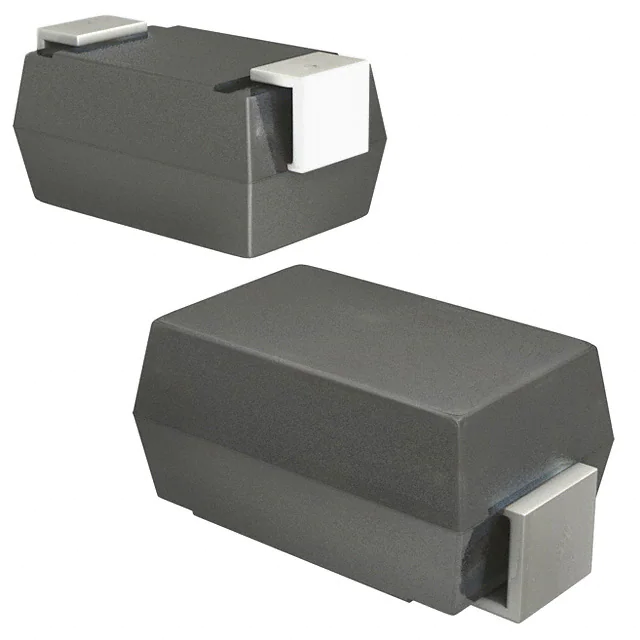
-
SMAJ4744A-TP
Micro Commercial Co
-
BZT52C3V6LP-7
Diodes Incorporated
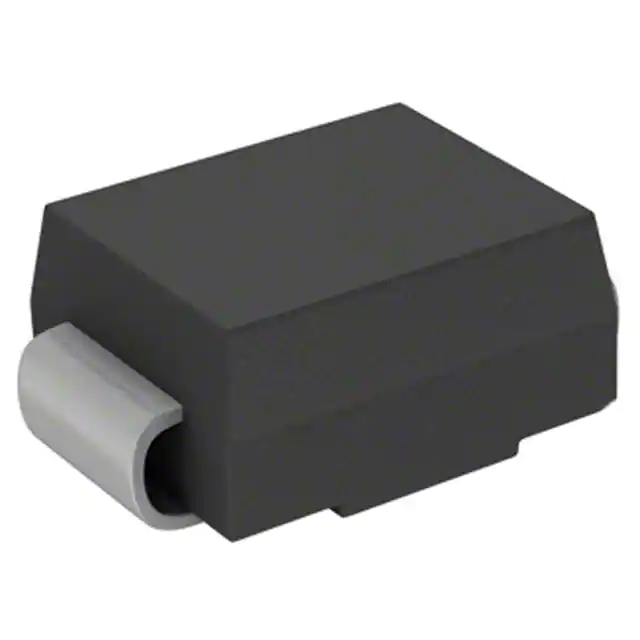
-
SMAZ12-13-F
Diodes Incorporated
Tech Hub

TTL and CMOS logic families differ in thresholds, loading, output drive, power and timing. This engineering guide compares 74HC and 74HCT, calculates noise margins and checks 3.3 V/5 V compatibility.

A practical engineering guide to 3.3V and 5V logic compatibility, input thresholds, resistor dividers, translator ICs, MOSFET level shifting, I2C pull-ups, timing limits and power-sequencing risks.

The 74HC595 uses push-pull logic outputs, while the TPIC6B595 uses 50 V open-drain DMOS sinks for higher-power loads. This guide compares timing, current limits, 3.3 V interfacing, load wiring, thermal…

The 74HC595 converts serial data into eight stable parallel outputs. This guide covers pin functions, shift and storage timing, OE and MR behavior, drive-current limits, cascading, voltage compatibilit…

A technical comparison of level-sensitive latches and edge-triggered flip-flops, covering timing windows, setup and hold limits, master–slave operation, time borrowing, race-through, HDL inference and…

A D latch stores one bit while Enable controls when data can pass. This reference covers gate-level operation, truth tables, transparency, setup and hold timing, LE versus OE, common ICs and practical …

An SR latch stores one bit through cross-coupled feedback. This engineering reference covers NOR and NAND implementations, truth tables, forbidden-state recovery, gated operation, switch debouncing, fa…

Latch circuits retain one bit through feedback. This technical reference covers SR and D latches, truth tables, transparency, timing limits, latch-versus-flip-flop behavior, applications and common log…

An engineering guide to LED driver operation, constant-current and constant-voltage outputs, linear and switching topologies, dimming, IC selection, calculations, replacement compatibility, and fault c…

Operational amplifier guide covering op amp basics, feedback, ideal vs real op amps, common configurations, buffer circuits, offset, bias current, gain-bandwidth, slew rate, rail-to-rail limits and sel…


