
 My Inquiry
 My Account


Renesas CP82C88
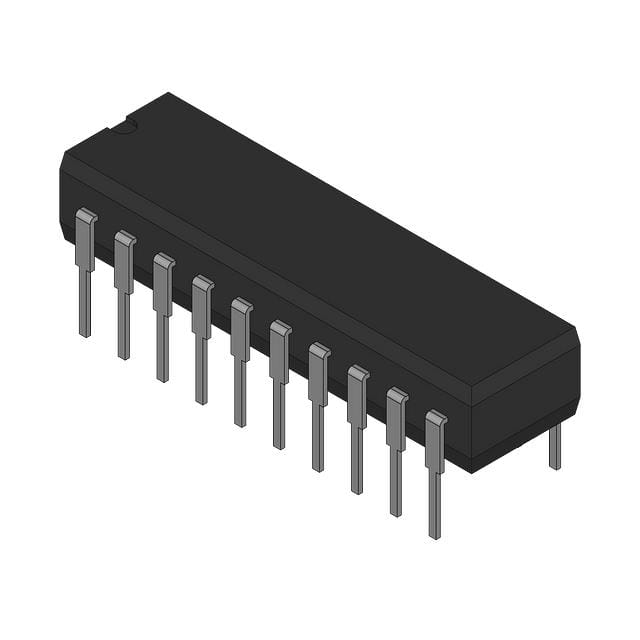
- Part No.:
- CP82C88
- Manufacturer:
- Renesas
- Category:
- Power Supply Controllers, Monitors
- Package:
- 20-DIP (0.300", 7.62mm)
- Datasheet:
-
 CP82C88.pdf
- Description:
- IC CMOS BUS CONTROLLER 20DIP
- Quantity:
- Payment:

- Shipping:

Inventory:2,802
Please send an inquiry. Send us your inquiry, and we will respond immediately.
Product details
Overview
CP82C88 from Intersil is a CMOS bus controller designed to generate timing and control signals for 80C86, 80C88, 8086, 8088, 8089, 80186, and 80188 microprocessor-based systems. It provides MRDC, MWTC, IORC, IOWC, AMWC, AIOWC, INTA, DEN, DT/R, ALE, and MCE/PDEN outputs with three-state command drivers, 5V single-supply operation, and static CMOS low-power design (ICCSB ≤ 10 µA). It supports both System Bus and I/O Bus modes via the IOB pin.
For engineers reviewing the CP82C88 datasheet, CP82C88 pinout, CP82C88 application, or CP82C88 equivalent, key selection considerations include its dual-bus mode configuration (IOB), compatibility with legacy Intel CPUs, timing response delays (e.g., TCLML ≤ 35 ns at 12 MHz), and direct replacement capability for bipolar 8288 in 5V TTL-compatible systems.
Technical Context
The CP82C88 decodes S0/S1/S2 status inputs from compatible microprocessors to generate synchronized command outputs-MRDC, MWTC, IORC, IOWC, AMWC, AIOWC, and INTA-with precise timing relative to CLK and AEN. Its control logic implements two distinct operational modes: System Bus mode (IOB = LOW) requires AEN arbitration before command issuance, while I/O Bus mode (IOB = HIGH) enables immediate I/O command activation independent of AEN.
It features dual-function MCE/PDEN output that serves as Master Cascade Enable in System Bus mode and Peripheral Data Enable in I/O Bus mode. All command outputs are three-state, with VOH ≥ 3.0 V at IOH = –12 mA and VOL ≤ 0.5 V at IOL = +12 mA, ensuring robust drive into standard TTL/CMOS loads without external buffers.
Key Specifications
| Parameter | Value and Actual Design Meaning |
|---|---|
| Supply Voltage | +4.5 V to +5.5 V - Supports standard 5V TTL-compatible system rails with ±10% tolerance. |
| Standby Current (ICCSB) | ≤ 10 µA - Enables ultra-low power retention during CPU halt or idle states. |
| Operating Current (ICCOP) | ≤ 1 mA/MHz - Scales linearly with clock frequency, simplifying thermal budgeting up to 12 MHz. |
| Command Active Delay (TCLML) | 5–35 ns - Ensures deterministic setup for memory/I/O devices across 8–12 MHz operation. |
| Output Drive (IOL) | +12 mA (command), +8 mA (control) - Directly drives 74LS/74HC transceivers and latches without buffer stages. |
| Operating Temperature | 0°C to +70°C - Qualified for commercial-grade embedded and industrial control applications. |
| Input Logic Thresholds | VIH = 2.0 V, VIL = 0.8 V - Matches TTL input levels for seamless integration with legacy 8086-family systems. |
Pinout & Package
CP82C88Z is supplied in a 20-lead plastic dual in-line package (PDIP) with Pb-free finish per RoHS, compliant with JEDEC MS-001 and Intersil drawing E20.3.
| Pin/Terminal | Circuit Role | Design Meaning |
|---|---|---|
| 1 (IOB) | Input/Output Bus Mode Select | Strapping HIGH enables immediate I/O command generation; LOW enables AEN-gated System Bus arbitration. |
| 2 (CLK) | Clock Input | CMOS-compatible input accepting 8–12 MHz clock from 82C84A/82C85; defines all timing windows. |
| 4 (DT/R) | Data Direction Control | Active-HIGH indicates transmit (write); active-LOW indicates receive (read); drives transceiver direction pin. |
| 5 (ALE) | Address Latch Enable | Falling-edge strobe for 82C82/82C83H address latches; synchronizes address capture with status decoding. |
| 6 (AEN) | Address Enable | Enables command outputs ≥110 ns after going LOW; disables them immediately when HIGH in System Bus mode. |
| 7 (MRDC) | Memory Read Command | Active-LOW signal instructing memory to place data on bus; generated during code/data read cycles. |
| 8 (AMWC) | Advanced Memory Write Command | Early-active-LOW write strobe issued before MWTC, reducing wait states for memory writes. |
| 9 (MWTC) | Memory Write Command | Primary active-LOW memory write strobe; used with AMWC for pipelined write operations. |
| 11 (IOWC) | I/O Write Command | Active-LOW signal directing I/O device to accept data from bus; paired with AIOWC for early write indication. |
| 12 (AIOWC) | Advanced I/O Write Command | Early-active-LOW I/O write strobe, identical timing to IORC, enabling faster peripheral response. |
| 13 (IORC) | I/O Read Command | Active-LOW signal instructing I/O device to drive data onto bus during I/O read cycles. |
| 14 (INTA) | Interrupt Acknowledge | Active-LOW during interrupt acknowledge cycle; functions as I/O read to fetch vector from interrupting device. |
| 15 (CEN) | Command Enable | Active-HIGH qualifier; forces all command outputs inactive (not high-Z) when LOW for memory partitioning. |
| 16 (DEN) | Data Enable | Active-HIGH signal enabling data transceivers onto local/system bus; complements DT/R for bidirectional flow. |
| 17 (MCE/PDEN) | Dual-Function Output | In System Bus mode: active-HIGH MCE reads cascade address from 82C59A; in I/O Bus mode: active-LOW PDEN enables I/O transceivers. |
| 18 (S2), 19 (S0), 3 (S1) | Status Inputs | Three-bit processor status bus decoded to determine machine cycle type (e.g., INTA, MRDC, MWTC). |
| 10 (GND), 20 (VCC) | Power Supply | Ground reference and +5V supply; requires 0.1 µF decoupling capacitor between pins 10 and 20. |
Key Features
| Feature | Design Value |
|---|---|
| Bipolar 8288 Compatibility | Pin- and function-compatible drop-in replacement for legacy 8288, enabling CMOS power savings without board redesign. |
| Multi-Master Bus Support | Provides advanced commands (AMWC, AIOWC) and AEN-controlled arbitration for shared-bus multiprocessor systems. |
| Two Operational Modes | IOB-selectable I/O Bus mode (no AEN dependency) and System Bus mode (AEN-gated) for flexible architecture partitioning. |
| Three-State Command Outputs | Allows safe connection to shared buses with multiple controllers; CEN forces inactive state (not high-Z) for clean bus isolation. |
| Single 5V Supply Operation | Eliminates need for dual-rail supplies; meets +4.5 V to +5.5 V spec with full AC/DC performance across temperature range. |
Applications
| Industrial PLC Backplane | Legacy x86 Embedded Controller |
|---|---|
Use Scenario: Real-time I/O expansion in programmable logic controllers using 80186-based CPU modules. IC Role / Device Role / Timing Role: Bus controller generating MRDC/MWTC/IOx commands synchronized to 80186 status lines and CLK, managing memory-mapped and port-mapped peripherals. Use Value: Eliminates external bus drivers due to +12 mA output drive; IOB = HIGH enables dedicated I/O bus with zero arbitration latency. | Use Scenario: Upgrading aging 8088-based medical instrument control boards from bipolar to CMOS logic. IC Role / Device Role / Timing Role: Direct 8288 replacement providing identical timing (TCLML ≤ 35 ns) and pinout for backward-compatible 5V system integration. Use Value: Reduces standby power by >95% vs. bipolar 8288 (ICCSB ≤ 10 µA vs. ~10 mA), extending fanless enclosure thermal margin. |
| Military Avionics Data Acquisition | Test Equipment Mainframe |
Use Scenario: Ruggedized flight data recorder interfacing MIL-STD-1553B peripherals via 8086 CPU subsystem. IC Role / Device Role / Timing Role: Generating AMWC/AIOWC early-write strobes and INTA for interrupt-driven sensor polling in deterministic real-time loops. Use Value: Advanced write commands reduce CPU wait states by up to one clock cycle, improving throughput in time-critical acquisition windows. | Use Scenario: Modular automatic test equipment (ATE) mainframe supporting mixed 8086/80188 processor cards. IC Role / Device Role / Timing Role: Centralized bus controller coordinating memory and I/O access across multi-slot backplane with AEN-based arbitration. Use Value: CEN input allows dynamic deactivation of command outputs during card hot-swap, preventing bus contention during reconfiguration. |
Equivalent & Alternatives
The following parts are listed as comparable options for similar bus controller applications.
| Alternative Part | Technical Difference | Application Difference | Selection Advice |
|---|---|---|---|
| 8288 | Bipolar process; ICCSB ≈ 10 mA (vs. 10 µA); no AMWC/AIOWC; higher power, lower noise immunity. | Requires external bus drivers; not suitable for low-power or extended-temperature designs. | Select only if legacy board reuse mandates identical thermal/power profile and no CMOS upgrade path exists. |
| CS82C88 | Same die, PLCC package (N20.3); identical electrical specs; different mechanical footprint and reflow profile. | Used where surface-mount assembly is required; incompatible with through-hole PDIP sockets. | Choose CS82C88 for new SMT designs needing same functionality in compact 20-lead PLCC; verify PCB land pattern against N20.3. |
Compared with the bipolar 8288, CP82C88 delivers 1000× lower standby current and integrated advanced write commands, while CS82C88 offers identical functionality in a space-saving PLCC package-neither is pin-compatible with CP82C88Z's PDIP form factor, requiring layout revision for physical substitution.
Availability
CP82C88 is available at Aetrix Electronics and suitable for industrial PLC backplanes, legacy x86 embedded controllers, and military avionics data acquisition systems requiring stable component supply and long-term obsolescence management.
Supply support for CP82C88 includes scheduled delivery planning, volume procurement assistance, BOM continuity management, traceable sourcing, and lifecycle availability coordination for OEM customers, industrial embedded developers, connected-device designers, and electronics production programs.
Manufacturer
Intersil Corporation is a U.S.-based semiconductor company specializing in precision analog and power management ICs, acquired by Renesas Electronics in 2017.
The 82C88 product line was developed to provide CMOS-compatible bus control for Intel 8086-family microprocessors, enabling lower-power, higher-reliability replacements for bipolar 8288 in commercial and industrial computing systems.
FAQ
What is the primary function of the CP82C88 in an 8086-based system?
The CP82C88 serves as the central bus controller, decoding S0/S1/S2 status signals from the 8086 or 8088 CPU to generate precisely timed command outputs-including MRDC, MWTC, IORC, IOWC, AMWC, AIOWC, INTA, DEN, and DT/R-that coordinate memory and I/O transactions. CP82C88 eliminates the need for external bus drivers due to its +12 mA output drive capability and supports both System Bus and I/O Bus modes via the IOB pin, making it essential for deterministic timing in legacy x86 architectures.
Does CP82C88 support 12 MHz operation, and what are the critical timing limits?
Yes, CP82C88 is fully specified for 12 MHz operation per FN2979 Rev 3.00. At this frequency, the maximum command active delay (TCLML) is 35 ns, the maximum AEN-to-command enable time (TAELCV) is 250 ns, and the minimum CLK high time (TCHCL) is 34 ns. These parameters ensure reliable synchronization with 80186/80188 processors running at 12 MHz, and CP82C88 maintains full DC/AC specification compliance across 0°C to +70°C without derating.
How does the IOB pin affect CP82C88 behavior, and what are the practical implications?
The IOB pin selects between two mutually exclusive operational modes: when IOB = HIGH, CP82C88 enters I/O Bus mode, enabling immediate I/O command activation (IORC/IOWC) independent of AEN-ideal for dedicated peripheral buses. When IOB = LOW, it enters System Bus mode, gating all commands (including memory) behind AEN for arbitration in multi-master systems. This dual-mode capability makes CP82C88 uniquely suited for hybrid architectures, and CP82C88's pinout and logic ensure no external glue logic is needed to switch modes.
Can CP82C88 directly replace a bipolar 8288, and what design changes are required?
Yes, CP82C88 is a pin- and function-compatible drop-in replacement for the bipolar 8288, requiring no PCB changes. CP82C88 matches all input thresholds (VIH = 2.0 V, VIL = 0.8 V), output drive levels, and timing waveforms. Key advantages include 1000× lower standby current (10 µA vs. ~10 mA), integrated AMWC/AIOWC advanced write commands, and improved noise immunity. No schematic or layout modifications are needed-only verification of decoupling (0.1 µF between VCC and GND) and thermal margin.
What is the role of the MCE/PDEN pin, and how does it differ between bus modes?
The MCE/PDEN pin is dual-function: in System Bus mode (IOB = LOW), it acts as Master Cascade Enable (MCE), an active-HIGH signal used during interrupt acknowledge cycles to read cascade addresses from an 82C59A PIC; in I/O Bus mode (IOB = HIGH), it becomes Peripheral Data Enable (PDEN), an active-LOW signal that enables I/O bus transceivers independently of DEN. This dynamic reassignment is handled entirely within CP82C88's internal logic-no external mode-select circuitry is required, and CP82C88 ensures correct timing alignment in both configurations per Table 1 and Figures 1–3.
CP82C88 Specifications
- Product attributes
- Attribute value
- Manufacturer:
- Renesas
- Series:
- -
- Package/Case:
- 20-DIP (0.300", 7.62mm)
- Packaging:
- Tube
- Product Status:
- Obsolete
- Programmable:
- Not Verified
- Applications:
- CMOS Bus Controller
- Voltage - Input:
- -
- Voltage - Supply:
- 4.5V ~ 5.5V
- Current - Supply:
- 1 mA
- Operating Temperature:
- 0°C ~ 70°C
- Grade:
- -
- Qualification:
- -
- Mounting Type:
- Through Hole
- Supplier Device Package:
- 20-PDIP
CP82C88 FAQ
1.How can I place an order for CP82C88 through Aetrix?
Please submit a Request for Quotation (RFQ) for CP82C88 on Aetrix. Our sales agent will provide a competitive quotation and guide you through the order confirmation once you accept the terms.
2.Are the price and stock information for CP82C88 reliable?
The price and inventory of CP82C88 are updated periodically and may fluctuate due to market conditions. Stock and pricing data are typically refreshed every 24 hours. Quotation validity for CP82C88 is usually 5 days.
3.What payment methods are accepted for CP82C88?
We accept Wire Transfer, PayPal, Credit Card, Western Union, MoneyGram, and Escrow for CP82C88 transactions.
Note: Certain payment methods may incur a processing fee.
4.How is shipping managed for CP82C88?
CP82C88 orders can be shipped via leading logistics carriers, including DHL, UPS, FedEx, TNT, or Registered Mail.
Once your CP82C88 order is processed, you will receive an email with the shipment details and tracking number.
Note: Tracking information may take up to 24 hours to appear. Express delivery typically takes 3–5 business days.
5.How can I obtain technical support or documentation for CP82C88?
For technical support, including CP82C88 datasheets, pinout diagrams, or application guidance, please contact our engineering support team. They can provide detailed documentation and assistance for your CP82C88 requirements.
6.How does Aetrix verify that CP82C88 is sourced from the original manufacturer or authorized distributors?
All CP82C88 products on Aetrix are procured from qualified distributors and authorized channels. Our dedicated quality assurance team conducts strict verification, including traceability checks and, if necessary, third-party testing. This ensures that CP82C88 meets industry standards.
7.What is the process for return or replacement of CP82C88?
All CP82C88 units undergo pre-shipment inspection (PSI). If there is an issue with CP82C88, returns or replacements are accepted under the following conditions:
1.Quantity discrepancies, incorrect items, or visible external defects (such as breakage or corrosion), acknowledged by Aetrix.
2.The issue is reported within 90 days of delivery.
3.The CP82C88 part is unused and in its original packaging.
Return procedure for CP82C88:
1.Submit a request within 90 days.
2.Obtain a Return Material Authorization (RMA) from Aetrix.
CP82C88 Tags

-
UC3845AD8TR
Texas Instruments
-
UC2843AD8TR
Texas Instruments

-
LM3880MFX-1AE/NOPB
Texas Instruments
-
LM3880MFX-1AA/NOPB
Texas Instruments
-
INA234AIYBJR
Texas Instruments

-
INA700AYWFR
Texas Instruments
-
LM3880MF-1AE/NOPB
Texas Instruments
-
LM3880MF-1AA/NOPB
Texas Instruments
-
LM3881MM/NOPB
Texas Instruments
-
UCC2802DTR
Texas Instruments
-
NCP4305DMTTWG
onsemi
-
INA237AIDGSR
Texas Instruments
Tech Hub

TTL and CMOS logic families differ in thresholds, loading, output drive, power and timing. This engineering guide compares 74HC and 74HCT, calculates noise margins and checks 3.3 V/5 V compatibility.

A practical engineering guide to 3.3V and 5V logic compatibility, input thresholds, resistor dividers, translator ICs, MOSFET level shifting, I2C pull-ups, timing limits and power-sequencing risks.

The 74HC595 uses push-pull logic outputs, while the TPIC6B595 uses 50 V open-drain DMOS sinks for higher-power loads. This guide compares timing, current limits, 3.3 V interfacing, load wiring, thermal…

The 74HC595 converts serial data into eight stable parallel outputs. This guide covers pin functions, shift and storage timing, OE and MR behavior, drive-current limits, cascading, voltage compatibilit…

A technical comparison of level-sensitive latches and edge-triggered flip-flops, covering timing windows, setup and hold limits, master–slave operation, time borrowing, race-through, HDL inference and…

A D latch stores one bit while Enable controls when data can pass. This reference covers gate-level operation, truth tables, transparency, setup and hold timing, LE versus OE, common ICs and practical …

An SR latch stores one bit through cross-coupled feedback. This engineering reference covers NOR and NAND implementations, truth tables, forbidden-state recovery, gated operation, switch debouncing, fa…

Latch circuits retain one bit through feedback. This technical reference covers SR and D latches, truth tables, transparency, timing limits, latch-versus-flip-flop behavior, applications and common log…

An engineering guide to LED driver operation, constant-current and constant-voltage outputs, linear and switching topologies, dimming, IC selection, calculations, replacement compatibility, and fault c…

Operational amplifier guide covering op amp basics, feedback, ideal vs real op amps, common configurations, buffer circuits, offset, bias current, gain-bandwidth, slew rate, rail-to-rail limits and sel…


