
 My Inquiry
 My Account


Infineon Technologies CY14B101PA-SFXI
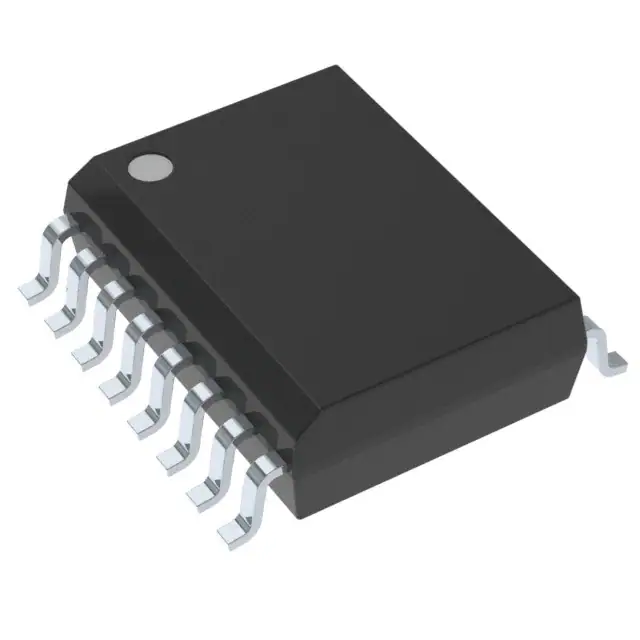
- Part No.:
- CY14B101PA-SFXI
- Manufacturer:
- Infineon Technologies
- Category:
- Memory
- Package:
- 16-SOIC (0.295", 7.50mm Width)
- Datasheet:
-
 CY14B101PA-SFXI.pdf
- Description:
- IC NVSRAM 1MBIT SPI 40MHZ 16SOIC
- Quantity:
- Payment:

- Shipping:

Inventory:1,966
Please send an inquiry. Send us your inquiry, and we will respond immediately.
Product details
Overview
CY14B101PA-SFXI from Cypress Semiconductor is a 1-Mbit (128K × 8) serial SPI nonvolatile SRAM with integrated real-time clock, AutoStore/RECALL functionality, and 40 MHz / 104 MHz dual-speed SPI interface. It operates from 2.7 V to 3.6 V, supports hardware STORE via HSB pin, and delivers 20-year data retention at 85 °C in industrial environments - used in metering systems requiring power-loss-resilient time-stamped logging.
For engineers reviewing the CY14B101PA-SFXI datasheet, CY14B101PA-SFXI pinout, CY14B101PA-SFXI application, or CY14B101PA-SFXI equivalent, key selection criteria include RTC backup current (0.45 µA typ), SPI mode 0/3 compatibility, QuantumTrap endurance (1M STORE cycles), and VCAP-based AutoStore timing during brownout.
Technical Context
The device integrates SRAM and QuantumTrap nonvolatile storage on a single die, enabling zero-cycle-delay SPI reads/writes to volatile memory while using capacitor-backed VCAP to trigger automatic STORE on power loss. Its RTC subsystem includes programmable alarm, watchdog timer, and selectable square-wave outputs (1 Hz to 32.768 kHz).
SPI communication uses standard opcodes plus four nvSRAM-specific instructions (STORE, RECALL, ASENB, ASDISB), with status register control for block protection (1/4, 1/2, full array) and write enable/disable. The HSB pin provides hardware-level busy indication and STORE initiation, decoupled from software sequencing.
Key Specifications
| Parameter | Value and Actual Design Meaning |
|---|---|
| Memory density | 1 Mbit (128K × 8) - supports full firmware state snapshot without external memory expansion |
| SPI clock rate | 40 MHz (zero-cycle-delay read/write); 104 MHz (fast read only) - enables high-throughput logging in real-time control loops |
| RTC backup current | 0.45 µA typical - allows >10-year coin-cell operation in battery-backed metering applications |
| Data retention | 20 years at 85 °C - meets industrial lifecycle requirements for infrastructure monitoring nodes |
| STORE endurance | 1 million cycles to QuantumTrap - supports daily power-cycling in smart grid endpoints |
| Operating voltage | 2.7 V to 3.6 V - compatible with 3.3 V system rails and LDO-regulated embedded designs |
| Package | 16-pin SOIC - surface-mount compatible with automated PCB assembly and IPC-7351 footprint standards |
Pinout & Package
16-pin Small Outline Integrated Circuit (SOIC) package with 300-mil body width and standard gull-wing lead form.
| Pin/Terminal | Circuit Role | Design Meaning |
|---|---|---|
| CS | Chip Select input | Active-low enable for SPI transaction; HIGH places device in 250 µA standby mode |
| SCK | Serial clock input | Drives SPI timing up to 104 MHz; rising edge latches SI, falling edge drives SO |
| SI | Serial input | Accepts all SPI opcodes including STORE, RECALL, RDRTC, WRTC, and status register commands |
| SO | Serial output | Drives read data, status flags, RTC registers, and serial number with programmable drive strength |
| WP | Hardware write protect | Hardwires write inhibition when LOW; overrides software write enable state |
| HSB | Hardware STORE Busy I/O | Outputs LOW during STORE/RECALL; accepts external LOW pulse to initiate hardware STORE |
| VCAP | AutoStore capacitor supply | Connects to 4.7 µF tantalum cap; powers internal STORE sequence during VCC dropout |
| VCC | Main power supply | 2.7–3.6 V rail; powers SRAM core, SPI logic, and RTC oscillator circuitry |
| VSS | Ground reference | Common return path for digital and RTC domains; requires low-impedance PCB plane |
| INT/SQW | Programmable interrupt/square wave | Configurable as alarm interrupt, watchdog timeout flag, or 1 Hz/512 Hz/4.096 kHz/32.768 kHz clock output |
| Xin/Xout | RTC crystal oscillator terminals | Supports 32.768 kHz tuning fork crystal; internal load caps eliminate external components |
| VRTCcap/VRTCbat | RTC backup power select | Either capacitor (low-leakage ceramic) or battery (coin cell) may be used; not both |
Key Features
| Feature | Design Value |
|---|---|
| QuantumTrap nonvolatile storage | Enables infinite SRAM write cycles + 1M STORE cycles without wear leveling or ECC overhead |
| AutoStore on power loss | Guarantees data persistence during uncontrolled shutdown using only a 4.7 µF VCAP capacitor |
| Full-featured RTC with alarm & watchdog | Eliminates need for external RTC IC in time-critical logging and event-triggered wake-up systems |
| Dual-speed SPI interface | 40 MHz zero-wait read/write + 104 MHz fast read supports burst data capture without CPU stalling |
| Hardware/software STORE/RECALL control | Allows deterministic data save timing via HSB pin or precise software scheduling via SPI instruction |
Applications
| Smart Electricity Metering | Industrial PLC Data Logging |
|---|---|
Use Scenario: Captures energy consumption snapshots and fault events during grid voltage sags or outages. IC Role / Device Role / Timing Role: Nonvolatile memory + RTC co-processor providing timestamped, power-loss-immune data storage. Use Value: Maintains 20-year meter calibration history and outage logs without battery replacement or external NV memory. | Use Scenario: Records sensor inputs and control states at 100 ms intervals during machine runtime. IC Role / Device Role / Timing Role: High-speed SPI nvSRAM buffer with autonomous STORE triggered by PLC power-down signal. Use Value: Eliminates data loss during emergency stop sequences where main power fails before software-initiated save. |
| Medical Infusion Pump Event History | Automotive Telematics Black Box |
Use Scenario: Logs drug delivery parameters, alarms, and operator actions with precise timestamps for regulatory audit. IC Role / Device Role / Timing Role: Secure time-stamped event recorder with tamper-resistant nonvolatile storage. Use Value: Meets FDA 21 CFR Part 11 requirements for immutable, time-anchored clinical data with 20-year retention. | Use Scenario: Stores vehicle CAN bus diagnostics, GPS coordinates, and crash-triggered sensor data prior to ignition loss. IC Role / Device Role / Timing Role: Crash-activated data logger using HSB-driven STORE and RTC-synchronized timestamping. Use Value: Captures pre-crash telemetry within 50 ms of power interruption, independent of host MCU response time. |
Equivalent & Alternatives
The following parts are listed as comparable options for similar nvSRAM with RTC applications.
| Alternative Part | Technical Difference | Application Difference | Selection Advice |
|---|---|---|---|
| STK11C88-3F | Discrete RTC + parallel nvSRAM; no integrated SPI interface; requires external glue logic | Larger PCB footprint; higher BOM count; no AutoStore capacitor support | Select only if legacy parallel bus architecture mandates compatibility with older STK11C88 footprint |
| FM24V10-G | F-RAM-based 1-Mbit serial memory; no integrated RTC; 10¹⁴ read/write endurance; no STORE/RECALL latency | RTC must be added externally; lower backup current (0.2 µA) but no capacitor timing dependency | Prefer when deterministic sub-100 ns write latency is critical and RTC can be sourced separately |
Compared with STK11C88-3F and FM24V10-G, CY14B101PA-SFXI uniquely combines SPI nvSRAM and full RTC in one SOIC package with capacitor-backed AutoStore - reducing component count, eliminating timing uncertainty in power-loss scenarios, and simplifying layout for compact industrial modules.
Availability
CY14B101PA-SFXI is available at Aetrix Electronics and suitable for smart metering, industrial PLC data logging, medical infusion pump event history, and automotive telematics black box applications requiring stable component supply and long-term lifecycle assurance.
Supply support for CY14B101PA-SFXI includes scheduled delivery planning, volume procurement assistance, BOM continuity management, traceable sourcing, and lifecycle availability coordination for OEM customers, industrial embedded developers, connected-device designers, and electronics production programs.
Manufacturer
Cypress Semiconductor (now part of Infineon Technologies) designs high-reliability mixed-signal ICs for industrial, automotive, and IoT applications, with expertise in nonvolatile memory and timing solutions.
The CY14X101PA product line integrates QuantumTrap nvSRAM and RTC into monolithic SPI devices to replace discrete memory + RTC combinations in space-constrained, power-interruption-prone systems.
FAQ
What is the minimum VCAP capacitance required for reliable AutoStore operation?
A 4.7 µF tantalum capacitor is specified for guaranteed AutoStore functionality across the full 2.7–3.6 V operating range and industrial temperature span. Lower values may work under specific conditions but are not characterized or warranted per datasheet Rev. *P. Ceramic capacitors are not recommended due to DC bias and aging effects that reduce effective capacitance below threshold.
Can the RTC operate independently when VCC is absent?
Yes - when VRTCcap or VRTCbat is connected and VCC is removed, the RTC continues running from backup power with typical current draw of 0.45 µA. The SRAM contents are retained only if VCAP supplies sufficient energy for STORE before VCC drops below 2.0 V; RTC timekeeping persists regardless.
How does Hardware STORE differ from Software STORE in terms of timing control?
Hardware STORE initiates immediately upon HSB pin falling edge and completes autonomously, making it immune to MCU lockup or software delay. Software STORE requires SPI command issuance and executes after instruction decode, introducing ~2 µs latency. Both use identical QuantumTrap programming sequence and duration (~10 ms).
Is the CY14B101PA-SFXI RoHS compliant and qualified for industrial temperature range?
Yes - the CY14B101PA-SFXI is RoHS compliant (per datasheet Rev. *P) and rated for industrial temperature operation from –40 °C to +85 °C. The 16-pin SOIC package meets JEDEC MS-012 standards, and thermal resistance (θJA) is 110 °C/W, validated under natural convection conditions.
CY14B101PA-SFXI Specifications
- Product attributes
- Attribute value
- Manufacturer:
- Infineon Technologies
- Series:
- -
- Package/Case:
- 16-SOIC (0.295", 7.50mm Width)
- Packaging:
- Tube
- Product Status:
- Active
- Programmable:
- Not Verified
- Memory Type:
- Non-Volatile
- Memory Format:
- NVSRAM
- Technology:
- NVSRAM (Non-Volatile SRAM)
- Memory Size:
- 1Mbit
- Memory Organization:
- 128K x 8
- Memory Interface:
- SPI
- Clock Frequency:
- 40 MHz
- Write Cycle Time - Word, Page:
- -
- Access Time:
- -
- Voltage - Supply:
- 2.7V ~ 3.6V
- Operating Temperature:
- -40°C ~ 85°C (TA)
- Grade:
- -
- Qualification:
- -
- Mounting Type:
- Surface Mount
- Supplier Device Package:
- 16-SOIC
CY14B101PA-SFXI FAQ
1.How can I place an order for CY14B101PA-SFXI through Aetrix?
Please submit a Request for Quotation (RFQ) for CY14B101PA-SFXI on Aetrix. Our sales agent will provide a competitive quotation and guide you through the order confirmation once you accept the terms.
2.Are the price and stock information for CY14B101PA-SFXI reliable?
The price and inventory of CY14B101PA-SFXI are updated periodically and may fluctuate due to market conditions. Stock and pricing data are typically refreshed every 24 hours. Quotation validity for CY14B101PA-SFXI is usually 5 days.
3.What payment methods are accepted for CY14B101PA-SFXI?
We accept Wire Transfer, PayPal, Credit Card, Western Union, MoneyGram, and Escrow for CY14B101PA-SFXI transactions.
Note: Certain payment methods may incur a processing fee.
4.How is shipping managed for CY14B101PA-SFXI?
CY14B101PA-SFXI orders can be shipped via leading logistics carriers, including DHL, UPS, FedEx, TNT, or Registered Mail.
Once your CY14B101PA-SFXI order is processed, you will receive an email with the shipment details and tracking number.
Note: Tracking information may take up to 24 hours to appear. Express delivery typically takes 3–5 business days.
5.How can I obtain technical support or documentation for CY14B101PA-SFXI?
For technical support, including CY14B101PA-SFXI datasheets, pinout diagrams, or application guidance, please contact our engineering support team. They can provide detailed documentation and assistance for your CY14B101PA-SFXI requirements.
6.How does Aetrix verify that CY14B101PA-SFXI is sourced from the original manufacturer or authorized distributors?
All CY14B101PA-SFXI products on Aetrix are procured from qualified distributors and authorized channels. Our dedicated quality assurance team conducts strict verification, including traceability checks and, if necessary, third-party testing. This ensures that CY14B101PA-SFXI meets industry standards.
7.What is the process for return or replacement of CY14B101PA-SFXI?
All CY14B101PA-SFXI units undergo pre-shipment inspection (PSI). If there is an issue with CY14B101PA-SFXI, returns or replacements are accepted under the following conditions:
1.Quantity discrepancies, incorrect items, or visible external defects (such as breakage or corrosion), acknowledged by Aetrix.
2.The issue is reported within 90 days of delivery.
3.The CY14B101PA-SFXI part is unused and in its original packaging.
Return procedure for CY14B101PA-SFXI:
1.Submit a request within 90 days.
2.Obtain a Return Material Authorization (RMA) from Aetrix.
CY14B101PA-SFXI Tags

-
M24C02-WMN6TP
STMicroelectronics
-
AT24C02C-XHM-T
Microchip Technology
-
AT21CS01-STUM10-T
Microchip Technology

-
AT24C02C-SSHM-T
Microchip Technology

-
24LC01BT-I/OT
Microchip Technology
-
M24C02-FMC6TG
STMicroelectronics
-
AT24CS02-SSHM-T
Microchip Technology

-
93LC46BT-I/OT
Microchip Technology
-
AT24C04C-SSHM-T
Microchip Technology

-
24LC01BT-I/SN
Microchip Technology
-
24AA02UIDT-I/OT
Microchip Technology
-
AT24C08C-STUM-T
Microchip Technology
Tech Hub

Latch circuits retain one bit through feedback. This technical reference covers SR and D latches, truth tables, transparency, timing limits, latch-versus-flip-flop behavior, applications and common log…

An engineering guide to LED driver operation, constant-current and constant-voltage outputs, linear and switching topologies, dimming, IC selection, calculations, replacement compatibility, and fault c…

Operational amplifier guide covering op amp basics, feedback, ideal vs real op amps, common configurations, buffer circuits, offset, bias current, gain-bandwidth, slew rate, rail-to-rail limits and sel…

Jumper cables guide covering safe connection order, red and black clamp placement, final ground connection, cable gauge, length, clamp quality, copper vs CCA cables, jump starter comparison and battery…

LDO regulator guide covering low dropout voltage, power dissipation, thermal design, PSRR, output noise, capacitor stability, adjustable LDO circuits, LDO vs buck converter and datasheet selection chec…

Conditional Access Module guide covering CAM meaning, CI/CI+ interface, smart card authorization, DVB security workflow, TV and set-top box compatibility, internal electronics, ESD protection, connecto…

Guide to electronic component obsolescence covering EOL risk, PCN/PDN notices, last-time buy planning, replacement options, form-fit-function validation, counterfeit risk and BOM lifecycle management.

18650 battery guide covering lithium-ion cell basics, 3.6V/3.7V voltage, 4.2V charging, mAh and Wh capacity, protected cells, chargers, BMS, series-parallel packs, holders, welding and sourcing checks.…

Hall effect sensor guide covering working principle, linear and digital sensors, Arduino circuits, current sensing, speed detection, automotive applications, A3144 examples, signal filtering and datash…

Product Change Notification guide for electronic components, covering PCN meaning, PCN vs PDN/EOL, common change types, risk levels, form-fit-function review, engineering validation, BOM control, LTB/L…


