
 My Inquiry
 My Account


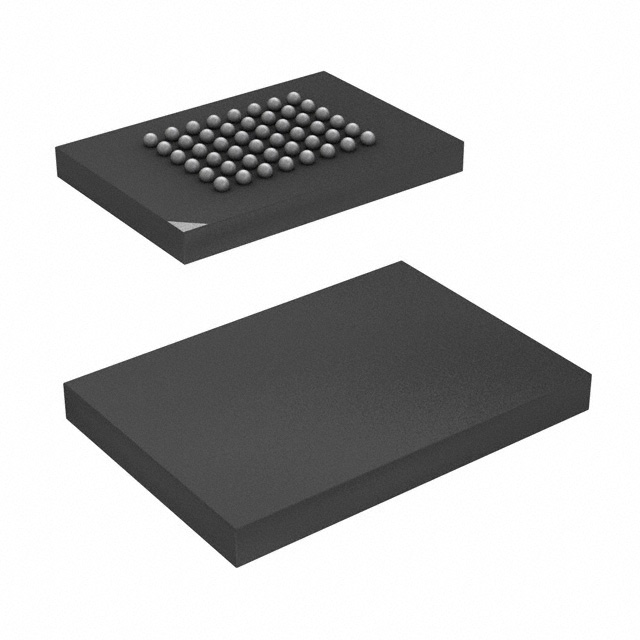
Infineon Technologies CY14B104L-BA20XIT
- Part No.:
- CY14B104L-BA20XIT
- Manufacturer:
- Infineon Technologies
- Category:
- Memory
- Package:
- 48-TFBGA
- Datasheet:
-
 CY14B104L-BA20XIT.pdf
- Description:
- IC NVSRAM 4MBIT PARALLEL 48FBGA
- Quantity:
- Payment:

- Shipping:

Inventory:3,747
Please send an inquiry. Send us your inquiry, and we will respond immediately.
Product details
Overview
CY14B104L-BA20XIT from Cypress Semiconductor is a 4 Mbit (512K × 8) nonvolatile SRAM with QuantumTrap® technology, operating at 20 ns access time, single 3V supply (+20% to –10%), and industrial temperature range (–40°C to +85°C). It integrates fast SRAM with on-chip nonvolatile storage, enabling automatic STORE on power loss using an external VCAP capacitor and software- or hardware-triggered RECALL. Used in industrial PLCs for real-time data retention during brownouts.
For engineers reviewing the CY14B104L-BA20XIT datasheet, CY14B104L-BA20XIT pinout, CY14B104L-BA20XIT application, or CY14B104L-BA20XIT equivalent, key selection criteria include AutoStore timing (tSTORE = 15 ms max), VCAP capacitor sizing (0.1 µF), HSB pin behavior during STORE/RECALL, and x8 vs. x16 configuration compatibility with existing memory controllers.
Technical Context
The CY14B104L-BA20XIT implements a dual-cell architecture: standard SRAM for high-speed read/write and embedded QuantumTrap nonvolatile elements per cell. STORE transfers data from SRAM to nonvolatile storage; RECALL restores it on power-up - both operations inhibit concurrent SRAM access.
AutoStore initiates automatically when VCC drops below VSWITCH (2.7 V typ), using charge stored on the VCAP pin (0.1 µF ceramic). Hardware STORE is triggered by pulling HSB low; software STORE uses a six-address CE-controlled read sequence (0x4E38 → 0xB1C7 → 0x83E0 → 0x7C1F → 0x703F → 0x8FC0).
Key Specifications
| Parameter | Value and Actual Design Meaning |
|---|---|
| Memory Density | 4 Mbit (512K × 8 organization); supports byte-wide interface without external data masking logic. |
| Access Time | 20 ns (tAA); enables direct interfacing with 50 MHz microcontrollers without wait states. |
| Supply Voltage | 3.0 V ±10% (2.7 V to 3.6 V); compatible with standard 3.3 V I/O domains and eliminates need for level shifters. |
| STORE Endurance | 200,000 cycles; sufficient for daily power-cycle logging in industrial gateways over 5+ years. |
| Data Retention | 20 years at +85°C; ensures firmware state integrity across product lifecycle without battery backup. |
| Operating Temperature | –40°C to +85°C; qualified for deployment in uncontrolled industrial enclosures and outdoor control cabinets. |
| VCAP Requirement | 0.1 µF ceramic capacitor on VCAP pin; provides ~15 ms STORE energy budget at VCC = 2.7 V, eliminating external power-fail circuitry. |
Pinout & Package
Package: 48-ball FBGA (7 mm × 9 mm, 0.8 mm pitch), RoHS-compliant, lead-free.
| Pin/Terminal | Circuit Role | Design Meaning |
|---|---|---|
| A0–A18 | Address Input | 19-bit address bus for 512K × 8 addressing; A17/A18 are NC in x8 mode per datasheet Figure 1. |
| DQ0–DQ7 | Bidirectional Data I/O | 8-bit parallel data path; tri-stated when OE HIGH or during STORE/RECALL to prevent bus contention. |
| WE, CE, OE | Control Inputs | Active-low write enable, chip enable, output enable; support standard SRAM timing with tHZWE = 5 ns min. |
| VCAP | Power Supply Terminal | Connects to 0.1 µF storage capacitor; internal regulator charges VCAP during normal operation and powers STORE at VCC dropout. |
| HSB | Hardware Store Busy | Open-drain status signal: driven LOW during STORE/RECALL; can initiate STORE when externally pulled LOW. |
| VCC / VSS | Power / Ground | Single 3V supply domain; VSS must be solidly connected to system ground plane to minimize noise-induced STORE errors. |
Key Features
| Feature | Design Value |
|---|---|
| AutoStore on Power Loss | Zero external circuitry required - internal VCAP regulator and voltage monitor trigger STORE when VCC < 2.7 V. |
| Software-Controlled STORE/RECALL | Six-address CE-read sequence enables deterministic nonvolatile writes without hardware interrupts or GPIO dependencies. |
| Infinite SRAM Read/Write Cycles | Preserves full SRAM endurance while adding nonvolatile backup - no wear leveling or block management overhead. |
| Hardware STORE Initiation via HSB | Enables system-level power-fail detection (e.g., from supervisor IC) to force STORE before complete VCC collapse. |
| Industrial Temperature Support | Validated operation from –40°C to +85°C ensures reliability in motor drives, HVAC controllers, and railway signaling systems. |
Applications
| Industrial PLC Data Logging | Medical Device Parameter Backup |
|---|---|
|
Use Scenario: Retaining runtime I/O state and alarm history during unexpected AC mains interruption in DIN-rail mounted PLCs. IC Role / Device Role / Timing Role: Nonvolatile SRAM providing immediate STORE on VCC drop, with 15 ms tSTORE ensuring completion before capacitor discharge. Use Value: Eliminates supercapacitor/battery backup subsystems, reducing BOM cost and board space by >30% versus NVSRAM alternatives requiring external power-fail logic. |
Use Scenario: Preserving calibrated sensor offsets and patient treatment settings across power cycles in portable infusion pumps. IC Role / Device Role / Timing Role: x8 nvSRAM acting as fail-safe register file; RECALL on power-up restores operational context within 10 ms (tHRECALL). Use Value: Meets IEC 62304 Class C software safety requirements by guaranteeing deterministic data recovery without firmware intervention. |
| Automotive Body Control Module | Telecom Line Card Configuration |
|
Use Scenario: Storing door lock actuator positions and lighting profiles during vehicle ignition-off periods in 12 V battery-supplied BCMs. IC Role / Device Role / Timing Role: Industrial-grade nvSRAM interfaced to 8-bit MCU via parallel bus; withstands load-dump transients up to ±40 V via robust VCC filtering. Use Value: Achieves ASIL-B compliance for memory integrity through 20-year data retention and 200K STORE cycles - exceeding automotive EEPROM endurance limits. |
Use Scenario: Holding FPGA configuration bitstreams and port mapping tables in carrier-grade DSLAM line cards subject to frequent hot-swap events. IC Role / Device Role / Timing Role: High-reliability memory buffer enabling zero-downtime field upgrades; HSB pin signals STORE progress to host processor. Use Value: Reduces mean time to repair (MTTR) by eliminating manual reconfiguration after line card replacement or power cycling. |
Equivalent & Alternatives
The following parts are listed as comparable options for similar nonvolatile SRAM applications.
| Alternative Part | Technical Difference | Application Difference | Selection Advice |
|---|---|---|---|
| STK14C88-3AJ5F | 4 Mbit (512K × 8), 35 ns access, 3.3 V only, no HSB pin, requires external power-fail detection circuit. | Lacks hardware STORE initiation and AutoStore; needs discrete supervisor IC and capacitor charging circuit. | Choose only if legacy design already includes power-fail logic and timing margin allows 35 ns access. |
| FM24CL04-G | 4 Mbit F-RAM, 55 ns access, I²C interface, unlimited endurance, but no parallel bus or AutoStore capability. | Serial interface increases CPU overhead; no automatic power-loss STORE - relies on host polling or interrupt-driven save. | Select for low-pin-count designs where I²C is preferred and deterministic STORE timing is not critical. |
Compared with STK14C88-3AJ5F and FM24CL04-G, the CY14B104L-BA20XIT uniquely combines 20 ns parallel access, integrated AutoStore with VCAP, and HSB status signaling - enabling simpler, more reliable power-loss recovery in real-time embedded systems.
Availability
CY14B104L-BA20XIT is available at Aetrix Electronics and suitable for industrial PLCs, medical infusion devices, automotive body control modules, and telecom line cards requiring stable component supply across extended product lifecycles.
Supply support for CY14B104L-BA20XIT includes scheduled delivery planning, volume procurement assistance, BOM continuity management, traceable sourcing, and lifecycle availability coordination for OEM customers, industrial embedded developers, connected-device designers, and electronics production programs.
Manufacturer
Cypress Semiconductor (now part of Infineon Technologies) designs high-reliability memory and programmable solutions for industrial, automotive, and communications markets.
The CY14B104L belongs to Cypress's nvSRAM product line, engineered specifically for applications demanding instant nonvolatile storage without batteries, capacitors, or external supervision circuitry.
FAQ
What is the minimum VCAP capacitance required for reliable AutoStore operation?
The CY14B104L-BA20XIT requires a 0.1 µF X7R ceramic capacitor on the VCAP pin. This value ensures ≥15 ms STORE duration at VCC = 2.7 V and –40°C, per DC Electrical Characteristics Table on page 7 of datasheet 001-07102 Rev. *L. Larger values do not extend STORE time due to internal current limiting.
Can the HSB pin be left unconnected if hardware STORE is not used?
Yes - the HSB pin has an internal weak pull-up and may be left floating if unused. When disconnected, it remains HIGH during normal operation and does not affect SRAM functionality. It only drives LOW during active STORE/RECALL or when externally asserted.
Does the CY14B104L-BA20XIT support x16 data bus configuration?
No - the CY14B104L variant is strictly 512K × 8 (x8). The x16 configuration (256K × 16) is implemented in the CY14B104N. Pinout, address mapping (A0–A17), and byte-enable pins (BHE/ BLE) differ; mixing them causes functional failure.
How is software STORE disabled to prevent unintended nonvolatile writes?
Software STORE is disabled by executing the AutoStore disable sequence: six consecutive CE-controlled reads to addresses 0x4E38, 0xB1C7, 0x83E0, 0x7C1F, 0x703F, then 0x8B45. This sequence must use CE control, with WE held HIGH throughout; intervening writes or address errors abort the command.
CY14B104L-BA20XIT Specifications
- Product attributes
- Attribute value
- Manufacturer:
- Infineon Technologies
- Series:
- -
- Package/Case:
- 48-TFBGA
- Packaging:
- Tape & Reel (TR)
- Product Status:
- Obsolete
- Programmable:
- Not Verified
- Memory Type:
- Non-Volatile
- Memory Format:
- NVSRAM
- Technology:
- NVSRAM (Non-Volatile SRAM)
- Memory Size:
- 4Mbit
- Memory Organization:
- 512K x 8
- Memory Interface:
- Parallel
- Clock Frequency:
- -
- Write Cycle Time - Word, Page:
- 20ns
- Access Time:
- 20 ns
- Voltage - Supply:
- 2.7V ~ 3.6V
- Operating Temperature:
- -40°C ~ 85°C (TA)
- Grade:
- -
- Qualification:
- -
- Mounting Type:
- Surface Mount
- Supplier Device Package:
- 48-FBGA (6x10)
CY14B104L-BA20XIT FAQ
1.How can I place an order for CY14B104L-BA20XIT through Aetrix?
Please submit a Request for Quotation (RFQ) for CY14B104L-BA20XIT on Aetrix. Our sales agent will provide a competitive quotation and guide you through the order confirmation once you accept the terms.
2.Are the price and stock information for CY14B104L-BA20XIT reliable?
The price and inventory of CY14B104L-BA20XIT are updated periodically and may fluctuate due to market conditions. Stock and pricing data are typically refreshed every 24 hours. Quotation validity for CY14B104L-BA20XIT is usually 5 days.
3.What payment methods are accepted for CY14B104L-BA20XIT?
We accept Wire Transfer, PayPal, Credit Card, Western Union, MoneyGram, and Escrow for CY14B104L-BA20XIT transactions.
Note: Certain payment methods may incur a processing fee.
4.How is shipping managed for CY14B104L-BA20XIT?
CY14B104L-BA20XIT orders can be shipped via leading logistics carriers, including DHL, UPS, FedEx, TNT, or Registered Mail.
Once your CY14B104L-BA20XIT order is processed, you will receive an email with the shipment details and tracking number.
Note: Tracking information may take up to 24 hours to appear. Express delivery typically takes 3–5 business days.
5.How can I obtain technical support or documentation for CY14B104L-BA20XIT?
For technical support, including CY14B104L-BA20XIT datasheets, pinout diagrams, or application guidance, please contact our engineering support team. They can provide detailed documentation and assistance for your CY14B104L-BA20XIT requirements.
6.How does Aetrix verify that CY14B104L-BA20XIT is sourced from the original manufacturer or authorized distributors?
All CY14B104L-BA20XIT products on Aetrix are procured from qualified distributors and authorized channels. Our dedicated quality assurance team conducts strict verification, including traceability checks and, if necessary, third-party testing. This ensures that CY14B104L-BA20XIT meets industry standards.
7.What is the process for return or replacement of CY14B104L-BA20XIT?
All CY14B104L-BA20XIT units undergo pre-shipment inspection (PSI). If there is an issue with CY14B104L-BA20XIT, returns or replacements are accepted under the following conditions:
1.Quantity discrepancies, incorrect items, or visible external defects (such as breakage or corrosion), acknowledged by Aetrix.
2.The issue is reported within 90 days of delivery.
3.The CY14B104L-BA20XIT part is unused and in its original packaging.
Return procedure for CY14B104L-BA20XIT:
1.Submit a request within 90 days.
2.Obtain a Return Material Authorization (RMA) from Aetrix.
CY14B104L-BA20XIT Tags

-
M24C02-WMN6TP
STMicroelectronics
-
AT24C02C-XHM-T
Microchip Technology
-
AT21CS01-STUM10-T
Microchip Technology

-
AT24C02C-SSHM-T
Microchip Technology

-
24LC01BT-I/OT
Microchip Technology
-
M24C02-FMC6TG
STMicroelectronics
-
AT24CS02-SSHM-T
Microchip Technology

-
93LC46BT-I/OT
Microchip Technology
-
AT24C04C-SSHM-T
Microchip Technology

-
24LC01BT-I/SN
Microchip Technology
-
24AA02UIDT-I/OT
Microchip Technology
-
AT24C08C-STUM-T
Microchip Technology
Tech Hub
A D latch stores one bit while Enable controls when data can pass. This reference covers gate-level operation, truth tables, transparency, setup and hold timing, LE versus OE, common ICs and practical …
An SR latch stores one bit through cross-coupled feedback. This engineering reference covers NOR and NAND implementations, truth tables, forbidden-state recovery, gated operation, switch debouncing, fa…

Latch circuits retain one bit through feedback. This technical reference covers SR and D latches, truth tables, transparency, timing limits, latch-versus-flip-flop behavior, applications and common log…

An engineering guide to LED driver operation, constant-current and constant-voltage outputs, linear and switching topologies, dimming, IC selection, calculations, replacement compatibility, and fault c…

Operational amplifier guide covering op amp basics, feedback, ideal vs real op amps, common configurations, buffer circuits, offset, bias current, gain-bandwidth, slew rate, rail-to-rail limits and sel…

Jumper cables guide covering safe connection order, red and black clamp placement, final ground connection, cable gauge, length, clamp quality, copper vs CCA cables, jump starter comparison and battery…

LDO regulator guide covering low dropout voltage, power dissipation, thermal design, PSRR, output noise, capacitor stability, adjustable LDO circuits, LDO vs buck converter and datasheet selection chec…

Conditional Access Module guide covering CAM meaning, CI/CI+ interface, smart card authorization, DVB security workflow, TV and set-top box compatibility, internal electronics, ESD protection, connecto…

Guide to electronic component obsolescence covering EOL risk, PCN/PDN notices, last-time buy planning, replacement options, form-fit-function validation, counterfeit risk and BOM lifecycle management.

18650 battery guide covering lithium-ion cell basics, 3.6V/3.7V voltage, 4.2V charging, mAh and Wh capacity, protected cells, chargers, BMS, series-parallel packs, holders, welding and sourcing checks.…


