
 My Inquiry
 My Account


Infineon Technologies CY14B104NA-BA45XE
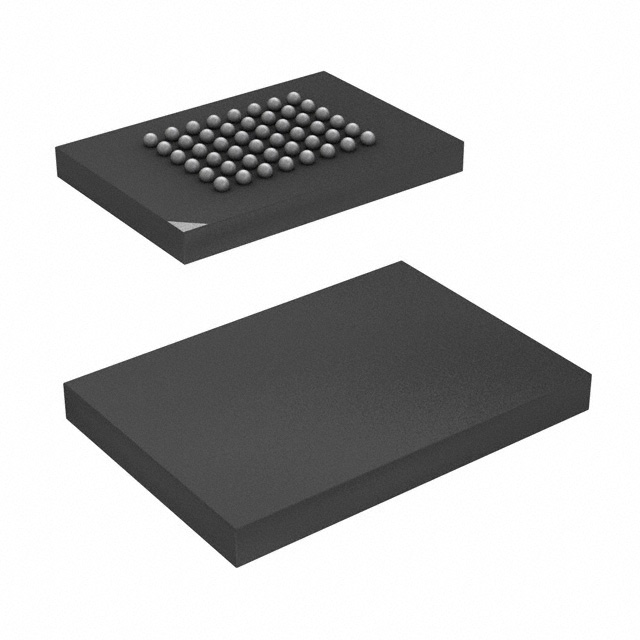
- Part No.:
- CY14B104NA-BA45XE
- Manufacturer:
- Infineon Technologies
- Category:
- Memory
- Package:
- 48-TFBGA
- Datasheet:
-
 CY14B104NA-BA45XE.pdf
- Description:
- IC NVSRAM 4MBIT PARALLEL 48FBGA
- Quantity:
- Payment:

- Shipping:

Inventory:4,371
Please send an inquiry. Send us your inquiry, and we will respond immediately.
Product details
Overview
CY14B104NA-BA45XE from Cypress Semiconductor is an automotive-grade 4-Mbit (256K × 16) non-volatile SRAM with QuantumTrap technology, operating at 45 ns access time and single 3.3 V supply (–40 °C to +125 °C). It integrates fast SRAM with embedded nonvolatile storage, supports AutoStore on power-down via VCAP capacitor, and enables software/hardware STORE/RECALL. Used in engine control units for real-time parameter retention during ignition cycling.
For engineers reviewing the CY14B104NA-BA45XE datasheet, CY14B104NA-BA45XE pinout, CY14B104NA-BA45XE application, or CY14B104NA-BA45XE equivalent, key selection criteria include Automotive-E temperature rating (–40 °C to +125 °C), 100K STORE cycles, VCAP-based AutoStore timing, HSB pin behavior during STORE, and TSOP II package compatibility with legacy ECU PCB layouts.
Technical Context
The CY14B104NA-BA45XE implements a dual-cell architecture: standard SRAM for volatile read/write and QuantumTrap nonvolatile elements per cell. STORE transfers data from SRAM to nonvolatile storage; RECALL restores it on power-up. Both operations inhibit concurrent SRAM access.
AutoStore triggers automatically when VCC drops below VSWITCH, using charge stored on the external VCAP capacitor (0.1 µF typical). Hardware STORE initiates via HSB pin assertion; software STORE/RECALL use six-address read sequences. The device supports byte-level writes via BHE/ BLE and uses CE/OE/WE control logic identical to standard SRAMs.
Key Specifications
| Parameter | Value and Actual Design Meaning |
|---|---|
| Memory Density | 4 Mbit (256K × 16 words); provides full 16-bit parallel interface without address multiplexing. |
| Access Time | 45 ns; ensures compatibility with mid-speed microcontrollers in automotive body control modules. |
| Operating Voltage | 3.3 V +0.3 V; matches standard automotive 3.3 V rail with no level-shifting required. |
| Temperature Range | –40 °C to +125 °C (Automotive-E grade); qualified for under-hood applications including transmission control units. |
| STORE Endurance | 100K cycles; specifies guaranteed nonvolatile write endurance for infotainment system configuration backup. |
| Data Retention | 1 year at +125 °C; defines minimum archival duration for calibration data after vehicle shutdown. |
| VCAP Capacitor | 0.1 µF ceramic; supplies energy for single AutoStore during brownout-must be placed within 5 mm of VCAP pin. |
Pinout & Package
Package: 44-pin Thin Small Outline Package (TSOP II), RoHS-compliant, 0.8 mm pitch, body size 12.0 × 10.0 mm.
| Pin/Terminal | Circuit Role | Design Meaning |
|---|---|---|
| A0–A17 | Address Input | 18-bit address bus supporting full 256K-word addressing; A16/A17 are NC in 4-Mbit config but reserved for future density expansion. |
| DQ0–DQ15 | Bidirectional Data I/O | 16-bit parallel data path; supports byte-wide access via BHE (DQ15–DQ8) and BLE (DQ7–DQ0). |
| WE, CE, OE | Control Inputs | Standard SRAM control tri-state logic: WE active-low write strobe, CE active-low chip select, OE active-low output enable. |
| HSB | Open-drain Status/Control | Indicates STORE progress (driven LOW); also initiates hardware STORE when externally pulled LOW-requires external pull-up if unused. |
| VCAP | Power Supply Terminal | Connects to 0.1 µF storage capacitor; internal regulator charges VCAP during normal operation to enable AutoStore on power loss. |
Key Features
| Feature | Design Value |
|---|---|
| QuantumTrap Nonvolatile Cell | Enables infinite SRAM read/write cycles while guaranteeing 100K STORE cycles and 1-year data retention at +125 °C. |
| AutoStore on Power-Down | Eliminates need for external backup battery or supercapacitor-uses only 0.1 µF VCAP capacitor for single-cycle store. |
| Hardware STORE Initiation | HSB pin allows deterministic, externally triggered STORE independent of software state-critical for crash-data capture. |
| Software STORE/RECALL Sequences | Six-address read sequences (e.g., 0x4E38 → 0xB1C7 → … → 0x8FC0) provide secure, non-disruptive firmware-controlled nonvolatile operations. |
| Automotive-E Qualification | Qualified to AEC-Q100 Grade 1 (–40 °C to +125 °C) with 100K STORE cycles-meets requirements for powertrain and ADAS subsystems. |
Applications
| Engine Control Unit (ECU) | Advanced Driver Assistance Systems (ADAS) |
|---|---|
|
Use Scenario: Stores real-time sensor fusion parameters and fault logs during engine cranking or voltage sag. IC Role / Device Role / Timing Role: Nonvolatile SRAM providing immediate recall of last-known safe state upon restart after ignition cycle interruption. Use Value: Eliminates reliance on EEPROM wear leveling or flash programming delays-enables sub-100 ms boot-time data recovery. |
Use Scenario: Retains camera calibration offsets and radar object tracking history across vehicle sleep/wake transitions. IC Role / Device Role / Timing Role: High-reliability memory buffer that survives 12 V battery disconnect events without data corruption. Use Value: Maintains functional safety integrity (ISO 26262 ASIL-B) by preserving critical runtime context between low-power states. |
| Infotainment Head Unit | Transmission Control Module (TCM) |
|
Use Scenario: Preserves user preferences (volume, display brightness, Bluetooth pairing) during short-term power loss. IC Role / Device Role / Timing Role: Drop-in SRAM replacement with transparent nonvolatile backup-no firmware changes required. Use Value: Achieves zero-latency recall of UI state without interrupting audio playback or navigation rendering. |
Use Scenario: Captures gear shift timing profiles and torque converter slip data during abrupt deceleration or stall events. IC Role / Device Role / Timing Role: Deterministic STORE trigger via HSB pin ensures data capture before power collapse in high-dynamic driving. Use Value: Enables post-event diagnostics with timestamped mechanical behavior data-even after complete power loss. |
Equivalent & Alternatives
The following parts are listed as comparable options for similar nvSRAM applications.
| Alternative Part | Technical Difference | Application Difference | Selection Advice |
|---|---|---|---|
| FM24V10-G | 1-Mbit (128K × 8), 45 ns, 2.7–3.6 V, 1M STORE cycles, SOIC-28 package | Limited density and 8-bit bus; lacks HSB pin and AutoStore capacitor interface | Choose for cost-sensitive, lower-density applications where software-controlled STORE suffices and board space is constrained. |
| MB85RS4MT-Y | 4-Mbit (512K × 8), 104 MHz SPI interface, 1.7–2.2 V, FRAM-based, no VCAP required | Serial interface incompatible with parallel SRAM buses; no hardware STORE/RECALL or HSB signaling | Choose for new designs with SPI-capable MCUs and where continuous write endurance (>10¹⁴ cycles) outweighs parallel interface needs. |
Compared with FM24V10-G and MB85RS4MT-Y, the CY14B104NA-BA45XE uniquely delivers parallel 16-bit SRAM compatibility, deterministic hardware STORE via HSB, and integrated AutoStore capacitor management-making it the only option for retrofitting legacy automotive controllers requiring zero-firmware-change nonvolatility.
Availability
CY14B104NA-BA45XE is available at Aetrix Electronics and suitable for engine control units, ADAS domain controllers, and transmission control modules requiring stable component supply across extended automotive lifecycles.
Supply support for CY14B104NA-BA45XE includes scheduled delivery planning, volume procurement assistance, BOM continuity management, traceable sourcing, and lifecycle availability coordination for OEM customers, industrial embedded developers, connected-device designers, and electronics production programs.
Manufacturer
Cypress Semiconductor (now part of Infineon Technologies) designs high-reliability semiconductor solutions for automotive, industrial, and IoT applications, with global R&D and manufacturing infrastructure.
The CY14B nvSRAM product line targets automotive systems needing deterministic, battery-free nonvolatile memory-specifically engineered for powertrain, chassis, and ADAS modules where data integrity must survive rapid voltage collapse.
FAQ
What is the function of the VCAP pin, and what capacitor value is required?
The VCAP pin connects to an external 0.1 µF ceramic capacitor that stores energy used to complete a single AutoStore operation during power loss. Cypress specifies 0.1 µF ±20% X7R dielectric, placed within 5 mm of the pin with minimal trace inductance. Using a smaller capacitor risks incomplete STORE and data corruption; larger values extend charge time but do not improve reliability.
How does the HSB pin behave during a STORE operation?
During any STORE (AutoStore, hardware, or software), the HSB pin is actively driven LOW by the device to signal busy status. After completion, it is driven HIGH for tHHHD (≤100 ns) with full drive strength, then held HIGH by an internal 100 kΩ pull-up. If unused, HSB must remain unconnected-no external pull-up is required unless used for hardware initiation.
Can CY14B104NA-BA45XE be used as a direct replacement for standard SRAMs?
Yes-its pinout, timing, and control logic (CE/OE/WE/BHE/ BLE) match industry-standard 256K × 16 SRAMs. All SRAM read/write functions operate identically. Nonvolatile features (STORE/RECALL) remain inactive unless explicitly triggered, enabling seamless integration into existing designs without firmware modification.
What is the difference between Automotive-A and Automotive-E grades for this part?
The CY14B104NA-BA45XE is Automotive-E grade: rated for –40 °C to +125 °C operation, 100K STORE cycles, and 1-year data retention at +125 °C. Automotive-A grade (e.g., CY14B104NA-BA25XIT) offers –40 °C to +85 °C, 1M STORE cycles, and 20-year retention-intended for cabin electronics, not under-hood applications.
CY14B104NA-BA45XE Specifications
- Product attributes
- Attribute value
- Manufacturer:
- Infineon Technologies
- Series:
- -
- Package/Case:
- 48-TFBGA
- Packaging:
- Tray
- Product Status:
- Active
- Programmable:
- Not Verified
- Memory Type:
- Non-Volatile
- Memory Format:
- NVSRAM
- Technology:
- NVSRAM (Non-Volatile SRAM)
- Memory Size:
- 4Mbit
- Memory Organization:
- 256K x 16
- Memory Interface:
- Parallel
- Clock Frequency:
- -
- Write Cycle Time - Word, Page:
- 45ns
- Access Time:
- 45 ns
- Voltage - Supply:
- 3V ~ 3.6V
- Operating Temperature:
- -40°C ~ 125°C (TA)
- Grade:
- -
- Qualification:
- -
- Mounting Type:
- Surface Mount
- Supplier Device Package:
- 48-FBGA (6x10)
CY14B104NA-BA45XE FAQ
1.How can I place an order for CY14B104NA-BA45XE through Aetrix?
Please submit a Request for Quotation (RFQ) for CY14B104NA-BA45XE on Aetrix. Our sales agent will provide a competitive quotation and guide you through the order confirmation once you accept the terms.
2.Are the price and stock information for CY14B104NA-BA45XE reliable?
The price and inventory of CY14B104NA-BA45XE are updated periodically and may fluctuate due to market conditions. Stock and pricing data are typically refreshed every 24 hours. Quotation validity for CY14B104NA-BA45XE is usually 5 days.
3.What payment methods are accepted for CY14B104NA-BA45XE?
We accept Wire Transfer, PayPal, Credit Card, Western Union, MoneyGram, and Escrow for CY14B104NA-BA45XE transactions.
Note: Certain payment methods may incur a processing fee.
4.How is shipping managed for CY14B104NA-BA45XE?
CY14B104NA-BA45XE orders can be shipped via leading logistics carriers, including DHL, UPS, FedEx, TNT, or Registered Mail.
Once your CY14B104NA-BA45XE order is processed, you will receive an email with the shipment details and tracking number.
Note: Tracking information may take up to 24 hours to appear. Express delivery typically takes 3–5 business days.
5.How can I obtain technical support or documentation for CY14B104NA-BA45XE?
For technical support, including CY14B104NA-BA45XE datasheets, pinout diagrams, or application guidance, please contact our engineering support team. They can provide detailed documentation and assistance for your CY14B104NA-BA45XE requirements.
6.How does Aetrix verify that CY14B104NA-BA45XE is sourced from the original manufacturer or authorized distributors?
All CY14B104NA-BA45XE products on Aetrix are procured from qualified distributors and authorized channels. Our dedicated quality assurance team conducts strict verification, including traceability checks and, if necessary, third-party testing. This ensures that CY14B104NA-BA45XE meets industry standards.
7.What is the process for return or replacement of CY14B104NA-BA45XE?
All CY14B104NA-BA45XE units undergo pre-shipment inspection (PSI). If there is an issue with CY14B104NA-BA45XE, returns or replacements are accepted under the following conditions:
1.Quantity discrepancies, incorrect items, or visible external defects (such as breakage or corrosion), acknowledged by Aetrix.
2.The issue is reported within 90 days of delivery.
3.The CY14B104NA-BA45XE part is unused and in its original packaging.
Return procedure for CY14B104NA-BA45XE:
1.Submit a request within 90 days.
2.Obtain a Return Material Authorization (RMA) from Aetrix.
CY14B104NA-BA45XE Tags

-
M24C02-WMN6TP
STMicroelectronics
-
AT24C02C-XHM-T
Microchip Technology
-
AT21CS01-STUM10-T
Microchip Technology

-
AT24C02C-SSHM-T
Microchip Technology

-
24LC01BT-I/OT
Microchip Technology
-
M24C02-FMC6TG
STMicroelectronics
-
AT24CS02-SSHM-T
Microchip Technology

-
93LC46BT-I/OT
Microchip Technology
-
AT24C04C-SSHM-T
Microchip Technology

-
24LC01BT-I/SN
Microchip Technology
-
24AA02UIDT-I/OT
Microchip Technology
-
AT24C08C-STUM-T
Microchip Technology
Tech Hub
An SR latch stores one bit through cross-coupled feedback. This engineering reference covers NOR and NAND implementations, truth tables, forbidden-state recovery, gated operation, switch debouncing, fa…

Latch circuits retain one bit through feedback. This technical reference covers SR and D latches, truth tables, transparency, timing limits, latch-versus-flip-flop behavior, applications and common log…

An engineering guide to LED driver operation, constant-current and constant-voltage outputs, linear and switching topologies, dimming, IC selection, calculations, replacement compatibility, and fault c…

Operational amplifier guide covering op amp basics, feedback, ideal vs real op amps, common configurations, buffer circuits, offset, bias current, gain-bandwidth, slew rate, rail-to-rail limits and sel…

Jumper cables guide covering safe connection order, red and black clamp placement, final ground connection, cable gauge, length, clamp quality, copper vs CCA cables, jump starter comparison and battery…

LDO regulator guide covering low dropout voltage, power dissipation, thermal design, PSRR, output noise, capacitor stability, adjustable LDO circuits, LDO vs buck converter and datasheet selection chec…

Conditional Access Module guide covering CAM meaning, CI/CI+ interface, smart card authorization, DVB security workflow, TV and set-top box compatibility, internal electronics, ESD protection, connecto…

Guide to electronic component obsolescence covering EOL risk, PCN/PDN notices, last-time buy planning, replacement options, form-fit-function validation, counterfeit risk and BOM lifecycle management.

18650 battery guide covering lithium-ion cell basics, 3.6V/3.7V voltage, 4.2V charging, mAh and Wh capacity, protected cells, chargers, BMS, series-parallel packs, holders, welding and sourcing checks.…

Hall effect sensor guide covering working principle, linear and digital sensors, Arduino circuits, current sensing, speed detection, automotive applications, A3144 examples, signal filtering and datash…


