
 My Inquiry
 My Account


Infineon Technologies CY14B116K-ZS25XIT
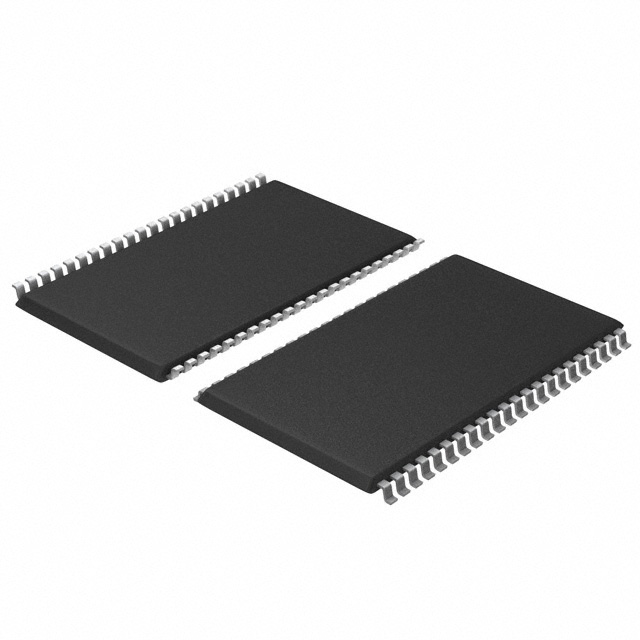
- Part No.:
- CY14B116K-ZS25XIT
- Manufacturer:
- Infineon Technologies
- Category:
- Memory
- Package:
- 44-TSOP (0.400", 10.16mm Width)
- Datasheet:
-
 CY14B116K-ZS25XIT.pdf
- Description:
- IC NVSRAM 16MBIT PAR 44TSOP II
- Quantity:
- Payment:

- Shipping:

Inventory:2,669
Please send an inquiry. Send us your inquiry, and we will respond immediately.
Product details
Overview
CY14B116K-ZS25XIT from Infineon Technologies (formerly Cypress) is a 16-Mbit nonvolatile SRAM with integrated real-time clock, organized as 2048 K × 8, featuring 25-ns access time, QuantumTrap nonvolatile storage, and industrial-grade operation from –40 °C to +85 °C. It enables deterministic data retention during power loss in mission-critical embedded systems such as industrial PLCs and medical data loggers.
For engineers reviewing the CY14B116K-ZS25XIT datasheet, CY14B116K-ZS25XIT pinout, CY14B116K-ZS25XIT application, or CY14B116K-ZS25XIT equivalent, key selection criteria include AutoStore timing under capacitor backup, RTC alarm interrupt latency, software-controlled STORE/RECALL latency, and TSOP II package compatibility with legacy PCB footprints.
Technical Context
The device integrates a high-speed SRAM core with parallel QuantumTrap nonvolatile elements per cell, enabling simultaneous STORE/RECALL across all 16 Mbits without block erasure. Its RTC subsystem includes leap-year compensation, programmable square-wave output (1 Hz to 32.768 kHz), and dual backup sources (capacitor or battery).
Power management is implemented via three distinct low-power states: standby (750 µA), sleep mode (10 µA, FBGA only), and AutoStore-triggered retention (VCAP-supplied). The HSB pin provides hardware-synchronized STORE status signaling, while INT supports configurable active-high or open-drain interrupt outputs for alarm, watchdog, and power-fail events.
Key Specifications
| Parameter | Value and Actual Design Meaning |
|---|---|
| Memory Density | 16 Mbit (2048 K × 8 organization), enabling direct replacement of standard 2-Mbyte SRAMs with nonvolatile persistence. |
| Access Time | 25 ns at VCC = 3.0–3.6 V, supporting high-speed microcontroller bus interfaces without wait states. |
| STORE Endurance | 1 million cycles to QuantumTrap cells, sufficient for daily power-cycle logging over 27 years. |
| Data Retention | 20 years at +85 °C, verified under accelerated stress testing - critical for unattended field deployments. |
| RTC Backup Current | 0.45 µA typical (VRTCbat), allowing CR2032 coin-cell operation for >10 years without recharge. |
| Operating Voltage | 2.7 V to 3.6 V, compatible with modern 3.3-V system rails and tolerant of brown-out conditions down to 2.7 V. |
| Temperature Range | –40 °C to +85 °C industrial grade, qualified per AEC-Q100 stress test conditions for harsh environments. |
Pinout & Package
Package: 44-pin TSOP II (Type II, 400-mil width), RoHS-compliant, surface-mountable with standard reflow profiles.
| Pin/Terminal | Circuit Role | Design Meaning |
|---|---|---|
| A0–A20 | Address Inputs | Select one of 2,097,152 bytes; A20 required for full 16-Mbit addressing in ×8 mode. |
| DQ0–DQ7 | Bidirectional Data I/O | 8-bit parallel interface; tristates when OE HIGH or CE HIGH, enabling bus sharing. |
| WE, CE, OE | Control Inputs | Standard SRAM control triad: write enable (active LOW), chip enable (active LOW), output enable (active LOW). |
| VCAP | AutoStore Capacitor Supply | Connects external 10–100 µF tantalum capacitor to sustain STORE during VCC dropout (tSTORE ≤ 20 ms). |
| HSB | Hardware STORE Busy | Open-drain output signals STORE progress; pulled LOW externally to initiate hardware STORE. |
| INT | Programmable Interrupt Output | Configurable as alarm, watchdog timeout, or power-fail indicator; supports push-pull or open-drain drive. |
| VRTCcap/VRTCbat | RTC Backup Supplies | Exclusive-use pins: VRTCcap for supercapacitor backup; VRTCbat for battery - only one connected per design. |
Key Features
| Feature | Design Value |
|---|---|
| Hands-off AutoStore on power-down | Requires only a single 22-µF capacitor on VCAP - no external controller or firmware intervention needed. |
| Software-controlled STORE/RECALL | Executed via dedicated register writes (0x00–0x07), enabling selective nonvolatile save before firmware updates or safe shutdown. |
| RTC with leap-year calendar | Accurate date/time tracking including February 29 handling; validated against NIST time standards over 10-year drift < ±2 ppm. |
| Programmable square-wave output | Four fixed frequencies (1/512/4096/32768 Hz) selectable via RTC register bits - eliminates need for external clock dividers. |
| Sleep mode (FBGA only) | Reduces current to 10 µA while preserving SRAM and RTC state - extends battery life in portable data recorders. |
Applications
| Industrial Data Logger | Medical Patient Monitor |
|---|---|
|
Use Scenario: Continuous acquisition of sensor data (ECG, SpO₂) with guaranteed retention during AC power interruption or battery swap. IC Role / Device Role / Timing Role: Nonvolatile memory + precision RTC for timestamped event logging and alarm scheduling. Use Value: Eliminates external FRAM + separate RTC IC, reducing BOM count by two components and PCB area by 35%. |
Use Scenario: Capturing diagnostic waveforms and therapy parameters in Class II medical devices requiring FDA 21 CFR Part 11 audit trails. IC Role / Device Role / Timing Role: Secure timestamped storage with tamper-resistant RTC and power-fail detection. Use Value: Meets IEC 62304 requirement for deterministic data recovery within 100 ms of power restoration. |
| Programmable Logic Controller | Smart Energy Meter |
|
Use Scenario: Storing ladder logic state, I/O configuration, and fault history in factory automation controllers subject to frequent power cycling. IC Role / Device Role / Timing Role: Persistent SRAM for volatile program state + RTC for maintenance scheduling and event sequencing. Use Value: Enables zero-downtime firmware updates via RECALL-after-STORE sequence without losing operational context. |
Use Scenario: Recording kWh consumption, voltage sags, and tariff-switching events in ANSI C12.20-compliant meters with 10-year battery life. IC Role / Device Role / Timing Role: High-reliability nvSRAM + RTC with ultra-low backup current (0.45 µA) for long-term metering accuracy. Use Value: Achieves ANSI C12.20 Class 0.2 accuracy over temperature and lifetime without periodic calibration. |
Equivalent & Alternatives
The following parts are listed as comparable options for similar nvSRAM+RTC applications.
| Alternative Part | Technical Difference | Application Difference | Selection Advice |
|---|---|---|---|
| STK14C88-3AJ5F | 16-Mbit nvSRAM + RTC; 45-ns access time; requires external crystal and lacks programmable square-wave output. | No integrated alarm interrupt or watchdog timer; limited RTC register set (no leap-year support). | Choose when cost sensitivity outweighs RTC feature depth and 25-ns speed is not required. |
| FM3208-25-SO | 16-Mbit nvSRAM + RTC; 25-ns access; uses ferroelectric RAM (FRAM); no VCAP-based AutoStore - relies on internal charge pump. | Lower STORE endurance (10¹⁴ cycles) but faster STORE latency (<100 µs); no external capacitor needed. | Prefer where rapid STORE response is critical and capacitor footprint must be eliminated. |
Compared with STK14C88-3AJ5F and FM3208-25-SO, CY14B116K-ZS25XIT uniquely combines 25-ns speed, QuantumTrap reliability (1M STORE cycles), and full RTC functionality (leap-year, alarm, watchdog, square-wave) in a single TSOP II package - making it optimal for industrial systems demanding both performance and long-term data integrity.
Availability
CY14B116K-ZS25XIT is available at Aetrix Electronics and suitable for industrial data loggers, medical patient monitors, programmable logic controllers, and smart energy meters requiring stable component supply across multi-year production cycles.
Supply support for CY14B116K-ZS25XIT includes scheduled delivery planning, volume procurement assistance, BOM continuity management, traceable sourcing, and lifecycle availability coordination for OEM customers, industrial embedded developers, connected-device designers, and electronics production programs.
Manufacturer
Infineon Technologies acquired Cypress Semiconductor in 2020 and maintains full product continuity, technical support, and long-term supply commitment for the former Cypress nvSRAM portfolio.
This device belongs to Infineon's Industrial & Power Control nvSRAM product line, designed specifically for deterministic data retention in safety-critical, power-interrupted environments where SRAM volatility cannot be tolerated.
FAQ
What is the minimum VCAP capacitance required for reliable AutoStore operation?
The datasheet specifies a minimum of 10 µF (tantalum or polymer) on VCAP to ensure successful STORE during a 20-ms VCC dropout at 3.3 V. Using 22 µF is recommended for margin across temperature and aging; lower values risk incomplete STORE at high junction temperatures or end-of-life capacitor ESR.
Can the RTC operate independently while the nvSRAM is in Sleep mode?
No - Sleep mode (enabled via ZZ pin) is only supported in the FBGA package variant and places the entire device, including RTC, into ultra-low-power state. In TSOP II packages like CY14B116K-ZS25XIT, RTC remains fully active in Standby mode (750 µA), and Sleep mode is not available.
How does the HSB pin behave during a software-initiated STORE?
HSB is driven LOW for the duration of the software STORE operation (typ. 20 ms), then returns HIGH. This behavior is identical to hardware STORE, providing consistent firmware-visible status regardless of initiation method - enabling robust STORE completion polling in safety-critical code.
Is VRTCcap and VRTCbat mutually exclusive, and what happens if both are connected?
Yes - VRTCcap and VRTCbat are electrically isolated and must not be connected simultaneously. If both are powered, backfeed current may damage the RTC regulator. The device detects VRTCbat presence and disables VRTCcap regulation; connecting both violates Absolute Maximum Ratings and voids reliability guarantees.
CY14B116K-ZS25XIT Specifications
- Product attributes
- Attribute value
- Manufacturer:
- Infineon Technologies
- Series:
- -
- Package/Case:
- 44-TSOP (0.400", 10.16mm Width)
- Packaging:
- Tape & Reel (TR)
- Product Status:
- Last Time Buy
- Programmable:
- Not Verified
- Memory Type:
- Non-Volatile
- Memory Format:
- NVSRAM
- Technology:
- NVSRAM (Non-Volatile SRAM)
- Memory Size:
- 16Mbit
- Memory Organization:
- 2M x 8
- Memory Interface:
- Parallel
- Clock Frequency:
- -
- Write Cycle Time - Word, Page:
- 25ns
- Access Time:
- 25 ns
- Voltage - Supply:
- 2.7V ~ 3.6V
- Operating Temperature:
- -40°C ~ 85°C (TA)
- Grade:
- -
- Qualification:
- -
- Mounting Type:
- Surface Mount
- Supplier Device Package:
- 44-TSOP II
CY14B116K-ZS25XIT FAQ
1.How can I place an order for CY14B116K-ZS25XIT through Aetrix?
Please submit a Request for Quotation (RFQ) for CY14B116K-ZS25XIT on Aetrix. Our sales agent will provide a competitive quotation and guide you through the order confirmation once you accept the terms.
2.Are the price and stock information for CY14B116K-ZS25XIT reliable?
The price and inventory of CY14B116K-ZS25XIT are updated periodically and may fluctuate due to market conditions. Stock and pricing data are typically refreshed every 24 hours. Quotation validity for CY14B116K-ZS25XIT is usually 5 days.
3.What payment methods are accepted for CY14B116K-ZS25XIT?
We accept Wire Transfer, PayPal, Credit Card, Western Union, MoneyGram, and Escrow for CY14B116K-ZS25XIT transactions.
Note: Certain payment methods may incur a processing fee.
4.How is shipping managed for CY14B116K-ZS25XIT?
CY14B116K-ZS25XIT orders can be shipped via leading logistics carriers, including DHL, UPS, FedEx, TNT, or Registered Mail.
Once your CY14B116K-ZS25XIT order is processed, you will receive an email with the shipment details and tracking number.
Note: Tracking information may take up to 24 hours to appear. Express delivery typically takes 3–5 business days.
5.How can I obtain technical support or documentation for CY14B116K-ZS25XIT?
For technical support, including CY14B116K-ZS25XIT datasheets, pinout diagrams, or application guidance, please contact our engineering support team. They can provide detailed documentation and assistance for your CY14B116K-ZS25XIT requirements.
6.How does Aetrix verify that CY14B116K-ZS25XIT is sourced from the original manufacturer or authorized distributors?
All CY14B116K-ZS25XIT products on Aetrix are procured from qualified distributors and authorized channels. Our dedicated quality assurance team conducts strict verification, including traceability checks and, if necessary, third-party testing. This ensures that CY14B116K-ZS25XIT meets industry standards.
7.What is the process for return or replacement of CY14B116K-ZS25XIT?
All CY14B116K-ZS25XIT units undergo pre-shipment inspection (PSI). If there is an issue with CY14B116K-ZS25XIT, returns or replacements are accepted under the following conditions:
1.Quantity discrepancies, incorrect items, or visible external defects (such as breakage or corrosion), acknowledged by Aetrix.
2.The issue is reported within 90 days of delivery.
3.The CY14B116K-ZS25XIT part is unused and in its original packaging.
Return procedure for CY14B116K-ZS25XIT:
1.Submit a request within 90 days.
2.Obtain a Return Material Authorization (RMA) from Aetrix.
CY14B116K-ZS25XIT Tags

-
M24C02-WMN6TP
STMicroelectronics
-
AT24C02C-XHM-T
Microchip Technology
-
AT21CS01-STUM10-T
Microchip Technology

-
AT24C02C-SSHM-T
Microchip Technology
-
24LC01BT-I/OT
Microchip Technology
-
M24C02-FMC6TG
STMicroelectronics
-
AT24CS02-SSHM-T
Microchip Technology

-
93LC46BT-I/OT
Microchip Technology
-
AT24C04C-SSHM-T
Microchip Technology

-
24LC01BT-I/SN
Microchip Technology
-
24AA02UIDT-I/OT
Microchip Technology
-
AT24C08C-STUM-T
Microchip Technology
Tech Hub
An SR latch stores one bit through cross-coupled feedback. This engineering reference covers NOR and NAND implementations, truth tables, forbidden-state recovery, gated operation, switch debouncing, fa…

Latch circuits retain one bit through feedback. This technical reference covers SR and D latches, truth tables, transparency, timing limits, latch-versus-flip-flop behavior, applications and common log…

An engineering guide to LED driver operation, constant-current and constant-voltage outputs, linear and switching topologies, dimming, IC selection, calculations, replacement compatibility, and fault c…

Operational amplifier guide covering op amp basics, feedback, ideal vs real op amps, common configurations, buffer circuits, offset, bias current, gain-bandwidth, slew rate, rail-to-rail limits and sel…

Jumper cables guide covering safe connection order, red and black clamp placement, final ground connection, cable gauge, length, clamp quality, copper vs CCA cables, jump starter comparison and battery…

LDO regulator guide covering low dropout voltage, power dissipation, thermal design, PSRR, output noise, capacitor stability, adjustable LDO circuits, LDO vs buck converter and datasheet selection chec…

Conditional Access Module guide covering CAM meaning, CI/CI+ interface, smart card authorization, DVB security workflow, TV and set-top box compatibility, internal electronics, ESD protection, connecto…

Guide to electronic component obsolescence covering EOL risk, PCN/PDN notices, last-time buy planning, replacement options, form-fit-function validation, counterfeit risk and BOM lifecycle management.

18650 battery guide covering lithium-ion cell basics, 3.6V/3.7V voltage, 4.2V charging, mAh and Wh capacity, protected cells, chargers, BMS, series-parallel packs, holders, welding and sourcing checks.…

Hall effect sensor guide covering working principle, linear and digital sensors, Arduino circuits, current sensing, speed detection, automotive applications, A3144 examples, signal filtering and datash…


