
 My Inquiry
 My Account


Infineon Technologies CY14E101J2-SXIT
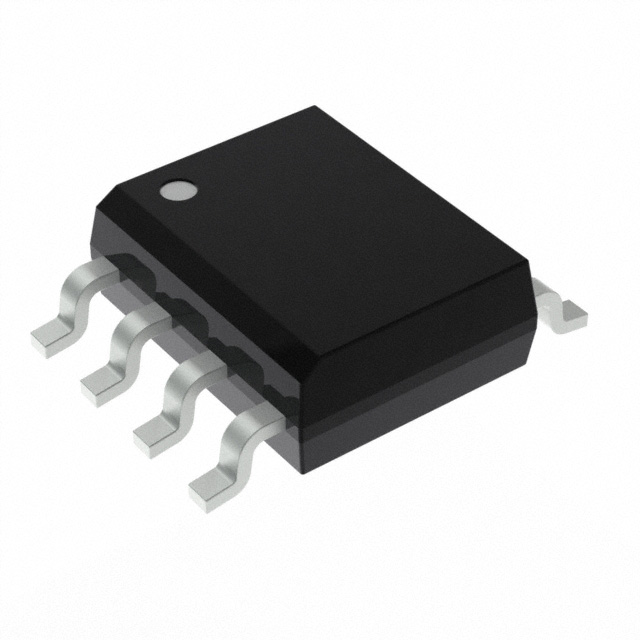
- Part No.:
- CY14E101J2-SXIT
- Manufacturer:
- Infineon Technologies
- Category:
- Memory
- Package:
- 8-SOIC (0.154", 3.90mm Width)
- Datasheet:
-
 CY14E101J2-SXIT.pdf
- Description:
- IC NVSRAM 1MBIT I2C 3.4MHZ 8SOIC
- Quantity:
- Payment:

- Shipping:

Inventory:1,289
Please send an inquiry. Send us your inquiry, and we will respond immediately.
Product details
Overview
CY14E101J2-SXIT from Infineon Technologies (formerly Cypress) is a 1-Mbit (128 K × 8) serial I²C nonvolatile SRAM with integrated real-time clock, operating at 4.5–5.5 V, featuring AutoStore on power-loss using external capacitor, Power-Up RECALL, and programmable square-wave output (1 Hz / 512 Hz / 4096 Hz / 32.768 kHz). It delivers infinite SRAM read/write cycles, 1 million STORE cycles to QuantumTrap nonvolatile elements, and 20-year data retention at 85 °C - deployed in industrial metering systems requiring deterministic nonvolatile data capture without battery backup.
For engineers reviewing the CY14E101J2-SXIT datasheet, CY14E101J2-SXIT pinout, CY14E101J2-SXIT application, or CY14E101J2-SXIT equivalent, key selection criteria include I²C speed support up to 3.4 MHz, RTC alarm/interrupt capability, hardware STORE/RECALL via HSB pin, VRTCcap/VRTCbat dual backup options, and SOIC-16 package compatibility with legacy board layouts.
Technical Context
This device integrates two independent functional blocks: a 128 K × 8 nvSRAM core with QuantumTrap nonvolatile storage and a full-featured RTC subsystem including watchdog timer, alarm registers, and programmable square-wave generator. The memory and RTC share a single I²C interface but operate on separate slave addresses and control register maps.
STORE operations are triggered automatically on VCC drop below threshold (using VCAP capacitor), by software command, or by asserting HSB low; RECALL occurs automatically at power-up or via I²C command. RTC backup is supported either by capacitor (VRTCcap) or battery (VRTCbat), with typical backup current of 0.45 µA and sleep mode current of 8 µA.
Key Specifications
| Parameter | Value and Actual Design Meaning |
|---|---|
| Memory Density | 1 Mbit (128 K × 8) - supports byte-wide data logging without address multiplexing |
| I²C Speed Modes | 100 kHz / 400 kHz / 1 MHz / 3.4 MHz - enables high-throughput firmware updates and time-stamped event buffering |
| Operating Voltage | 4.5 V to 5.5 V - compatible with 5 V industrial logic rails and legacy microcontroller interfaces |
| Data Retention | 20 years at 85 °C - ensures long-term reliability in uncooled industrial enclosures |
| RTC Backup Current | 0.45 µA (typical) - allows >10-year operation on CR2032 coin cell or low-leakage supercapacitor |
| STORE Endurance | 1 million cycles to QuantumTrap - supports daily power-cycle logging for >27 years |
| Square-Wave Output | Programmable 1 Hz / 512 Hz / 4096 Hz / 32.768 kHz - drives external timing circuits or low-power wake-up triggers |
Pinout & Package
16-pin Small Outline Integrated Circuit (SOIC) package, RoHS-compliant, 300 mil body width, standard gull-wing lead form.
| Pin/Terminal | Circuit Role | Design Meaning |
|---|---|---|
| VCC | Power supply input | Primary 4.5–5.5 V supply for nvSRAM and RTC logic; decoupling required within 10 mm |
| VSS | Ground reference | Digital ground return path; must be connected to system GND plane with low-inductance trace |
| SDA | I²C bidirectional data | Open-drain I/O requiring external pull-up to VCC; supports multi-master arbitration |
| SCL | I²C clock input | Master-generated clock up to 3.4 MHz; rise/fall time constrained by bus capacitance |
| WP | Hardware write protect | Active-low pin; internally pulled LOW - left floating for default unprotected operation |
| HSB | Hardware STORE busy indicator | Open-drain status output (LOW = busy); also accepts active-LOW STORE trigger |
| VCAP | AutoStore energy reservoir | Connects to external capacitor (≥47 µF, low-ESR) to sustain STORE during VCC dropout |
| VRTCcap | RTC capacitor backup | Alternative to VRTCbat; connects to backup capacitor when battery not used |
| VRTCbat | RTC battery backup | Accepts 1.8–5.5 V battery; disables VRTCcap when connected |
| INT/SQW | Interrupt/square-wave output | Configurable as alarm interrupt (active-HIGH push-pull or open-drain) or calibrated square wave |
| Xin / Xout | RTC crystal oscillator interface | Drives 32.768 kHz tuning-fork crystal; requires load capacitors per layout guidelines |
| A1 / A2 | I²C slave address select | Set slave address bits; internally pulled LOW - floating = 0b000 for base address 0x50 |
| NC | No-connect | Not bonded; must remain unconnected on PCB |
Key Features
| Feature | Design Value |
|---|---|
| AutoStore on power loss | Guaranteed STORE completion using VCAP capacitor without external supervisor IC or battery |
| Power-Up RECALL | Automatic SRAM restoration within 10 ms of VCC stabilization - no host initialization delay |
| RTC alarm & watchdog | Independent programmable alarm interrupt and watchdog timeout with configurable reset behavior |
| Software-controlled STORE/RECALL | Full I²C command set enables precise control over nonvolatile operations during runtime |
| 8-byte unique serial number | Factory-programmed identifier accessible via I²C - supports device-level traceability and calibration data binding |
Applications
| Smart Electricity Metering | Industrial PLC Data Logger |
|---|---|
Use Scenario: Capturing cumulative kWh readings and tariff-switch timestamps during mains power interruptions. IC Role / Device Role / Timing Role: Nonvolatile memory + precision RTC - stores metering data and maintains accurate time across blackouts. Use Value: Eliminates need for separate RTC chip and battery-backed SRAM, reducing BOM count and field failure modes. | Use Scenario: Recording sensor values (temperature, pressure, flow) at 1-second intervals with time stamps in factory automation controllers. IC Role / Device Role / Timing Role: Time-stamped data buffer with deterministic STORE on brownout - ensures no event loss during power sag. Use Value: VCAP-based AutoStore guarantees data integrity without battery maintenance or replacement logistics. |
| Medical Diagnostic Equipment | Energy Management Gateway |
Use Scenario: Storing calibration coefficients and last-known vital sign measurements in portable ultrasound or ECG devices. IC Role / Device Role / Timing Role: Secure, tamper-resistant storage with RTC-synchronized audit logs - meets IEC 62304 traceability requirements. Use Value: 8-byte serial number binds calibration data to specific unit; 20-year retention satisfies medical device lifecycle mandates. | Use Scenario: Aggregating submeter data from HVAC, lighting, and power quality sensors in commercial buildings. IC Role / Device Role / Timing Role: Centralized timekeeping and nonvolatile buffer - synchronizes distributed sensor timestamps and buffers burst uploads. Use Value: Programmable 1 Hz / 32.768 kHz SQW output drives external ADC sampling clocks or MCU wake-up timers. |
Equivalent & Alternatives
The following parts are listed as comparable options for similar nvSRAM+RTC applications.
| Alternative Part | Technical Difference | Application Difference | Selection Advice |
|---|---|---|---|
| STK14CA8-NF55I | Parallel interface (32-bit), 1-Mbit nvSRAM only - no integrated RTC or I²C | Requires external RTC and level-shifting for 5 V systems; higher pin count | Select when parallel bus bandwidth >10 MB/s is needed and RTC can be added separately |
| DS1347Z+ | Standalone RTC with trickle-charge battery backup - no nvSRAM | Must pair with external EEPROM or FRAM for nonvolatile data storage | Select when precise temperature-compensated RTC is prioritized over integrated memory |
Compared with STK14CA8-NF55I and DS1347Z+, CY14E101J2-SXIT uniquely combines I²C-accessible nvSRAM and full RTC in one SOIC-16 package, eliminating inter-chip timing skew, reducing PCB area by ~40%, and enabling single-interface firmware integration.
Availability
CY14E101J2-SXIT is available at Aetrix Electronics and suitable for smart metering, industrial data loggers, medical diagnostics, and energy gateway applications requiring stable component supply, long-life data retention, and deterministic power-loss recovery.
Supply support for CY14E101J2-SXIT includes scheduled delivery planning, volume procurement assistance, BOM continuity management, traceable sourcing, and lifecycle availability coordination for OEM customers, industrial embedded developers, connected-device designers, and electronics production programs.
Manufacturer
Infineon Technologies AG is a German semiconductor manufacturer specializing in power management, automotive, industrial, and security solutions, with global R&D and manufacturing infrastructure.
CY14E101J2-SXIT belongs to the Infineon nvSRAM product line, designed specifically for industrial and metering applications where deterministic nonvolatile storage and autonomous timekeeping must coexist without external supervision or battery dependency.
FAQ
What is the maximum I²C clock frequency supported by CY14E101J2-SXIT?
The device supports I²C Fast Mode Plus (1 MHz) and High-Speed Mode (3.4 MHz) in addition to standard (100 kHz) and fast (400 kHz) modes. All modes use the same physical interface and slave addressing scheme, with timing parameters specified per mode in the datasheet's AC switching characteristics table.
Can CY14E101J2-SXIT operate without an external crystal?
Yes - the RTC oscillator can be disabled entirely, or configured to use internal RC timing (with reduced accuracy). However, for full RTC functionality including alarm, watchdog, and square-wave output, a 32.768 kHz crystal must be connected between Xin and Xout with appropriate load capacitors per layout guidelines.
How does AutoStore behave when both VCAP and VRTCcap are populated?
VCAP powers the nvSRAM STORE operation during VCC dropout; VRTCcap powers only the RTC circuitry. They operate independently. Populating both is valid and common: VCAP ensures memory persistence, while VRTCcap maintains timekeeping during extended outages - no conflict or interaction between the two paths.
Is the 8-byte serial number writable or locked at factory?
The 8-byte serial number is factory-programmed and permanently locked. It is readable via I²C at fixed address offset 0x00 in the serial number slave address space (0x57), and cannot be modified, erased, or reprogrammed in-system or during programming.
CY14E101J2-SXIT Specifications
- Product attributes
- Attribute value
- Manufacturer:
- Infineon Technologies
- Series:
- -
- Package/Case:
- 8-SOIC (0.154", 3.90mm Width)
- Packaging:
- Tape & Reel (TR)
- Product Status:
- Active
- Programmable:
- Not Verified
- Memory Type:
- Non-Volatile
- Memory Format:
- NVSRAM
- Technology:
- NVSRAM (Non-Volatile SRAM)
- Memory Size:
- 1Mbit
- Memory Organization:
- 128K x 8
- Memory Interface:
- I2C
- Clock Frequency:
- 3.4 MHz
- Write Cycle Time - Word, Page:
- -
- Access Time:
- -
- Voltage - Supply:
- 4.5V ~ 5.5V
- Operating Temperature:
- -40°C ~ 85°C (TA)
- Grade:
- -
- Qualification:
- -
- Mounting Type:
- Surface Mount
- Supplier Device Package:
- 8-SOIC
CY14E101J2-SXIT FAQ
1.How can I place an order for CY14E101J2-SXIT through Aetrix?
Please submit a Request for Quotation (RFQ) for CY14E101J2-SXIT on Aetrix. Our sales agent will provide a competitive quotation and guide you through the order confirmation once you accept the terms.
2.Are the price and stock information for CY14E101J2-SXIT reliable?
The price and inventory of CY14E101J2-SXIT are updated periodically and may fluctuate due to market conditions. Stock and pricing data are typically refreshed every 24 hours. Quotation validity for CY14E101J2-SXIT is usually 5 days.
3.What payment methods are accepted for CY14E101J2-SXIT?
We accept Wire Transfer, PayPal, Credit Card, Western Union, MoneyGram, and Escrow for CY14E101J2-SXIT transactions.
Note: Certain payment methods may incur a processing fee.
4.How is shipping managed for CY14E101J2-SXIT?
CY14E101J2-SXIT orders can be shipped via leading logistics carriers, including DHL, UPS, FedEx, TNT, or Registered Mail.
Once your CY14E101J2-SXIT order is processed, you will receive an email with the shipment details and tracking number.
Note: Tracking information may take up to 24 hours to appear. Express delivery typically takes 3–5 business days.
5.How can I obtain technical support or documentation for CY14E101J2-SXIT?
For technical support, including CY14E101J2-SXIT datasheets, pinout diagrams, or application guidance, please contact our engineering support team. They can provide detailed documentation and assistance for your CY14E101J2-SXIT requirements.
6.How does Aetrix verify that CY14E101J2-SXIT is sourced from the original manufacturer or authorized distributors?
All CY14E101J2-SXIT products on Aetrix are procured from qualified distributors and authorized channels. Our dedicated quality assurance team conducts strict verification, including traceability checks and, if necessary, third-party testing. This ensures that CY14E101J2-SXIT meets industry standards.
7.What is the process for return or replacement of CY14E101J2-SXIT?
All CY14E101J2-SXIT units undergo pre-shipment inspection (PSI). If there is an issue with CY14E101J2-SXIT, returns or replacements are accepted under the following conditions:
1.Quantity discrepancies, incorrect items, or visible external defects (such as breakage or corrosion), acknowledged by Aetrix.
2.The issue is reported within 90 days of delivery.
3.The CY14E101J2-SXIT part is unused and in its original packaging.
Return procedure for CY14E101J2-SXIT:
1.Submit a request within 90 days.
2.Obtain a Return Material Authorization (RMA) from Aetrix.
CY14E101J2-SXIT Tags

-
M24C02-WMN6TP
STMicroelectronics
-
AT24C02C-XHM-T
Microchip Technology
-
AT21CS01-STUM10-T
Microchip Technology

-
AT24C02C-SSHM-T
Microchip Technology

-
24LC01BT-I/OT
Microchip Technology
-
M24C02-FMC6TG
STMicroelectronics
-
AT24CS02-SSHM-T
Microchip Technology

-
93LC46BT-I/OT
Microchip Technology
-
AT24C04C-SSHM-T
Microchip Technology

-
24LC01BT-I/SN
Microchip Technology
-
24AA02UIDT-I/OT
Microchip Technology
-
AT24C08C-STUM-T
Microchip Technology
Tech Hub

A practical engineering guide to 3.3V and 5V logic compatibility, input thresholds, resistor dividers, translator ICs, MOSFET level shifting, I2C pull-ups, timing limits and power-sequencing risks.

The 74HC595 uses push-pull logic outputs, while the TPIC6B595 uses 50 V open-drain DMOS sinks for higher-power loads. This guide compares timing, current limits, 3.3 V interfacing, load wiring, thermal…

The 74HC595 converts serial data into eight stable parallel outputs. This guide covers pin functions, shift and storage timing, OE and MR behavior, drive-current limits, cascading, voltage compatibilit…

A technical comparison of level-sensitive latches and edge-triggered flip-flops, covering timing windows, setup and hold limits, master–slave operation, time borrowing, race-through, HDL inference and…

A D latch stores one bit while Enable controls when data can pass. This reference covers gate-level operation, truth tables, transparency, setup and hold timing, LE versus OE, common ICs and practical …

An SR latch stores one bit through cross-coupled feedback. This engineering reference covers NOR and NAND implementations, truth tables, forbidden-state recovery, gated operation, switch debouncing, fa…

Latch circuits retain one bit through feedback. This technical reference covers SR and D latches, truth tables, transparency, timing limits, latch-versus-flip-flop behavior, applications and common log…

An engineering guide to LED driver operation, constant-current and constant-voltage outputs, linear and switching topologies, dimming, IC selection, calculations, replacement compatibility, and fault c…

Operational amplifier guide covering op amp basics, feedback, ideal vs real op amps, common configurations, buffer circuits, offset, bias current, gain-bandwidth, slew rate, rail-to-rail limits and sel…

Jumper cables guide covering safe connection order, red and black clamp placement, final ground connection, cable gauge, length, clamp quality, copper vs CCA cables, jump starter comparison and battery…


