
 My Inquiry
 My Account


Infineon Technologies CY14V101PS-SF108XIT
- Part No.:
- CY14V101PS-SF108XIT
- Manufacturer:
- Infineon Technologies
- Category:
- Memory
- Package:
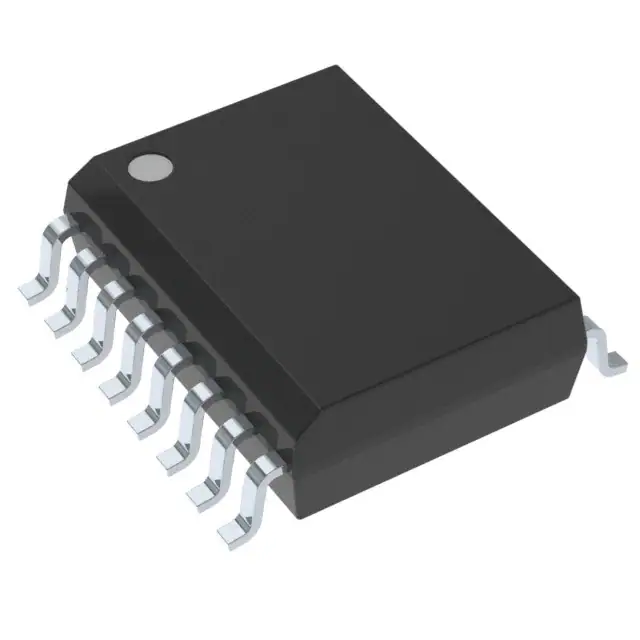
- 16-SOIC (0.295", 7.50mm Width)
- Datasheet:
-
 CY14V101PS-SF108XIT.pdf
- Description:
- IC NVSRAM 1MBIT SPI 16SOIC
- Quantity:
- Payment:

- Shipping:

Inventory:4,127
Please send an inquiry. Send us your inquiry, and we will respond immediately.
Product details
Overview
CY14V101PS-SF108XIT from Cypress Semiconductor is a 1-Mbit (128K × 8) Quad SPI nonvolatile SRAM with integrated real-time clock, operating at up to 108 MHz interface speed, supporting AutoStore via VCAP capacitor and hardware STORE/RECALL via HSB pin, and delivering 54 MBps read/write bandwidth for industrial data logging and power-fail-safe memory applications.
For engineers reviewing the CY14V101PS-SF108XIT datasheet, CY14V101PS-SF108XIT pinout, CY14V101PS-SF108XIT application, or CY14V101PS-SF108XIT equivalent, key selection considerations include QPI/DPI/SPI mode flexibility, RTC register access via RDRTC/WRRTC instructions, VRTCbat-backed timekeeping, and hardware STORE initiation via HSB pin assertion.
Technical Context
The device integrates SRAM and SONOS FLASH Quantum Trap nonvolatile cells in a unified 128K × 8 array, enabling infinite SRAM read/write cycles while guaranteeing 20-year data retention at 85 °C and one million STORE cycles to nonvolatile elements. It supports SPI modes 0 and 3 with configurable clock polarity and phase.
QPI operation enables 4-bit-per-cycle transfers using I/O0–I/O3 pins; dual and quad I/O modes require tri-stating unused I/O pins during CS assertion. RTC functionality includes programmable square wave output (1 Hz to 32.768 kHz), alarm, watchdog timer, and interrupt generation on INT/SQW pin.
Key Specifications
| Parameter | Value and Actual Design Meaning |
|---|---|
| Density | 1 Mbit (128K × 8): Full SRAM-accessible memory space with parallel STORE/RECALL between volatile and nonvolatile layers. |
| Interface Speed | 108 MHz QPI: Enables 54 MBps throughput for burst-wrap reads/writes in quad mode, critical for high-speed data capture before power loss. |
| Data Retention | 20 years at 85 °C: Guaranteed nonvolatile data integrity without refresh, validated for industrial thermal environments. |
| STORE Endurance | 1 million cycles: Maximum supported hardware/software STORE operations to SONOS FLASH Quantum Trap cells. |
| Supply Voltages | VCC = 2.7–3.6 V (core); VCCQ = 1.71–2.0 V (I/O): Dual-rail operation isolates I/O signaling from core logic, reducing noise coupling. |
| RTC Backup | VRTCBAT pin: Dedicated battery input sustaining RTC registers and oscillator during main power failure, independent of VCAP function. |
| Power Modes | Sleep = 380 µA; Hibernate = 8 µA (both at 85 °C): Ultra-low quiescent current for extended battery-backed RTC operation. |
Pinout & Package
16-pin SOIC package with 300-mil body width, surface-mount compatible, JEDEC MS-012AC compliant. Pin 1 index marker located at top-left corner when viewed from top side.
| Pin/Terminal | Circuit Role | Design Meaning |
|---|---|---|
| CS | Chip Select Input | Active-low enable for SPI instruction decoding; HIGH places device in standby with reduced current draw. |
| SCK | Serial Clock Input | Drives all SPI timing; latches SI on rising edge, drives SO on falling edge; supports up to 108 MHz in QPI mode. |
| SI (I/O0) | Serial Input / I/O0 | Primary instruction/data input in SPI mode; becomes bidirectional I/O0 in DPI/QPI for command/address/data multiplexing. |
| SO (I/O1) | Serial Output / I/O1 | Primary data output in SPI mode; becomes bidirectional I/O1 in DPI/QPI for full-duplex transfer. |
| WP (I/O2) | Write Protect / I/O2 | Hardware write lock in SPI/DPI; reconfigured as I/O2 in QPI for quad-mode address/data transfer. |
| NC (I/O3) | No Connect / I/O3 | Floating in SPI/DPI; becomes active I/O3 in QPI for fourth data lane-must be tri-stated during CS assertion in dual/quad modes. |
| HSB | Hardware STORE Busy | Open-drain status output (LOW = busy); also accepts external LOW pulse to trigger hardware STORE independently of power state. |
| VCAP | AutoStore Capacitor | Connects external capacitor (typically 4.7–10 µF) to sustain STORE during VCC collapse; must not be grounded. |
| VRTCBAT | RTC Battery Supply | Dedicated backup rail for RTC oscillator and registers; operates independently of VCC and VCAP functions. |
| XIN/XOUT | RTC Crystal Interface | Connects 32.768 kHz tuning-fork crystal; XIN is input, XOUT is buffered output-both unconnected if RTC disabled. |
| INT/SQW | Interrupt/Square Wave | Programmable open-drain output for RTC alarms, watchdog timeout, or calibrated square wave (1 Hz–32.768 kHz). |
| VCC/VCCQ/VSS | Power/Ground Rails | VCC powers core logic; VCCQ powers I/O buffers (1.71–2.0 V only); VSS is common ground reference for both domains. |
Key Features
| Feature | Design Value |
|---|---|
| Quad SPI Interface | Supports single/dual/quad I/O modes with opcode-based command set, enabling flexible bandwidth scaling without changing PCB layout. |
| AutoStore with VCAP | Guarantees automatic STORE on power-down using external capacitor-no firmware intervention required for data integrity. |
| Hardware STORE/RECALL | HSB pin allows external microcontroller to initiate STORE or detect completion, enabling synchronized system-level power management. |
| Integrated RTC | Full-featured real-time clock with alarm, watchdog, calibration, and programmable SQW output-no external RTC IC needed. |
| Serial Number OTP | 8-byte customer-programmable one-time-write serial number stored in nonvolatile register, enabling device traceability and anti-counterfeiting. |
Applications
| Industrial Data Logger | Medical Patient Monitor |
|---|---|
Use Scenario: Continuous acquisition of sensor readings (temperature, pressure, ECG) with guaranteed persistence across unexpected AC loss or battery swap. IC Role / Device Role / Timing Role: Nonvolatile memory buffer with embedded RTC timestamping; stores raw waveform data and event logs with millisecond-accurate timestamps. Use Value: Eliminates need for external EEPROM + RTC combo; AutoStore ensures zero-data-loss during brownout; VRTCbat maintains time continuity during main power interruption. | Use Scenario: Capturing and archiving vital sign trends in portable diagnostic devices requiring FDA-compliant audit trails and time-stamped event records. IC Role / Device Role / Timing Role: Secure, tamper-resistant memory with cryptographically verifiable timestamps via RDRTC/WRRTC and serial number OTP. Use Value: Meets IEC 62304 software lifecycle requirements by providing immutable, battery-backed time stamps and device-unique identifiers for regulatory traceability. |
| Smart Energy Meter | PLC Controller Module |
Use Scenario: Storing billing cycle data, tariff schedules, and outage history in utility-grade meters deployed in unattended outdoor cabinets. IC Role / Device Role / Timing Role: High-reliability nvSRAM with 20-year data retention at 85 °C; RTC tracks cumulative energy usage and outage duration with calendar accuracy. Use Value: Replaces FRAM+RTC solution with superior endurance (1M STORE cycles vs. FRAM wear-out) and lower cost per bit at 1-Mbit density. | Use Scenario: Maintaining program state, I/O configuration, and fault history in DIN-rail mounted PLCs subject to frequent power cycling and electromagnetic interference. IC Role / Device Role / Timing Role: Power-fail-safe memory with hardware STORE triggered by PLC's power supervisor; RTC provides deterministic scan cycle timing and watchdog reset coordination. Use Value: Enables deterministic boot-up with full state restoration in <100 ms; HSB pin integration simplifies power sequencing design versus discrete STORE controller solutions. |
Equivalent & Alternatives
The following parts are listed as comparable options for similar nonvolatile memory with RTC applications.
| Alternative Part | Technical Difference | Application Difference | Selection Advice |
|---|---|---|---|
| FM24V10-G | F-RAM-based 1-Mbit memory; no STORE latency; RTC lacks alarm/watchdog; VRTCbat not supported. | No battery-backed RTC features; limited to basic timekeeping without interrupt-driven events. | Select when ultra-fast STORE/RECALL (<1 µs) is critical and RTC complexity is unnecessary. |
| RV-3032-C3 | Dedicated RTC IC with I²C interface; no integrated memory; requires external nvSRAM or FRAM for data storage. | Separate memory + RTC architecture increases BOM count, PCB area, and power domain coordination effort. | Select when highest RTC accuracy (<±2 ppm) and long-term aging compensation are required over integrated simplicity. |
Compared with FM24V10-G and RV-3032-C3, CY14V101PS-SF108XIT uniquely combines QPI bandwidth, hardware STORE control, and full-featured RTC in one SOIC package-reducing system-level design effort while maintaining industrial-grade reliability and data integrity.
Availability
CY14V101PS-SF108XIT is available at Aetrix Electronics and suitable for industrial data loggers, medical patient monitors, and smart energy meters requiring stable component supply, long-lifecycle support, and guaranteed 20-year data retention at elevated temperature.
Supply support for CY14V101PS-SF108XIT includes scheduled delivery planning, volume procurement assistance, BOM continuity management, traceable sourcing, and lifecycle availability coordination for OEM customers, industrial embedded developers, connected-device designers, and electronics production programs.
Manufacturer
Cypress Semiconductor (now part of Infineon Technologies) designs high-performance mixed-signal ICs for embedded systems, emphasizing reliability, low-power operation, and system integration.
The CY14V series targets power-fail-resilient memory applications, combining nvSRAM, RTC, and serial interfaces to replace multi-chip solutions in industrial, medical, and metering equipment.
FAQ
What is the role of the VCAP pin and what capacitor value is recommended?
The VCAP pin supplies hold-up energy to complete STORE during VCC collapse. A 4.7 µF to 10 µF tantalum or ceramic capacitor is recommended-value selected based on worst-case voltage droop and STORE time (typically 5–10 ms). VCAP must never connect to ground or VCC; floating is acceptable only if AutoStore is disabled.
Can the RTC operate without an external crystal?
No-the RTC requires a 32.768 kHz crystal connected between XIN and XOUT pins for accurate timekeeping. Internal RC oscillators are not provided; omitting the crystal disables all RTC functions including alarm, watchdog, and SQW output, though nvSRAM remains fully operational.
How does hardware STORE differ from AutoStore?
Hardware STORE is initiated by externally pulling HSB LOW, triggering immediate data transfer from SRAM to nonvolatile cells regardless of VCC state. AutoStore activates automatically only during VCC decay, using energy from the VCAP capacitor. Both use the same SONOS FLASH storage layer but differ in trigger mechanism and timing control.
Is the CY14V101PS-SF108XIT pin-compatible with earlier CY14V101P variants?
Yes-CY14V101PS-SF108XIT uses the same 16-pin SOIC footprint and pinout as CY14V101P-SP25XIT and CY14V101P-SP40XIT. Key differences are interface speed (108 MHz vs. 25/40 MHz) and internal QPI optimization; existing layouts support drop-in replacement with firmware updates for new opcodes and timing parameters.
CY14V101PS-SF108XIT Specifications
- Product attributes
- Attribute value
- Manufacturer:
- Infineon Technologies
- Series:
- -
- Package/Case:
- 16-SOIC (0.295", 7.50mm Width)
- Packaging:
- Tape & Reel (TR)
- Product Status:
- Obsolete
- Programmable:
- Not Verified
- Memory Type:
- Non-Volatile
- Memory Format:
- NVSRAM
- Technology:
- NVSRAM (Non-Volatile SRAM)
- Memory Size:
- 1Mbit
- Memory Organization:
- 128K x 8
- Memory Interface:
- SPI
- Clock Frequency:
- 108 MHz
- Write Cycle Time - Word, Page:
- -
- Access Time:
- -
- Voltage - Supply:
- 2.7V ~ 3.6V
- Operating Temperature:
- -40°C ~ 85°C (TA)
- Grade:
- -
- Qualification:
- -
- Mounting Type:
- Surface Mount
- Supplier Device Package:
- 16-SOIC
CY14V101PS-SF108XIT FAQ
1.How can I place an order for CY14V101PS-SF108XIT through Aetrix?
Please submit a Request for Quotation (RFQ) for CY14V101PS-SF108XIT on Aetrix. Our sales agent will provide a competitive quotation and guide you through the order confirmation once you accept the terms.
2.Are the price and stock information for CY14V101PS-SF108XIT reliable?
The price and inventory of CY14V101PS-SF108XIT are updated periodically and may fluctuate due to market conditions. Stock and pricing data are typically refreshed every 24 hours. Quotation validity for CY14V101PS-SF108XIT is usually 5 days.
3.What payment methods are accepted for CY14V101PS-SF108XIT?
We accept Wire Transfer, PayPal, Credit Card, Western Union, MoneyGram, and Escrow for CY14V101PS-SF108XIT transactions.
Note: Certain payment methods may incur a processing fee.
4.How is shipping managed for CY14V101PS-SF108XIT?
CY14V101PS-SF108XIT orders can be shipped via leading logistics carriers, including DHL, UPS, FedEx, TNT, or Registered Mail.
Once your CY14V101PS-SF108XIT order is processed, you will receive an email with the shipment details and tracking number.
Note: Tracking information may take up to 24 hours to appear. Express delivery typically takes 3–5 business days.
5.How can I obtain technical support or documentation for CY14V101PS-SF108XIT?
For technical support, including CY14V101PS-SF108XIT datasheets, pinout diagrams, or application guidance, please contact our engineering support team. They can provide detailed documentation and assistance for your CY14V101PS-SF108XIT requirements.
6.How does Aetrix verify that CY14V101PS-SF108XIT is sourced from the original manufacturer or authorized distributors?
All CY14V101PS-SF108XIT products on Aetrix are procured from qualified distributors and authorized channels. Our dedicated quality assurance team conducts strict verification, including traceability checks and, if necessary, third-party testing. This ensures that CY14V101PS-SF108XIT meets industry standards.
7.What is the process for return or replacement of CY14V101PS-SF108XIT?
All CY14V101PS-SF108XIT units undergo pre-shipment inspection (PSI). If there is an issue with CY14V101PS-SF108XIT, returns or replacements are accepted under the following conditions:
1.Quantity discrepancies, incorrect items, or visible external defects (such as breakage or corrosion), acknowledged by Aetrix.
2.The issue is reported within 90 days of delivery.
3.The CY14V101PS-SF108XIT part is unused and in its original packaging.
Return procedure for CY14V101PS-SF108XIT:
1.Submit a request within 90 days.
2.Obtain a Return Material Authorization (RMA) from Aetrix.
CY14V101PS-SF108XIT Tags

-
M24C02-WMN6TP
STMicroelectronics
-
AT24C02C-XHM-T
Microchip Technology
-
AT21CS01-STUM10-T
Microchip Technology

-
AT24C02C-SSHM-T
Microchip Technology

-
24LC01BT-I/OT
Microchip Technology
-
M24C02-FMC6TG
STMicroelectronics
-
AT24CS02-SSHM-T
Microchip Technology

-
93LC46BT-I/OT
Microchip Technology
-
AT24C04C-SSHM-T
Microchip Technology

-
24LC01BT-I/SN
Microchip Technology
-
24AA02UIDT-I/OT
Microchip Technology
-
AT24C08C-STUM-T
Microchip Technology
Tech Hub

The 74HC595 uses push-pull logic outputs, while the TPIC6B595 uses 50 V open-drain DMOS sinks for higher-power loads. This guide compares timing, current limits, 3.3 V interfacing, load wiring, thermal…

The 74HC595 converts serial data into eight stable parallel outputs. This guide covers pin functions, shift and storage timing, OE and MR behavior, drive-current limits, cascading, voltage compatibilit…

A technical comparison of level-sensitive latches and edge-triggered flip-flops, covering timing windows, setup and hold limits, master–slave operation, time borrowing, race-through, HDL inference and…

A D latch stores one bit while Enable controls when data can pass. This reference covers gate-level operation, truth tables, transparency, setup and hold timing, LE versus OE, common ICs and practical …

An SR latch stores one bit through cross-coupled feedback. This engineering reference covers NOR and NAND implementations, truth tables, forbidden-state recovery, gated operation, switch debouncing, fa…

Latch circuits retain one bit through feedback. This technical reference covers SR and D latches, truth tables, transparency, timing limits, latch-versus-flip-flop behavior, applications and common log…

An engineering guide to LED driver operation, constant-current and constant-voltage outputs, linear and switching topologies, dimming, IC selection, calculations, replacement compatibility, and fault c…

Operational amplifier guide covering op amp basics, feedback, ideal vs real op amps, common configurations, buffer circuits, offset, bias current, gain-bandwidth, slew rate, rail-to-rail limits and sel…

Jumper cables guide covering safe connection order, red and black clamp placement, final ground connection, cable gauge, length, clamp quality, copper vs CCA cables, jump starter comparison and battery…

LDO regulator guide covering low dropout voltage, power dissipation, thermal design, PSRR, output noise, capacitor stability, adjustable LDO circuits, LDO vs buck converter and datasheet selection chec…


