
 My Inquiry
 My Account


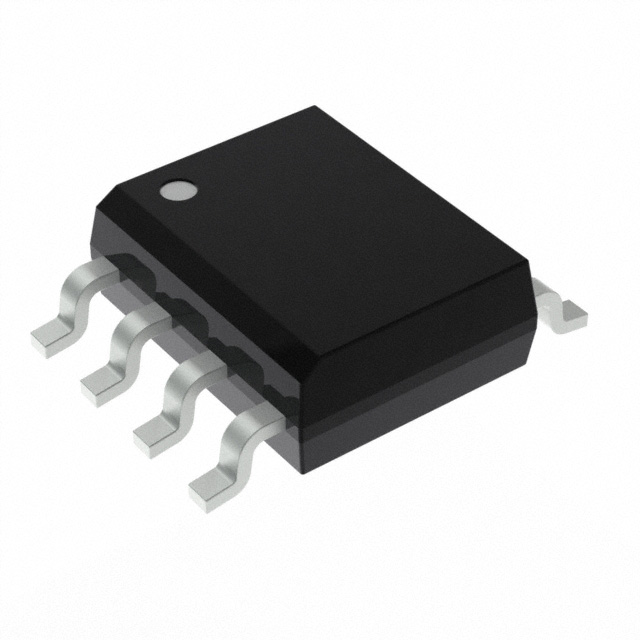
Infineon Technologies CY15B004J-SXAT
- Part No.:
- CY15B004J-SXAT
- Manufacturer:
- Infineon Technologies
- Category:
- Memory
- Package:
- 8-SOIC (0.154", 3.90mm Width)
- Datasheet:
-
 CY15B004J-SXAT.pdf
- Description:
- IC FRAM 4KBIT I2C 1MHZ 8SOIC
- Quantity:
- Payment:

- Shipping:

Inventory:1,606
Please send an inquiry. Send us your inquiry, and we will respond immediately.
Product details
Overview
CY15B004J-SXAT from Cypress Semiconductor is a 4-Kbit (512 × 8) automotive-grade serial F-RAM with I²C interface, operating from 2.7 V to 3.65 V over –40 °C to +85 °C. It delivers NoDelay™ writes, 10¹⁴ read/write endurance, and 151-year data retention-enabling rapid, reliable nonvolatile logging in safety-critical automotive systems.
For engineers reviewing the CY15B004J-SXAT datasheet, CY15B004J-SXAT pinout, CY15B004J-SXAT application, or CY15B004J-SXAT equivalent, key selection factors include I²C bus-speed write capability, absence of write polling, automotive-A temperature qualification, and hardware-compatible replacement for legacy serial EEPROMs in infotainment, ADAS sensor buffers, and powertrain control modules.
Technical Context
The CY15B004J-SXAT implements a ferroelectric memory array organized as 512 × 8 bits, accessed via standard I²C protocol with slave address format 1010b + A2/A1 + PS + R/W. It supports 100 kHz, 400 kHz, and 1 MHz clock frequencies while maintaining full compatibility with legacy EEPROM timing constraints.
Its internal address latch auto-increments during sequential reads/writes, enabling burst transfers without re-addressing. The device lacks internal voltage boosting circuitry-eliminating write delay-and relies solely on external pull-ups for SDA/SCL, with Schmitt-trigger inputs and slope-controlled outputs for noise immunity and EMI reduction.
Key Specifications
| Parameter | Value and Actual Design Meaning |
|---|---|
| Memory size | 4 Kbit (512 × 8), directly addressable via 9-bit addressing (8-bit word + 1-bit page select) |
| I²C speed | Up to 1 MHz-enables sub-μs write completion per byte without polling overhead |
| Endurance | 10¹⁴ read/write cycles-supports >27,000 writes/second continuously for 10 years in data-logging applications |
| Data retention | 151 years at +85 °C-guaranteed nonvolatile storage without refresh or backup power |
| Supply voltage | 2.7 V to 3.65 V-compatible with automotive 3.3 V rail and brown-out tolerant operation |
| Operating temp | –40 °C to +85 °C (Automotive-A grade)-qualified for under-hood and cabin ECUs |
| Active current | 100 μA at 100 kHz-reduces system-level power budget in always-on monitoring circuits |
Pinout & Package
Package: 8-pin Small Outline Integrated Circuit (SOIC), RoHS-compliant, surface-mount.
| Pin/Terminal | Circuit Role | Design Meaning |
|---|---|---|
| A1, A2 | Device select input | Hardwired address bits enabling up to four CY15B004J devices on same I²C bus without address conflict |
| SDA | Bi-directional serial data | Open-drain I²C data line with Schmitt trigger input and slope-controlled output for noise-immune communication |
| SCL | Serial clock input | Master-generated clock with Schmitt trigger input-defines timing for all read/write transfers |
| WP | Write protect input | Hardware-level lock: tied to VDD disables all writes; tied to GND enables full memory access |
| VSS | Ground reference | System ground connection required for stable logic thresholds and ESD path |
| VDD | Power supply | Primary 2.7–3.65 V supply-no internal regulation; must remain within spec to prevent data corruption |
| NC | No connect | Internally unconnected pin-must be left floating or grounded per PCB layout best practices |
Key Features
| Feature | Design Value |
|---|---|
| NoDelay™ write architecture | Eliminates write polling and timeout loops-data commits at I²C bus speed, reducing firmware complexity and CPU load |
| Ferroelectric memory process | Enables 100 trillion write cycles without wear leveling or block management-ideal for high-frequency timestamping |
| Automotive-A qualification | Guaranteed operation across full –40 °C to +85 °C range with AEC-Q100 stress testing compliance |
| I²C EEPROM drop-in compatibility | Same pinout, slave address structure, and command set as standard 4-Kbit I²C EEPROM-no hardware or firmware redesign needed |
| Low-power standby mode | 3 μA typical quiescent current-enables battery-backed operation in sleep-state vehicle subsystems |
Applications
| Automotive Infotainment Logging | ADAS Sensor Calibration Storage |
|---|---|
Use Scenario: Storing user preferences, radio presets, and navigation history in head-unit controllers with frequent updates. IC Role / Device Role / Timing Role: Nonvolatile scratchpad memory interfacing directly to MCU I²C port for real-time parameter persistence. Use Value: Eliminates EEPROM write delays that cause UI lag during simultaneous button presses or voice commands. | Use Scenario: Retaining factory-calibrated coefficients for camera/lidar modules between ignition cycles. IC Role / Device Role / Timing Role: High-reliability configuration store accessed at boot and updated only after validated sensor recalibration. Use Value: 151-year retention ensures calibration integrity across vehicle lifetime without periodic refresh or backup capacitor. |
| Powertrain Control Module (PCM) Event Buffer | Body Control Module (BCM) Fault Code Storage |
Use Scenario: Capturing engine misfire timestamps, throttle position snapshots, and OBD-II diagnostic events during transient conditions. IC Role / Device Role / Timing Role: High-endurance circular buffer memory written at 10–100 Hz during active driving, read only during service mode. Use Value: 10¹⁴ endurance supports continuous logging for >30 years of daily 1-hour driving-no wear-out risk. | Use Scenario: Recording intermittent fault codes (e.g., door lock actuator failures, lighting errors) across multiple ignition cycles. IC Role / Device Role / Timing Role: Low-power nonvolatile storage retaining error history even during extended vehicle dormancy. Use Value: 3 μA standby current extends battery life in parked vehicles; no data loss during 12-V battery disconnect. |
Equivalent & Alternatives
The following parts are listed as comparable options for similar serial nonvolatile memory applications.
| Alternative Part | Technical Difference | Application Difference | Selection Advice |
|---|---|---|---|
| AT24C04D-SSHM-T (Microchip) | 4-Kbit I²C EEPROM; requires 5 ms write cycle; 1 million endurance cycles | Lacks automotive-A temp rating; rated only to +70 °C commercial grade | Acceptable for cost-sensitive non-automotive designs where write frequency <100×/hour |
| FM24V04-G (Cypress) | Same 4-Kbit F-RAM architecture but with 2.0–3.6 V supply and industrial temp (–40 °C to +85 °C) | Not AEC-Q100 qualified; lacks automotive-specific screening and traceability documentation | Preferred for industrial control where automotive qualification is not mandated but F-RAM performance is required |
Compared with AT24C04D-SSHM-T and FM24V04-G, the CY15B004J-SXAT uniquely combines AEC-Q100 Automotive-A qualification, 10¹⁴ endurance, and guaranteed 1-MHz I²C operation-making it the only option for safety-critical, high-write-frequency automotive subsystems requiring zero-compromise reliability.
Availability
CY15B004J-SXAT is available at Aetrix Electronics and suitable for automotive infotainment systems, ADAS sensor modules, and powertrain control units requiring stable component supply across multi-year production programs.
Supply support for CY15B004J-SXAT includes scheduled delivery planning, volume procurement assistance, BOM continuity management, traceable sourcing, and lifecycle availability coordination for OEM customers, industrial embedded developers, connected-device designers, and electronics production programs.
Manufacturer
Cypress Semiconductor (now part of Infineon Technologies) designs high-reliability semiconductor solutions for automotive, industrial, and IoT applications, with deep expertise in nonvolatile memory and microcontroller integration.
The CY15B004J belongs to Cypress's automotive-qualified F-RAM product line, engineered specifically to replace EEPROM in mission-critical automotive subsystems where write latency, endurance, and temperature robustness are non-negotiable.
FAQ
Is CY15B004J-SXAT pin-compatible with standard 8-pin I²C EEPROMs like AT24C04?
Yes-CY15B004J-SXAT uses identical 8-pin SOIC packaging and matches the pin functions of industry-standard 4-Kbit I²C EEPROMs: A1/A2 for device addressing, SDA/SCL for interface, WP for write protection, and VDD/VSS for power. No PCB redesign is required for drop-in replacement.
Does CY15B004J-SXAT require external circuitry for I²C pull-up resistors?
Yes-SDA and SCL pins are open-drain and require external pull-up resistors to VDD. Recommended values are 2.2 kΩ for 100 kHz, 1 kΩ for 400 kHz, and 4.7 kΩ for 1 MHz operation, per Cypress Application Note AN219127, to ensure rise time compliance and noise margin.
How does the 151-year data retention specification apply under real-world automotive conditions?
The 151-year retention is specified at +85 °C ambient and verified per JEDEC JESD22-A117. At lower temperatures (e.g., +25 °C cabin), retention exceeds 1,000 years. Real-world automotive use-including thermal cycling and vibration-does not degrade this rating, as confirmed by AEC-Q100 Grade 1 qualification testing.
Can CY15B004J-SXAT operate reliably during cold-cranking when battery voltage dips to 6 V?
No-CY15B004J-SXAT requires VDD between 2.7 V and 3.65 V. During cold-cranking, the 12-V system drops below 2.7 V, halting memory operation. System designers must implement brown-out detection and suspend writes until VDD stabilizes above 2.7 V to prevent data corruption.
CY15B004J-SXAT Specifications
- Product attributes
- Attribute value
- Manufacturer:
- Infineon Technologies
- Series:
- F-RAM™
- Package/Case:
- 8-SOIC (0.154", 3.90mm Width)
- Packaging:
- Tape & Reel (TR)
- Product Status:
- Active
- Programmable:
- Not Verified
- Memory Type:
- Non-Volatile
- Memory Format:
- FRAM
- Technology:
- FRAM (Ferroelectric RAM)
- Memory Size:
- 4Kbit
- Memory Organization:
- 512 x 8
- Memory Interface:
- I2C
- Clock Frequency:
- 1 MHz
- Write Cycle Time - Word, Page:
- -
- Access Time:
- -
- Voltage - Supply:
- 2.7V ~ 3.65V
- Operating Temperature:
- -40°C ~ 85°C (TA)
- Grade:
- Automotive
- Qualification:
- AEC-Q100
- Mounting Type:
- Surface Mount
- Supplier Device Package:
- 8-SOIC
CY15B004J-SXAT FAQ
1.How can I place an order for CY15B004J-SXAT through Aetrix?
Please submit a Request for Quotation (RFQ) for CY15B004J-SXAT on Aetrix. Our sales agent will provide a competitive quotation and guide you through the order confirmation once you accept the terms.
2.Are the price and stock information for CY15B004J-SXAT reliable?
The price and inventory of CY15B004J-SXAT are updated periodically and may fluctuate due to market conditions. Stock and pricing data are typically refreshed every 24 hours. Quotation validity for CY15B004J-SXAT is usually 5 days.
3.What payment methods are accepted for CY15B004J-SXAT?
We accept Wire Transfer, PayPal, Credit Card, Western Union, MoneyGram, and Escrow for CY15B004J-SXAT transactions.
Note: Certain payment methods may incur a processing fee.
4.How is shipping managed for CY15B004J-SXAT?
CY15B004J-SXAT orders can be shipped via leading logistics carriers, including DHL, UPS, FedEx, TNT, or Registered Mail.
Once your CY15B004J-SXAT order is processed, you will receive an email with the shipment details and tracking number.
Note: Tracking information may take up to 24 hours to appear. Express delivery typically takes 3–5 business days.
5.How can I obtain technical support or documentation for CY15B004J-SXAT?
For technical support, including CY15B004J-SXAT datasheets, pinout diagrams, or application guidance, please contact our engineering support team. They can provide detailed documentation and assistance for your CY15B004J-SXAT requirements.
6.How does Aetrix verify that CY15B004J-SXAT is sourced from the original manufacturer or authorized distributors?
All CY15B004J-SXAT products on Aetrix are procured from qualified distributors and authorized channels. Our dedicated quality assurance team conducts strict verification, including traceability checks and, if necessary, third-party testing. This ensures that CY15B004J-SXAT meets industry standards.
7.What is the process for return or replacement of CY15B004J-SXAT?
All CY15B004J-SXAT units undergo pre-shipment inspection (PSI). If there is an issue with CY15B004J-SXAT, returns or replacements are accepted under the following conditions:
1.Quantity discrepancies, incorrect items, or visible external defects (such as breakage or corrosion), acknowledged by Aetrix.
2.The issue is reported within 90 days of delivery.
3.The CY15B004J-SXAT part is unused and in its original packaging.
Return procedure for CY15B004J-SXAT:
1.Submit a request within 90 days.
2.Obtain a Return Material Authorization (RMA) from Aetrix.
CY15B004J-SXAT Tags

-
M24C02-WMN6TP
STMicroelectronics
-
AT24C02C-XHM-T
Microchip Technology
-
AT21CS01-STUM10-T
Microchip Technology

-
AT24C02C-SSHM-T
Microchip Technology

-
24LC01BT-I/OT
Microchip Technology
-
M24C02-FMC6TG
STMicroelectronics
-
AT24CS02-SSHM-T
Microchip Technology

-
93LC46BT-I/OT
Microchip Technology
-
AT24C04C-SSHM-T
Microchip Technology

-
24LC01BT-I/SN
Microchip Technology
-
24AA02UIDT-I/OT
Microchip Technology
-
AT24C08C-STUM-T
Microchip Technology
Tech Hub
A technical comparison of level-sensitive latches and edge-triggered flip-flops, covering timing windows, setup and hold limits, master–slave operation, time borrowing, race-through, HDL inference and…
A D latch stores one bit while Enable controls when data can pass. This reference covers gate-level operation, truth tables, transparency, setup and hold timing, LE versus OE, common ICs and practical …
An SR latch stores one bit through cross-coupled feedback. This engineering reference covers NOR and NAND implementations, truth tables, forbidden-state recovery, gated operation, switch debouncing, fa…

Latch circuits retain one bit through feedback. This technical reference covers SR and D latches, truth tables, transparency, timing limits, latch-versus-flip-flop behavior, applications and common log…

An engineering guide to LED driver operation, constant-current and constant-voltage outputs, linear and switching topologies, dimming, IC selection, calculations, replacement compatibility, and fault c…

Operational amplifier guide covering op amp basics, feedback, ideal vs real op amps, common configurations, buffer circuits, offset, bias current, gain-bandwidth, slew rate, rail-to-rail limits and sel…

Jumper cables guide covering safe connection order, red and black clamp placement, final ground connection, cable gauge, length, clamp quality, copper vs CCA cables, jump starter comparison and battery…

LDO regulator guide covering low dropout voltage, power dissipation, thermal design, PSRR, output noise, capacitor stability, adjustable LDO circuits, LDO vs buck converter and datasheet selection chec…

Conditional Access Module guide covering CAM meaning, CI/CI+ interface, smart card authorization, DVB security workflow, TV and set-top box compatibility, internal electronics, ESD protection, connecto…

Guide to electronic component obsolescence covering EOL risk, PCN/PDN notices, last-time buy planning, replacement options, form-fit-function validation, counterfeit risk and BOM lifecycle management.


