
 My Inquiry
 My Account


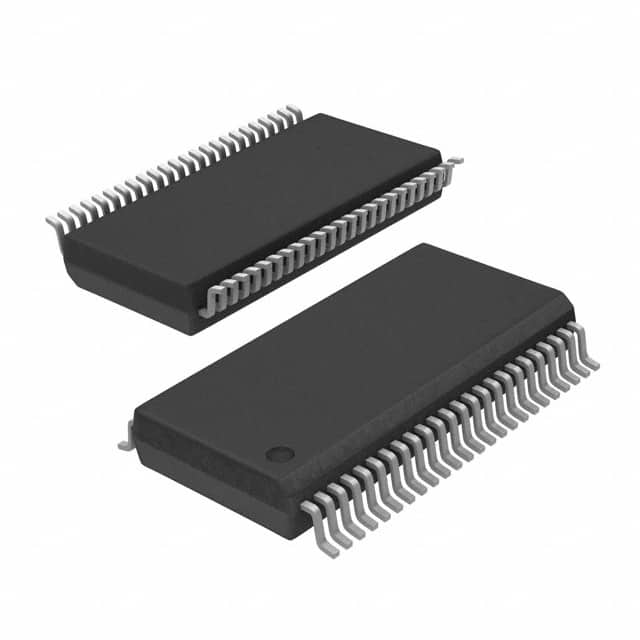
Infineon Technologies CY2280PVXC-11ST
- Part No.:
- CY2280PVXC-11ST
- Manufacturer:
- Infineon Technologies
- Category:
- Application Specific Clock/Timing
- Package:
- 48-BSSOP (0.295", 7.50mm Width)
- Datasheet:
-
 CY2280PVXC-11ST.pdf
- Description:
- IC CLOCK SYNTH SS 48SSOP
- Quantity:
- Payment:

- Shipping:

Inventory:2,100
Please send an inquiry. Send us your inquiry, and we will respond immediately.
Product details
Overview
CY2280PVXC-11ST from Cypress Semiconductor is a 100-MHz Pentium® II clock synthesizer/driver with factory-programmable spread-spectrum EMI reduction, delivering four 2.5V CPU clocks (66.67/100 MHz), eight 3.3V PCI clocks (33.33 MHz), two 48-MHz USB clocks, three 14.318-MHz reference clocks, and two APIC clocks - used on desktop and mobile PC motherboards requiring synchronized, low-jitter timing.
For engineers reviewing the CY2280PVXC-11ST datasheet, CY2280PVXC-11ST pinout, CY2280PVXC-11ST application, or CY2280PVXC-11ST equivalent, key selection criteria include CPU/PCI skew (1.5–4.0 ns), downspread margin (–0.6%), dual-voltage operation (2.5V/3.3V), and power management support via CPU_STOP, PCI_STOP, and PWR_DWN pins.
Technical Context
The CY2280PVXC-11ST integrates two PLLs - a CPU PLL and a system (SYS) PLL - to generate synchronized clocks from a 14.318-MHz crystal input. It supports selectable CPU/PCI ratios (2:1 or 3:1) and programmable CPU frequencies (66.67 MHz or 100 MHz) via SEL100/SEL1/SEL0 inputs.
Spread spectrum modulation is applied only to CPU and PCI outputs when SEL_SS is asserted, with factory-EPROM-set downspread of –0.6% at 30–33 kHz modulation frequency. Power-down mode shuts down both PLLs and drives all outputs low, reducing current to 500 µA.
Key Specifications
| Parameter | Value and Actual Design Meaning |
|---|---|
| CPU Clock Frequency | 66.67 MHz or 100 MHz - selectable via SEL100/SEL1/SEL0; actual measured values are 66.654 MHz (–195 ppm) and 99.77 MHz (–2346 ppm) |
| PCI Clock Frequency | 33.33 MHz - derived as CPU/2 or CPU/3; stable across temperature and load with 250 ps PCI-PCI skew |
| USB Clock Frequency | 48.008 MHz (±167 ppm) - low-jitter output for USB 1.1 host timing compliance |
| CPU-PCI Clock Skew | 1.5–4.0 ns - ensures setup/hold timing margin between CPU and PCI bus controllers |
| Spread Spectrum Margin | –0.6% downspread - factory-programmed EMI reduction on CPU and PCI clocks without external components |
| Supply Voltages | 2.5V for CPU/APIC outputs (VDDCPU/VDDAPIC); 3.3V for PCI/USB/REF outputs (VDDPCI/VDDUSB/VDDREF) |
| Power-Down Current | 500 µA - enables deep sleep mode during system idle, preserving board-level power budget |
Pinout & Package
Package: 48-pin SSOP (0.240" wide), RoHS-compliant, surface-mountable with standard reflow profile.
| Pin/Terminal | Circuit Role | Design Meaning |
|---|---|---|
| CPUCLK[0:3] (Pins 35–40) | 2.5V CPU clock outputs | Four identical, low-skew (≤175 ps) 66.67/100 MHz clocks for Pentium II processor core and L2 cache |
| PCICLK[1:7], PCICLK_F (Pins 7–17) | 3.3V PCI clock outputs | Seven configurable PCI clocks + one free-running PCI clock; all driven low during PCI_STOP assertion except PCICLK_F |
| APIC[0:1] (Pins 44–45) | 2.5V APIC clock outputs | Two 14.318-MHz clocks for Advanced Programmable Interrupt Controller; APIC lags CPU by 2.0–4.5 ns in -21S variant (not applicable to -11ST) |
| REF[0:2] (Pins 1–2, 47) | 3.3V reference clock outputs | Three 14.318-MHz clocks for ISA, SMBus, or other legacy peripherals requiring precise timing reference |
| SEL_SS (Pin 28) | Spread spectrum enable input | Active-HIGH signal enabling –0.6% downspread on CPU and PCI clocks; tied HIGH in -11ST configuration |
| CPU_STOP (Pin 30) | Active-LOW CPU clock control | Drives all CPUCLK outputs LOW during processor halt; ensures glitch-free transition without external logic |
| PWR_DWN (Pin 29) | Active-LOW power-down control | Shuts down internal oscillators and PLLs, reduces supply current to 500 µA, and forces all outputs LOW |
Key Features
| Feature | Design Value |
|---|---|
| Mixed 2.5V/3.3V supply domains | Enables direct interface to Pentium II CPU core (2.5V) and PCI/USB peripherals (3.3V) without level shifters |
| Factory-EPROM programmable outputs | Eliminates need for external configuration resistors or jumpers; CPU frequency, spread margin, and drive strength set at manufacturing |
| Glitch-free power management | On-chip synchronization ensures zero-cycle glitches during CPU_STOP, PCI_STOP, or PWR_DWN transitions |
| Low cycle-cycle jitter | CPU clock jitter ≤250 ps, PCI clock jitter ≤500 ps - meets Pentium II motherboard timing closure requirements |
| EMI-reduction via spread spectrum | –0.6% downspread at 30–33 kHz modulates fundamental energy, lowering peak radiated emissions without affecting system timing margins |
Applications
| Desktop PC Motherboard | Mobile Pentium II Platform |
|---|---|
|
Use Scenario: Mainboard design for Intel Pentium II-based desktop systems with SDRAM, AGP, and PCI expansion slots. IC Role / Device Role / Timing Role: Primary clock synthesizer generating CPU, PCI, USB, APIC, and REF clocks from single 14.318-MHz crystal. Use Value: Reduces BOM count by consolidating eight discrete clock generators; supports CPU/PCI skew <4.0 ns for reliable bus arbitration. |
Use Scenario: Compact notebook platform requiring low-power, thermally efficient clocking with EMI compliance. IC Role / Device Role / Timing Role: System clock source with dynamic power management - CPU_STOP and PWR_DWN enable deep sleep states. Use Value: 500 µA power-down current extends battery life; spread spectrum lowers FCC Class B radiated emissions without heatsink or shielding. |
| Industrial Embedded PC | Legacy Peripheral Interface Board |
|
Use Scenario: Fanless embedded controller for factory automation, operating continuously at 0–70°C ambient. IC Role / Device Role / Timing Role: Robust clock generator with guaranteed 100-MHz CPU output stability and ±2346 ppm worst-case accuracy. Use Value: Dual-voltage supplies tolerate rail variations; 170 mA IDD33 ensures thermal headroom under full load without derating. |
Use Scenario: ISA-to-PCI bridge card requiring legacy 14.318-MHz reference and 48-MHz USB timing. IC Role / Device Role / Timing Role: Multi-output reference clock distributor with independent USBCLK and REF outputs. Use Value: Eliminates need for separate 48-MHz oscillator; 167 ppm USBCLK accuracy satisfies USB 1.1 full-speed timing tolerance. |
Equivalent & Alternatives
The following parts are listed as comparable options for similar clock synthesizer applications.
| Alternative Part | Technical Difference | Application Difference | Selection Advice |
|---|---|---|---|
| CY2280PVXC-21ST | Supports APIC clocks at 16.67 MHz (PCI/2) instead of 14.318 MHz; adds CPU-APIC skew specification (2.0–4.5 ns) | Required for Pentium II systems using APIC interrupt routing at PCI-derived frequency | Select -21ST only if APIC must run at PCI/2; otherwise -11ST offers identical CPU/PCI/USB/REF functionality with simpler timing model |
| ICS9171AGT | Single 3.3V supply; no 2.5V outputs; supports 133-MHz CPU option; lacks spread spectrum and APIC outputs | Suitable for cost-sensitive desktop boards without APIC or EMI constraints | Choose ICS9171AGT only for 3.3V-only designs needing higher CPU frequency; not drop-in compatible due to voltage and pinout mismatch |
Compared with CY2280PVXC-21ST, the -11ST variant simplifies timing validation by omitting CPU-APIC skew, while retaining identical EMI control and power management. Against ICS9171AGT, the CY2280PVXC-11ST provides essential 2.5V CPU domain support and factory-programmed spread spectrum - critical for Pentium II compliance.
Availability
CY2280PVXC-11ST is available at Aetrix Electronics and suitable for desktop PC motherboard design, industrial embedded PCs, mobile Pentium II platforms, and legacy peripheral interface boards requiring stable component supply and long-term lifecycle support.
Supply support for CY2280PVXC-11ST includes scheduled delivery planning, volume procurement assistance, BOM continuity management, traceable sourcing, and lifecycle availability coordination for OEM customers, industrial embedded developers, connected-device designers, and electronics production programs.
Manufacturer
Cypress Semiconductor (now part of Infineon Technologies) is a U.S.-based semiconductor company specializing in timing, memory, and programmable solutions for computing and communications systems.
The CY2280 product line was designed specifically to meet Intel's Pentium II clocking architecture requirements - integrating CPU, PCI, USB, APIC, and reference clocks into a single, EMI-optimized package for high-volume PC motherboard applications.
FAQ
What is the function of the SEL_SS pin on CY2280PVXC-11ST?
The SEL_SS pin (Pin 28) is an active-HIGH input that enables factory-programmed –0.6% downspread modulation on CPU and PCI clock outputs. When asserted, it activates spread spectrum clocking to reduce electromagnetic interference; when deasserted, clocks operate at nominal frequency. In the -11ST variant, this pin is internally configured for enabled spread spectrum.
Does CY2280PVXC-11ST support both 66.67 MHz and 100 MHz CPU clock outputs?
Yes. The CY2280PVXC-11ST supports both frequencies via SEL100, SEL1, and SEL0 inputs. With SEL100=1 and SEL1/SEL0=11, it delivers 100 MHz CPU clocks (measured at 99.77 MHz); with SEL100=0 and SEL1/SEL0=11, it delivers 66.67 MHz (measured at 66.654 MHz). Both configurations are fully supported in the -11ST option.
How does the CY2280PVXC-11ST handle power management signals like CPU_STOP and PWR_DWN?
CPU_STOP (Pin 30) is active-LOW and drives all CPUCLK outputs LOW while preserving PCI and USB clocks. PWR_DWN (Pin 29) is also active-LOW and shuts down the internal crystal oscillator and both PLLs, forcing all outputs LOW and reducing supply current to 500 µA. These functions are synchronized on-chip to prevent glitches.
Can CY2280PVXC-11ST be used with a 25-MHz crystal instead of the specified 14.318-MHz crystal?
No. The CY2280PVXC-11ST requires a parallel-resonant 14.318-MHz crystal with 18-pF load capacitance (XTALIN/XTALOUT pins). Its PLL architecture is optimized for this frequency; using 25 MHz would violate the reference input specification and prevent correct CPU/PCI ratio generation per the function table.
CY2280PVXC-11ST Specifications
- Product attributes
- Attribute value
- Manufacturer:
- Infineon Technologies
- Series:
- -
- Package/Case:
- 48-BSSOP (0.295", 7.50mm Width)
- Packaging:
- Tape & Reel (TR)
- Product Status:
- Obsolete
- Programmable:
- Not Verified
- PLL:
- Yes
- Main Purpose:
- Intel CPU Servers
- Input:
- Clock
- Output:
- Clock
- Number of Circuits:
- 1
- Ratio - Input:Output:
- 1:19
- Differential - Input:Output:
- No/No
- Frequency - Max:
- 100MHz
- Voltage - Supply:
- 2.375V ~ 3.465V
- Operating Temperature:
- 0°C ~ 70°C
- Mounting Type:
- Surface Mount
- Grade:
- -
- Qualification:
- -
- Supplier Device Package:
- 48-SSOP
CY2280PVXC-11ST FAQ
1.How can I place an order for CY2280PVXC-11ST through Aetrix?
Please submit a Request for Quotation (RFQ) for CY2280PVXC-11ST on Aetrix. Our sales agent will provide a competitive quotation and guide you through the order confirmation once you accept the terms.
2.Are the price and stock information for CY2280PVXC-11ST reliable?
The price and inventory of CY2280PVXC-11ST are updated periodically and may fluctuate due to market conditions. Stock and pricing data are typically refreshed every 24 hours. Quotation validity for CY2280PVXC-11ST is usually 5 days.
3.What payment methods are accepted for CY2280PVXC-11ST?
We accept Wire Transfer, PayPal, Credit Card, Western Union, MoneyGram, and Escrow for CY2280PVXC-11ST transactions.
Note: Certain payment methods may incur a processing fee.
4.How is shipping managed for CY2280PVXC-11ST?
CY2280PVXC-11ST orders can be shipped via leading logistics carriers, including DHL, UPS, FedEx, TNT, or Registered Mail.
Once your CY2280PVXC-11ST order is processed, you will receive an email with the shipment details and tracking number.
Note: Tracking information may take up to 24 hours to appear. Express delivery typically takes 3–5 business days.
5.How can I obtain technical support or documentation for CY2280PVXC-11ST?
For technical support, including CY2280PVXC-11ST datasheets, pinout diagrams, or application guidance, please contact our engineering support team. They can provide detailed documentation and assistance for your CY2280PVXC-11ST requirements.
6.How does Aetrix verify that CY2280PVXC-11ST is sourced from the original manufacturer or authorized distributors?
All CY2280PVXC-11ST products on Aetrix are procured from qualified distributors and authorized channels. Our dedicated quality assurance team conducts strict verification, including traceability checks and, if necessary, third-party testing. This ensures that CY2280PVXC-11ST meets industry standards.
7.What is the process for return or replacement of CY2280PVXC-11ST?
All CY2280PVXC-11ST units undergo pre-shipment inspection (PSI). If there is an issue with CY2280PVXC-11ST, returns or replacements are accepted under the following conditions:
1.Quantity discrepancies, incorrect items, or visible external defects (such as breakage or corrosion), acknowledged by Aetrix.
2.The issue is reported within 90 days of delivery.
3.The CY2280PVXC-11ST part is unused and in its original packaging.
Return procedure for CY2280PVXC-11ST:
1.Submit a request within 90 days.
2.Obtain a Return Material Authorization (RMA) from Aetrix.
CY2280PVXC-11ST Tags
-
LMK00334RTVRQ1
Texas Instruments
.jpg)
-
DSC557-0344FI0T
Microchip Technology
-
9FGV0241AKILFT
Renesas Electronics Corporation

-
9DBL0452CKILFT
Renesas Electronics Corporation
-
DSC557-0344FL1T
Microchip Technology
-
RC19008AGND#KB0
Renesas Electronics Corporation
-
RC19008AGND#BB0
Renesas Electronics Corporation
-
9DB403DGILFT
Renesas Electronics Corporation
-
9DB233AGILFT
Renesas Electronics Corporation
-
9DB803DGILFT
Renesas Electronics Corporation
-
9FGL0851DKILFT
Renesas Electronics Corporation
-
AB-557-03-HCHC-F-L-C-T
Abracon LLC
Tech Hub

An engineering guide to LED driver operation, constant-current and constant-voltage outputs, linear and switching topologies, dimming, IC selection, calculations, replacement compatibility, and fault c…

Operational amplifier guide covering op amp basics, feedback, ideal vs real op amps, common configurations, buffer circuits, offset, bias current, gain-bandwidth, slew rate, rail-to-rail limits and sel…

Jumper cables guide covering safe connection order, red and black clamp placement, final ground connection, cable gauge, length, clamp quality, copper vs CCA cables, jump starter comparison and battery…

LDO regulator guide covering low dropout voltage, power dissipation, thermal design, PSRR, output noise, capacitor stability, adjustable LDO circuits, LDO vs buck converter and datasheet selection chec…

Conditional Access Module guide covering CAM meaning, CI/CI+ interface, smart card authorization, DVB security workflow, TV and set-top box compatibility, internal electronics, ESD protection, connecto…

Guide to electronic component obsolescence covering EOL risk, PCN/PDN notices, last-time buy planning, replacement options, form-fit-function validation, counterfeit risk and BOM lifecycle management.

18650 battery guide covering lithium-ion cell basics, 3.6V/3.7V voltage, 4.2V charging, mAh and Wh capacity, protected cells, chargers, BMS, series-parallel packs, holders, welding and sourcing checks.…

Hall effect sensor guide covering working principle, linear and digital sensors, Arduino circuits, current sensing, speed detection, automotive applications, A3144 examples, signal filtering and datash…

Product Change Notification guide for electronic components, covering PCN meaning, PCN vs PDN/EOL, common change types, risk levels, form-fit-function review, engineering validation, BOM control, LTB/L…

A practical guide to blend door actuators, covering HVAC function, symptoms, location, AC and heater issues, reset and calibration, replacement cost, electrical diagnosis, compatibility checks, and rep…


