
 My Inquiry
 My Account


Infineon Technologies CY25819SXCT
- Part No.:
- CY25819SXCT
- Manufacturer:
- Infineon Technologies
- Package:
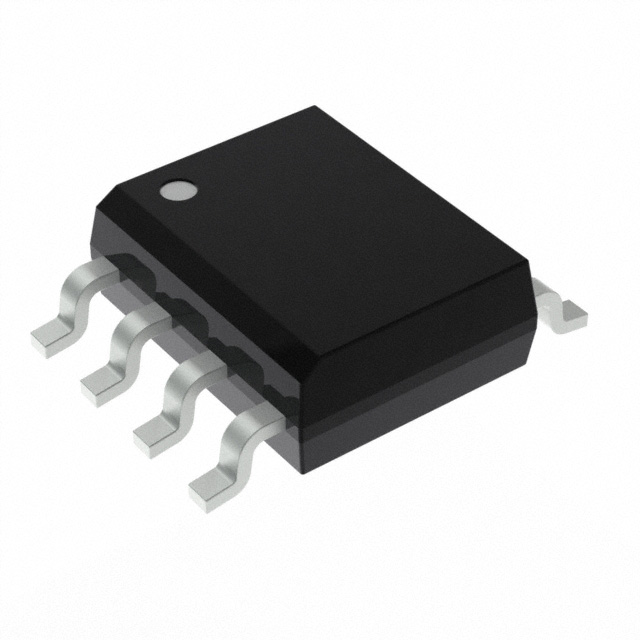
- 8-SOIC (0.154", 3.90mm Width)
- Datasheet:
-
 CY25819SXCT.pdf
- Description:
- IC CLK/FREQ SYNTH 8SOIC
- Quantity:
- Payment:

- Shipping:

Inventory:4,480
Please send an inquiry. Send us your inquiry, and we will respond immediately.
Product details
Overview
CY25819SXCT from Cypress Semiconductor is a spread spectrum clock generator (SSCG) IC designed to reduce electromagnetic interference in high-speed digital systems. It accepts 16–32 MHz crystal, resonator, or clock inputs; provides separate modulated (SSCLK) and unmodulated (REFCLK) outputs; delivers down-spread modulation with selectable –0.5% to –3.0% spread; and operates at 3.3 V with typical power dissipation of 36 mW at 16 MHz and 63 mW at 32 MHz - used in LCD panels, notebook PCs, and networking equipment.
For engineers reviewing the CY25819SXCT datasheet, CY25819SXCT pinout, CY25819SXCT application, or CY25819SXCT equivalent, key selection criteria include input frequency range (16–32 MHz), spread percentage control via 3-level S0 pin, modulation rate (fIN/512), cycle-to-cycle jitter (250 ps SSCLK, 275 ps REFCLK), and commercial-grade 8-pin SOIC packaging.
Technical Context
The CY25819SXCT implements a proprietary PLL-based spread spectrum architecture with non-linear optimized frequency modulation to flatten spectral energy distribution across fundamental and harmonic frequencies. Its down-spread profile reduces peak EMI by 8–16 dB without degrading timing integrity.
Modulation rate is fixed at fIN/512 (e.g., 62.5 kHz at 32 MHz input); spread percentage is selected via 3-level S0 pin (H/M/L), enabling discrete –0.5% to –3.0% down-spread values depending on input frequency band; and both SSCLK and REFCLK outputs maintain 45–55% duty cycle with 2.0–4.0 ns rise/fall times.
Key Specifications
| Parameter | Value and Actual Design Meaning |
|---|---|
| Input Frequency Range | 16–32 MHz - supports crystal/resonator/clock sources for mainstream digital display and computing platforms. |
| Spread Modulation | Down-spread only, –0.5% to –3.0% - user-selectable via 3-level S0 pin to meet specific EMI compliance targets. |
| Modulation Rate | fIN/512 - e.g., 62.5 kHz at 32 MHz input; ensures optimal spectral spreading without affecting system timing margins. |
| Cycle-to-Cycle Jitter | 250 ps (SSCLK), 275 ps (REFCLK) - low jitter preserves setup/hold timing in synchronous interfaces like LVDS and DDR. |
| Power Dissipation | 36 mW typ @ 16 MHz, 63 mW typ @ 32 MHz - enables thermal management in space-constrained consumer electronics. |
| Supply Voltage | 2.97–3.63 V - compatible with standard 3.3 V logic rails and tolerant of ±10% regulation variation. |
| Operating Temperature | 0°C to +70°C - commercial-grade rating suitable for printers, MFPs, and embedded digital systems. |
Pinout & Package
Package: 8-pin SOIC (150-mil), surface-mount, RoHS-compliant, commercial temperature grade (0°C to +70°C).
| Pin/Terminal | Circuit Role | Design Meaning |
|---|---|---|
| 1 XIN/CLKIN | Clock input terminal | Accepts external clock, crystal, or ceramic resonator; internal oscillator circuitry enables standalone timing generation. |
| 2 Vss | Ground reference | Dedicated analog/digital ground pin; must be connected to low-impedance PCB ground plane for jitter and EMI performance. |
| 3 S0 | Spread% control input | 3-level digital input (H/M/L) selecting down-spread percentage; no external resistors required due to on-chip 10k/10k divider. |
| 4 SSCLK | Modulated output clock | Primary spread-spectrum output; frequency equals input; down-modulated per S0 setting; drives high-speed digital interfaces. |
| 5 REFCLK | Unmodulated reference clock | Exact input frequency replica; used for phase-sensitive circuits (e.g., PLL feedback, ADC sampling clocks) requiring stable timing. |
| 6 PD# | Active-low power-down control | Pulls high by default; driven low to halt internal PLL and reduce supply current to ≤250 µA - enables dynamic EMI management. |
| 7 Vdd | Positive supply rail | 3.3 V nominal supply; decoupling capacitor (0.1 µF) required near pin for noise suppression and jitter stability. |
| 8 XOUT | Clock output for crystal/resonator | Drives crystal or resonator when XIN is used as input; left unconnected when external clock applied to XIN. |
Key Features
| Feature | Design Value |
|---|---|
| Proprietary non-linear SSC profile | Optimized frequency vs. time curve flattens spectral energy distribution - achieves up to 16 dB peak EMI reduction without increasing bandwidth. |
| 3-level S0 spread control | Single-pin interface selects three discrete down-spread percentages - eliminates need for I²C/SPI configuration and simplifies BOM. |
| Dual-output architecture | Simultaneous SSCLK (modulated) and REFCLK (unmodulated) outputs - supports mixed-signal systems requiring both EMI-reduced and jitter-critical clocks. |
| Low-power power-down mode | PD# pin reduces supply current to ≤250 µA - enables rapid EMI suppression during idle periods in portable and battery-aware designs. |
| Integrated crystal drive circuitry | XIN/XOUT pins support direct crystal/resonator connection - removes need for external oscillator IC or buffer, reducing board area and cost. |
Applications
| Printers and MFPs | LCD Panels and Notebook PCs |
|---|---|
Use Scenario: High-resolution print engine timing and parallel data transfer between ASIC and print head controller. IC Role / Device Role / Timing Role: Generates spread-spectrum pixel clock and reference clock for image processing pipeline while meeting FCC Class B radiated emissions limits. Use Value: Reduces peak EMI by ≥12 dB at 32 MHz fundamental, eliminating need for costly metal shielding or ferrite beads on display interface traces. | Use Scenario: Driving LVDS or eDP timing in thin-bezel notebook displays with tight EMI budgets. IC Role / Device Role / Timing Role: Provides synchronized SSCLK for source driver ICs and clean REFCLK for timing controller PLLs. Use Value: Enables 32 MHz pixel clock operation with <250 ps cycle-to-cycle jitter on SSCLK and <275 ps on REFCLK - maintains display image integrity while passing CISPR-22 testing. |
| Digital Copiers | Networking and LAN/WAN Equipment |
Use Scenario: Scanner-to-printer data path synchronization in multifunction copier systems with high-speed parallel bus interfaces. IC Role / Device Role / Timing Role: Supplies modulated system clock to image sensor interface and unmodulated clock to memory controller for frame buffering. Use Value: Achieves –3.0% down-spread at 24 MHz input (S0 = H), reducing third-harmonic emissions at 72 MHz by >10 dB - avoids redesign of RF-filtered backplane connectors. | Use Scenario: Clocking Ethernet PHYs and switch fabric controllers in compact 1U rack-mounted switches. IC Role / Device Role / Timing Role: Delivers spread-spectrum clock to Gigabit PHY and stable reference to packet buffer memory controller. Use Value: Supports 16–32 MHz input range matching common PHY reference clocks; dual outputs eliminate need for separate clock buffers - reduces layer count and signal integrity risk. |
Equivalent & Alternatives
The following parts are listed as comparable options for similar spread spectrum clock generator applications.
| Alternative Part | Technical Difference | Application Difference | Selection Advice |
|---|---|---|---|
| IDT 8T49N241 | Programmable spread (±0.25% to ±4.0%), I²C-configurable, 4-output, 3.3 V; higher integration but larger TQFN package. | Requires firmware initialization; suited for programmable platforms where spread % must adapt dynamically. | Select when system-level software control of spread parameters is required and board space permits 4×4 mm TQFN. |
| ON Semi NB3N502 | Fixed –0.5% down-spread only; single SSCLK output; no REFCLK; 8-pin SOIC; lower cost but no spread selectability. | Limited to fixed EMI reduction; cannot optimize spread for varying noise peaks or regulatory test bands. | Select for cost-sensitive, static-design applications where –0.5% spread suffices and dual-clock architecture is unnecessary. |
Compared with IDT 8T49N241 and ON Semi NB3N502, the CY25819SXCT uniquely balances pin-strapped flexibility (3-level spread control), dual-output capability, and SOIC compatibility - making it optimal for fixed-function consumer electronics where design simplicity, EMI margin, and layout efficiency are prioritized over programmability.
Availability
CY25819SXCT is available at Aetrix Electronics and suitable for printers and MFPs, LCD panels and notebook PCs, and digital copiers requiring stable component supply with commercial-temperature reliability and RoHS-compliant packaging.
Supply support for CY25819SXCT includes scheduled delivery planning, volume procurement assistance, BOM continuity management, traceable sourcing, and lifecycle availability coordination for OEM customers, industrial embedded developers, connected-device designers, and electronics production programs.
Manufacturer
Cypress Semiconductor (now part of Infineon Technologies) is a U.S.-based semiconductor company specializing in programmable system-on-chip solutions, timing devices, and USB controllers.
The CY258xx series belongs to Cypress's Spread Spectrum Clock Generator product line, engineered specifically to reduce radiated EMI in cost-sensitive, high-volume consumer and computing systems without compromising timing accuracy or requiring complex configuration.
FAQ
What is the maximum input frequency supported by CY25819SXCT?
The CY25819SXCT supports an input frequency range of 16–32 MHz. This is strictly defined in the datasheet (Rev. *E, page 4) and verified across electrical characteristics tables. Operation outside this range - including below 16 MHz or above 32 MHz - is not characterized or guaranteed, and may result in unstable PLL lock or incorrect spread modulation behavior.
How does the 3-level S0 pin select spread percentage?
The S0 pin detects HIGH (Vdd), MIDDLE (floating), and LOW (GND) logic levels using an internal 10k/10k resistor divider. Each level maps to a discrete down-spread value (e.g., S0=H → –3.0% at 16–20 MHz input). No external components are needed, and the mapping is fixed per input frequency band as specified in Table 2 of the datasheet.
Can CY25819SXCT drive a crystal directly?
Yes. When a crystal or ceramic resonator is used, connect it between XIN (Pin 1) and XOUT (Pin 8); the device includes integrated oscillator circuitry. The XOUT pin must not be left floating in this configuration. If an external clock is applied to XIN, XOUT must remain unconnected per Pin Description (page 3).
Is there a version of CY25819SXCT rated for industrial temperature range?
The CY25819SXCT is specified for 0°C to +70°C (commercial grade). Cypress documentation (page 4) states industrial range (–40°C to +85°C) and TSSOP packaging are available upon request - but no orderable industrial-grade variant (e.g., CY25819SXIT) is listed in official ordering information or distributor catalogs as of Rev. *E.
CY25819SXCT Specifications
- Product attributes
- Attribute value
- Manufacturer:
- Infineon Technologies
- Series:
- -
- Package/Case:
- 8-SOIC (0.154", 3.90mm Width)
- Packaging:
- Tape & Reel (TR)
- Product Status:
- Obsolete
- Programmable:
- Not Verified
- Type:
- Clock/Frequency Synthesizer, Fanout Distribution, Frequency Modulator, Spread Spectrum Clock Generator
- PLL:
- Yes
- Input:
- Clock, Crystal, Resonator
- Output:
- Clock
- Number of Circuits:
- 1
- Ratio - Input:Output:
- 1:2
- Differential - Input:Output:
- No/No
- Frequency - Max:
- 32MHz
- Divider/Multiplier:
- Yes/No
- Voltage - Supply:
- 2.97V ~ 3.63V
- Operating Temperature:
- 0°C ~ 70°C
- Mounting Type:
- Surface Mount
- Grade:
- -
- Qualification:
- -
- Supplier Device Package:
- 8-SOIC
CY25819SXCT FAQ
1.How can I place an order for CY25819SXCT through Aetrix?
Please submit a Request for Quotation (RFQ) for CY25819SXCT on Aetrix. Our sales agent will provide a competitive quotation and guide you through the order confirmation once you accept the terms.
2.Are the price and stock information for CY25819SXCT reliable?
The price and inventory of CY25819SXCT are updated periodically and may fluctuate due to market conditions. Stock and pricing data are typically refreshed every 24 hours. Quotation validity for CY25819SXCT is usually 5 days.
3.What payment methods are accepted for CY25819SXCT?
We accept Wire Transfer, PayPal, Credit Card, Western Union, MoneyGram, and Escrow for CY25819SXCT transactions.
Note: Certain payment methods may incur a processing fee.
4.How is shipping managed for CY25819SXCT?
CY25819SXCT orders can be shipped via leading logistics carriers, including DHL, UPS, FedEx, TNT, or Registered Mail.
Once your CY25819SXCT order is processed, you will receive an email with the shipment details and tracking number.
Note: Tracking information may take up to 24 hours to appear. Express delivery typically takes 3–5 business days.
5.How can I obtain technical support or documentation for CY25819SXCT?
For technical support, including CY25819SXCT datasheets, pinout diagrams, or application guidance, please contact our engineering support team. They can provide detailed documentation and assistance for your CY25819SXCT requirements.
6.How does Aetrix verify that CY25819SXCT is sourced from the original manufacturer or authorized distributors?
All CY25819SXCT products on Aetrix are procured from qualified distributors and authorized channels. Our dedicated quality assurance team conducts strict verification, including traceability checks and, if necessary, third-party testing. This ensures that CY25819SXCT meets industry standards.
7.What is the process for return or replacement of CY25819SXCT?
All CY25819SXCT units undergo pre-shipment inspection (PSI). If there is an issue with CY25819SXCT, returns or replacements are accepted under the following conditions:
1.Quantity discrepancies, incorrect items, or visible external defects (such as breakage or corrosion), acknowledged by Aetrix.
2.The issue is reported within 90 days of delivery.
3.The CY25819SXCT part is unused and in its original packaging.
Return procedure for CY25819SXCT:
1.Submit a request within 90 days.
2.Obtain a Return Material Authorization (RMA) from Aetrix.
CY25819SXCT Tags
-
CD74HCT4046AM96
Texas Instruments
-
MC14046BDWR2G
onsemi

-
501MILFT
Renesas Electronics Corporation
-
CD74HC7046AM
Texas Instruments
-
CDCVF2505PWR
Texas Instruments

-
RC19004A100GNL#KB0
Renesas Electronics Corporation
-
SI5351A-B-GTR
Skyworks Solutions Inc.
-
CY2305SXI-1T
Infineon Technologies
-
570BILFT
Renesas Electronics Corporation
-
CDCE913PWR
Texas Instruments
-
CY2305SXI-1HT
Infineon Technologies
-
DS1086LU+T
Analog Devices Inc./Maxim Integrated
Tech Hub

An engineering guide to LED driver operation, constant-current and constant-voltage outputs, linear and switching topologies, dimming, IC selection, calculations, replacement compatibility, and fault c…

Operational amplifier guide covering op amp basics, feedback, ideal vs real op amps, common configurations, buffer circuits, offset, bias current, gain-bandwidth, slew rate, rail-to-rail limits and sel…

Jumper cables guide covering safe connection order, red and black clamp placement, final ground connection, cable gauge, length, clamp quality, copper vs CCA cables, jump starter comparison and battery…

LDO regulator guide covering low dropout voltage, power dissipation, thermal design, PSRR, output noise, capacitor stability, adjustable LDO circuits, LDO vs buck converter and datasheet selection chec…

Conditional Access Module guide covering CAM meaning, CI/CI+ interface, smart card authorization, DVB security workflow, TV and set-top box compatibility, internal electronics, ESD protection, connecto…

Guide to electronic component obsolescence covering EOL risk, PCN/PDN notices, last-time buy planning, replacement options, form-fit-function validation, counterfeit risk and BOM lifecycle management.

18650 battery guide covering lithium-ion cell basics, 3.6V/3.7V voltage, 4.2V charging, mAh and Wh capacity, protected cells, chargers, BMS, series-parallel packs, holders, welding and sourcing checks.…

Hall effect sensor guide covering working principle, linear and digital sensors, Arduino circuits, current sensing, speed detection, automotive applications, A3144 examples, signal filtering and datash…

Product Change Notification guide for electronic components, covering PCN meaning, PCN vs PDN/EOL, common change types, risk levels, form-fit-function review, engineering validation, BOM control, LTB/L…

A practical guide to blend door actuators, covering HVAC function, symptoms, location, AC and heater issues, reset and calibration, replacement cost, electrical diagnosis, compatibility checks, and rep…


