
 My Inquiry
 My Account


Infineon Technologies CY28RS480OXC
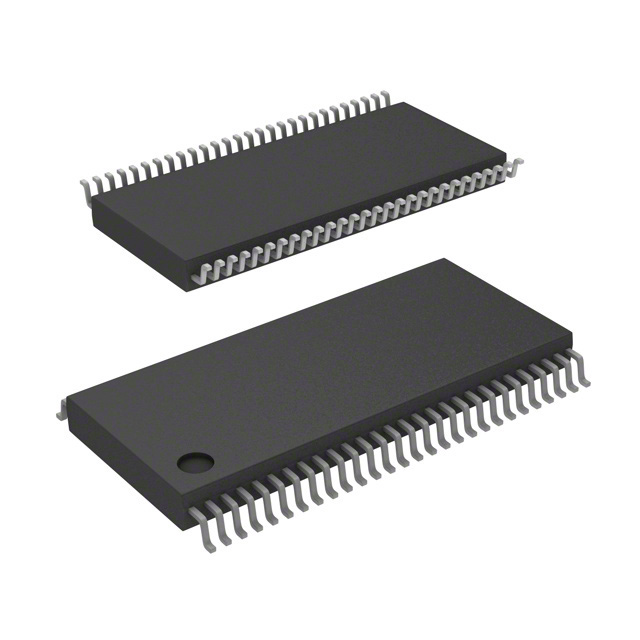
- Part No.:
- CY28RS480OXC
- Manufacturer:
- Infineon Technologies
- Category:
- Application Specific Clock/Timing
- Package:
- 56-BSSOP (0.295", 7.50mm Width)
- Datasheet:
-
 CY28RS480OXC.pdf
- Description:
- IC CLK GEN CPU 200MHZ 2CIRC
- Quantity:
- Payment:

- Shipping:

Inventory:4,056
Please send an inquiry. Send us your inquiry, and we will respond immediately.
Product details
Overview
CY28RS480 from Cypress Semiconductor is a clock generator IC designed specifically for the AMD ATI RS480 chipset, providing synchronized, low-jitter differential and single-ended clocks including 200-MHz CPU pairs, 100-MHz SRC, 66-MHz HyperTransport, 48-MHz USB, 33-MHz PCI, and 14.318-MHz REF outputs. It integrates I²C programmability, spread-spectrum EMI reduction, and per-output enable/disable control for desktop motherboard timing.
For engineers reviewing the CY28RS480 datasheet, CY28RS480 pinout, CY28RS480 application, or CY28RS480 equivalent, key selection criteria include differential output compliance (AMD K8/Intel Type-X/Type-5), I²C register-level control of clock enables and drive strength, spread-spectrum configuration, and multi-rail 3.3V power domain isolation (VDD_CPU, VDD_SRC, VDD_PCI, etc.).
Technical Context
The CY28RS480 uses a dual-PLL architecture: one PLL locks to the 14.318-MHz crystal input (XIN/XOUT) to generate the CPU and REF clocks, while a second PLL synthesizes the 100-MHz SRC and 66-MHz HTT66 clocks. All outputs are buffered with Intel- and AMD-compliant drive strengths and termination.
I²C interface (SCLK/SDATA) supports byte/block read/write operations at slave address D2h, enabling runtime configuration of output enables, spread-spectrum depth (–0.35% or –0.50%), drive strength (1x/2x), and CLKREQ#-controlled stop modes - all without requiring system reset.
Key Specifications
| Parameter | Value and Actual Design Meaning |
|---|---|
| CPU Clock Output | 200-MHz differential pair (CPUT0/CPUC0, CPUT1/CPUC1); compliant with AMD K8 buffer spec. |
| SRC Clock Output | 100-MHz differential outputs (SRCT0–SRCT5/SRCC0–SRCC5); Intel Type-X buffer with overclock support via SMBus. |
| USB Clock | 48-MHz single-ended output (USB_48); Intel Type-3A buffer with configurable 1x/2x drive strength. |
| PCI Clock | 33-MHz single-ended output (PCI0); Intel Type-5 buffer with enable/disable control via register bit. |
| HyperTransport Clock | 66-MHz single-ended output (HTT66); Intel Type-5 buffer with high/low drive strength selection. |
| Reference Clock | 14.318-MHz single-ended triple output (REF0–REF2); Intel Type-5 buffer with independent enable bits. |
| Serial Interface | I²C-compatible (SCLK/SDATA); 7-bit slave address 0xD2; supports byte/block read/write and register-level clock control. |
| Spread Spectrum | Selectable –0.35% or –0.50% modulation depth; reduces EMI across CPU, SRC, and USB domains independently. |
Pinout & Package
Package: 56-pin SSOP/TSSOP (0.209" body width, 0.025" pitch). Pin assignments validated per Cypress Document #38-07638 Rev. *C, Pages 2–3.
| Pin/Terminal | Circuit Role | Design Meaning |
|---|---|---|
| XIN / XOUT | Crytal oscillator input/output | Drives parallel-resonant 14.318-MHz crystal; internal load capacitance requires external trim caps (Ce1/Ce2 ≈ 33 pF). |
| CPUT0/CPUC0, CPUT1/CPUC1 | Differential CPU clock outputs | 200-MHz LVDS-compatible pairs; each pair isolated on dedicated VDD_CPU/VSS_CPU rails. |
| SRCT0–SRCT5 / SRCC0–SRCC5 | Differential SRC clock outputs | 100-MHz Intel Type-X buffers; individually enabled/disabled via Control Register 0 bits [7:2]. |
| USB_48, PCI0, HTT66, REF[0:2] | Single-ended clock outputs | 48-MHz (Type-3A), 33-MHz (Type-5), 66-MHz (Type-5), and triple 14.318-MHz (Type-5) outputs with independent enable bits. |
| SCLK / SDATA | I²C serial interface | Open-drain, pull-up enabled; supports register read/write for dynamic clock management and spread-spectrum tuning. |
| CLKREQ#0 / CLKREQ#1 | Asynchronous clock stop control | Debounced active-low inputs; control stoppable SRC outputs per Control Registers 4–5; final state: SRCT=High, SRCC=Low. |
| VDD_* / VSS_* | Power/Ground domains | Eight isolated 3.3V supply rails (CPU, SRC, PCI, REF, HTT, 48MHz, SRCS, Analog) minimize crosstalk and noise coupling. |
Key Features
| Feature | Design Value |
|---|---|
| Multi-domain power isolation | Eight dedicated VDD/VSS pairs ensure clean clock generation across CPU, SRC, PCI, USB, HTT, REF, and analog PLL sections. |
| Per-output enable/disable | I²C-accessible control registers allow individual activation/deactivation of all 12 clock outputs without hardware change. |
| Configurable spread spectrum | Two selectable modulation depths (–0.35%, –0.50%) applied independently to CPU/SRC/USB domains to meet EMI limits. |
| CLKREQ#-controlled stop mode | Hardware-triggered, glitch-free clock gating for SRC outputs using debounced CLKREQ#0/CLKREQ#1 pins. |
| Intel/AMD-compliant output buffers | All outputs meet specified Type-3A (USB), Type-5 (PCI/REF/HTT), and K8 (CPU) electrical and timing requirements. |
Applications
| Desktop Motherboard Timing | AMD Platform Reference Design |
|---|---|
Use Scenario: Mainboard for AMD Athlon 64/FX processors using ATI RS480 chipset with PCI Express x16 graphics and multiple expansion slots. IC Role / Device Role / Timing Role: Primary clock source generating synchronized CPU, HTT, PCI, USB, and REF clocks with precise skew control and EMI suppression. Use Value: Eliminates need for discrete clock buffers and oscillators; reduces BOM count by consolidating 12 timing signals into one IC with domain-isolated power rails. | Use Scenario: Reference design validation for AMD-certified motherboards targeting BIOS compatibility and platform certification. IC Role / Device Role / Timing Role: Timing hub ensuring strict adherence to AMD K8 CPU clock jitter (<15 ps RMS), HTT66 setup/hold, and PCI timing margins. Use Value: Built-in I²C register access enables BIOS-level tuning of spread-spectrum depth and clock enables during POST, accelerating platform qualification. |
| Embedded Industrial PC | Legacy Expansion Card Support |
Use Scenario: Fanless industrial PC with RS480-based chipset supporting legacy PCI add-in cards and USB peripherals in EMI-sensitive environments. IC Role / Device Role / Timing Role: EMI-optimized clock generator delivering stable 33-MHz PCI and 48-MHz USB clocks with spread-spectrum modulation enabled. Use Value: Achieves CISPR 22 Class B emissions compliance without external filtering, reducing board area and cost in space-constrained enclosures. | Use Scenario: Minicard-compliant daughterboard requiring selective SRC clock enablement per slot specification. IC Role / Device Role / Timing Role: SRC clock controller with CLKREQ#0/CLKREQ#1 inputs enabling per-slot clock gating per Minicard v1.2 specification. Use Value: Hardware-driven clock stop eliminates software latency; ensures zero-clock leakage during slot power-down, improving thermal and power efficiency. |
Equivalent & Alternatives
The following parts are listed as comparable options for similar clock generator applications.
| Alternative Part | Technical Difference | Application Difference | Selection Advice |
|---|---|---|---|
| ICS952006AGT | Single 3.3V rail; no isolated VDD_SRC/VDD_CPU domains; fixed 100-MHz SRC (no overclocking); no I²C readback. | Lacks per-domain power isolation and register-level drive strength control; not suitable for high-integration RS480 designs requiring EMI tuning. | Select only if cost sensitivity outweighs EMI performance and clock flexibility requirements. |
| ICS952012AGT | Supports AMD 580X/690G chipsets; adds PCIe 100-MHz clock; retains I²C but omits CLKREQ# hardware stop inputs. | Targets newer platforms; lacks hardware-triggered SRC stop capability required by Minicard specification. | Prefer for post-RS480 AMD platforms; avoid where CLKREQ#-based slot-level clock gating is mandatory. |
Compared with ICS952006AGT and ICS952012AGT, the CY28RS480 uniquely delivers eight isolated power domains, CLKREQ#-hardware clock gating, and I²C readback - critical for RS480-specific EMI compliance, BIOS tuning, and Minicard slot control.
Availability
CY28RS480 is available at Aetrix Electronics and suitable for desktop motherboard timing, AMD platform reference designs, embedded industrial PCs, and legacy expansion card support requiring stable component supply and long-lifecycle availability.
Supply support for CY28RS480 includes scheduled delivery planning, volume procurement assistance, BOM continuity management, traceable sourcing, and lifecycle availability coordination for OEM customers, industrial embedded developers, connected-device designers, and electronics production programs.
Manufacturer
Cypress Semiconductor (now part of Infineon Technologies) is a fabless semiconductor company specializing in timing, memory, microcontrollers, and USB solutions for computing and industrial markets.
The CY28RS480 belongs to Cypress's high-precision clock generator product line, engineered specifically to meet AMD chipset timing specifications, EMI requirements, and platform validation needs for desktop and embedded systems.
FAQ
What crystal specifications are mandatory for reliable CY28RS480 operation?
The CY28RS480 requires a 14.31818-MHz parallel-resonant AT-cut crystal with 20-pF load capacitance, ≤35-ppm initial tolerance, ≤30-ppm temperature stability, and ≤5-ppm aging. Substituting a series-resonant crystal causes frequency error (~300 ppm) and violates timing specs. External trim capacitors must be ~33 pF each to achieve correct loading.
How does the CLKREQ# interface control SRC clock outputs?
CLKREQ#0 and CLKREQ#1 are asynchronous, debounced active-low inputs that gate selected SRC outputs (SRCT/C[0:5]) based on settings in Control Registers 4 and 5. When asserted, outputs stop after next transition with SRCT=High and SRCC=Low. The control is hardware-asserted, eliminating software latency and ensuring deterministic clock gating for Minicard compliance.
Can the CY28RS480 generate non-standard frequencies like 125 MHz or 250 MHz?
No. The CY28RS480 is a fixed-function generator with hardwired PLL ratios optimized for AMD RS480 platform clocks: 200 MHz (CPU), 100 MHz (SRC), 66 MHz (HTT), 48 MHz (USB), 33 MHz (PCI), and 14.318 MHz (REF). It lacks programmable dividers/multipliers for arbitrary frequency synthesis - only spread-spectrum depth and output enables are configurable via I²C.
What is the role of the IREF pin and how is it used in layout?
IREF is an analog current reference input requiring a precision 12.4-kΩ resistor to ground. This sets the internal bias current for all clock buffers and PLLs. Layout best practice: place the resistor within 5 mm of IREF, use short traces, avoid routing near noisy digital lines, and connect to clean analog ground (VSSA) - not shared digital ground - to maintain jitter performance below 15 ps RMS.
CY28RS480OXC Specifications
- Product attributes
- Attribute value
- Manufacturer:
- Infineon Technologies
- Series:
- -
- Package/Case:
- 56-BSSOP (0.295", 7.50mm Width)
- Packaging:
- Tube
- Product Status:
- Obsolete
- Programmable:
- Not Verified
- PLL:
- Yes
- Main Purpose:
- AMD CPU
- Input:
- Clock, Crystal
- Output:
- Clock
- Number of Circuits:
- 2
- Ratio - Input:Output:
- -
- Differential - Input:Output:
- No/Yes
- Frequency - Max:
- 200MHz
- Voltage - Supply:
- 3.135V ~ 3.465V
- Operating Temperature:
- 0°C ~ 70°C
- Mounting Type:
- Surface Mount
- Grade:
- -
- Qualification:
- -
- Supplier Device Package:
- 56-SSOP
CY28RS480OXC FAQ
1.How can I place an order for CY28RS480OXC through Aetrix?
Please submit a Request for Quotation (RFQ) for CY28RS480OXC on Aetrix. Our sales agent will provide a competitive quotation and guide you through the order confirmation once you accept the terms.
2.Are the price and stock information for CY28RS480OXC reliable?
The price and inventory of CY28RS480OXC are updated periodically and may fluctuate due to market conditions. Stock and pricing data are typically refreshed every 24 hours. Quotation validity for CY28RS480OXC is usually 5 days.
3.What payment methods are accepted for CY28RS480OXC?
We accept Wire Transfer, PayPal, Credit Card, Western Union, MoneyGram, and Escrow for CY28RS480OXC transactions.
Note: Certain payment methods may incur a processing fee.
4.How is shipping managed for CY28RS480OXC?
CY28RS480OXC orders can be shipped via leading logistics carriers, including DHL, UPS, FedEx, TNT, or Registered Mail.
Once your CY28RS480OXC order is processed, you will receive an email with the shipment details and tracking number.
Note: Tracking information may take up to 24 hours to appear. Express delivery typically takes 3–5 business days.
5.How can I obtain technical support or documentation for CY28RS480OXC?
For technical support, including CY28RS480OXC datasheets, pinout diagrams, or application guidance, please contact our engineering support team. They can provide detailed documentation and assistance for your CY28RS480OXC requirements.
6.How does Aetrix verify that CY28RS480OXC is sourced from the original manufacturer or authorized distributors?
All CY28RS480OXC products on Aetrix are procured from qualified distributors and authorized channels. Our dedicated quality assurance team conducts strict verification, including traceability checks and, if necessary, third-party testing. This ensures that CY28RS480OXC meets industry standards.
7.What is the process for return or replacement of CY28RS480OXC?
All CY28RS480OXC units undergo pre-shipment inspection (PSI). If there is an issue with CY28RS480OXC, returns or replacements are accepted under the following conditions:
1.Quantity discrepancies, incorrect items, or visible external defects (such as breakage or corrosion), acknowledged by Aetrix.
2.The issue is reported within 90 days of delivery.
3.The CY28RS480OXC part is unused and in its original packaging.
Return procedure for CY28RS480OXC:
1.Submit a request within 90 days.
2.Obtain a Return Material Authorization (RMA) from Aetrix.
CY28RS480OXC Tags
-
LMK00334RTVRQ1
Texas Instruments
.jpg)
-
DSC557-0344FI0T
Microchip Technology
-
9FGV0241AKILFT
Renesas Electronics Corporation

-
9DBL0452CKILFT
Renesas Electronics Corporation
-
DSC557-0344FL1T
Microchip Technology
-
RC19008AGND#KB0
Renesas Electronics Corporation
-
RC19008AGND#BB0
Renesas Electronics Corporation
-
9DB403DGILFT
Renesas Electronics Corporation
-
9DB233AGILFT
Renesas Electronics Corporation
-
9DB803DGILFT
Renesas Electronics Corporation
-
9FGL0851DKILFT
Renesas Electronics Corporation
-
AB-557-03-HCHC-F-L-C-T
Abracon LLC
Tech Hub

An engineering guide to LED driver operation, constant-current and constant-voltage outputs, linear and switching topologies, dimming, IC selection, calculations, replacement compatibility, and fault c…

Operational amplifier guide covering op amp basics, feedback, ideal vs real op amps, common configurations, buffer circuits, offset, bias current, gain-bandwidth, slew rate, rail-to-rail limits and sel…

Jumper cables guide covering safe connection order, red and black clamp placement, final ground connection, cable gauge, length, clamp quality, copper vs CCA cables, jump starter comparison and battery…

LDO regulator guide covering low dropout voltage, power dissipation, thermal design, PSRR, output noise, capacitor stability, adjustable LDO circuits, LDO vs buck converter and datasheet selection chec…

Conditional Access Module guide covering CAM meaning, CI/CI+ interface, smart card authorization, DVB security workflow, TV and set-top box compatibility, internal electronics, ESD protection, connecto…

Guide to electronic component obsolescence covering EOL risk, PCN/PDN notices, last-time buy planning, replacement options, form-fit-function validation, counterfeit risk and BOM lifecycle management.

18650 battery guide covering lithium-ion cell basics, 3.6V/3.7V voltage, 4.2V charging, mAh and Wh capacity, protected cells, chargers, BMS, series-parallel packs, holders, welding and sourcing checks.…

Hall effect sensor guide covering working principle, linear and digital sensors, Arduino circuits, current sensing, speed detection, automotive applications, A3144 examples, signal filtering and datash…

Product Change Notification guide for electronic components, covering PCN meaning, PCN vs PDN/EOL, common change types, risk levels, form-fit-function review, engineering validation, BOM control, LTB/L…

A practical guide to blend door actuators, covering HVAC function, symptoms, location, AC and heater issues, reset and calibration, replacement cost, electrical diagnosis, compatibility checks, and rep…


