
 My Inquiry
 My Account


Infineon Technologies CY37032P44-125AC
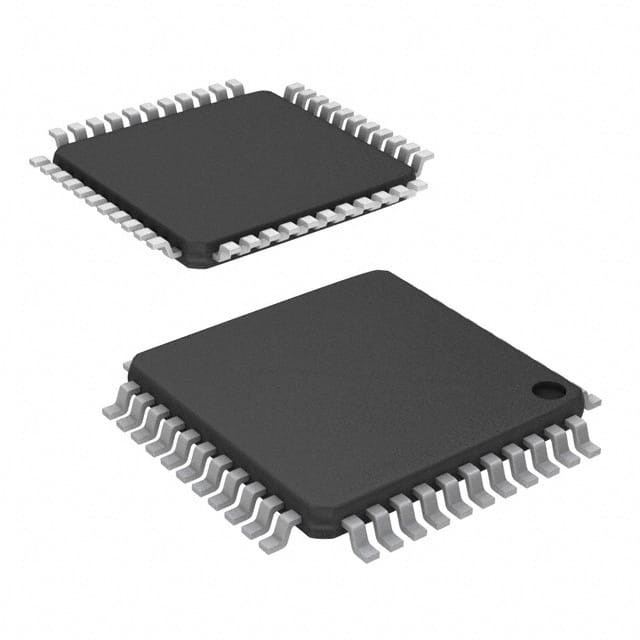
- Part No.:
- CY37032P44-125AC
- Manufacturer:
- Infineon Technologies
- Package:
- 44-LQFP
- Datasheet:
-
 CY37032P44-125AC.pdf
- Description:
- IC CPLD 32MC 10NS 44TQFP
- Quantity:
- Payment:

- Shipping:

Inventory:2,196
Please send an inquiry. Send us your inquiry, and we will respond immediately.
Product details
Overview
CY37032P44-125AC from Cypress Semiconductor is a 32-macrocell In-System Reprogrammable (ISR™) Complex Programmable Logic Device (CPLD) in a 44-pin TQFP package, operating at 5V with 125 MHz maximum frequency (tPD = 12.5 ns), PCI-compatible I/O, and JTAG-based reconfiguration. It features four synchronous clocks, programmable bus-hold on all I/Os, and supports both combinatorial and registered logic functions in embedded control and interface glue logic applications.
For engineers reviewing the CY37032P44-125AC datasheet, CY37032P44-125AC pinout, CY37032P44-125AC application, or CY37032P44-125AC equivalent, key selection criteria include its fixed-pinout migration path across Ultra37000 densities, zero-delay PIM routing, product-term steering (0–16 per macrocell), 5V/3.3V I/O tolerance via VCCO configuration, and JTAG-compliant ISR for field updates without timing or pinout impact.
Technical Context
The CY37032P44-125AC implements a two-block Ultra37000 architecture with a 36-input Programmable Interconnect Matrix (PIM) feeding two logic blocks, each containing a 72×87 product term array and 16 macrocells. All signals-including I/O pins and macrocell feedbacks-pass through the PIM, with worst-case delays fully incorporated into timing specs.
Each logic block supports four global synchronous clocks (CLK0–CLK3), one asynchronous product-term clock (PTCLK), programmable clock polarity, and independent high-speed/low-power mode selection. The intelligent product term allocator enables per-macrocell assignment of 0–16 product terms and sharing across groups of four macrocells without speed penalty.
Key Specifications
| Parameter | Value and Actual Design Meaning |
|---|---|
| Macrocell Count | 32 macrocells (16 per logic block), enabling medium-complexity glue logic or state-machine implementation. |
| Maximum Frequency (fMAX) | 125 MHz - guarantees synchronous operation up to 8 ns clock period in critical paths. |
| Propagation Delay (tPD) | 12.5 ns - fixed, route-independent delay due to PIM-integrated timing model. |
| I/O Pins | 32 user I/O pins + 5 dedicated inputs (4 clock-capable) - supports compact board layout with full clocking flexibility. |
| Supply Voltage | 5V VCC with 3.3V/5V-tolerant I/O via VCCO - allows direct interfacing to mixed-voltage systems without level shifters. |
| JTAG Interface | IEEE 1149.1-compliant - enables in-system reprogramming, boundary scan testing, and design iteration without hardware change. |
| PCI Compatibility | Fully compliant with PCI Local Bus Specification electrical and timing requirements - suitable for add-in card logic. |
Pinout & Package
Package: 44-pin Thin Quad Flat Package (TQFP), 10 mm × 10 mm, 0.8 mm pitch, RoHS-compliant.
| Pin/Terminal | Circuit Role | Design Meaning |
|---|---|---|
| TCK, TMS, TDI, TDO | JTAG Test Access Port | Enable IEEE 1149.1 boundary scan and ISR programming; no external programming hardware required. |
| CLK0–CLK3 | Dedicated Clock Inputs | Four globally distributed synchronous clocks with programmable polarity - support multi-clock domain designs. |
| PTCLK | Product Term Clock Input | Asynchronous clock derived from local product terms - enables event-driven register updates independent of global clocks. |
| VCC, GND | Power Supply | 5V core supply; separate VCCO pins allow per-bank I/O voltage selection (3.3V or 5V). |
| I/O[0]–I/O[31] | Configurable Bidirectional I/O | Supports input, output, or bidirectional modes; all feature programmable bus-hold and slew rate control. |
Key Features
| Feature | Design Value |
|---|---|
| In-System Reprogrammability (ISR™) | JTAG-based field updates preserve pinout and timing - eliminates respins during firmware or logic revisions. |
| Fixed Pinout Migration | Same 44-pin TQFP footprint across CY37032/CY37064/CY37128 - enables density upgrades without PCB redesign. |
| Zero-Delay PIM Routing | All signal paths routed through Programmable Interconnect Matrix with worst-case delay baked into tPD - eliminates route-dependent timing analysis. |
| Per-Macrocell Product Term Allocation | 0–16 product terms assignable per macrocell - optimizes logic density without sacrificing performance or predictability. |
| Programmable Slew Rate | Fast/slow edge control per output - balances EMI compliance (slow) and timing margin (fast) in same design. |
Applications
| PCI Add-In Card Control | Legacy Bus Interface Adapter |
|---|---|
Use Scenario: Implementing address decoding, interrupt arbitration, and register mapping for PCIe-to-ISA/PCI-X bridge cards. IC Role / Device Role / Timing Role: Glue logic CPLD handling setup/hold timing-critical control signals between legacy peripherals and host controller. Use Value: PCI-compliant 5V I/O and deterministic 12.5 ns tPD ensure reliable handshake timing without external buffers or delay compensation. | Use Scenario: Translating timing and voltage levels between 3.3V microcontrollers and 5V industrial sensors or displays. IC Role / Device Role / Timing Role: Level-shifting and protocol adaptation engine with configurable bus-hold to prevent floating inputs during sensor disconnect. Use Value: VCCO-selectable I/O and programmable slew rate enable single-device support for mixed-voltage subsystems while meeting FCC radiated emissions limits. |
| Field-Upgradeable Firmware Sequencer | Configurable Power-On Reset Controller |
Use Scenario: Managing boot sequence, FPGA configuration loading, and watchdog reset coordination in telecom baseband modules. IC Role / Device Role / Timing Role: State-machine-based sequencer with JTAG-updatable logic to adapt to new FPGA bitstreams or boot firmware versions. Use Value: ISR capability allows field updates of power sequencing logic without replacing hardware - reducing service downtime and NRE costs. | Use Scenario: Generating synchronized, glitch-free reset pulses for multiple ASICs and memory devices after power stabilization. IC Role / Device Role / Timing Role: Precision reset generator using product-term clocking and asynchronous set/reset - immune to supply ripple-induced false triggers. Use Value: Dedicated asynchronous clock and polarity-controlled set/reset product terms guarantee sub-10 ns jitter and monotonic reset assertion across temperature and voltage ranges. |
Equivalent & Alternatives
The following parts are listed as comparable options for similar CPLD-based glue logic applications.
| Alternative Part | Technical Difference | Application Difference | Selection Advice |
|---|---|---|---|
| XC9536XL-10VQ44I | 36 macrocells, 3.3V-only supply, 10 ns tPD, Xilinx CoolRunner-II architecture with lower static current. | Lacks 5V tolerance and PCI compliance; requires external level shifters for 5V buses. | Prefer when low-power battery operation is primary and system uses only 3.3V signaling. |
| ATF1502AS-10AU44 | 32 macrocells, 3.3V supply, 10 ns tPD, Atmel (Microchip) ISP-enabled CPLD with JTAG but no dedicated clock pins. | No dedicated clock inputs - all clocks must be routed through I/O pins, increasing routing complexity and skew. | Choose when cost sensitivity outweighs clocking flexibility and PCI interface needs. |
Compared with XC9536XL-10VQ44I and ATF1502AS-10AU44, the CY37032P44-125AC uniquely delivers 5V/3.3V I/O tolerance, four dedicated clock pins, and PCI compliance in the same 44-pin TQFP - making it the only option for retrofitting legacy 5V systems with field-upgradable logic without board redesign.
Availability
CY37032P44-125AC is available at Aetrix Electronics and suitable for PCI add-in card manufacturing, industrial bus interface adapters, and field-upgradeable firmware sequencers requiring stable component supply across extended product lifecycles.
Supply support for CY37032P44-125AC includes scheduled delivery planning, volume procurement assistance, BOM continuity management, traceable sourcing, and lifecycle availability coordination for OEM customers, industrial embedded developers, connected-device designers, and electronics production programs.
Manufacturer
Cypress Semiconductor (now part of Infineon Technologies) is a U.S.-based semiconductor company specializing in programmable logic, memory, and mixed-signal solutions for industrial, automotive, and communications markets.
The Ultra37000 CPLD family was designed to deliver high-density, pin-compatible, and timing-predictable programmable logic for system-level glue logic, bus interfacing, and control sequencing - bridging the gap between simple PLDs and FPGAs.
FAQ
What is the difference between CY37032P44-125AC and CY37032V-125AC?
The CY37032P44-125AC is a 5V-core device supporting both 5V and 3.3V I/O via VCCO configuration, while the CY37032V-125AC is a 3.3V-core variant requiring 3.3V on all VCCO pins and offering lower power consumption. The 'P' suffix denotes plastic TQFP packaging and 5V operation; the 'V' suffix indicates 3.3V core voltage. Both share identical pinout and JTAG functionality.
Does CY37032P44-125AC require external pull-up resistors on JTAG pins?
No. The device has internal weak pull-ups on TMS and TCK pins, and TDI/TDO are driven actively during JTAG operations. External pull-ups are unnecessary and may interfere with signal integrity; Cypress's recommended configuration uses only series termination resistors for noise suppression on long traces.
Can CY37032P44-125AC replace a 22V10 PLD in existing designs?
Yes - with appropriate HDL translation and pin mapping. Its 32 macrocells, 32 I/Os, and compatible architecture provide direct functional expansion over the 22V10 (10 macrocells). The fixed pinout across densities and ISR capability allow drop-in replacement where board space permits the 44-pin TQFP footprint and additional logic capacity is needed.
Is bus-hold enabled by default on power-up?
No. Bus-hold is disabled by default at power-on reset. It must be explicitly enabled per I/O pin using the device's fuse map or programming software (e.g., Warp v9.0 or third-party tools). Once programmed, bus-hold remains active until reconfigured, providing latch-like behavior during tri-state conditions without external components.
CY37032P44-125AC Specifications
- Product attributes
- Attribute value
- Manufacturer:
- Infineon Technologies
- Series:
- Ultra37000™
- Package/Case:
- 44-LQFP
- Packaging:
- Bag
- Product Status:
- Obsolete
- Programmable:
- Not Verified
- Programmable Type:
- In-System Reprogrammable™ (ISR™) CMOS
- Delay Time tpd(1) Max:
- 10 ns
- Voltage Supply - Internal:
- 4.75V ~ 5.25V
- Number of Logic Elements/Blocks:
- -
- Number of Macrocells:
- 32
- Number of Gates:
- -
- Number of I/O:
- 37
- Operating Temperature:
- 0°C ~ 70°C (TA)
- Grade:
- -
- Qualification:
- -
- Mounting Type:
- Surface Mount
- Supplier Device Package:
- 44-TQFP (10x10)
CY37032P44-125AC FAQ
1.How can I place an order for CY37032P44-125AC through Aetrix?
Please submit a Request for Quotation (RFQ) for CY37032P44-125AC on Aetrix. Our sales agent will provide a competitive quotation and guide you through the order confirmation once you accept the terms.
2.Are the price and stock information for CY37032P44-125AC reliable?
The price and inventory of CY37032P44-125AC are updated periodically and may fluctuate due to market conditions. Stock and pricing data are typically refreshed every 24 hours. Quotation validity for CY37032P44-125AC is usually 5 days.
3.What payment methods are accepted for CY37032P44-125AC?
We accept Wire Transfer, PayPal, Credit Card, Western Union, MoneyGram, and Escrow for CY37032P44-125AC transactions.
Note: Certain payment methods may incur a processing fee.
4.How is shipping managed for CY37032P44-125AC?
CY37032P44-125AC orders can be shipped via leading logistics carriers, including DHL, UPS, FedEx, TNT, or Registered Mail.
Once your CY37032P44-125AC order is processed, you will receive an email with the shipment details and tracking number.
Note: Tracking information may take up to 24 hours to appear. Express delivery typically takes 3–5 business days.
5.How can I obtain technical support or documentation for CY37032P44-125AC?
For technical support, including CY37032P44-125AC datasheets, pinout diagrams, or application guidance, please contact our engineering support team. They can provide detailed documentation and assistance for your CY37032P44-125AC requirements.
6.How does Aetrix verify that CY37032P44-125AC is sourced from the original manufacturer or authorized distributors?
All CY37032P44-125AC products on Aetrix are procured from qualified distributors and authorized channels. Our dedicated quality assurance team conducts strict verification, including traceability checks and, if necessary, third-party testing. This ensures that CY37032P44-125AC meets industry standards.
7.What is the process for return or replacement of CY37032P44-125AC?
All CY37032P44-125AC units undergo pre-shipment inspection (PSI). If there is an issue with CY37032P44-125AC, returns or replacements are accepted under the following conditions:
1.Quantity discrepancies, incorrect items, or visible external defects (such as breakage or corrosion), acknowledged by Aetrix.
2.The issue is reported within 90 days of delivery.
3.The CY37032P44-125AC part is unused and in its original packaging.
Return procedure for CY37032P44-125AC:
1.Submit a request within 90 days.
2.Obtain a Return Material Authorization (RMA) from Aetrix.
CY37032P44-125AC Tags
-
5M40ZE64C5N
Intel
-
ATF1502ASV-15AU44
Microchip Technology
-
5M80ZE64C5N
Intel
-
5M80ZT100C5N
Intel
-
ATF1502AS-10AU44
Microchip Technology
-
ATF1502AS-10JU44
Microchip Technology
-
5M80ZE64I5N
Intel
-
5M80ZT100I5N
Intel
-
LC4032V-75TN48C
Lattice Semiconductor Corporation
-
ATF1504ASV-15AU44
Microchip Technology
-
ATF1504AS-10JU44
Microchip Technology
-
5M160ZE64C5N
Intel
Tech Hub

An engineering guide to LED driver operation, constant-current and constant-voltage outputs, linear and switching topologies, dimming, IC selection, calculations, replacement compatibility, and fault c…

Operational amplifier guide covering op amp basics, feedback, ideal vs real op amps, common configurations, buffer circuits, offset, bias current, gain-bandwidth, slew rate, rail-to-rail limits and sel…

Jumper cables guide covering safe connection order, red and black clamp placement, final ground connection, cable gauge, length, clamp quality, copper vs CCA cables, jump starter comparison and battery…

LDO regulator guide covering low dropout voltage, power dissipation, thermal design, PSRR, output noise, capacitor stability, adjustable LDO circuits, LDO vs buck converter and datasheet selection chec…

Conditional Access Module guide covering CAM meaning, CI/CI+ interface, smart card authorization, DVB security workflow, TV and set-top box compatibility, internal electronics, ESD protection, connecto…

Guide to electronic component obsolescence covering EOL risk, PCN/PDN notices, last-time buy planning, replacement options, form-fit-function validation, counterfeit risk and BOM lifecycle management.

18650 battery guide covering lithium-ion cell basics, 3.6V/3.7V voltage, 4.2V charging, mAh and Wh capacity, protected cells, chargers, BMS, series-parallel packs, holders, welding and sourcing checks.…

Hall effect sensor guide covering working principle, linear and digital sensors, Arduino circuits, current sensing, speed detection, automotive applications, A3144 examples, signal filtering and datash…

Product Change Notification guide for electronic components, covering PCN meaning, PCN vs PDN/EOL, common change types, risk levels, form-fit-function review, engineering validation, BOM control, LTB/L…

A practical guide to blend door actuators, covering HVAC function, symptoms, location, AC and heater issues, reset and calibration, replacement cost, electrical diagnosis, compatibility checks, and rep…


