
 My Inquiry
 My Account


Infineon Technologies CY7C63801-SXC
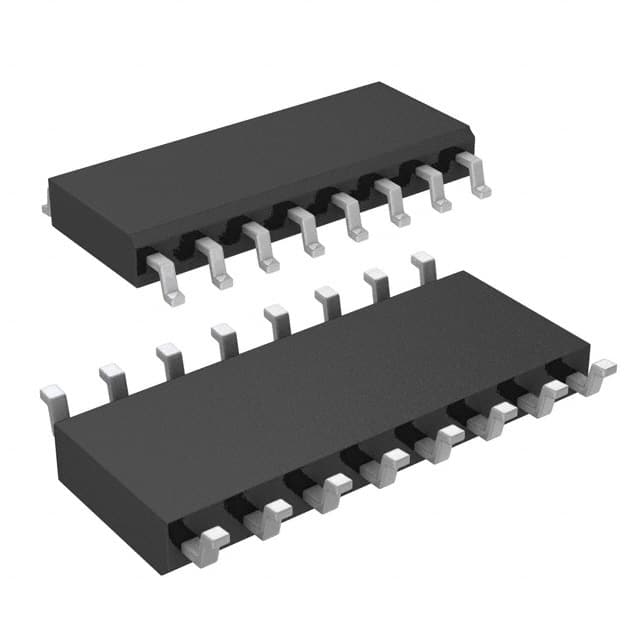
- Part No.:
- CY7C63801-SXC
- Manufacturer:
- Infineon Technologies
- Category:
- Controllers
- Package:
- 16-SOIC (0.154", 3.90mm Width)
- Datasheet:
-
 CY7C63801-SXC.pdf
- Description:
- IC USB PERIPHERAL CTRLR 16SOIC
- Quantity:
- Payment:

- Shipping:

Inventory:2,433
Please send an inquiry. Send us your inquiry, and we will respond immediately.
Product details
Overview
CY7C63801-SXC from Cypress Semiconductor is an 8-bit flash-programmable low-speed USB peripheral controller with integrated USB transceiver, crystalless 24 MHz oscillator, dual 3.3 V regulators (125 mA main + dedicated USB PHY), and up to 20 GPIO pins. It supports USB 2.0 (TID #40000085), HID v1.1, one device address, control + two data endpoints, and auto-configurable USB/PS/2 mode - used in optical mice, game pads, and barcode scanners.
For engineers reviewing the CY7C63801-SXC datasheet, CY7C63801-SXC pinout, CY7C63801-SXC application, or CY7C63801-SXC equivalent, key selection criteria include its crystalless operation, dual-regulator architecture, PS/2/USB dual-mode auto-switching without GPIO overhead, 24 MHz ±1.5% USB-tuned oscillator, and 8 KB flash with EEROM emulation for field firmware updates.
Technical Context
The CY7C63801-SXC implements a Harvard-architecture M8C CPU running at up to 24 MHz, with USB Serial Interface Engine (SIE) handling all protocol-layer tasks including token decoding, CRC generation/checking, and endpoint management. Its internal clock generator supports both crystalless operation and external 12/24 MHz reference input for USB timing compliance.
It integrates a dedicated 3.3 V regulator for USB D– pull-up and signal integrity, plus a separate 125 mA 3.3 V regulator for external peripherals. The device supports full USB suspend/resume with internal wakeup timer and low-power sleep (10 µA), while retaining programmable LVD, watchdog timer, and vectored interrupt controller with 22 sources.
Key Specifications
| Parameter | Value and Actual Design Meaning |
|---|---|
| USB Compliance | USB 2.0 Low-Speed (1.5 Mbps); USB-IF certified (TID #40000085) |
| CPU Core | M8C 8-bit Harvard architecture, up to 24 MHz operation |
| Memory | 8 KB flash (with EEROM emulation) + 256 bytes RAM |
| Oscillator | Internal crystalless 24 MHz ±1.5% oscillator; supports external 12/24 MHz clock |
| Regulators | Dedicated 3.3 V USB PHY regulator + 125 mA general-purpose 3.3 V regulator |
| I/O Capability | Up to 20 GPIO; 4 pins at 3.3 V logic; configurable 8/50 mA sink per designated pin |
| USB Endpoints | 1 control endpoint (EP0) + 2 data endpoints (EP1, EP2) |
Pinout & Package
Package: 24-pin SOIC (Small Outline Integrated Circuit), 300 mil width, RoHS-compliant, lead-free.
| Pin/Terminal | Circuit Role | Design Meaning |
|---|---|---|
| VDD | Power supply input | 4.0–5.5 V DC main supply; powers core logic and I/O |
| VSS | Ground reference | Digital ground common to all circuit blocks |
| D+ | USB differential data line | Low-speed USB data+; internally pulled up to 3.3 V via dedicated regulator |
| D− | USB differential data line | Low-speed USB data−; includes internal pull-up resistor for LS detection |
| XIN/XOUT | External clock interface | Optional 12/24 MHz crystal or external clock input; bypassed when using internal oscillator |
| P0.0–P0.7 | General-purpose I/O port | Individually configurable; support CMOS/TTL I/O, open-drain, pull-up, high-Z inputs |
| P1.0–P1.3 | 3.3 V I/O port | Fixed 3.3 V logic level; compatible with USB/PS/2 signaling; no level-shifting required |
| RESET | Active-low reset input | Asynchronous reset; triggered by POR, LVD, or external assertion |
Key Features
| Feature | Design Value |
|---|---|
| Crystalless USB operation | Eliminates external crystal/resonator and associated load capacitors - reduces BOM count and PCB area |
| Auto-switching USB/PS/2 mode | Detects host interface type at power-on or reset; requires zero GPIO pins or external logic to manage mode selection |
| Dual 3.3 V regulation | Separate 3.3 V supplies for USB PHY (signal integrity) and system peripherals (125 mA drive) - avoids noise coupling and enables direct interfacing |
| Configurable GPIO sink current | Designated pins support 50 mA sink (vs. standard 8 mA), enabling direct LED driving or relay control without external drivers |
| Capture timer for RF/optical inputs | Two-channel 8-bit capture registers store rising/falling edge timestamps - simplifies pulse-width decoding for IR remotes and optical encoders |
Applications
| Optical Mouse | Game Controller |
|---|---|
Use Scenario: Optical sensor interface with quadrature output and button inputs in compact USB mouse design. IC Role / Device Role / Timing Role: USB peripheral controller managing HID report generation, optical encoder timing capture, and button debouncing. Use Value: Internal capture timers directly measure encoder pulse widths; crystalless operation eliminates timing component; 3.3 V I/O matches sensor logic levels. | Use Scenario: Wired USB joystick or gamepad with analog potentiometer inputs, digital buttons, and vibration motor control. IC Role / Device Role / Timing Role: HID-class peripheral handling report polling, analog-to-digital sampling (via external ADC or resistive ladder), and motor driver enable sequencing. Use Value: 50 mA GPIO sink drives vibration motors directly; dual regulators isolate USB signaling from motor noise; PS/2 fallback supports legacy consoles. |
| Barcode Scanner | Security Dongle |
Use Scenario: Handheld or kiosk-mounted scanner transmitting decoded data as keyboard HID reports over USB. IC Role / Device Role / Timing Role: USB HID keyboard device translating scanned codes into scancode sequences; manages laser trigger and decode timing. Use Value: 8 KB flash stores multiple symbology decoders; in-system reprogrammability enables firmware updates post-deployment; low-power sleep extends battery life. | Use Scenario: Compact USB authentication token generating time-based or challenge-response one-time passwords. IC Role / Device Role / Timing Role: Secure USB HID device performing cryptographic operations (via software implementation) and reporting tokens as keyboard input. Use Value: Internal 12-bit programmable interval timer enables precise TOTP window alignment; 256-byte RAM accommodates crypto state; tamper-resistant sleep mode preserves session context. |
Equivalent & Alternatives
The following parts are listed as comparable options for similar low-speed USB peripheral controller applications.
| Alternative Part | Technical Difference | Application Difference | Selection Advice |
|---|---|---|---|
| CY7C63802-SXC | Same die, 16-pin SOIC package; fewer GPIO (14 total), no 3.3 V I/O pins | Limited I/O count and absence of 3.3 V logic restricts use in mixed-voltage sensor interfaces | Select when board space is constrained and only basic USB HID functionality is required |
| SLAB CP2102N-A02-GM | USB-to-UART bridge IC; no embedded MCU, no flash, no GPIO programmability | Requires external microcontroller for HID logic; cannot emulate keyboard/mouse natively | Select only for serial tunneling applications where host-side firmware handles HID protocol |
Compared with CY7C63802-SXC, the CY7C63801-SXC provides more I/O and native 3.3 V signaling for sensor integration; versus CP2102N, it delivers full embedded HID processing without external MCU dependency - critical for cost-sensitive, self-contained peripherals.
Availability
CY7C63801-SXC is available at Aetrix Electronics and suitable for optical mouse designs, gaming peripherals, point-of-sale terminals, and secure authentication dongles requiring stable component supply, long-term lifecycle support, and RoHS-compliant packaging.
Supply support for CY7C63801-SXC includes scheduled delivery planning, volume procurement assistance, BOM continuity management, traceable sourcing, and lifecycle availability coordination for OEM customers, industrial embedded developers, connected-device designers, and electronics production programs.
Manufacturer
Cypress Semiconductor (now part of Infineon Technologies) is a fabless semiconductor company specializing in programmable system-on-chip solutions, USB controllers, and mixed-signal ICs for embedded applications.
The enCoRe™ II product line was designed specifically for cost-sensitive, low-speed USB HID peripherals - integrating oscillator, regulators, transceiver, and firmware infrastructure to minimize external components and accelerate time-to-market.
FAQ
Does CY7C63801-SXC require an external crystal to operate in USB mode?
No. The device features a factory-trimmed internal 24 MHz oscillator with ±1.5% accuracy over temperature and voltage, fully compliant with USB Low-Speed timing requirements. An external crystal or clock is optional and used only when higher precision is needed - for example, in systems requiring tighter synchronization across multiple USB devices.
Can CY7C63801-SXC be programmed in-circuit after soldering?
Yes. It supports in-system reprogrammability via its USB interface using Cypress's bootloader and PSoC Designer tools. No external programmer is required - firmware updates can be delivered over USB using vendor-specific class requests, enabling field upgrades and configuration changes without hardware access.
What is the maximum sink current capability of its GPIO pins?
Standard GPIO pins provide 8 mA sink current. Five designated pins (P0.0–P0.4) support programmable 50 mA sink current - confirmed in the DC Characteristics table (Section 74) of datasheet 38-08035 Rev. *T. This allows direct driving of LEDs, small relays, or buzzer circuits without external transistors.
How does the device handle USB suspend and resume events?
Upon USB bus suspend, CY7C63801-SXC enters low-power sleep mode drawing 10 µA. It wakes on USB resume, remote wakeup request, or internal wakeup timer expiration. The wakeup timer operates independently during suspend and requires no external components - enabling periodic polling or motion-triggered wake in HID devices like mice.
CY7C63801-SXC Specifications
- Product attributes
- Attribute value
- Manufacturer:
- Infineon Technologies
- Package/Case:
- 16-SOIC (0.154", 3.90mm Width)
- Programmable:
- Not Verified
- Protocol:
- USB
- Function:
- Controller
- Interface:
- GPIO, SPI
- Standards:
- USB 2.0
- Voltage - Supply:
- 4V ~ 5.5V
- Current - Supply:
- 40mA
- Operating Temperature:
- 0°C ~ 70°C
- Supplier Device Package:
- 16-SOIC
- Grade:
- -
- Qualification:
- -
CY7C63801-SXC FAQ
1.How can I place an order for CY7C63801-SXC through Aetrix?
Please submit a Request for Quotation (RFQ) for CY7C63801-SXC on Aetrix. Our sales agent will provide a competitive quotation and guide you through the order confirmation once you accept the terms.
2.Are the price and stock information for CY7C63801-SXC reliable?
The price and inventory of CY7C63801-SXC are updated periodically and may fluctuate due to market conditions. Stock and pricing data are typically refreshed every 24 hours. Quotation validity for CY7C63801-SXC is usually 5 days.
3.What payment methods are accepted for CY7C63801-SXC?
We accept Wire Transfer, PayPal, Credit Card, Western Union, MoneyGram, and Escrow for CY7C63801-SXC transactions.
Note: Certain payment methods may incur a processing fee.
4.How is shipping managed for CY7C63801-SXC?
CY7C63801-SXC orders can be shipped via leading logistics carriers, including DHL, UPS, FedEx, TNT, or Registered Mail.
Once your CY7C63801-SXC order is processed, you will receive an email with the shipment details and tracking number.
Note: Tracking information may take up to 24 hours to appear. Express delivery typically takes 3–5 business days.
5.How can I obtain technical support or documentation for CY7C63801-SXC?
For technical support, including CY7C63801-SXC datasheets, pinout diagrams, or application guidance, please contact our engineering support team. They can provide detailed documentation and assistance for your CY7C63801-SXC requirements.
6.How does Aetrix verify that CY7C63801-SXC is sourced from the original manufacturer or authorized distributors?
All CY7C63801-SXC products on Aetrix are procured from qualified distributors and authorized channels. Our dedicated quality assurance team conducts strict verification, including traceability checks and, if necessary, third-party testing. This ensures that CY7C63801-SXC meets industry standards.
7.What is the process for return or replacement of CY7C63801-SXC?
All CY7C63801-SXC units undergo pre-shipment inspection (PSI). If there is an issue with CY7C63801-SXC, returns or replacements are accepted under the following conditions:
1.Quantity discrepancies, incorrect items, or visible external defects (such as breakage or corrosion), acknowledged by Aetrix.
2.The issue is reported within 90 days of delivery.
3.The CY7C63801-SXC part is unused and in its original packaging.
Return procedure for CY7C63801-SXC:
1.Submit a request within 90 days.
2.Obtain a Return Material Authorization (RMA) from Aetrix.
CY7C63801-SXC Tags
-
PTN5150AHXMP
NXP USA Inc.
-
USB3740B-AI9-TR
Microchip Technology
-
USB3740B-AI2-TR
Microchip Technology
-
USB3300-EZK-TR
Microchip Technology
-
USB3300-EZK
Microchip Technology
-
FUSB340TMX
onsemi
-
FUSB302BMPX
onsemi
-
DP83826IRHBR
Texas Instruments
-
MCP2518FDT-E/QBB
Microchip Technology
-
FUSB302MPX
onsemi
-
MCP2518FDT-E/SL
Microchip Technology
-
FT260Q-R
FTDI, Future Technology Devices International Ltd
Tech Hub

An engineering guide to LED driver operation, constant-current and constant-voltage outputs, linear and switching topologies, dimming, IC selection, calculations, replacement compatibility, and fault c…

Operational amplifier guide covering op amp basics, feedback, ideal vs real op amps, common configurations, buffer circuits, offset, bias current, gain-bandwidth, slew rate, rail-to-rail limits and sel…

Jumper cables guide covering safe connection order, red and black clamp placement, final ground connection, cable gauge, length, clamp quality, copper vs CCA cables, jump starter comparison and battery…

LDO regulator guide covering low dropout voltage, power dissipation, thermal design, PSRR, output noise, capacitor stability, adjustable LDO circuits, LDO vs buck converter and datasheet selection chec…

Conditional Access Module guide covering CAM meaning, CI/CI+ interface, smart card authorization, DVB security workflow, TV and set-top box compatibility, internal electronics, ESD protection, connecto…

Guide to electronic component obsolescence covering EOL risk, PCN/PDN notices, last-time buy planning, replacement options, form-fit-function validation, counterfeit risk and BOM lifecycle management.

18650 battery guide covering lithium-ion cell basics, 3.6V/3.7V voltage, 4.2V charging, mAh and Wh capacity, protected cells, chargers, BMS, series-parallel packs, holders, welding and sourcing checks.…

Hall effect sensor guide covering working principle, linear and digital sensors, Arduino circuits, current sensing, speed detection, automotive applications, A3144 examples, signal filtering and datash…

Product Change Notification guide for electronic components, covering PCN meaning, PCN vs PDN/EOL, common change types, risk levels, form-fit-function review, engineering validation, BOM control, LTB/L…

A practical guide to blend door actuators, covering HVAC function, symptoms, location, AC and heater issues, reset and calibration, replacement cost, electrical diagnosis, compatibility checks, and rep…


