
 My Inquiry
 My Account


Infineon Technologies CY7C65620-56LTXC
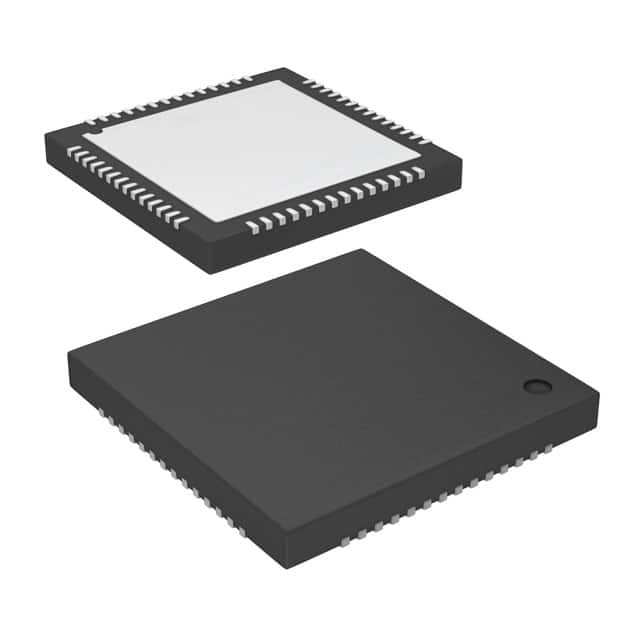
- Part No.:
- CY7C65620-56LTXC
- Manufacturer:
- Infineon Technologies
- Category:
- Controllers
- Package:
- 56-VFQFN Exposed Pad
- Datasheet:
-
 CY7C65620-56LTXC.pdf
- Description:
- IC USB HUB CTLR 2PORT 56VQFN
- Quantity:
- Payment:

- Shipping:

Inventory:2,768
Please send an inquiry. Send us your inquiry, and we will respond immediately.
Product details
Overview
CY7C65620-56LTXC from Cypress Semiconductor is a 2-port, single-transaction-translator (1TT) USB 2.0 hub controller supporting bus-powered operation, integrated 24 MHz PLL clock generation, and configurable SPI EEPROM-based device identification (VID/PID/DID). It integrates upstream 1.5 kΩ pull-up, downstream 15 kΩ pull-downs, and on-die termination resistors, targeting compact embedded hubs in monitor, docking station, and peripheral replicator systems.
For engineers reviewing the CY7C65620-56LTXC datasheet, CY7C65620-56LTXC pinout, CY7C65620-56LTXC application, or CY7C65620-56LTXC equivalent, key selection criteria include 2-port 1TT architecture, QFN-56 package compatibility with CY7C65640, bus-powered mode support, integrated USB transceivers, and SPI-configurable overcurrent detection polarity and port power switching behavior.
Technical Context
The CY7C65620 implements a USB 2.0 hub repeater for same-speed traffic (e.g., full-speed to full-speed) and a dedicated transaction translator (TT) for high-speed split transactions to full-/low-speed downstream devices. Its serial interface engine (SIE) handles bit stuffing, checksum validation, and address matching independently of host software.
Configuration is loaded at power-up from an external SPI EEPROM, enabling runtime customization of port count, removable status, power settings, overcurrent timers, LED polarity, and multi-language string descriptors - all without firmware changes.
Key Specifications
| Parameter | Value and Actual Design Meaning |
|---|---|
| USB Compliance | USB 2.0 specification compliant; USB-IF certified (TID# 30000009); WHQL compliant |
| Port Count | 2 downstream ports + 1 upstream port; both downstream ports share a single TT |
| Power Modes | Bus-powered only (no self-powered mode); internal regulator eliminates need for external LDO |
| Crystal Input | 24 MHz external crystal; integrated PLL generates required USB clocks (48/12/6 MHz) |
| Operating Temp | –40 °C to +85 °C industrial grade; qualified for automotive-grade applications |
| EEPROM Interface | SPI serial interface; supports byte- and word-addressable EEPROMs for full configuration storage |
| Integrated Resistors | Upstream 1.5 kΩ pull-up; downstream 15 kΩ pull-downs; on-die 15 Ω series termination on all D+/D– lines |
Pinout & Package
Package: 56-pin QFN (8 mm × 8 mm, 0.5 mm pitch), thermally enhanced with exposed pad. RoHS-compliant, lead-free, moisture sensitivity level 3.
| Pin/Terminal | Circuit Role | Design Meaning |
|---|---|---|
| VDD | Core power supply | 3.0–3.6 V single supply; powers internal regulator and logic |
| VBUSPOWER | Upstream VBUS sense | Detects presence of upstream bus power to initiate enumeration |
| D+ / D– (UP) | Upstream differential pair | Connects to host or upstream hub; includes integrated 1.5 kΩ pull-up on D+ |
| D+ / D– (DP1, DP2) | Downstream differential pairs | Each includes integrated 15 kΩ pull-down and 15 Ω series termination |
| PWR#1 / PWR#2 | Port power control outputs | Active-low open-drain signals driving external MOSFETs for per-port power switching |
| OVR#1 / OVR#2 | Overcurrent fault indicators | Active-low open-drain outputs signaling overcurrent condition per port |
| LED1 / LED2 | Port status indicator drivers | Open-drain outputs controlling green LEDs per downstream port |
| SPI_SCK / SPI_CS / SPI_SD | SPI configuration interface | Loads VID/PID/DID, port config, power settings, and string descriptors at boot |
Key Features
| Feature | Design Value |
|---|---|
| Single Transaction Translator (1TT) | Enables cost-effective 2-port hub design with shared TT resource; avoids dual-TT complexity and area overhead |
| Integrated USB Transceivers | Eliminates 8 external 15 Ω termination resistors and 2 pull-up/pull-down networks - reduces BOM count by ≥10 passive components |
| Configurable Overcurrent Handling | EEPROM-selectable polarity, timer duration, and ganged vs. independent port shutdown behavior - supports diverse power delivery architectures |
| Bus-Powered Only Architecture | Optimized for low-power embedded applications where self-powering is unnecessary; removes requirement for auxiliary 5 V rail |
| Multi-Language String Descriptor Support | Full Unicode string tables stored in SPI EEPROM enable localized UI in keyboard hubs, monitors, and docking stations |
Applications
| Monitor Hub | Docking Station |
|---|---|
Use Scenario: Integrated USB hub in LCD/LED monitor providing auxiliary ports for keyboard, mouse, and flash drives. IC Role / Device Role / Timing Role: 2-port bus-powered hub controller managing upstream connection to PC and downstream connections to peripherals; handles USB reset, suspend/resume, and port status reporting. Use Value: Reduces bill-of-materials via integrated termination and pull resistors; enables compact PCB layout with 56-pin QFN footprint and no external crystal oscillator needed beyond 24 MHz reference. | Use Scenario: Compact USB expansion module in laptop docking stations adding legacy peripherals without requiring additional power adapters. IC Role / Device Role / Timing Role: Downstream-facing hub controller aggregating low-speed HID devices while maintaining high-speed upstream link to host; manages port power sequencing and overcurrent isolation. Use Value: Bus-powered operation eliminates need for separate 5 V supply rail; EEPROM-configurable port removability and LED polarity align with OEM mechanical design constraints. |
| Keyboard Hub | External Storage Enclosure |
Use Scenario: Embedded hub inside mechanical keyboards offering dedicated USB-C or Type-A passthrough for headsets or mobile devices. IC Role / Device Role / Timing Role: Low-latency, low-power 2-port hub handling simultaneous full-speed HID traffic and high-speed bulk transfers; supports remote wakeup from suspend. Use Value: Industrial temperature range (–40 °C to +85 °C) ensures reliability in enclosed thermal environments; integrated SIE offloads timing-critical USB protocol handling from MCU. | Use Scenario: Dual-bay USB 3.0-to-2.0 bridge enclosure using CY7C65620 to manage legacy USB 2.0 peripherals alongside modern SSDs. IC Role / Device Role / Timing Role: Dedicated 2-port hub for backward-compatible peripherals (e.g., card readers, optical drives); isolates overcurrent events to prevent host port shutdown. Use Value: Configurable overcurrent detection mode (latched vs. auto-retry) and per-port PWR# control allow safe hot-plug of mixed-power peripherals without risking system instability. |
Equivalent & Alternatives
The following parts are listed as comparable options for similar 2-port USB 2.0 hub controller applications.
| Alternative Part | Technical Difference | Application Difference | Selection Advice |
|---|---|---|---|
| CY7C65630-56LTXC | Identical pinout and feature set but supports 4 downstream ports; shares same 56-pin QFN package and EEPROM configuration structure | Used where future port scalability or multi-peripheral aggregation is required; consumes same PCB area but adds routing complexity for two extra ports | Select when board layout allows unused port traces or when product variants require 2- and 4-port SKUs sharing firmware and layout |
| UPD720114GA | 3-port hub with dual TT; requires external 12 MHz crystal; no integrated pull resistors; supports self-powered mode | Targets higher-performance applications needing independent TT per port; mandates additional passives and power rail design | Choose only if dual-TT latency isolation or self-powered operation is mandatory; increases BOM and layout effort versus CY7C65620's integrated solution |
Compared with CY7C65630-56LTXC, the CY7C65620 offers lower system cost and simpler power delivery for fixed 2-port use cases; versus UPD720114GA, it delivers superior integration density and reduced passive count at the expense of TT flexibility and self-power capability.
Availability
CY7C65620-56LTXC is available at Aetrix Electronics and suitable for monitor hubs, docking stations, and keyboard-integrated USB expansion requiring stable component supply across industrial temperature ranges and long-lifecycle production programs.
Supply support for CY7C65620-56LTXC includes scheduled delivery planning, volume procurement assistance, BOM continuity management, traceable sourcing, and lifecycle availability coordination for OEM customers, industrial embedded developers, connected-device designers, and electronics production programs.
Manufacturer
Cypress Semiconductor (now part of Infineon Technologies) designs high-performance, low-power programmable system-on-chip solutions for USB, memory, and mixed-signal applications.
The EZ-USB HX2LP™ family targets ultra-low-power, space-constrained USB 2.0 hub implementations in consumer, industrial, and automotive peripherals - emphasizing BOM reduction through analog integration and EEPROM-driven configurability.
FAQ
Does CY7C65620-56LTXC support self-powered operation?
No. The CY7C65620-56LTXC is designed exclusively for bus-powered applications. It lacks the internal circuitry and pin assignments required for self-powered mode, unlike the CY7C65630 which supports both bus- and self-powered configurations. Power is derived solely from the upstream VBUS line via the VBUSPOWER pin, and internal regulation supplies core logic from that source.
What is the function of the PWR# and OVR# pins?
PWR#1 and PWR#2 are active-low, open-drain outputs that drive external N-channel MOSFETs to switch power to each downstream port. OVR#1 and OVR#2 are corresponding active-low, open-drain fault indicators asserting when overcurrent is detected on their respective ports. Both sets are EEPROM-configurable for polarity and latching behavior, enabling flexible power domain isolation strategies.
Can the CY7C65620-56LTXC operate without an external crystal?
No. A 24 MHz fundamental-mode crystal must be connected to the XIN/XOUT pins. The device integrates a PLL to derive all required USB clocks (48 MHz for high-speed, 12 MHz for full-speed), but it does not support external clock input or internal RC oscillation. Crystal load capacitance is specified at 12 pF, and stability over temperature is validated per industrial-grade requirements.
Is the CY7C65620-56LTXC pin-compatible with CY7C65640?
Yes - the CY7C65620-56LTXC is pin-for-pin compatible with CY7C65640 and CY7C65640A (TetraHub™) in the 56-pin QFN package. However, functionality differs: CY7C65640 supports four ports with dual TT, while CY7C65620 supports two ports with single TT. Firmware and EEPROM configuration must be updated accordingly; electrical pin behavior matches for shared signals like D+/D–, PWR#, OVR#, and SPI interface.
CY7C65620-56LTXC Specifications
- Product attributes
- Attribute value
- Manufacturer:
- Infineon Technologies
- Package/Case:
- 56-VFQFN Exposed Pad
- Programmable:
- Not Verified
- Protocol:
- USB
- Function:
- Hub Controller
- Interface:
- USB
- Standards:
- USB 2.0
- Voltage - Supply:
- 3.15V ~ 3.45V
- Current - Supply:
- -
- Operating Temperature:
- 0°C ~ 70°C
- Supplier Device Package:
- 56-QFN (8x8)
- Grade:
- -
- Qualification:
- -
CY7C65620-56LTXC FAQ
1.How can I place an order for CY7C65620-56LTXC through Aetrix?
Please submit a Request for Quotation (RFQ) for CY7C65620-56LTXC on Aetrix. Our sales agent will provide a competitive quotation and guide you through the order confirmation once you accept the terms.
2.Are the price and stock information for CY7C65620-56LTXC reliable?
The price and inventory of CY7C65620-56LTXC are updated periodically and may fluctuate due to market conditions. Stock and pricing data are typically refreshed every 24 hours. Quotation validity for CY7C65620-56LTXC is usually 5 days.
3.What payment methods are accepted for CY7C65620-56LTXC?
We accept Wire Transfer, PayPal, Credit Card, Western Union, MoneyGram, and Escrow for CY7C65620-56LTXC transactions.
Note: Certain payment methods may incur a processing fee.
4.How is shipping managed for CY7C65620-56LTXC?
CY7C65620-56LTXC orders can be shipped via leading logistics carriers, including DHL, UPS, FedEx, TNT, or Registered Mail.
Once your CY7C65620-56LTXC order is processed, you will receive an email with the shipment details and tracking number.
Note: Tracking information may take up to 24 hours to appear. Express delivery typically takes 3–5 business days.
5.How can I obtain technical support or documentation for CY7C65620-56LTXC?
For technical support, including CY7C65620-56LTXC datasheets, pinout diagrams, or application guidance, please contact our engineering support team. They can provide detailed documentation and assistance for your CY7C65620-56LTXC requirements.
6.How does Aetrix verify that CY7C65620-56LTXC is sourced from the original manufacturer or authorized distributors?
All CY7C65620-56LTXC products on Aetrix are procured from qualified distributors and authorized channels. Our dedicated quality assurance team conducts strict verification, including traceability checks and, if necessary, third-party testing. This ensures that CY7C65620-56LTXC meets industry standards.
7.What is the process for return or replacement of CY7C65620-56LTXC?
All CY7C65620-56LTXC units undergo pre-shipment inspection (PSI). If there is an issue with CY7C65620-56LTXC, returns or replacements are accepted under the following conditions:
1.Quantity discrepancies, incorrect items, or visible external defects (such as breakage or corrosion), acknowledged by Aetrix.
2.The issue is reported within 90 days of delivery.
3.The CY7C65620-56LTXC part is unused and in its original packaging.
Return procedure for CY7C65620-56LTXC:
1.Submit a request within 90 days.
2.Obtain a Return Material Authorization (RMA) from Aetrix.
CY7C65620-56LTXC Tags
-
PTN5150AHXMP
NXP USA Inc.
-
USB3740B-AI9-TR
Microchip Technology
-
USB3740B-AI2-TR
Microchip Technology
-
USB3300-EZK-TR
Microchip Technology
-
USB3300-EZK
Microchip Technology
-
FUSB340TMX
onsemi
-
FUSB302BMPX
onsemi
-
DP83826IRHBR
Texas Instruments
-
MCP2518FDT-E/QBB
Microchip Technology
-
FUSB302MPX
onsemi
-
MCP2518FDT-E/SL
Microchip Technology
-
FT260Q-R
FTDI, Future Technology Devices International Ltd
Tech Hub

An engineering guide to LED driver operation, constant-current and constant-voltage outputs, linear and switching topologies, dimming, IC selection, calculations, replacement compatibility, and fault c…

Operational amplifier guide covering op amp basics, feedback, ideal vs real op amps, common configurations, buffer circuits, offset, bias current, gain-bandwidth, slew rate, rail-to-rail limits and sel…

Jumper cables guide covering safe connection order, red and black clamp placement, final ground connection, cable gauge, length, clamp quality, copper vs CCA cables, jump starter comparison and battery…

LDO regulator guide covering low dropout voltage, power dissipation, thermal design, PSRR, output noise, capacitor stability, adjustable LDO circuits, LDO vs buck converter and datasheet selection chec…

Conditional Access Module guide covering CAM meaning, CI/CI+ interface, smart card authorization, DVB security workflow, TV and set-top box compatibility, internal electronics, ESD protection, connecto…

Guide to electronic component obsolescence covering EOL risk, PCN/PDN notices, last-time buy planning, replacement options, form-fit-function validation, counterfeit risk and BOM lifecycle management.

18650 battery guide covering lithium-ion cell basics, 3.6V/3.7V voltage, 4.2V charging, mAh and Wh capacity, protected cells, chargers, BMS, series-parallel packs, holders, welding and sourcing checks.…

Hall effect sensor guide covering working principle, linear and digital sensors, Arduino circuits, current sensing, speed detection, automotive applications, A3144 examples, signal filtering and datash…

Product Change Notification guide for electronic components, covering PCN meaning, PCN vs PDN/EOL, common change types, risk levels, form-fit-function review, engineering validation, BOM control, LTB/L…

A practical guide to blend door actuators, covering HVAC function, symptoms, location, AC and heater issues, reset and calibration, replacement cost, electrical diagnosis, compatibility checks, and rep…


