
 My Inquiry
 My Account


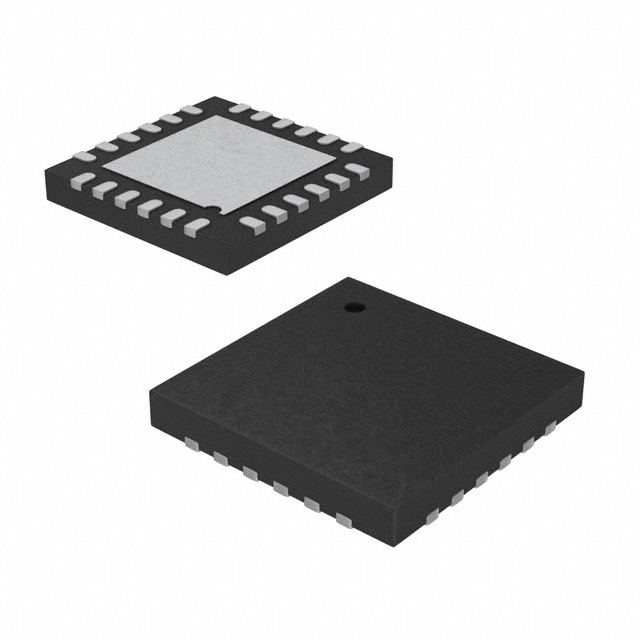
Cypress Semiconductor Corp CY7C68003-24LQXIT
- Part No.:
- CY7C68003-24LQXIT
- Manufacturer:
- Cypress Semiconductor Corp
- Category:
- Drivers, Receivers, Transceivers
- Package:
- 24-UFQFN Exposed Pad
- Datasheet:
-
 CY7C68003-24LQXIT.pdf
- Description:
- IC TRANSCEIVER FULL 1/1 24QFN
- Quantity:
- Payment:

- Shipping:

Inventory:1,526
Please send an inquiry. Send us your inquiry, and we will respond immediately.
Product details
Overview
CY7C68003-24LQXIT from Cypress Semiconductor is a USB 2.0 ULPI transceiver supporting full-speed (12 Mbps) and high-speed (480 Mbps) device-mode operation, with integrated 13/19.2/24/26 MHz PLL clock synthesis, 1.8 V core supply, and multi-range 1.8–3.3 V I/O interface. It features on-chip USB pull-up/termination resistors, UART pass-through mode for car-kit applications, and operates across –40 °C to +85 °C.
For engineers reviewing the CY7C68003-24LQXIT datasheet, CY7C68003-24LQXIT pinout, CY7C68003-24LQXIT application, or CY7C68003-24LQXIT equivalent, key selection criteria include ULPI SDR 8-bit interface compliance, VBATT input range (3.0–5.775 V), sleep current (5 µA), active HS transfer current (30 mA), and QFN-24 package compatibility with chip select (CS_N) control.
Technical Context
The CY7C68003 implements UTMI+ Level 0 protocol translation between ULPI and USB physical layers, using an internal PLL locked to 13/19.2/24/26 MHz reference inputs to generate precise 480 MHz USB HS clock. Its dual power domains-1.8 V core (VCC) and 1.8–3.3 V I/O (VIO)-enable direct interfacing with diverse host controllers without level shifters.
It supports device-only USB operation with integrated oscillator circuitry, ESD protection per JESD22-A114D (8 kV HBM) and IEC61000-4-2 (8 kV contact / 15 kV air), and configurable modes including Sleep, Configuration, ULPI Low Power, and Carkit UART Pass-Through via RESET_N and CS_N state combinations.
Key Specifications
| Parameter | Value and Actual Design Meaning |
|---|---|
| USB Speed Support | Full-Speed (12 Mbps) and High-Speed (480 Mbps); enables dual-rate connectivity in portable USB device designs. |
| ULPI Interface | 8-bit SDR ULPI compliant; reduces host-controller pin count and simplifies PCB routing versus parallel UTMI+. |
| Core Supply Voltage | VCC = 1.7–1.9 V; optimized for low-power mobile SoC integration with dedicated 1.8 V rail. |
| I/O Voltage Range | VIO = 1.7–3.6 V; auto-scales logic levels to match host controller I/O voltage without external translators. |
| Battery Input Range | VBATT = 3.0–5.775 V; accepts single-cell Li-ion or dual-cell alkaline battery inputs directly. |
| Sleep Current | 5 µA nominal; minimizes standby power in always-on mobile peripherals like GPS or media players. |
| Active HS Current | 30 mA nominal at 480 Mbps; balances performance and thermal constraints in compact handheld enclosures. |
Pinout & Package
Package: 4 mm × 4 mm, 24-pin QFN (LQFP-style leadless), 0.5 mm pitch, exposed thermal pad. Pinout validated per Cypress Document 001-15775 Rev. *O, Pages 7–8.
| Pin/Terminal | Circuit Role | Design Meaning |
|---|---|---|
| DP / DM | USB differential data pair | Direct connection to USB receptacle; includes integrated 1.5 kΩ pull-up resistor on DP for device enumeration. |
| DATA[7:0] | ULPI bidirectional data bus | 8-bit SDR interface carrying commands, status, and payload; shares pins with UART signals in Carkit mode. |
| CLOCK / DIR / STP / NXT | ULPI timing and control signals | Supports synchronous ULPI handshake; DIR indicates data direction, STP halts transfers, NXT advances to next byte. |
| RESET_N | Active-low reset and mode control | Three-state control: low pulse enters Sleep or Configuration Mode depending on CS_N state; must be pulled high if unused. |
| CS_N | Chip select / ULPI tristate enable | Available only in QFN-24; deasserted (high) tristates all ULPI outputs; used with RESET_N to enter Configuration Mode. |
| VBATT | Battery input supply | Powers internal 3.3 V regulator for USB PHY and oscillator; accepts unregulated 3.0–5.775 V sources. |
| VCC | Core logic supply | 1.8 V ±0.1 V supply for digital logic and register blocks; requires local decoupling near pin. |
| VIO | I/O voltage reference | Defines ULPI signal voltage level (1.8–3.3 V); sets LVCMOS threshold automatically based on applied voltage. |
Key Features
| Feature | Design Value |
|---|---|
| Integrated PLL with selectable reference | Accepts 13/19.2/24/26 MHz crystal or LVCMOS clock; eliminates external clock generator IC and reduces BOM cost. |
| On-chip USB termination and pull-up | Includes 1.5 kΩ DP pull-up and 15 kΩ DP/DM termination resistors; removes four external passive components. |
| Carkit UART Pass-Through Mode | Maps UART TXD/RXD to DP/DM pins via DATA[0:1]; enables hands-free Bluetooth gateway functionality without additional transceivers. |
| Multi-voltage I/O support | VIO auto-detects 1.8–3.3 V logic levels; allows seamless interface with 1.8 V, 2.5 V, or 3.3 V host controllers. |
| Industrial temperature range | –40 °C to +85 °C operation; qualified for use in automotive infotainment and outdoor portable electronics. |
Applications
| Mobile Handsets | Portable Media Players |
|---|---|
|
Use Scenario: Integration into smartphone baseband SoC for USB device-mode charging and data sync. IC Role / Device Role / Timing Role: ULPI PHY transceiver handling physical layer signaling, clock recovery, and impedance matching for DP/DM lines. Use Value: Enables compact layout with 24-pin QFN and eliminates need for external 480 MHz clock source or level shifters. |
Use Scenario: USB connectivity in flash-based audio/video players requiring low-power suspend/resume. IC Role / Device Role / Timing Role: USB 2.0 device-mode transceiver managing FS/HS link training, packet serialization, and ESD-protected DP/DM interface. Use Value: 5 µA sleep current extends battery life during idle; integrated termination ensures USB-IF compliance without layout tuning. |
| Automotive Carkit Systems | Portable GPS Receivers |
|
Use Scenario: Hands-free calling bridge between Bluetooth module and vehicle USB port via UART-over-USB. IC Role / Device Role / Timing Role: UART-to-USB pass-through transceiver mapping UART signals onto DP/DM using ULPI DATA[1:0] pins. Use Value: Eliminates separate UART transceiver and USB PHY; leverages existing USB cable infrastructure for voice/data transport. |
Use Scenario: GNSS data logging and firmware updates over USB in battery-powered navigation units. IC Role / Device Role / Timing Role: USB device-mode PHY providing robust 480 Mbps bulk transfer while surviving automotive voltage transients. Use Value: VBATT input (3.0–5.775 V) accepts wide-range vehicle power; industrial temp rating ensures reliability under dashboard heat. |
Equivalent & Alternatives
The following parts are listed as comparable options for similar USB 2.0 ULPI transceiver applications.
| Alternative Part | Technical Difference | Application Difference | Selection Advice |
|---|---|---|---|
| SMSC USB3317C-EZK | Supports both device and host modes; lacks integrated oscillator and UART pass-through; requires external 24 MHz crystal. | Used in dual-role OTG designs; not suitable for Carkit UART bridging or ultra-low-power sleep scenarios. | Select when host capability or higher ESD rating (15 kV air) is required; verify external clock sourcing and mode configuration overhead. |
| Microchip USB2514B-AEZG | 4-port USB 2.0 hub controller with embedded transceivers; no ULPI interface; integrates USB switch and power management. | Targets multi-peripheral docking stations; not a drop-in replacement for standalone ULPI PHY use cases. | Choose only for hub-based architectures; incompatible with ULPI-linked SoCs due to missing ULPI bus and different control model. |
Compared with SMSC USB3317C-EZK and Microchip USB2514B-AEZG, the CY7C68003-24LQXIT uniquely combines device-only ULPI operation, integrated PLL/crystal oscillator, UART pass-through, and sub-µA sleep-making it optimal for space-constrained, battery-sensitive mobile peripherals where host mode or hub functionality is unnecessary.
Availability
CY7C68003-24LQXIT is available at Aetrix Electronics and suitable for mobile handsets, portable media players, automotive carkit systems, and portable GPS receivers requiring stable component supply, long-term lifecycle support, and RoHS-compliant packaging.
Supply support for CY7C68003-24LQXIT includes scheduled delivery planning, volume procurement assistance, BOM continuity management, traceable sourcing, and lifecycle availability coordination for OEM customers, industrial embedded developers, connected-device designers, and electronics production programs.
Manufacturer
Cypress Semiconductor (now part of Infineon Technologies) is a fabless semiconductor company specializing in programmable system-on-chip (PSoC), memory, and USB connectivity solutions for embedded and industrial markets.
The MoBL-USB™ TX2UL product line was designed specifically for ultra-low-power, small-form-factor USB device interfaces in mobile consumer electronics-emphasizing minimal external components, integrated clocking, and flexible power domain management.
FAQ
Is CY7C68003-24LQXIT compatible with USB On-The-Go (OTG) hosts?
No. The CY7C68003-24LQXIT supports USB device mode only and lacks host-mode transceiver circuitry or OTG negotiation logic. It cannot function as a USB host or perform A-device/B-device role swapping. For OTG applications, a dual-role transceiver such as the SMSC USB3317C-EZK is required.
What is the function of the CS_N pin, and is it required in all designs?
The CS_N pin is present only in the 24-pin QFN package and serves two functions: tristating ULPI output pins when deasserted (high), and enabling Configuration Mode when asserted (low) with RESET_N. It is not required for basic operation-if unused, it may be left unconnected or tied high, but Configuration Mode access is then unavailable.
Does CY7C68003-24LQXIT require an external crystal, or can it use an oscillator input?
It supports both: a parallel-resonant 13/19.2/24/26 MHz crystal connected across XI/XO pins, or a single-ended LVCMOS clock (13/19.2/24/26 MHz) driven only on XI with XO floating. Crystal drive level must be ≤750 µW; load capacitance is 12 pF per side assuming 3 pF trace capacitance.
How does UART Pass-Through Mode affect USB functionality?
In UART Pass-Through Mode, the DP/DM pins carry UART signals (TXD/RXD) instead of USB differential data, and the USB link is disabled. The ULPI interface remains active for register access, but no USB enumeration or data transfer occurs. This mode is intended for auxiliary serial communication-not concurrent USB+UART operation.
CY7C68003-24LQXIT Specifications
- Product attributes
- Attribute value
- Manufacturer:
- Cypress Semiconductor Corp
- Series:
- CY7C
- Package/Case:
- 24-UFQFN Exposed Pad
- Packaging:
- Bulk
- Product Status:
- Obsolete
- Type:
- Transceiver
- Protocol:
- USB 2.0
- Number of Drivers/Receivers:
- 1/1
- Duplex:
- Full
- Receiver Hysteresis:
- -
- Data Rate:
- -
- Voltage - Supply:
- 1.8V ~ 3.3V
- Operating Temperature:
- -40°C ~ 85°C
- Grade:
- -
- Qualification:
- -
- Mounting Type:
- Surface Mount
- Supplier Device Package:
- 24-QFN (4x4)
CY7C68003-24LQXIT FAQ
1.How can I place an order for CY7C68003-24LQXIT through Aetrix?
Please submit a Request for Quotation (RFQ) for CY7C68003-24LQXIT on Aetrix. Our sales agent will provide a competitive quotation and guide you through the order confirmation once you accept the terms.
2.Are the price and stock information for CY7C68003-24LQXIT reliable?
The price and inventory of CY7C68003-24LQXIT are updated periodically and may fluctuate due to market conditions. Stock and pricing data are typically refreshed every 24 hours. Quotation validity for CY7C68003-24LQXIT is usually 5 days.
3.What payment methods are accepted for CY7C68003-24LQXIT?
We accept Wire Transfer, PayPal, Credit Card, Western Union, MoneyGram, and Escrow for CY7C68003-24LQXIT transactions.
Note: Certain payment methods may incur a processing fee.
4.How is shipping managed for CY7C68003-24LQXIT?
CY7C68003-24LQXIT orders can be shipped via leading logistics carriers, including DHL, UPS, FedEx, TNT, or Registered Mail.
Once your CY7C68003-24LQXIT order is processed, you will receive an email with the shipment details and tracking number.
Note: Tracking information may take up to 24 hours to appear. Express delivery typically takes 3–5 business days.
5.How can I obtain technical support or documentation for CY7C68003-24LQXIT?
For technical support, including CY7C68003-24LQXIT datasheets, pinout diagrams, or application guidance, please contact our engineering support team. They can provide detailed documentation and assistance for your CY7C68003-24LQXIT requirements.
6.How does Aetrix verify that CY7C68003-24LQXIT is sourced from the original manufacturer or authorized distributors?
All CY7C68003-24LQXIT products on Aetrix are procured from qualified distributors and authorized channels. Our dedicated quality assurance team conducts strict verification, including traceability checks and, if necessary, third-party testing. This ensures that CY7C68003-24LQXIT meets industry standards.
7.What is the process for return or replacement of CY7C68003-24LQXIT?
All CY7C68003-24LQXIT units undergo pre-shipment inspection (PSI). If there is an issue with CY7C68003-24LQXIT, returns or replacements are accepted under the following conditions:
1.Quantity discrepancies, incorrect items, or visible external defects (such as breakage or corrosion), acknowledged by Aetrix.
2.The issue is reported within 90 days of delivery.
3.The CY7C68003-24LQXIT part is unused and in its original packaging.
Return procedure for CY7C68003-24LQXIT:
1.Submit a request within 90 days.
2.Obtain a Return Material Authorization (RMA) from Aetrix.
CY7C68003-24LQXIT Tags

-
ATA6561-GAQW-N
Microchip Technology
-
ATA6561-GBQW-N
Microchip Technology
-
AM26LS32ACDR
Texas Instruments

-
SP485CN-L/TR
MaxLinear, Inc.
-
SP485EN-L/TR
MaxLinear, Inc.
-
SP485EEN-L/TR
MaxLinear, Inc.
-
SP485ECN-L/TR
MaxLinear, Inc.
-
THVD1400DR
Texas Instruments
-
AM26C31IDR
Texas Instruments

-
TLIN1021ADRQ1
Texas Instruments
-
MAX232IDR
Texas Instruments
-
AM26C32IDR
Texas Instruments
Tech Hub

An engineering guide to LED driver operation, constant-current and constant-voltage outputs, linear and switching topologies, dimming, IC selection, calculations, replacement compatibility, and fault c…

Operational amplifier guide covering op amp basics, feedback, ideal vs real op amps, common configurations, buffer circuits, offset, bias current, gain-bandwidth, slew rate, rail-to-rail limits and sel…

Jumper cables guide covering safe connection order, red and black clamp placement, final ground connection, cable gauge, length, clamp quality, copper vs CCA cables, jump starter comparison and battery…

LDO regulator guide covering low dropout voltage, power dissipation, thermal design, PSRR, output noise, capacitor stability, adjustable LDO circuits, LDO vs buck converter and datasheet selection chec…

Conditional Access Module guide covering CAM meaning, CI/CI+ interface, smart card authorization, DVB security workflow, TV and set-top box compatibility, internal electronics, ESD protection, connecto…

Guide to electronic component obsolescence covering EOL risk, PCN/PDN notices, last-time buy planning, replacement options, form-fit-function validation, counterfeit risk and BOM lifecycle management.

18650 battery guide covering lithium-ion cell basics, 3.6V/3.7V voltage, 4.2V charging, mAh and Wh capacity, protected cells, chargers, BMS, series-parallel packs, holders, welding and sourcing checks.…

Hall effect sensor guide covering working principle, linear and digital sensors, Arduino circuits, current sensing, speed detection, automotive applications, A3144 examples, signal filtering and datash…

Product Change Notification guide for electronic components, covering PCN meaning, PCN vs PDN/EOL, common change types, risk levels, form-fit-function review, engineering validation, BOM control, LTB/L…

A practical guide to blend door actuators, covering HVAC function, symptoms, location, AC and heater issues, reset and calibration, replacement cost, electrical diagnosis, compatibility checks, and rep…


