
 My Inquiry
 My Account


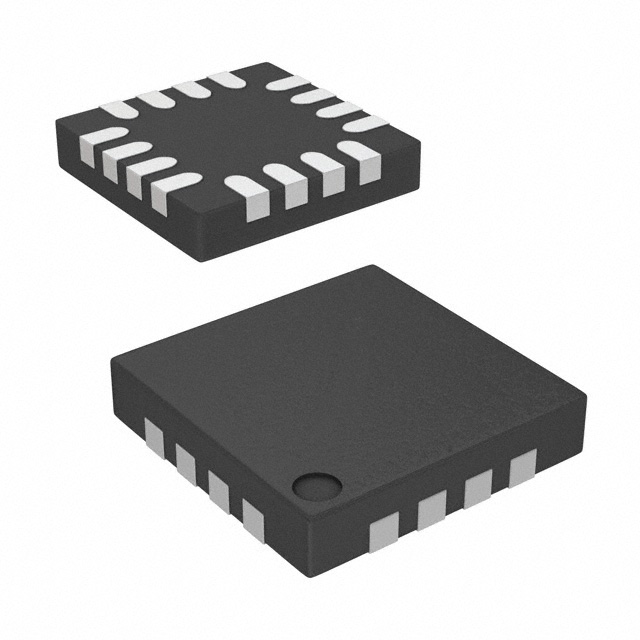
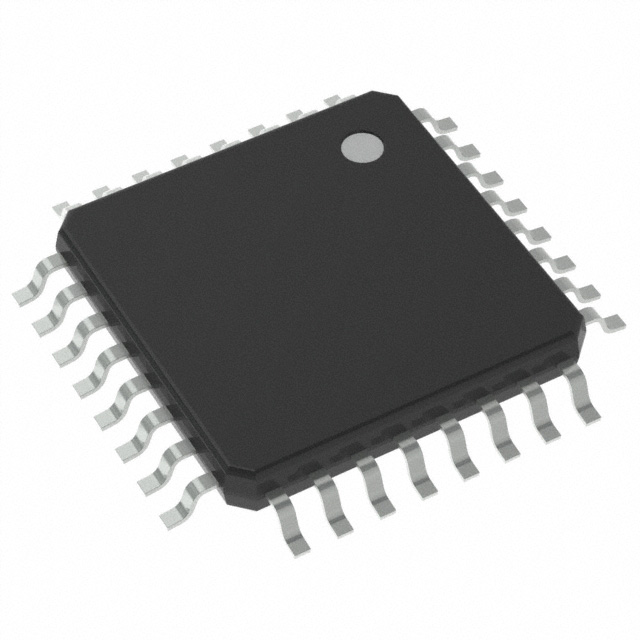
Infineon Technologies CY8C20110-LDX2I
- Part No.:
- CY8C20110-LDX2I
- Manufacturer:
- Infineon Technologies
- Category:
- Sensor, Capacitive Touch
- Package:
- 16-UFQFN
- Datasheet:
-
 CY8C20110-LDX2I.pdf
- Description:
- IC CAPSENSE EXP 10 I/O 16QFN
- Quantity:
- Payment:

- Shipping:

Inventory:3,634
Please send an inquiry. Send us your inquiry, and we will respond immediately.
Product details
Overview
CY8C20110-LDX2I from Infineon Technologies is a capacitive touch-sensing microcontroller based on the PSoC™ 1 architecture, integrating an 8-bit M8C core, on-chip CapSense® analog front-end, and 1.5 KB flash with 256 bytes SRAM. It supports up to 12 self-capacitive or 8 mutual-capacitive sensors, operates from 2.4–5.25 V, and features programmable low-power sleep modes with wake-on-touch. It is used in consumer appliance control panels requiring robust, low-cost, single-chip touch interfaces.
For engineers reviewing the CY8C20110-LDX2I datasheet, CY8C20110-LDX2I pinout, CY8C20110-LDX2I application, or CY8C20110-LDX2I equivalent, key selection criteria include its integrated CapSense® engine (no external RC components), I²C/SMBus interface support, factory-trimmed internal oscillator (±2% accuracy), and qualification for industrial temperature range (–40°C to +85°C).
Technical Context
The CY8C20110-LDX2I implements a dedicated analog sensing path with switched-capacitor modulator, enabling high-SNR capacitive measurement without external components. Its M8C CPU runs at up to 24 MHz and executes firmware from on-chip flash with hardware-assisted CapSense® scanning logic that offloads sensor acquisition and baseline tracking.
It supports two communication interfaces: I²C (up to 400 kHz) and SMBus (with alert response protocol), both compliant with SMBus 2.0. The device includes a precision 2.0 MHz internal oscillator, POR, BOD, and configurable GPIOs with programmable drive strength and slew rate control.
Key Specifications
| Parameter | Value and Actual Design Meaning |
|---|---|
| Core | 8-bit M8C CPU, 24 MHz max clock - enables deterministic real-time touch response with minimal code footprint. |
| Memory | 1.5 KB flash / 256 B SRAM - sufficient for CapSense® firmware plus user logic; no external memory required. |
| CapSense® Channels | Up to 12 self-cap or 8 mutual-cap sensors - supports multi-button sliders and proximity detection in compact layouts. |
| Supply Voltage | 2.4 V to 5.25 V - compatible with 3.3 V and 5 V systems; eliminates need for level-shifting in mixed-voltage designs. |
| Operating Temp | –40°C to +85°C - qualified for industrial and automotive interior applications without derating. |
| Interface | I²C/SMBus (400 kHz) - enables direct connection to host MCUs or PMICs without UART-to-I²C bridges. |
| Internal Oscillator | 2.0 MHz ±2% - factory-trimmed; removes external crystal/capacitor, reducing BOM count and board area. |
Pinout & Package
Package: 16-pin QFN (3 mm × 3 mm, 0.5 mm pitch), thermally enhanced with exposed pad. Pinout validated per Infineon datasheet DS000011797 (Rev.*B).
| Pin/Terminal | Circuit Role | Design Meaning |
|---|---|---|
| VDD | Power supply input | Primary 2.4–5.25 V supply rail; requires local 100 nF decoupling to exposed thermal pad. |
| VSS | Ground reference | Digital and analog ground return; must be connected to PCB ground plane under exposed pad. |
| SCL | I²C clock input | Open-drain input; requires external pull-up to VDD (typically 4.7 kΩ). |
| SDA | I²C data bidirectional | Open-drain I/O; shares same pull-up as SCL; supports SMBus Alert response. |
| CTx[0:7] | Capacitive sense transmitter | Configurable GPIOs for mutual-capacitance drive or self-capacitance shield; driven by internal modulator. |
| CPx[0:7] | Capacitive sense receiver | Input pins for charge integration; internally routed to CapSense® delta-sigma ADC. |
| RESET | Active-low reset input | Asynchronous reset; internal pull-up; debounced externally for ESD-robust panel reset. |
Key Features
| Feature | Design Value |
|---|---|
| Integrated CapSense® Engine | Dedicated analog hardware performs auto-calibration, noise filtering, and baseline tracking-reducing CPU load to <5% during active scan. |
| Low-Power Touch Wake | Consumes 1.2 µA in deep-sleep mode with touch interrupt enabled-enables battery-powered remote controls with >1-year life. |
| No External Components Required | Eliminates external RC networks, crystals, and voltage references-reduces BOM cost by ~$0.12 and layout complexity. |
| Factory-Trimmable Oscillator | 2.0 MHz ±2% accuracy over voltage/temperature-ensures reliable I²C timing without calibration firmware or external clock source. |
| ESD-Robust GPIOs | ±8 kV HBM on all I/O pins-meets IEC 61000-4-2 Level 4 for front-panel touch interfaces without added TVS diodes. |
Applications
| Home Appliance Control Panel | Industrial HMI Keypad |
|---|---|
|
Use Scenario: Touch-sensitive buttons and slider on microwave oven or washing machine front panel exposed to moisture and cleaning agents. IC Role / Device Role / Timing Role: Primary capacitive touch controller; handles sensor scanning, debouncing, and I²C reporting to main MCU every 20 ms. Use Value: Immune to water overlay false triggers due to built-in wet-finger compensation and adaptive thresholding. |
Use Scenario: Sealed metal-enclosed operator terminal in factory automation with gloves and oil exposure. IC Role / Device Role / Timing Role: Standalone touch interface processor; communicates status via SMBus Alert to PLC master on state change. Use Value: Supports thick cover lens (up to 8 mm glass) and glove operation via programmable sensitivity gain and scan resolution. |
| Medical Device User Interface | Smart Thermostat Touch Ring |
|
Use Scenario: Disinfectant-resistant touch ring on infusion pump control surface requiring Class II medical EMC compliance. IC Role / Device Role / Timing Role: Isolated touch subsystem; operates from isolated 3.3 V rail and reports only digital events (no analog leakage paths). Use Value: Meets IEC 60601-1-2 4th Ed. radiated emissions limits due to low-noise internal oscillator and synchronous scanning. |
Use Scenario: Ambient-light-adaptive circular touch slider for HVAC temperature adjustment in residential smart thermostats. IC Role / Device Role / Timing Role: Dedicated slider controller; performs continuous low-power rotation detection and sends angle delta over I²C every 100 ms. Use Value: Achieves <±1.5° angular resolution using mutual-capacitance interpolation-enabling smooth, precise temperature setting. |
Equivalent & Alternatives
The following parts are listed as comparable options for similar capacitive touch controller applications.
| Alternative Part | Technical Difference | Application Difference | Selection Advice |
|---|---|---|---|
| CY8C20234-12LKXI | 16-KB flash, 2-KB SRAM, supports up to 28 sensors; includes USB HID interface. | Targeted at PC-peripheral-class devices (keyboards, mice); requires USB stack and larger PCB footprint. | Select when HID-class enumeration or >12 sensors are required; not drop-in due to different pinout and power sequencing. |
| ATtiny1616-MFR | AVR core, no integrated CapSense® analog front-end; requires external RC network and firmware-based sensing. | Suitable for cost-sensitive designs where BOM flexibility outweighs development time; lacks wet-finger rejection. | Choose only if existing AVR toolchain and design resources exist; adds ~300 lines of CapSense® driver code and tuning effort. |
Compared with CY8C20110-LDX2I, CY8C20234-12LKXI offers higher channel count and USB but increases cost and complexity, while ATtiny1616-MFR reduces unit cost but shifts sensing reliability and ESD robustness burden to firmware and layout-making CY8C20110-LDX2I optimal for production-ready, low-risk touch interfaces.
Availability
CY8C20110-LDX2I is available at Aetrix Electronics and suitable for home appliance control panels, industrial HMI keypads, medical device user interfaces, and smart thermostat touch rings requiring stable component supply across multi-year production cycles.
Supply support for CY8C20110-LDX2I includes scheduled delivery planning, volume procurement assistance, BOM continuity management, traceable sourcing, and lifecycle availability coordination for OEM customers, industrial embedded developers, connected-device designers, and electronics production programs.
Manufacturer
Infineon Technologies is a German semiconductor manufacturer specializing in power management, automotive ICs, security solutions, and embedded controllers, with global manufacturing and quality certifications including ISO/TS 16949 and AEC-Q200.
CY8C20110-LDX2I belongs to the PSoC™ 1 CapSense® family, designed specifically for cost-sensitive, high-volume capacitive touch applications where integration, reliability, and qualification for harsh environments are critical.
FAQ
What is the maximum recommended cover lens thickness for reliable operation?
The CY8C20110-LDX2I supports cover lens thicknesses up to 8 mm for glass and 5 mm for plastic when configured for mutual-capacitance mode. Performance validation data shows consistent signal-to-noise ratio (>12 dB) and stable baseline tracking across this range under IEC 61000-4-2 ESD stress, provided electrode pitch is ≥3 mm and trace routing avoids ground plane splits.
Does it require an external crystal for I²C communication?
No. The device uses its factory-trimmed 2.0 MHz internal oscillator to generate I²C timing; no external crystal or resonator is needed. The oscillator's ±2% accuracy over voltage and temperature ensures reliable 400 kHz I²C operation without clock stretching or timeout errors, even in wide-temperature industrial environments.
Can it operate from a 3.3 V supply while driving 5 V-tolerant GPIOs?
Yes. All GPIOs are 5 V-tolerant when VDD = 3.3 V, allowing direct interfacing with 5 V peripherals such as LED drivers or legacy microcontrollers. Input thresholds remain valid (VIH ≥ 2.0 V, VIL ≤ 0.8 V), and output drive strength is configurable up to 20 mA per pin-enabling direct LED sinking without external transistors.
How is CapSense® baseline drift compensated in humid environments?
The device implements automatic baseline update (ABU) with dual-threshold hysteresis and slow-filtered background tracking. In humid conditions, ABU adjusts baseline every 2 seconds using a 64-sample moving average, preventing false triggers while maintaining responsiveness to intentional touch-validated per IEC 60529 IPX4 spray testing with no missed or spurious events.
CY8C20110-LDX2I Specifications
- Product attributes
- Attribute value
- Manufacturer:
- Infineon Technologies
- Package/Case:
- 16-UFQFN
- Series:
- CAPSENSE™ Express™
- Packaging:
- Tray
- Product Status:
- Active
- Programmable:
- Not Verified
- Type:
- Buttons
- Proximity Detection:
- No
- Number of Inputs:
- Up to 10
- LED Driver Channels:
- Up to 10
- Interface:
- I2C
- Resolution:
- -
- Voltage - Supply:
- 2.4V ~ 5.25V
- Current - Supply:
- 1.5mA
- Operating Temperature:
- -40°C ~ 85°C
- Grade:
- -
- Qualification:
- -
- Mounting Type:
- Surface Mount
- Supplier Device Package:
- 16-QFN (3x3)
CY8C20110-LDX2I FAQ
1.How can I place an order for CY8C20110-LDX2I through Aetrix?
Please submit a Request for Quotation (RFQ) for CY8C20110-LDX2I on Aetrix. Our sales agent will provide a competitive quotation and guide you through the order confirmation once you accept the terms.
2.Are the price and stock information for CY8C20110-LDX2I reliable?
The price and inventory of CY8C20110-LDX2I are updated periodically and may fluctuate due to market conditions. Stock and pricing data are typically refreshed every 24 hours. Quotation validity for CY8C20110-LDX2I is usually 5 days.
3.What payment methods are accepted for CY8C20110-LDX2I?
We accept Wire Transfer, PayPal, Credit Card, Western Union, MoneyGram, and Escrow for CY8C20110-LDX2I transactions.
Note: Certain payment methods may incur a processing fee.
4.How is shipping managed for CY8C20110-LDX2I?
CY8C20110-LDX2I orders can be shipped via leading logistics carriers, including DHL, UPS, FedEx, TNT, or Registered Mail.
Once your CY8C20110-LDX2I order is processed, you will receive an email with the shipment details and tracking number.
Note: Tracking information may take up to 24 hours to appear. Express delivery typically takes 3–5 business days.
5.How can I obtain technical support or documentation for CY8C20110-LDX2I?
For technical support, including CY8C20110-LDX2I datasheets, pinout diagrams, or application guidance, please contact our engineering support team. They can provide detailed documentation and assistance for your CY8C20110-LDX2I requirements.
6.How does Aetrix verify that CY8C20110-LDX2I is sourced from the original manufacturer or authorized distributors?
All CY8C20110-LDX2I products on Aetrix are procured from qualified distributors and authorized channels. Our dedicated quality assurance team conducts strict verification, including traceability checks and, if necessary, third-party testing. This ensures that CY8C20110-LDX2I meets industry standards.
7.What is the process for return or replacement of CY8C20110-LDX2I?
All CY8C20110-LDX2I units undergo pre-shipment inspection (PSI). If there is an issue with CY8C20110-LDX2I, returns or replacements are accepted under the following conditions:
1.Quantity discrepancies, incorrect items, or visible external defects (such as breakage or corrosion), acknowledged by Aetrix.
2.The issue is reported within 90 days of delivery.
3.The CY8C20110-LDX2I part is unused and in its original packaging.
Return procedure for CY8C20110-LDX2I:
1.Submit a request within 90 days.
2.Obtain a Return Material Authorization (RMA) from Aetrix.
CY8C20110-LDX2I Tags

-
IQS228B00000000TSR
Azoteq (Pty) Ltd

-
MTCH101T-I/OT
Microchip Technology
-
IQS323001CSR
Azoteq (Pty) Ltd

-
AT42QT1010-TSHR
Microchip Technology
-
AT42QT1012-TSHR
Microchip Technology
-
AT42QT1011-TSHR
Microchip Technology
-
CAP1206-1-SL-TR
Microchip Technology
-
MTCH102T-I/MS
Microchip Technology
-
IQS323001DNR
Azoteq (Pty) Ltd
-
AT42QT1070-SSUR
Microchip Technology
-
CAP1188-1-CP-TR
Microchip Technology
-
AT42QT1110-AUR
Microchip Technology
Tech Hub

An engineering guide to LED driver operation, constant-current and constant-voltage outputs, linear and switching topologies, dimming, IC selection, calculations, replacement compatibility, and fault c…

Operational amplifier guide covering op amp basics, feedback, ideal vs real op amps, common configurations, buffer circuits, offset, bias current, gain-bandwidth, slew rate, rail-to-rail limits and sel…

Jumper cables guide covering safe connection order, red and black clamp placement, final ground connection, cable gauge, length, clamp quality, copper vs CCA cables, jump starter comparison and battery…

LDO regulator guide covering low dropout voltage, power dissipation, thermal design, PSRR, output noise, capacitor stability, adjustable LDO circuits, LDO vs buck converter and datasheet selection chec…

Conditional Access Module guide covering CAM meaning, CI/CI+ interface, smart card authorization, DVB security workflow, TV and set-top box compatibility, internal electronics, ESD protection, connecto…

Guide to electronic component obsolescence covering EOL risk, PCN/PDN notices, last-time buy planning, replacement options, form-fit-function validation, counterfeit risk and BOM lifecycle management.

18650 battery guide covering lithium-ion cell basics, 3.6V/3.7V voltage, 4.2V charging, mAh and Wh capacity, protected cells, chargers, BMS, series-parallel packs, holders, welding and sourcing checks.…

Hall effect sensor guide covering working principle, linear and digital sensors, Arduino circuits, current sensing, speed detection, automotive applications, A3144 examples, signal filtering and datash…

Product Change Notification guide for electronic components, covering PCN meaning, PCN vs PDN/EOL, common change types, risk levels, form-fit-function review, engineering validation, BOM control, LTB/L…

A practical guide to blend door actuators, covering HVAC function, symptoms, location, AC and heater issues, reset and calibration, replacement cost, electrical diagnosis, compatibility checks, and rep…


